Aqviz

What Is an Escrow Account and How Does It Work?

An escrow account is a specialized financial account used in mortgage lending to hold funds for property taxes, homeowners insurance, and sometimes other related expenses. It acts as a neutral holding place managed by the mortgage servicer, ensuring these bills are paid on time. Borrowers contribute a portion of these costs monthly alongside their mortgage payment so the servicer can disburse the funds when due. This arrangement protects both lenders and borrowers from missed payments or sudden large expenses.

Escrow accounts are particularly important when borrowers do not make a large down payment, or when government-backed loans like FHA, VA, or USDA loans are involved. By collecting funds gradually, escrow accounts reduce the risk of default and simplify bill management for homeowners. Regulatory guidelines, primarily under the Real Estate Settlement Procedures Act (RESPA), strictly govern how these accounts operate, including how servicers must conduct annual analyses and handle shortages or surpluses.

Understanding the purpose, rules, and mechanics of escrow accounts is essential for homeowners and prospective borrowers alike. These accounts influence monthly mortgage payments and can affect overall affordability. They also provide transparency through required annual statements and options to manage escrow shortages. This article explains what escrow accounts are, their regulatory framework, payment calculations, and how borrowers can interact with these accounts throughout their mortgage term.

Escrow Account Basics and Regulatory Framework

An escrow account is designed to collect and hold funds specifically for recurring property-related expenses, most commonly property taxes and homeowners insurance. Instead of paying these bills directly, the borrower pays the mortgage servicer a monthly amount that includes principal, interest, and the escrow portion. The servicer then holds the escrow funds in a trust account separate from the mortgage principal and interest payments. This separation ensures the escrow funds are used only to pay the designated bills.

The use of escrow accounts is mandated or strongly encouraged by lenders to protect their financial interest in the property. For loans insured or guaranteed by federal agencies such as the Federal Housing Administration (FHA), Veterans Affairs (VA), and the United States Department of Agriculture (USDA), escrow accounts are required regardless of down payment size. Conventional loans often require escrow if the borrower’s down payment is less than 20 percent. This protects the lender by making sure taxes and insurance are kept current, reducing the risk of liens or uninsured losses.

The Real Estate Settlement Procedures Act (RESPA), enforced through Regulation X (12 CFR Part 1024), governs escrow accounts for most federally related mortgage loans. RESPA sets rules on how servicers must manage escrow accounts, including limits on the amount of money that can be held as a cushion, requirements for annual escrow account analyses, and mandates for timely refunds of surplus funds. These protections were created to prevent borrowers from being overcharged or left uninformed about their escrow status.

Requirements and Conditions for Escrow Accounts

Escrow accounts are required for all FHA loans regardless of down payment amount, for VA and USDA loans, and for conventional loans with less than 20% down payment. This ensures that essential property-related bills are paid promptly, which protects both the borrower and lender. For conventional loans where the down payment is 20% or more, escrow accounts are usually optional and may be waived by the lender under certain conditions.

When escrow accounts are maintained, servicers typically collect one-twelfth of the estimated annual property taxes and insurance premiums each month. For example, if annual property taxes total $4,800 and homeowners insurance costs $1,200 annually, the borrower pays $500 monthly into the escrow account. This steady collection prevents the borrower from facing large lump sum payments when bills come due. The servicer then disburses these funds as required to cover the bills.

RESPA also allows servicers to maintain a cushion in the escrow account, but this cushion cannot exceed two months’ worth of escrow payments. This cushion protects against minor fluctuations in tax and insurance costs. If the escrow analysis reveals a shortage beyond this cushion, the borrower is offered the option to repay it either as a lump sum or spread over 12 months. Surpluses exceeding $50 must be refunded within 30 days, ensuring borrowers are not overcharged.

Loan Type Down Payment Escrow Required Notes
FHA Any Yes Mandatory for life of loan if down payment < 10%; MIP and escrow removable after 11 years if ≥10% down
VA Any Yes Escrow generally required; protects government guarantee
USDA Any Yes Escrow mandatory to protect property and taxes
Conventional < 20% Yes Escrow required to reduce lender risk
Conventional ≥ 20% Optional Borrowers may waive escrow; lender may charge fee

Calculating and Managing Escrow Payments

The monthly escrow payment is calculated by adding the total annual property tax amount to the annual homeowners insurance premium and dividing the sum by 12. For example, if a home’s annual property taxes are $4,800 and the insurance premium is $1,200, the total annual escrow payment is $6,000. Dividing this by 12 results in a monthly escrow payment of $500. This amount is collected along with the monthly principal and interest payments to form the total monthly mortgage payment.

Mortgage servicers conduct an annual escrow analysis to verify that the amount collected each month is sufficient to cover the upcoming year’s property tax and insurance bills. During this review, servicers compare the actual disbursements made with the amounts collected and projected expenses. If the analysis shows a shortage, borrowers may have to make up the difference either in a lump sum or through a 12-month repayment plan. Conversely, if there is a surplus greater than $50, the servicer must refund the excess or apply it toward future payments.

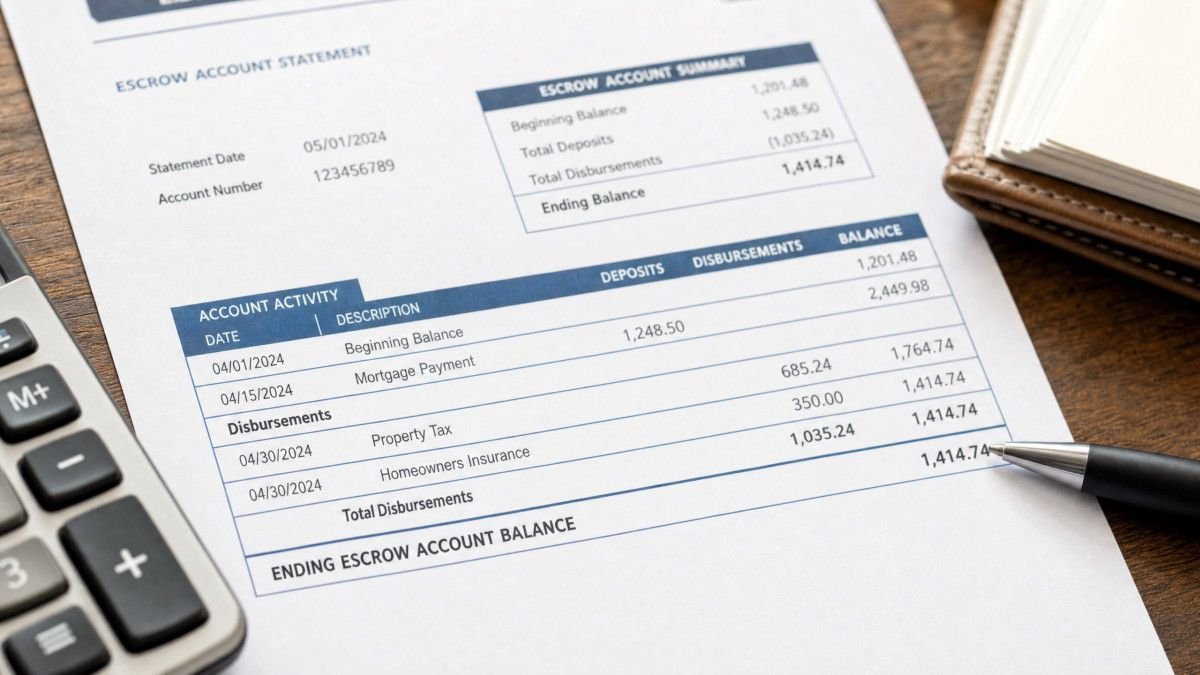
Under RESPA, servicers must provide borrowers with an escrow account statement within 30 days after completing the annual analysis. This statement details the previous year’s payments, current escrow balance, projected payments for the coming year, and any shortage or surplus. Borrowers can use this information to understand how their escrow funds are managed and to plan for any required repayments or refunds accordingly.

what-is-an-escrow-account-and-how-does-it-work-2
Under RESPA, servicers must send an annual escrow analysis statement and may maintain a cushion of no more than two months of escrow payments — any shortage beyond that must be offered as a 12-month repayment option.

Escrow Waivers, Interest on Balances, and Borrower Rights

In some cases, borrowers with conventional loans and a loan-to-value ratio of 80% or less may be eligible to waive an escrow account. Lenders may grant escrow waivers to borrowers with good payment histories, but often charge a fee ranging from 0.125% to 0.25% of the loan amount annually for this privilege. Borrowers opting for a waiver take on the responsibility of paying property taxes and insurance premiums directly, which requires careful budgeting and timely payments to avoid penalties or liens.

Only 15 states require lenders to pay interest on escrow account balances. These states include California, Connecticut, Iowa, Maine, Maryland, Massachusetts, Minnesota, New Hampshire, New Jersey, New York, Oregon, Rhode Island, Utah, Vermont, and Wisconsin. In these states, mortgage servicers must credit interest earned on escrow funds to the borrower, either through a direct refund or by applying it to future escrow payments. In other states, no such requirement exists, so escrow balances typically do not earn interest for the borrower.

Borrowers also have rights under RESPA if the mortgage servicer fails to pay property taxes or insurance premiums from the escrow account, which could result in liens or insurance lapses. In such cases, borrowers can file complaints with the Consumer Financial Protection Bureau (CFPB). This federal agency oversees compliance with RESPA and can enforce corrective actions. Additionally, annual escrow statements provide transparency, enabling borrowers to monitor account activity and dispute errors promptly.

What is an escrow account?

An escrow account is a trust account managed by a mortgage servicer to collect and hold funds for property taxes and homeowners insurance. Borrowers pay a portion of these bills monthly along with their mortgage payments. The servicer disburses the funds when the bills are due, ensuring timely payment and protecting both the borrower and lender from missed or late payments.

Why are escrow accounts required on some loans?

Escrow accounts are required to protect the lender’s interest by ensuring property taxes and insurance premiums are paid on time. This prevents liens or uninsured losses that could jeopardize the lender’s security. Federal programs like FHA, VA, and USDA loans mandate escrow accounts, while conventional loans require them if the down payment is less than 20%.

How is the monthly escrow payment calculated?

The monthly escrow payment is calculated by adding the total annual property taxes and annual homeowners insurance premiums, then dividing by 12. For example, if annual taxes are $4,800 and insurance is $1,200, the total $6,000 divided by 12 results in a $500 monthly escrow payment included with the mortgage.

What happens if there is an escrow shortage?

If an annual escrow analysis shows a shortage greater than the allowed cushion (two months of payments), the borrower must repay the shortage either as a lump sum or spread over 12 months. The servicer must provide an escrow statement with these options so the borrower can select the preferred repayment method.

Can borrowers waive escrow accounts?

Borrowers with conventional loans and at least 20% down payment may request an escrow waiver if they have a strong payment history. Lenders may charge a fee for the waiver, and borrowers then become responsible for paying property taxes and insurance directly. This option is not available for most government-backed loans, which require escrow accounts.

Conclusion

Escrow accounts serve as an important safeguard in mortgage lending by ensuring that property taxes and insurance premiums are paid timely through a managed trust account. The monthly escrow payments are carefully calculated to cover annual bills evenly, reducing the risk of large lump sum payments for borrowers. Federal regulations like RESPA impose strict rules on escrow accounts, requiring servicers to conduct annual analyses, limit account cushions, and return surpluses promptly. These rules promote transparency and fairness.

While escrow accounts are mandatory for most government-backed loans and conventional loans with smaller down payments, borrowers with sufficient equity and good payment histories may waive escrow for conventional loans, often for a fee. Understanding the roles and management of escrow accounts enables borrowers to budget effectively and recognize their rights. Escrow accounts ultimately provide stability and protection for homeowners and lenders alike, ensuring key property expenses are consistently managed throughout the life of a mortgage.

How to Lower Your Mortgage Interest Rate Effectively

For many homeowners, the mortgage is not only the largest component of their monthly expenses but also a significant factor in their long-term financial health. Reducing the mortgage interest rate can lead to lowered monthly payments and substantial savings over the duration of the loan, sometimes amounting to tens of thousands of dollars. This makes understanding and pursuing ways to reduce mortgage interest rates a priority for those looking to optimize their finances and build equity more efficiently.

There are multiple strategies available to homeowners seeking to lower their mortgage interest rates, each with distinct eligibility requirements, benefits, and considerations. Conventional refinancing remains a popular choice, allowing borrowers to replace their existing loan with one that carries a lower rate or modified terms. Meanwhile, government-backed refinance programs provide streamlined options for veterans, FHA loan holders, and other eligible borrowers, often with reduced documentation and fees. These programs are designed to ease access to lower rates while safeguarding borrowers’ interests.

In addition to refinancing, loan modifications and alternative methods such as mortgage rate buydowns and mortgage recasting offer homeowners additional ways to reduce their effective interest rates or monthly payments. Each approach involves different processes and impacts, making it crucial for borrowers to carefully assess their credit profiles, current loan terms, equity positions, and financial goals. Gaining a comprehensive understanding of these options empowers homeowners to make informed decisions that maximize savings and improve their mortgage situations.

Refinancing Your Mortgage

Refinancing your mortgage involves replacing your current loan with a new one, often to obtain a lower interest rate, reduce monthly payments, or adjust the loan term. Conventional refinancing requires credit approval and may involve closing costs typically ranging from 2% to 6% of the loan amount. For example, reducing your interest rate by one percentage point on a $300,000 mortgage could save approximately $333 per month, translating to over $4,000 annually in savings.

Government-backed refinance programs offer streamlined options with less stringent underwriting. The VA IRRRL targets veterans with existing VA loans, allowing them to refinance with reduced documentation and potentially lower rates. The FHA Streamline Refinance similarly helps FHA mortgage holders reduce rates with limited requirements. These programs may waive appraisals and credit checks under certain conditions, accelerating the process and lowering upfront costs.

When considering refinancing, it is important to calculate the break-even point, which is the time it takes for the monthly savings to cover the closing costs associated with the new loan. Typically, if you plan to stay in your home beyond this period, refinancing becomes a financially sound decision. Additionally, borrowers should be aware that shortening the loan term through refinancing can increase monthly payments but reduce total interest paid, while extending the term can lower monthly payments but increase long-term interest expenses.

Another consideration is the impact of refinancing on your credit score. Applying for a refinance involves a hard credit inquiry, which can result in a temporary dip in your credit score. However, if managed properly and combined with timely payments on the new loan, your credit score can recover and even improve over time. It is advisable to shop for refinance rates within a focused window—usually 14 to 45 days—to minimize multiple inquiries’ impact on your credit.

Government-Backed Refinance Programs

Several government programs, including VA IRRRL, FHA Streamline Refinance, and initiatives by Fannie Mae and Freddie Mac, provide specialized refinance options to lower mortgage interest rates. The VA IRRRL allows eligible veterans to refinance existing VA loans with minimal documentation and typically no appraisal, helping reduce monthly payments or convert adjustable rates to fixed rates. Borrowers pay a one-time VA funding fee that can be rolled into the loan.

Fannie Mae’s RefiNow™ program requires a minimum 0.50% interest rate reduction and a lower monthly payment, targeting Fannie Mae-owned loans. Freddie Mac’s Refi Possible® assists low- and moderate-income borrowers, allowing high debt-to-income ratios up to 65% and waiving minimum credit score requirements. Both programs often waive appraisals to reduce costs. FHA Streamline Refinance requires the existing loan to be current and provides a net tangible benefit, with cash back limited to $500.

These government programs are designed to increase accessibility for borrowers who might not qualify for conventional refinancing due to credit challenges or income limitations. They often feature more flexible underwriting standards and reduced documentation requirements, which can speed up processing times. For example, the VA IRRRL program does not require a new credit check or income verification in most cases, making it an efficient option for veterans looking to lower their interest rates quickly.

In addition to lowering interest rates, some government programs allow borrowers to switch from adjustable-rate mortgages (ARMs) to fixed-rate loans, providing payment stability and protection against future rate increases. This can be particularly advantageous in a rising interest rate environment. However, borrowers should carefully review program-specific fees, such as VA funding fees or FHA mortgage insurance premiums, to understand the full cost implications before proceeding.

Loan Modification to Lower Interest Rate

A loan modification permanently changes one or more terms of your existing mortgage to make payments more affordable, often including interest rate reductions. Unlike refinancing, it does not replace your loan but adjusts it, typically for borrowers facing financial hardship. Eligibility generally requires demonstrating difficulty in meeting current payments and being at least one month delinquent.

Modifications can extend the loan term, reduce interest rates temporarily or permanently, or forbear a portion of principal. Government programs, such as FHA’s Standalone Loan Modification, assist borrowers in modifying loans to prevent foreclosure. The Consumer Financial Protection Bureau recommends proactively contacting mortgage servicers to explore modification options before missing payments.

Loan modifications can be a critical tool for borrowers experiencing temporary or permanent financial difficulties, such as job loss, medical emergencies, or other unforeseen circumstances. Unlike refinancing, loan modifications typically do not require a new credit application or appraisal, making them more accessible for struggling borrowers. Some modifications may also reduce principal balances in rare cases, though most focus on adjusting payment terms to improve affordability.

Servicers are required by law to evaluate borrowers for all available workout options, including loan modifications, before initiating foreclosure proceedings. Borrowers should maintain open communication with their mortgage servicers and provide requested documentation promptly to increase their chances of approval. While modifications can lower interest rates and monthly payments, they may also extend the loan term, potentially increasing total interest paid over time, so borrowers should weigh these factors carefully.

how-to-lower-your-mortgage-interest-rate-effective-2
Paying 2 discount points ($7,000) on a $350,000 loan to reduce the rate from 7.25% to 6.75% saves $122 per month, reaching break-even at month 58 — making points worthwhile only if the borrower stays past five years.

Other Strategies to Lower Mortgage Rates

Beyond refinancing and modifications, homeowners can reduce their effective mortgage interest rate through rate buydowns or mortgage recasting. A mortgage rate buydown involves paying points upfront—commonly one point equals 1% of the loan amount—to lower the interest rate by about 0.25% per point paid. Temporary buydowns, such as a 3-2-1 buydown, reduce rates gradually over the first three years.

Mortgage recasting allows borrowers to make a large principal payment, after which the lender recalculates monthly payments based on the reduced balance, maintaining the original interest rate and loan term. This lowers monthly payments without incurring new closing costs or refinancing. Recasting is especially beneficial for those receiving a lump sum, such as a bonus or inheritance, seeking to reduce monthly expenses without changing loan structure.

Rate buydowns can be especially attractive in a higher interest rate environment, where lowering the rate even slightly can lead to meaningful monthly savings. While paying points upfront increases initial costs, the long-term savings may justify this expense for homeowners planning to remain in their homes for several years. Some lenders also offer seller-paid buydowns as incentives during home purchases, which can reduce the initial interest rate without direct cost to the buyer.

Mortgage recasting requires lender approval and is not offered by all loan servicers. Unlike refinancing, recasting does not reset the loan term or require full underwriting, making it a faster and lower-cost option for reducing monthly payments. However, recasting is generally only available on conventional loans and not government-backed loans, and the minimum principal payment required to trigger a recast varies by lender. Borrowers should contact their servicer to understand the specific requirements and benefits.

Comparison of Mortgage Refinance Options

The following table compares key features of various refinance options to help homeowners evaluate which approach best suits their needs.

Feature Conventional Refinance VA Interest Rate Reduction Refinance Loan (IRRRL) FHA Streamline Refinance Fannie Mae RefiNow / Freddie Mac Refi Possible
Eligibility Broad; credit-dependent Existing VA-backed loan holder Existing FHA-insured loan holder Fannie Mae/Freddie Mac-owned loan; income limits apply
Credit Score Impact Significant; higher scores get better rates Less emphasis; still considered Less emphasis; may waive new credit check Moderate to significant
Down Payment Not applicable (refinance) Not applicable (refinance) Not applicable (refinance) Not applicable (refinance)
Equity Requirement Typically 20% to avoid PMI No specific equity requirement No specific equity requirement Can be low (e.g., 3% for HomeReady)
Appraisal Required? Often required Often waived Often waived Often waived (RefiNow)
Net Tangible Benefit Required Not always required Required Required Required (e.g., 0.50% rate reduction for RefiNow)
Cash-out Option Yes; limited or full cash-out No; limited to $500 No; limited to $500 Limited (e.g., $2,000 or 2% for HomeReady)
Mortgage Insurance PMI if equity <20% No PMI; VA funding fee applies MIP (Mortgage Insurance Premium) applies PMI if equity <20%

Frequently Asked Questions

How much can I save by lowering my mortgage interest rate?

Savings depend on your loan balance, current rate, and new rate. For instance, reducing your interest rate by one percentage point on a $300,000 mortgage saves roughly $333 monthly, exceeding $4,000 annually. Over a 30-year loan, this can accumulate to tens of thousands in savings, making even small rate reductions financially significant. The exact savings also depend on the loan term and whether you refinance to a shorter or longer term, as shorter terms typically save more interest overall.

What is the minimum credit score required to refinance for a lower interest rate?

Generally, a credit score of 740 or higher qualifies borrowers for the most competitive rates. However, government-backed programs like FHA and VA loans accept lower scores, expanding access. Improving your credit score by even a few points can help you secure a more favorable interest rate and reduce your overall mortgage costs. Some programs waive credit checks entirely or have more flexible criteria, which can be beneficial for borrowers with less-than-perfect credit histories.

Are there any government programs to help me lower my mortgage interest rate?

Yes. The VA Interest Rate Reduction Refinance Loan (IRRRL) assists veterans with existing VA loans. The FHA Streamline Refinance helps current FHA mortgage holders reduce rates with limited documentation. Fannie Mae and Freddie Mac offer programs such as RefiNow™ and Refi Possible®, which facilitate refinancing at lower rates for eligible borrowers, often waiving appraisal requirements. These programs are designed to reduce barriers like high closing costs and documentation burdens.

What are the costs associated with refinancing my mortgage?

Closing costs typically range from 2% to 6% of the loan amount, covering appraisals, title insurance, lender fees, and administrative expenses. Some lenders offer “no-cost” refinances by incorporating fees into the loan balance or charging higher interest rates. Calculating the break-even point helps determine if refinancing savings outweigh these costs within a reasonable timeframe. Additionally, government-backed refinance programs often reduce or waive some fees, lowering upfront expenses for qualifying borrowers.

Can I lower my interest rate without refinancing?

Yes. Loan modifications permit permanent adjustments to existing loan terms, including interest rate reductions, primarily for borrowers facing financial hardship. Mortgage recasting lowers monthly payments by recalculating payments after a lump-sum principal payment without changing the interest rate or loan term. However, these options depend on lender policies and borrower eligibility. They may not be available to all borrowers but can be valuable alternatives to refinancing when circumstances prevent obtaining a new loan.

Conclusion

Lowering your mortgage interest rate can lead to substantial financial savings through various avenues such as refinancing, loan modifications, rate buydowns, or recasting. Refinancing remains the most common and often most effective method, with conventional and government-backed programs offering tailored options to suit different borrower profiles. Understanding eligibility requirements, potential savings, and associated costs is essential for making an informed decision that fits your financial goals.

Government programs like the VA IRRRL and FHA Streamline Refinance simplify the process for eligible borrowers, while Fannie Mae and Freddie Mac initiatives provide additional alternatives. Other strategies like loan modifications and mortgage recasting offer solutions for those facing hardship or seeking to reduce monthly payments without a full refinance. Evaluating these options carefully, comparing multiple lender offers, and considering your credit score and equity position will help you secure the lowest possible mortgage interest rate.

The Impact of Property Taxes on Your Mortgage Payment

Property taxes significantly influence the total amount homeowners pay each month for their mortgage. These taxes are often included in the monthly mortgage payment through an escrow account, which collects funds to pay local tax authorities on the homeowner’s behalf. Because property tax rates and assessed values fluctuate, the monthly mortgage payment can change accordingly, affecting household budgeting and financial planning.

Calculating property taxes involves multiplying the assessed value of a property by the local tax rate or millage rate. For example, a home assessed at $400,000 with a 2% tax rate results in $8,000 in annual taxes. This annual amount is typically divided by 12 and added to the monthly mortgage payment. Understanding how these calculations work and how property taxes integrate into mortgage payments helps homeowners anticipate changes and avoid surprises.

Many lenders require escrow accounts to manage property tax payments, ensuring taxes are paid on time and protecting both the homeowner and lender from penalties or liens. Laws and regulations, including those from the Consumer Financial Protection Bureau and HUD, govern escrow management. Additionally, tax deductions like the SALT deduction affect the overall financial impact of property taxes on homeowners’ federal income taxes.

How Property Taxes Are Calculated

Property taxes are calculated by multiplying the assessed value of a property by the local tax rate or millage rate. The assessed value is often a fraction of the market value, determined by local tax assessors, and may be adjusted annually. For instance, if a home has an assessed value of $300,000 and the tax rate is 1.5%, the annual property tax would be $4,500. Alternatively, using mills, if the millage rate is 15 mills, the calculation would be $300,000 multiplied by 15 mills divided by 1,000, also equaling $4,500.

It is important to distinguish between market value and assessed value since many jurisdictions tax only a portion of the market value. Additionally, property tax exemptions, such as homestead exemptions, can lower the taxable amount. Variations in local tax rates and assessed values cause property tax bills to fluctuate from year to year, which impacts the monthly mortgage payment when taxes are included through escrow.

Impact of Property Taxes on Mortgage Payments

Most homeowners with mortgages pay property taxes through escrow accounts managed by their lenders. A portion of the monthly mortgage payment is allocated to this escrow account, which accumulates funds to pay property taxes when they become due. This system spreads out the tax burden over 12 months, avoiding large lump-sum payments. The total monthly payment commonly includes principal, interest, taxes, and insurance, known as PITI.

Escrow accounts protect lenders by ensuring property taxes are paid promptly, preventing tax liens that could threaten mortgage security. Lenders, especially those with FHA-insured loans, often require escrow accounts. Each year, servicers perform an escrow analysis to adjust monthly contributions based on changes in tax bills or insurance premiums. Significant increases in property taxes can raise monthly mortgage payments, sometimes with as little as 30 days’ notice, affecting household cash flow.

Comparison of Property Tax Payment Methods: Escrow vs. Direct Payment

Homeowners either pay property taxes through an escrow account managed by their lender or directly to the tax authority. Each method has distinct advantages and risks. Escrow accounts offer convenience and reduce the risk of late payments but limit homeowner control over funds. Direct payments provide more control but require careful budgeting and timely payment to avoid penalties.

The table below compares key features of both payment methods to clarify their differences and financial implications for homeowners.

Feature Payment via Escrow Account Direct Payment to Tax Authority
Convenience High; lender manages payments, reducing homeowner burden. Lower; homeowner must track due dates and make payments.
Budgeting Easier; monthly contributions spread cost evenly. Requires saving for large, infrequent payments.
Risk of Late Payment Low; lender ensures timely payments, minimizing penalties. Higher; homeowner must avoid late payments to prevent liens.
Control over Funds Lower; funds held by lender without substantial interest earnings. Higher; homeowner retains funds until payment due date.
Lender Requirement Often required, especially for FHA loans or high loan-to-value ratios. Permitted by some lenders, often with financial qualifications.
Annual Adjustments Monthly payments adjusted annually based on escrow analysis. Homeowner pays adjusted tax bills directly.
the-impact-of-property-taxes-on-your-mortgage-paym-2
Filing a formal property tax appeal with supporting comparable sales data — typically within 30 to 90 days of receiving the assessment notice — is the most direct way to reduce an inflated assessed value and lower the escrow component of the mortgage payment.

Laws, Regulations, and Government Programs Affecting Property Taxes

The Consumer Financial Protection Bureau (CFPB) regulates mortgage servicers’ handling of escrow accounts, requiring timely payments to avoid penalties and tax liens. The CFPB advises homeowners to contact servicers immediately if taxes are unpaid and to provide a formal notice of error. HUD mandates escrow accounts for FHA-insured mortgages to ensure taxes and insurance are paid promptly, protecting both homeowners and lenders.

Freddie Mac guidelines require servicers to collect sufficient escrow funds and conduct annual analyses to adjust payments for property taxes and insurance. These guidelines also define procedures for managing escrow surpluses and shortages. The Internal Revenue Service permits homeowners to deduct property taxes on federal returns through the SALT deduction, capped at $10,000 per household under the Tax Cuts and Jobs Act of 2017. This cap is scheduled to increase by 1% annually starting in 2026, reaching $40,000 by 2029 for taxpayers earning under $500,000.

Common Misconceptions About Property Taxes and Mortgage Payments

One common misconception is that property taxes are fixed. In reality, property taxes often change annually due to reassessments, tax rate adjustments, or expiration of exemptions. Homeowners should expect fluctuations and plan accordingly. Another misunderstanding is that property taxes are always included in the mortgage payment. While many lenders require escrow accounts, some allow direct payment, which necessitates disciplined budgeting to avoid late fees.

Some believe escrow accounts earn significant interest; however, any interest earned is generally minimal and often offset by administrative fees, depending on state laws. Lastly, increases in property taxes are often attributed solely to rising home values, but other factors such as increased local government spending or changes in tax policy can also cause tax increases even if property values remain stable.

Frequently Asked Questions

What happens if my mortgage servicer fails to pay my property taxes from my escrow account?

If your mortgage servicer does not pay your property taxes on time, you should immediately contact them and provide a formal notice of error. You should also notify your local tax authority to avoid penalties or a tax lien on your property. The Consumer Financial Protection Bureau recommends consulting a HUD-approved housing counselor or attorney if the issue remains unresolved. Prompt action is critical to prevent fines or legal complications.

Can I choose to pay my property taxes directly instead of through an escrow account?

Some lenders allow homeowners to pay property taxes directly, but this depends on lender policy and loan type. Direct payment requires the homeowner to budget for large, infrequent tax bills, which are typically due annually or semi-annually. Choosing direct payment increases the risk of late payments and penalties if funds are not set aside properly. Many FHA loans and high loan-to-value mortgages require escrow accounts, limiting this option.

How often do property tax assessments change and affect my mortgage payment?

Property tax assessments can change annually or on a periodic basis depending on local government schedules. Changes in assessed value or tax rates alter the annual property tax bill. Mortgage servicers perform an escrow analysis annually and adjust the monthly escrow payment accordingly. This adjustment changes the total monthly mortgage payment to reflect updated tax obligations, which homeowners should anticipate during budgeting.

Are there exemptions that reduce my property tax burden?

Many jurisdictions offer exemptions that lower taxable property values, including homestead exemptions for primary residences, and exemptions for seniors, veterans, and disabled individuals. These exemptions reduce the annual property tax bill and thus the monthly mortgage payment if taxes are escrowed. Eligibility and application requirements vary by location, so homeowners should research local programs to maximize savings.

What is the SALT deduction and how does it relate to property taxes?

The State and Local Tax (SALT) deduction allows taxpayers who itemize to deduct property taxes and other state and local taxes on federal income tax returns. The Tax Cuts and Jobs Act of 2017 capped this deduction at $10,000 per household. This limit reduces the federal tax benefit of high property tax payments, particularly in high-tax states. The cap is set to increase annually by 1% starting in 2026, reaching $40,000 by 2029 for incomes under $500,000.

Conclusion

Property taxes are a critical factor influencing monthly mortgage payments through escrow accounts that help homeowners manage large annual tax bills by spreading payments monthly. Understanding the calculation of property taxes, their variability, and how they integrate into mortgage payments allows homeowners to better plan their finances and anticipate changes. Escrow accounts offer convenience and reduce the risk of late payments, although they limit control over funds.

Laws and regulations from entities such as the CFPB, HUD, and Freddie Mac ensure proper management of escrow accounts and timely payment of property taxes. Additionally, tax benefits like the SALT deduction provide some relief but come with limitations. Homeowners should remain informed about local exemptions and reassessments to avoid surprises and ensure their mortgage payment accurately reflects their tax obligations.

Understanding Closing Costs for Buyers

Closing costs are the fees and expenses a buyer must pay at the conclusion of a real estate transaction, separate from the down payment. These costs typically range between 2% and 6% of the home’s purchase price or loan amount. For example, on a $200,000 mortgage, closing costs could be between $6,000 and $12,000. The exact amount depends on the loan type, lender, and property location.

These costs cover various services required to finalize the mortgage and transfer ownership, including lender fees, third-party charges, and prepaid expenses like insurance and taxes. Buyers should anticipate these expenses as part of budgeting for homeownership and understand which fees are negotiable or mandatory.

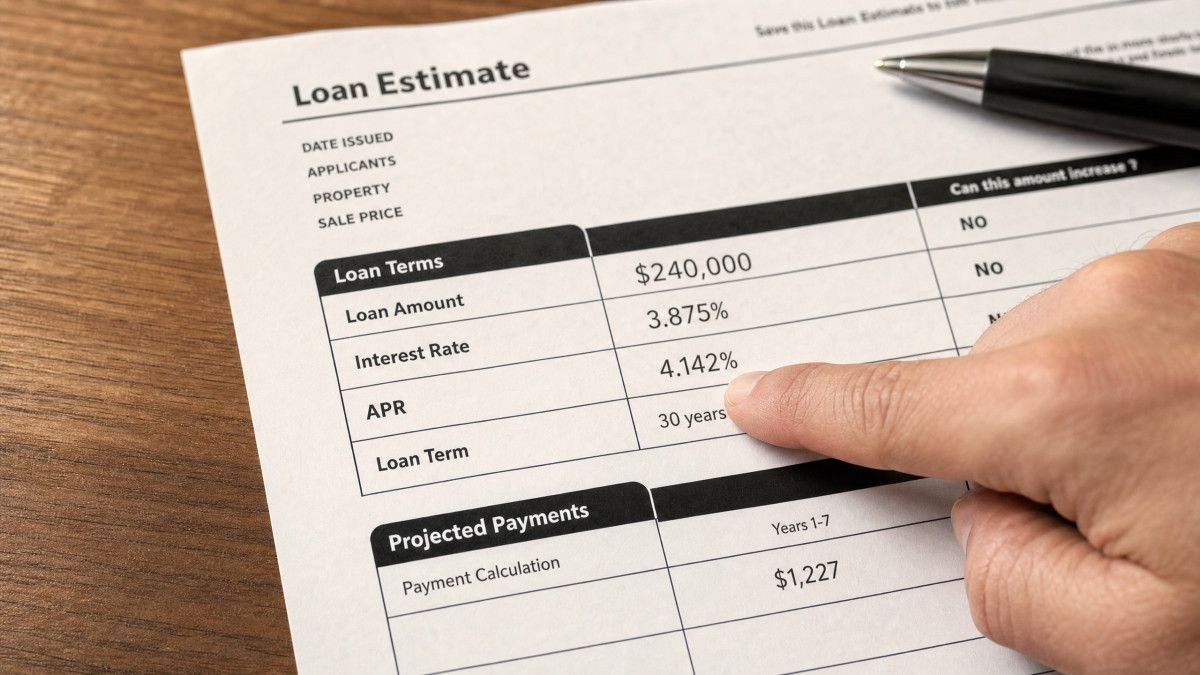
Federal laws such as RESPA and regulations under TRID ensure buyers receive clear disclosures about closing costs, including the Loan Estimate and Closing Disclosure documents. These protections help buyers compare lenders and avoid surprises at settlement.

Closing costs can vary widely depending on factors like the property’s location, the lender’s policies, and the complexity of the transaction. For instance, urban areas with higher property values often have correspondingly higher closing fees due to increased recording or transfer taxes. Additionally, buyers using specialized loan programs may encounter unique fees or premiums that affect their total closing costs. Understanding these variables helps buyers prepare more accurately for the financial commitment at closing.

Another important consideration is that some closing costs are paid upfront at closing, while others may be prepaid or escrowed for future payments, such as property taxes and homeowners insurance. This means buyers not only pay for services rendered during the transaction but also for expenses that cover periods after closing. Properly estimating these prepaid items is critical to avoid unexpected out-of-pocket costs immediately after moving into a new home.

Breakdown of Common Closing Costs for Buyers

Closing costs for buyers consist of lender fees, third-party fees, and prepaid expenses. Lender fees include the loan origination fee, typically ranging from 0.5% to 1% of the loan amount, which covers administrative costs. An application fee, which can be up to $500, may also be charged. The credit report fee usually ranges from $50 to $110. Buyers may choose to pay discount points, where one point equals 1% of the loan amount and typically reduces the interest rate by 0.25%.

Third-party fees include appraisal costs of $300 to $600, or higher for VA loans ($650 to $1300), along with title search and title insurance fees. Title insurance protects both lender and buyer against title defects. Real estate attorney fees, closing or escrow fees, recording fees, survey fees, and tax service provider fees also contribute to third-party costs and vary by location. Prepaid expenses cover homeowners insurance premiums, often around $2,110 annually, prorated property taxes averaging $2,000 annually, prepaid interest from closing until the first mortgage payment, escrow deposits for future taxes and insurance, and potentially HOA dues.

Loan origination fees represent the lender’s charge for processing and underwriting the mortgage, and they can be negotiated in some cases. While the typical range is from 0.5% to 1%, some lenders might offer competitive rates or waive certain fees to attract borrowers. The credit report fee is usually a modest expense but is required to assess the buyer’s creditworthiness. Discount points are optional and represent a trade-off between upfront costs and long-term interest savings. Buyers should carefully evaluate whether paying points will be beneficial based on how long they plan to stay in the home.

Third-party fees often constitute a significant portion of closing costs. The appraisal fee is critical because it protects the lender by confirming the property’s market value. Title insurance, which includes both lender’s and owner’s policies, safeguards against title defects and potential legal disputes. While the lender’s title insurance is mandatory, the owner’s policy is highly recommended for buyers’ protection. Real estate attorney fees vary widely depending on state requirements; some states mandate attorney involvement, while others do not. Survey fees, required in some cases, ensure accurate property boundaries, which can prevent future disputes. Recording fees are set by local government agencies and cover the official documentation of property transfer.

Laws, Regulations, and Government Programs Affecting Closing Costs

Federal laws such as the Real Estate Settlement Procedures Act (RESPA) and the Truth in Lending Act (TILA) protect consumers by requiring transparent disclosures and prohibiting kickbacks or unearned fees. The TILA-RESPA Integrated Disclosure (TRID) rule mandates lenders provide a Loan Estimate within three business days of application and a Closing Disclosure at least three business days before closing, detailing final costs clearly.

Government-backed loan programs impact closing costs differently. FHA loans typically have closing costs between 2% and 6%, and include an Upfront Mortgage Insurance Premium (UFMIP) of 1.75% of the loan amount, which can be financed. Sellers can contribute up to 6% of the sales price or appraised value toward closing costs. VA loans generally have closing costs ranging from 3% to 5% of the loan amount, with a VA Funding Fee varying by circumstances (e.g., 2.15% for first-time use with less than 5% down). Disabled veterans are exempt. VA loans limit buyer-paid fees and allow sellers to pay all standard closing costs plus 4% in concessions.

RESPA also prohibits certain practices that can inflate closing costs, such as kickbacks between settlement service providers. This ensures fees are fair and competitive. The TRID disclosures, specifically the Loan Estimate and Closing Disclosure, give buyers a clear understanding of their expected costs early in the process and a final detailed accounting before closing, preventing last-minute surprises. These regulations have greatly improved transparency and consumer protection in real estate transactions.

Regarding government loan programs, FHA loans require mortgage insurance premiums to protect lenders against borrower default, which adds to closing costs but allows buyers with lower credit scores and smaller down payments to qualify. VA loans offer significant benefits, including no required mortgage insurance and limits on allowable fees, reducing upfront costs for qualified veterans. Additionally, sellers can negotiate concessions to help cover closing costs, which can be especially helpful for buyers with limited cash reserves. Understanding the specific rules for each program helps buyers plan their finances accordingly.

Comparison of Closing Costs by Loan Type

Closing costs vary significantly based on the type of mortgage loan. Conventional loans often require private mortgage insurance if the down payment is under 20%, FHA loans mandate mortgage insurance premiums including the upfront fee, and VA loans have unique funding fees and restrictions on allowable fees. Seller concessions and financing options for closing costs also differ among these loan types.

Feature Conventional Loan FHA Loan VA Loan
Typical Closing Costs 2% – 5% of loan amount 2% – 6% of purchase price 3% – 5% of loan amount
Unique Fees Private Mortgage Insurance (PMI) if down payment < 20% Upfront Mortgage Insurance Premium (UFMIP) at 1.75% VA Funding Fee (e.g., 2.15% for first use, <5% down)
Seller Concession Limits 3% – 9% depending on down payment Up to 6% of sales price or appraised value Up to 4% in concessions; no limit on standard closing costs
Financing Closing Costs Generally not allowed for purchase UFMIP can be financed VA Funding Fee can be financed
Non-Allowable Fees None specific None specific Prohibits buyer from paying attorney fees, broker commissions, etc.

Conventional loans, while typically having the lowest overall closing costs percentage, may require buyers to pay private mortgage insurance (PMI) if their down payment is less than 20%. This insurance protects the lender but increases monthly costs rather than upfront closing fees unless prepaid PMI is required. FHA loans have higher closing costs partly because of the mandatory mortgage insurance premiums, including the Upfront Mortgage Insurance Premium (UFMIP) of 1.75%, which can be financed but adds to the loan balance.

VA loans are distinct in that they generally have higher closing costs in percentage terms but no mortgage insurance requirement. The VA Funding Fee varies based on the borrower’s down payment and service history; disabled veterans are exempt from this fee. VA loans also limit the fees that buyers can be charged, prohibiting payment of broker commissions and attorney fees by the buyer, which can reduce out-of-pocket expenses. Sellers can contribute up to 4% in concessions, helping buyers cover closing costs or prepaid items.

understanding-closing-costs-for-buyers-2
The Loan Estimate’s three-section cost breakdown — origination charges (Section A), required services (Section B), and shoppable services (Section C) — allows buyers to identify exactly which fees are negotiable and which are fixed.

Common Misconceptions About Closing Costs

A widespread myth is that closing costs are fixed and non-negotiable. In reality, many fees such as lender origination, appraisal, and title fees can be shopped for or negotiated. Comparing Loan Estimates from multiple lenders helps buyers find lower fees and better loan terms. Government recording fees are typically fixed, but other costs can vary.

Another misconception is that “no closing cost” loans mean no fees. Usually, these costs are either rolled into the mortgage balance or compensated by a higher interest rate, increasing total payments over time. Buyers also often confuse down payment with closing costs; these are separate expenses. For instance, FHA rules require the 3.5% minimum down payment to be separate from closing costs. Finally, many buyers believe they must pay all closing costs out of pocket, but sellers can contribute through concessions, and some fees like FHA’s UFMIP or VA Funding Fee can be financed into the loan.

Many buyers assume that all closing costs must be paid in cash at closing, but various loan programs and seller concessions can reduce upfront cash requirements. For example, FHA and VA loans allow certain fees to be rolled into the loan or paid by the seller, easing the buyer’s immediate financial burden. Additionally, buyers often overlook that prepaid expenses such as property taxes and homeowners insurance premiums are part of closing costs, which can sometimes be negotiated or prorated. Understanding the distinction between mandatory fees, optional fees, and prepaid items empowers buyers to better manage their cash flow.

Another common misunderstanding is that the disclosed closing costs are the final and only costs. Sometimes, buyers encounter additional fees post-closing, such as HOA transfer fees or outstanding utility bills, which are not included in the closing statement. Awareness of these potential extra expenses can help buyers plan more effectively and ask targeted questions during the closing process. Engaging experienced professionals and carefully reviewing all disclosure documents reduces the chances of unexpected costs.

Frequently Asked Questions (FAQs)

How much should I expect to pay in closing costs?

Buyers typically pay between 2% and 6% of the loan amount or home’s purchase price in closing costs. For a $300,000 home, this means budgeting between $6,000 and $18,000. The exact amount depends on loan type, lender, and location, so obtaining Loan Estimates early is recommended. Additionally, government-backed loans like FHA or VA loans may include unique fees such as mortgage insurance premiums or funding fees, which can affect the total.

Can I roll my closing costs into my mortgage?

Rolling closing costs into the mortgage depends on loan type. Standard purchase loans usually do not allow financing most closing costs. However, FHA loans permit financing the Upfront Mortgage Insurance Premium of 1.75%, and VA loans allow the VA Funding Fee (e.g., 2.15% for first-time users with less than 5% down) to be included in the loan amount. Conventional loans generally do not allow financing closing costs, except in certain refinance scenarios.

What is the difference between a Loan Estimate and a Closing Disclosure?

A Loan Estimate is provided within three business days of applying for a mortgage and offers an estimate of loan terms and closing costs. The Closing Disclosure is given at least three business days before closing and details the finalized costs and loan terms the buyer will pay at settlement. These disclosures are required by federal law to ensure transparency and allow buyers to compare offers and prepare financially.

Are closing costs tax-deductible?

Most closing costs are not tax-deductible. However, certain expenses paid at closing, such as prepaid mortgage interest (points) and property taxes, may be deductible. The deduction for mortgage insurance premiums expired at the end of 2021. Buyers should consult a tax professional for advice specific to their situation, as tax laws can be complex and subject to change.

How can I reduce my closing costs?

Closing costs can be reduced by comparing Loan Estimates from multiple lenders to find lower fees. Buyers can negotiate seller concessions where the seller pays part of the closing costs. Additionally, state or local homebuyer assistance programs may offer grants or loans to cover closing expenses. Choosing loan programs like VA loans, which limit buyer fees, can also help lower upfront costs. Being informed about which fees are negotiable and shopping around are key strategies.

Conclusion

Closing costs represent a significant but necessary expense for homebuyers, typically ranging from 2% to 6% of the purchase price. Understanding the components of these costs, including lender fees, third-party charges, and prepaid expenses, helps buyers budget appropriately. Federal laws and regulations ensure transparency through required disclosures like the Loan Estimate and Closing Disclosure, empowering buyers to make informed decisions and avoid unexpected fees.

Buyers can mitigate closing costs by shopping around for lenders, negotiating with sellers for concessions, and exploring financing options for certain fees within FHA and VA loan programs. Awareness of common misconceptions also helps prevent confusion about down payments, “no closing cost” loans, and payment responsibilities. Thorough preparation and understanding of closing costs contribute to a smoother homebuying process.

How to Choose Between a Fixed-Rate and Adjustable-Rate Mortgage

Choosing between a fixed-rate mortgage and an adjustable-rate mortgage is a critical financial decision that affects your monthly payments and long-term housing costs, notes UTZ Property Management solutions. A fixed-rate mortgage maintains the same interest rate over the life of the loan, providing stability and predictable payments. In contrast, an adjustable-rate mortgage starts with a lower initial interest rate that can change periodically based on market indices, which introduces payment variability and potential savings or risk.
Understanding the key differences between these two mortgage types is essential for making an informed choice. Fixed-rate mortgages typically suit borrowers planning to remain in their homes for a decade or longer due to their consistent payments. Adjustable-rate mortgages may benefit those expecting to move or refinance within a few years by offering lower initial rates and payments. However, adjustable rates involve complexities such as index tracking, margins, and rate caps that borrowers should fully comprehend.Deciding which mortgage type aligns best with your financial situation and housing plans requires evaluating factors like your anticipated length of stay, tolerance for payment fluctuations, and the current interest rate environment. This overview explains the characteristics, advantages, disadvantages, and common misconceptions about fixed-rate and adjustable-rate mortgages to guide your decision-making process with reliable data from authoritative sources.

Fixed-Rate Mortgages Overview

A fixed-rate mortgage features an interest rate that remains constant for the entire term of the loan, typically 15 or 30 years. This means the principal and interest portion of your monthly payment does not change, allowing for consistent budgeting. While property taxes and insurance can cause some monthly payment variation, the main loan payment is stable over time. Fixed-rate mortgages are often preferred by borrowers intending to stay in their homes for 10 years or more, as they offer long-term financial predictability and protection against rising interest rates.

One of the primary advantages of a fixed-rate mortgage is payment stability, which helps homeowners plan their finances without concern for interest rate fluctuations. Additionally, fixed-rate loans are straightforward, with clear terms from the outset. The main drawback is the typically higher initial interest rate compared to adjustable-rate mortgages, which can mean higher payments in the early years. Borrowers do not benefit from falling interest rates unless they refinance, which involves additional costs such as closing fees and appraisal expenses.

Adjustable-Rate Mortgages Overview

An adjustable-rate mortgage begins with a fixed interest rate for a specified initial period, commonly three, five, or ten years, after which the rate can adjust periodically—usually every six or twelve months. The interest rate is tied to an index such as the Secured Overnight Financing Rate (SOFR), plus a fixed margin set by the lender. For example, if the index is 3% and the margin is 2.5%, the borrower’s rate would be 5.5%. ARMs typically have caps that limit how much the interest rate can increase at the first adjustment, during subsequent adjustments, and over the life of the loan.

Adjustable-rate mortgages usually start with a lower interest rate than fixed-rate mortgages, resulting in lower initial monthly payments. This makes ARMs attractive for borrowers who expect to move or refinance before the adjustable period begins. However, the variability of payments after the initial fixed period introduces financial uncertainty, as rates can rise significantly depending on market conditions. ARMs are more complex due to their indexing, margin, and cap structures, and some include prepayment penalties if the loan is paid off or refinanced early.

Key Factors in Choosing Between Fixed and ARM

The decision between a fixed-rate mortgage and an adjustable-rate mortgage depends heavily on how long you plan to stay in the home. If your plan is to remain for 10 years or more, a fixed-rate mortgage offers stable payments and shields you from interest rate increases. Conversely, if you expect to move or refinance within five years, an ARM can provide lower initial payments and potential interest savings. This timing consideration is crucial because ARMs typically have initial fixed-rate periods matching common move timelines, such as a 5/6 ARM with five years fixed and adjustments every six months thereafter.

Another significant factor is the current interest rate environment. When long-term fixed rates are high, ARMs become more appealing due to their lower initial rates. If fixed rates are low, locking in a fixed-rate mortgage can provide long-term savings and payment certainty. Financial flexibility is also important; if you cannot comfortably absorb potential payment increases after the initial ARM period, a fixed-rate mortgage is generally safer. Additionally, understanding the complexity and potential prepayment penalties of ARMs is essential before deciding.

how-to-choose-between-a-fixed-rate-and-adjustable-2
A break-even analysis comparing a 5/1 ARM at 5.125% versus a 30-year fixed at 6.375% on a $400,000 loan shows the ARM saves money only if the borrower sells or refinances before the rate adjusts in year five.

Comparison of Fixed-Rate and Adjustable-Rate Mortgages

This table summarizes the key features of fixed-rate mortgages and adjustable-rate mortgages to help clarify their differences and suitability based on borrower needs.

Feature Fixed-Rate Mortgage (FRM) Adjustable-Rate Mortgage (ARM)
Interest Rate Remains constant for the full loan term, often 30 years. Fixed for an initial period (e.g., 5 years), then adjusts periodically based on an index plus margin.
Monthly Payment (Principal & Interest) Stable and predictable throughout the loan term. Can increase or decrease after the initial fixed period depending on market rates.
Initial Interest Rate Typically higher, e.g., 6.5% for a 30-year FRM in a rising rate environment. Typically lower, e.g., 5.0% for a 5/6 ARM initial period.
Best For Long-term homeownership (10+ years) and budgeting stability. Short-term ownership (less than 5 years) or when long-term fixed rates are high.
Complexity Simple and straightforward loan structure. More complex; involves understanding indices, margins, and rate caps.

Common Misconceptions About Fixed and ARM Loans

One common misconception is that adjustable-rate mortgage interest rates always increase. In reality, ARM rates can decrease if the underlying index falls, although borrowers should prepare for the possibility of rising rates. Another mistaken belief is that refinancing an ARM before the rate adjusts is always easy. Refinancing depends on creditworthiness, home value, and market conditions; if the home’s value drops or credit worsens, refinancing may not be feasible. Misunderstanding these points can lead to unexpected financial challenges.

Additionally, some borrowers think fixed-rate mortgages guarantee a fully unchanging monthly payment. While principal and interest remain constant, total monthly payments may vary due to changes in property taxes or insurance premiums. Finally, some assume ARMs never have prepayment penalties. In fact, many ARMs include penalties if the loan is paid off or refinanced during the initial fixed-rate period, often lasting three to five years, and these penalties can amount to several thousand dollars.

Frequently Asked Questions

What is the main difference between a fixed-rate and an adjustable-rate mortgage?

The main difference is the interest rate structure. Fixed-rate mortgages have an interest rate that stays the same for the entire loan term, resulting in stable monthly principal and interest payments. Adjustable-rate mortgages start with a lower fixed rate for an initial period, after which the rate can change periodically based on a market index plus a fixed margin, causing payments to fluctuate.

How do rate caps work on an ARM?

Rate caps limit how much the interest rate on an ARM can increase or decrease. There are usually three caps: an initial cap limiting the first adjustment increase, a periodic cap limiting changes at each subsequent adjustment, and a lifetime cap capping the total possible increase over the loan’s life. For example, a 2/1/5 cap means the rate can increase by 2% at the first adjustment, 1% on subsequent adjustments, and no more than 5% total above the initial rate.

When is an ARM a good idea?

An ARM is beneficial if you plan to sell or refinance before the initial fixed-rate period ends, such as within five years on a 5/6 ARM. It also makes sense when long-term fixed rates are relatively high and you want to take advantage of lower initial payments. However, you should be comfortable with the risk of payment increases after the fixed period.

Can my monthly payment change with a fixed-rate mortgage?

While the principal and interest portion of the payment remains fixed, your total monthly payment can change if property taxes or homeowners insurance premiums increase or decrease. These costs vary independently of the mortgage interest rate and can cause fluctuations in the overall payment amount.

Are there penalties for paying off an ARM early?

Some adjustable-rate mortgages include prepayment penalties if you pay off or refinance the loan during the initial fixed-rate period, usually the first three to five years. These penalties can be several thousand dollars, so it is important to review your loan terms carefully before committing to an ARM.

Conclusion

Selecting between a fixed-rate mortgage and an adjustable-rate mortgage requires careful consideration of your financial goals, how long you plan to live in the home, and your tolerance for payment risk. Fixed-rate mortgages provide long-term payment stability and are generally better suited for homeowners intending to stay in one place for 10 years or more. Adjustable-rate mortgages offer lower initial rates and potential savings for borrowers planning shorter stays or looking to capitalize on lower initial payments.

Both mortgage types have advantages and disadvantages that impact monthly budgets and long-term costs. Understanding the structure of ARMs, including indices, margins, and rate caps, is essential to avoid surprises. Likewise, weighing the certainty of fixed payments against the potential cost savings of an ARM can help borrowers make an informed choice aligned with their financial situation and housing plans.

Benefits of Making Extra Mortgage Payments

Making extra mortgage payments is a financial strategy that can have a profound impact on a homeowner’s long-term wealth and stability, reports Uplift Property Management solutions. By paying more than the minimum monthly payment, homeowners reduce the outstanding principal balance faster, which lowers the amount of interest accrued over the life of the loan. This approach not only shortens the time it takes to fully own the home but also improves overall financial flexibility by reducing debt more rapidly.

Homeowners who adopt this strategy benefit from accelerated amortization, where each extra payment directly chips away at the principal rather than just covering accrued interest. As a result, monthly payments begin to apply more toward principal sooner than scheduled, which compounds savings over decades. For example, on a $300,000, 30-year fixed mortgage at 6.25%, making one additional full payment annually can reduce the loan term by over five years and save more than $77,000 in interest costs.

While the benefits are significant, it is important for borrowers to understand the terms of their mortgage agreement, including any potential prepayment penalties, and to confirm that extra payments are applied correctly toward principal. Loans backed by government agencies such as FHA, VA, or USDA typically do not impose prepayment penalties, making extra payments particularly advantageous for those borrowers. Proper planning ensures that extra payments maximize savings and accelerate equity growth effectively.

Faster Loan Payoff

Making extra mortgage payments accelerates the repayment schedule by reducing the loan principal balance more quickly than scheduled. On a $300,000 fixed-rate mortgage at 6.25%, the standard 30-year term requires monthly payments of approximately $1,847. By making one additional full payment per year, the loan term shortens to about 24 years and 7 months, cutting more than five years off the payoff timeline.

This acceleration occurs because mortgage amortization schedules allocate a larger portion of early payments to interest rather than principal. Extra payments directed specifically to principal reduce the outstanding balance, which decreases the interest accrued on subsequent payments. This compounding effect means that even modest extra payments can significantly reduce the length of the loan.

In addition to making an extra full payment annually, homeowners can choose other approaches such as bi-weekly payments. By splitting the monthly payment in half and paying every two weeks, borrowers effectively make 26 half-payments per year, equivalent to 13 full payments, which similarly reduces the loan term by over five years. This method can be easier to manage for some borrowers and still provides substantial acceleration in paying off the mortgage.

Even smaller additional amounts paid regularly, such as an extra $100 or $200 monthly, contribute to shortening the loan term. These incremental payments reduce the principal continually, reshaping the amortization schedule over time. The cumulative effect can shave years off the mortgage duration, offering homeowners greater financial freedom sooner than expected.

Significant Interest Savings

Reducing the principal faster translates directly to substantial interest savings over the life of the loan. In the example of a $300,000 mortgage at 6.25%, the total interest without extra payments is approximately $364,975. Making one extra payment annually reduces this figure to about $287,708, saving over $77,000 in interest charges. This represents a meaningful financial benefit for homeowners who consistently make additional payments.

Smaller but regular additional contributions can also yield impressive savings. For instance, adding $100 monthly to the mortgage payment on the same loan can save roughly $57,000 in interest and shorten the loan term by nearly four years. These savings arise because interest is calculated on the outstanding principal balance, so lowering that balance early reduces cumulative interest costs.

The savings are not only substantial but also reduce the total amount paid over time, freeing up household income for other financial goals. Less interest paid means that more of each regular payment goes toward principal, enhancing the speed of loan payoff and providing increased equity. Over decades, these savings can significantly improve a homeowner’s net worth and reduce financial stress.

Even modest extra payments can have an outsized effect on interest costs. For example, adding as little as $20 monthly to the mortgage payment could save more than $13,000 in total interest and cut approximately one year off the loan term. This demonstrates that the strategy is scalable and accessible for many homeowners, regardless of income level.

Accelerated Home Equity Growth

Extra mortgage payments increase home equity faster by lowering the principal balance more rapidly than scheduled. Home equity represents the homeowner’s stake in the property, calculated as the difference between market value and remaining mortgage balance. By accelerating principal reduction, homeowners build equity that can be leveraged for loans, lines of credit, or to cancel private mortgage insurance (PMI) once the loan-to-value ratio reaches 80%.

Growing equity also enhances financial security and flexibility. Faster equity accumulation provides options such as refinancing or accessing funds for major expenses through home equity products. Although home price appreciation affects total equity, paying down principal early guarantees an immediate increase in owned value, independent of market fluctuations.

Building equity faster can also protect homeowners from market volatility and potential declines in home values. Since equity is the difference between the home’s market value and the mortgage balance, reducing the loan balance swiftly puts homeowners in a stronger position, even if property values stagnate or fall. This increased equity serves as a financial buffer and can be tapped for emergencies or investments.

Moreover, accelerated equity growth can lead to earlier eligibility for refinancing options that require a certain equity threshold. This opens opportunities to reduce interest rates or switch loan types, further improving the homeowner’s financial situation. The ability to cancel PMI when equity reaches 20% also reduces monthly expenses, increasing cash flow available for other uses.

benefits-of-making-extra-mortgage-payments-2
Adding $200 per month to principal on a $300,000 loan at 6.5% shortens the payoff date by approximately 6 years and eliminates tens of thousands of dollars in interest charges.

Laws, Regulations, and Prepayment Penalties

While making extra mortgage payments is generally advantageous, borrowers must be aware of potential prepayment penalties. These fees are charged by some lenders if a mortgage is paid off early or if large lump-sum payments exceed certain thresholds. Federal regulations typically limit prepayment penalties on conventional loans to the first three years after origination, and FHA, VA, and USDA loans prohibit such penalties entirely.

Lenders are legally required to disclose any prepayment penalty provisions in the Loan Estimate and Closing Disclosure documents. Prepayment penalties usually apply only to paying off the entire loan or making significant lump-sum payments, commonly defined as over 20% of the loan balance annually. Regular smaller extra payments directed to principal generally do not trigger penalties. Borrowers should review loan documents carefully and communicate clearly with lenders to ensure extra payments are applied correctly.

Additionally, borrowers should be cautious to specify that extra funds be applied to principal rather than future payments. Without clear instructions, some lenders might apply overpayments to upcoming installments, delaying the impact on principal reduction and diminishing potential interest savings. Clear communication is essential to ensure the financial benefits of extra payments are fully realized.

Understanding loan-specific terms is critical because some adjustable-rate mortgages or specialized loan products may have unique prepayment restrictions or fees. Consulting with a mortgage professional or reviewing loan agreements thoroughly helps homeowners avoid surprises and plan their payment strategies effectively. Awareness of these rules empowers borrowers to optimize their mortgage repayment without incurring unintended costs.

Comparison of Extra Payment Strategies

Different methods of making extra mortgage payments have varying impacts on the loan term and interest savings. The table below illustrates how common strategies compare on a hypothetical $300,000, 30-year fixed-rate mortgage at 6.25% interest.

Strategy Example Monthly Payment Total Extra Annual Payment Estimated Years Shaved Off Loan Term Estimated Total Interest Saved
Standard Monthly Payment $1,847 $0 0 $0 (baseline)
One Extra Payment Annually $1,847 (13 payments/year) $1,847 5 years, 5 months $77,000+
Bi-weekly Payments $923.50 (26 payments/year) $1,847 5 years, 5 months $77,000+
Extra $20/month $1,867 $240 ~1 year $13,000+
Extra $100/month $1,947 $1,200 ~4 years $57,000+

Note: All figures are illustrative and based on a hypothetical $300,000, 30-year fixed-rate mortgage at 6.25% interest. Actual savings and term reductions will vary based on loan terms and interest rates.

Frequently Asked Questions

What are the main benefits of making extra mortgage payments?

Making extra mortgage payments provides three key benefits: paying off the loan faster, saving substantial interest costs, and building home equity more quickly. For example, on a $300,000, 30-year fixed-rate mortgage at 6.25%, making one additional payment annually shortens the loan by over five years and saves more than $77,000 in interest. These benefits improve financial stability and reduce long-term debt burden, allowing homeowners to own their homes outright sooner.

How much can I save by making extra mortgage payments?

Savings depend on loan size, interest rate, and payment consistency. Using the $300,000, 30-year at 6.25% example, one extra annual payment of $1,847 lowers total interest from nearly $365,000 to about $288,000, saving over $77,000. Smaller monthly contributions like $100 extra can save around $57,000 and reduce the loan term by nearly four years. Consistency and timing of payments greatly affect these outcomes, with earlier payments producing larger savings.

Are there any downsides or risks to making extra mortgage payments, such as prepayment penalties?

Some loans include prepayment penalties for early payoff or large lump sums, especially on conventional loans within the first three years. FHA, VA, and USDA loans prohibit these penalties, making extra payments safer on these products. Generally, smaller, regular extra payments do not trigger fees. Borrowers should review loan documents carefully and maintain an emergency fund before allocating extra money toward mortgage principal to avoid financial strain and unexpected costs.

What are some alternative strategies to pay off a mortgage faster?

Besides making a full extra payment annually, alternatives include bi-weekly payments (resulting in an extra monthly payment yearly), adding a small amount monthly (e.g., $20 to $100), and applying financial windfalls like bonuses or tax refunds directly to principal. Ensuring extra payments are applied to principal rather than future interest maximizes impact on loan payoff speed and interest savings. These flexible options allow homeowners to tailor their payment approach to their financial situation.

Do government programs assist with principal reduction?

Government programs like the Home Affordable Modification Program (HAMP) included Principal Reduction Alternatives to help struggling homeowners reduce mortgage principal. The Federal Housing Finance Agency (FHFA) also offered Principal Reduction Modifications for seriously delinquent borrowers with loans owned or guaranteed by Fannie Mae or Freddie Mac. While these programs have evolved or ended, FHA, VA, and USDA loans generally do not impose prepayment penalties, facilitating extra payments without fees and supporting borrowers in reducing principal faster.

Conclusion

Making extra mortgage payments offers clear financial advantages, including faster loan payoff, significant interest savings, and accelerated equity growth. These benefits can improve a homeowner’s financial position and reduce the total cost of homeownership. Careful review of loan terms and communication with lenders ensures extra payments are applied correctly, maximizing these advantages and strengthening long-term wealth accumulation.

Homeowners should weigh extra payment strategies against other financial priorities such as maintaining emergency savings and addressing higher-interest debts. Understanding federal regulations and loan-specific conditions helps avoid prepayment penalties and ensures that extra funds reduce principal effectively. Consistent additional principal payments remain a powerful tool to shorten mortgage terms and save thousands in interest over time, providing greater financial freedom and security.


What to Do If You Can’t Afford Your Mortgage Payments

When homeowners find themselves unable to keep up with mortgage payments, it can quickly become a stressful and overwhelming experience, observes property management Fort Lauderdale FL. The risk of losing one’s home combined with the prospect of long-lasting credit damage makes it essential to act quickly. Facing financial hardship proactively allows homeowners the opportunity to explore solutions and prevent the situation from escalating into foreclosure. The sooner you address the problem, the more options you will have to protect your housing stability and financial future.

Financial difficulties that affect mortgage payments often arise unexpectedly and can stem from a wide range of life events. Job loss, reduction in work hours, unexpected medical bills, divorce, or even widespread economic downturns can all impact your ability to pay. Recognizing these challenges early and understanding that most lenders have programs designed to assist borrowers during tough times is critical. These programs are intended to provide relief and help homeowners regain their footing rather than lose their homes.

Knowing what steps to take when mortgage payments become unaffordable can empower homeowners to navigate this difficult period with greater confidence. It is essential to become familiar with available options such as temporary payment adjustments, loan modifications, refinancing opportunities, and other alternatives that may prevent foreclosure. Taking decisive action early can safeguard your credit, preserve your home, and provide the breathing room needed to stabilize your finances.

Immediate Steps to Take If You Can’t Afford Payments

The very first action to take upon recognizing that mortgage payments may become unaffordable is to contact your mortgage servicer immediately. Waiting until after a payment is missed can limit your options and increase fees or penalties. By communicating early, you demonstrate your willingness to resolve the issue and open the door to potential assistance. It is important to be honest and thorough when explaining the nature of your hardship, as this information guides the servicer in recommending appropriate programs.

Beyond contacting the servicer, reaching out to a HUD-approved housing counselor can be an invaluable resource. These counselors are trained professionals who offer free, confidential advice tailored to your financial situation. They can help you understand complex lender communications, explain the pros and cons of various loss mitigation options, and even assist you in submitting paperwork. Many homeowners find that working with a counselor reduces stress and helps them make better-informed decisions during a difficult time.

Another immediate step is to gather all relevant financial documents including recent pay stubs, tax returns, bank statements, and information about monthly expenses. Having this documentation ready can speed up the review process when applying for assistance programs. Keeping a detailed record of all communications with your servicer and any housing counselors is also recommended, as it can help resolve disputes and ensure everyone is on the same page. Being organized and proactive increases the likelihood of a positive outcome.

Loss Mitigation Options Available to Homeowners

Loss mitigation options serve as tools to help homeowners manage mortgage payments during periods of financial distress. Forbearance is a popular choice, offering a temporary suspension or reduction in payments to provide short-term relief. During this time, borrowers can focus on stabilizing their income or addressing emergency expenses without falling further behind. While forbearance does not erase missed payments, it prevents immediate foreclosure and allows flexibility in repayment timing.

Repayment plans are another option designed to help borrowers gradually catch up on missed payments while maintaining regular monthly payments. These plans spread the overdue amounts over a predetermined period, reducing the shock of paying a lump sum all at once. Loan modifications, on the other hand, offer a more permanent solution by adjusting terms such as interest rates or loan duration to lower monthly payments sustainably. This option can be especially beneficial for those facing long-term financial changes rather than temporary hardship.

Refinancing may be possible if you qualify, which involves replacing your current mortgage with a new loan that has better terms. This can result in a lower interest rate or extended loan term, thereby decreasing monthly payments. However, refinancing requires good credit and sufficient equity in the home, which may not be feasible for all borrowers. In cases where staying in the home is not an option, alternatives like short sales or deeds in lieu of foreclosure provide ways to avoid the full foreclosure process. These options usually require lender approval and have varying impacts on credit and future homeownership.

Comparison of Loss Mitigation Options

Understanding how different loss mitigation options compare helps homeowners choose the best path forward based on their unique circumstances. Each option varies in terms of duration, payment structure, and credit consequences. For instance, while forbearance provides temporary relief, it requires repayment of missed amounts later, which could be a challenge if income does not improve. Loan modifications adjust the loan terms permanently, offering more stability but potentially affecting the total interest paid over the life of the loan.

Credit impact is another important consideration when evaluating these options. Some solutions may be reported as late payments or modifications, which can affect credit scores differently. For example, short sales and deeds in lieu of foreclosure typically have a more severe and lasting negative impact on credit, but they might be preferable to a full foreclosure in certain circumstances. Weighing the pros and cons of each option in light of your financial goals and future plans is essential for making an informed decision.

It is also critical to recognize that eligibility requirements and program availability can vary by lender and loan type. Some loss mitigation options may be available only for federally backed loans, while others might apply to private mortgages. Consulting with your mortgage servicer and housing counselor can clarify which options you qualify for and the specific steps required to apply. Being well-informed about these differences can prevent surprises and ensure you pursue the most effective solution.

what-to-do-if-you-cant-afford-your-mortgage-paymen-2
A HUD-approved housing counselor provides free guidance on loss mitigation options and can communicate directly with the servicer on the homeowner’s behalf, often achieving outcomes that borrowers cannot negotiate independently.

Understanding Foreclosure Timeline and Credit Impact

Foreclosure is a legal process that lenders use to recover the balance of a loan from a borrower who has stopped making payments. The timeline for foreclosure generally begins after three to six missed payments, but the exact timing can vary significantly depending on state laws and the type of foreclosure process used. Judicial foreclosure states require court approval, which may extend the timeline, while non-judicial states allow lenders to proceed more quickly without court intervention. Understanding your state’s foreclosure process can help you anticipate deadlines and act accordingly.

The impact of foreclosure on credit is substantial and long-lasting. A foreclosure can cause a credit score to drop by 100 to 160 points, making it harder to qualify for future loans, credit cards, or even rental applications. The foreclosure remains on credit reports for up to seven years, signaling to lenders a higher risk. Missed payments leading up to foreclosure also negatively affect credit, often by 90 to 110 points. Alternatives such as short sales or deeds in lieu of foreclosure may still impact credit but sometimes less severely than a full foreclosure. Early intervention can help avoid reaching the foreclosure stage altogether.

In addition to credit damage, foreclosure can have other financial and emotional consequences. It may involve legal fees, deficiency judgments if the sale of the home does not cover the loan balance, and the stress of finding new housing. Awareness of these factors highlights why taking early steps to communicate with lenders and explore options is so important. Avoiding foreclosure preserves not only credit but also peace of mind and financial stability.

Additional Resources and Government Protections

Several government initiatives and resources are designed to assist homeowners experiencing difficulty with mortgage payments. The CARES Act, enacted in response to the COVID-19 pandemic, provided temporary forbearance rights for many federally backed loans, allowing borrowers to pause payments without penalty. While these protections were initially time-limited, similar programs may be extended or available through other government agencies. State and local housing finance agencies also sometimes offer assistance programs tailored to their communities.

Access to HUD-approved housing counselors is a vital resource for homeowners in distress. These counselors provide expert advice free of charge and can help you understand eligibility for various government and private programs. They also assist with paperwork and negotiations, making the process less daunting. Programs such as Making Home Affordable have provided loan modification and refinancing options for eligible borrowers, aiming to reduce monthly payments and prevent foreclosure. Staying informed about available assistance programs and taking advantage of them when needed can make a significant difference in managing mortgage challenges.

Additional nonprofit organizations and community groups may offer emergency financial assistance, temporary housing support, or legal aid related to housing issues. Exploring these resources early can provide much-needed support and broaden the options available. Proactive outreach to these organizations can help bridge gaps in income or expenses during times of hardship. Combining government protections with local resources often leads to more comprehensive solutions that meet individual needs more effectively.

Frequently Asked Questions

What is the first step if I can’t afford my mortgage?

The initial step is to contact your mortgage servicer as soon as you realize you may have trouble making your payments. Early communication allows you to explain your financial hardship and inquire about available assistance programs. Acting before missing any payments increases the likelihood of securing options such as forbearance or repayment plans. It also helps avoid late fees and negative credit reporting. Prompt outreach demonstrates your commitment to resolving the issue and can open the door to solutions tailored to your situation.

What is forbearance and how does it work?

Forbearance is an arrangement between a borrower and lender that temporarily reduces or suspends mortgage payments. This agreement typically lasts from three to twelve months and is intended to provide short-term relief during financial hardship. While payments are paused or lowered, the missed amounts are not forgiven; instead, they are either added to the end of the loan term or repaid through a repayment plan after the forbearance period ends. Forbearance helps avoid immediate foreclosure but requires a plan for catching up on missed payments.

What does loan modification mean?

Loan modification refers to a permanent change in the terms of your existing mortgage to make payments more affordable. This could involve lowering the interest rate, extending the length of the loan to reduce monthly payments, or, in some cases, reducing the principal balance. Loan modifications are intended for borrowers who anticipate long-term financial challenges rather than temporary setbacks. By adjusting the loan terms, a modification can help prevent foreclosure and provide stability by aligning payments with your current financial capacity.

How can a HUD housing counselor help me?

HUD-approved housing counselors offer free and confidential assistance to homeowners facing mortgage difficulties. They can explain your options, help you understand lender communications, and guide you through the application process for loss mitigation programs. Counselors also provide budgeting advice and support to improve your overall financial health. You can reach them by calling the national hotline at 1-800-569-4287. Their expertise can help reduce confusion, avoid mistakes, and increase your chances of successfully managing mortgage challenges.

When does foreclosure usually start?

Foreclosure proceedings typically begin after three to six consecutive missed mortgage payments, but the exact timing depends on state laws and whether the foreclosure is judicial or non-judicial. Judicial states require the lender to file a lawsuit in court, which can lengthen the timeline, while non-judicial states allow lenders to foreclose without court involvement, sometimes making the process faster. Understanding your state’s specific process and timeline is crucial so you can take timely action to avoid losing your home.

Can refinancing help if I can’t afford my mortgage?

Refinancing can be a helpful option for homeowners who qualify, as it replaces the existing mortgage with a new loan that often has lower interest rates or longer terms, resulting in reduced monthly payments. However, qualifying for refinancing generally requires good credit and sufficient home equity. If your financial situation has deteriorated significantly, refinancing might not be available. In such cases, other loss mitigation options like loan modifications or forbearance may be more appropriate. Consulting with your lender or counselor can clarify which solutions fit your circumstances best.

Conclusion

Facing the inability to afford mortgage payments is undoubtedly a stressful challenge, but taking swift and informed action can make a meaningful difference. Opening lines of communication with your mortgage servicer before missing payments allows access to various loss mitigation programs designed to help homeowners manage their financial difficulties. Utilizing free resources such as HUD-approved housing counselors can provide valuable guidance and support throughout the process, helping to clarify options and reduce uncertainty.

Understanding the foreclosure process, its timeline, and the impact on credit empowers homeowners to make strategic decisions that protect their financial wellbeing. Although foreclosure is a serious and impactful event, exploring alternatives like forbearance, loan modifications, or refinancing can help preserve homeownership or minimize damage. Early engagement, careful planning, and using available assistance are key factors in achieving the best possible outcome during financial hardship.

Understanding Mortgage Pre-Approval vs Pre-Qualification

Mortgage pre-approval and pre-qualification are two distinct steps in the home buying process that serve different purposes, explains TrueDoor Property Management specialists. Pre-qualification is an informal estimate of a borrower’s potential loan amount based on self-reported financial information. In contrast, pre-approval is a formal evaluation involving verified financial documents and a hard credit check, resulting in a conditional commitment from a lender.

Knowing the difference between these two steps is essential for homebuyers because sellers and real estate agents view them very differently. While pre-qualification can provide a general idea of borrowing capacity for early budgeting, it does not carry significant weight when making an offer. Pre-approval letters are typically required by sellers to consider an offer seriously, as they demonstrate verified financial readiness.

Both pre-qualification and pre-approval can help buyers understand their financial situation better, but they impact the home buying journey in unique ways. Understanding when and how to use each can improve a buyer’s confidence, streamline the search for a new home, and enhance negotiation leverage. This clarity also helps in managing expectations about loan eligibility and the overall timeline for securing financing.

Definition and Purpose of Pre-Qualification and Pre-Approval

Pre-qualification is an initial step that gives a rough estimate of how much a borrower might qualify for based on information they provide about income, debts, and assets. It involves little to no verification, often relying on a soft credit inquiry or none at all. This makes pre-qualification a quick and simple way to get an idea of potential loan amounts early in the home buying journey.

Pre-approval, by contrast, is a more rigorous process where the lender verifies a borrower’s financial documents and runs a hard credit check. This results in a conditional commitment letter that specifies how much the lender is willing to loan and under what terms. The purpose of pre-approval is to demonstrate to sellers and agents that a buyer is financially qualified to proceed with a home purchase.

While pre-qualification can be useful for setting initial budgets and exploring options, pre-approval serves as a stronger indication of loan eligibility. Sellers typically view pre-approval as a necessary step before accepting an offer, as it reduces uncertainty about the buyer’s ability to secure financing.

In addition to signaling financial readiness, pre-approval can help buyers move faster in a competitive housing market. Having a pre-approval letter can make offers more attractive and credible, potentially giving buyers an edge over others who have not undergone this process. It also helps buyers refine their search by knowing their approved price range with greater certainty.

Process and Timelines for Pre-Qualification and Pre-Approval

The pre-qualification process is relatively quick, typically taking one to three days. It involves providing self-reported financial details such as income, assets, and debts, without submitting formal documentation. Credit checks, if performed, are usually soft inquiries that do not affect credit scores. Because it is informal, there is no lender commitment or guarantee of loan approval.

Pre-approval requires a more detailed submission of verified documents including pay stubs, W-2 forms, tax returns, bank statements, and employment verification. The lender performs a hard credit pull, which can temporarily impact credit scores. This process can take between three and ten business days to complete, depending on document availability and lender workload. The outcome is a conditional loan commitment letter stating the approved loan amount and terms.

Pre-approval letters generally remain valid for 60 to 90 days. If a buyer does not find a home within that timeframe, they may need to update documents and renew the pre-approval. This process reflects the lender’s more thorough evaluation compared to the informal nature of pre-qualification.

During the pre-qualification phase, buyers can quickly assess their potential borrowing power, helping them avoid spending time on homes outside their price range. In contrast, the pre-approval process requires more preparation and documentation but offers a clearer, more reliable estimate of loan amount and terms. Being aware of these timelines allows buyers to plan their house hunting activities more effectively and avoid delays when ready to make an offer.

Documentation and Credit Checks Required

Pre-qualification requires minimal documentation. Often, borrowers only need to provide basic financial information verbally or through an online form. This self-reported data includes estimated income, debts, and assets. Because lenders do not verify these details or obtain official documents, pre-qualification is considered an estimate rather than a firm offer.

Pre-approval demands comprehensive documentation verification. Borrowers must submit a government-issued ID, Social Security number, two years of W-2s and tax returns, most recent 30 days of pay stubs, two to three months of bank and investment account statements, and employment information. Rental history or additional financial details may also be required. The lender uses this information alongside a hard credit inquiry to assess creditworthiness rigorously.

The hard credit check involved in pre-approval evaluates credit scores and history, which can impact a borrower’s credit rating temporarily. This contrasts with the soft credit pull or lack of inquiry in pre-qualification, which leaves credit unaffected.

Providing accurate and complete documentation during pre-approval can speed up the process and reduce the chance of delays later during underwriting. It also helps lenders better assess risks, which can improve loan terms or increase the likelihood of approval. Borrowers should prepare these documents ahead of time to make the pre-approval process smoother and more efficient.

understanding-mortgage-pre-approval-vs-pre-qualifi-2
Presenting a pre-approval letter during an offer strengthens the buyer’s negotiating position because it demonstrates to the seller that financing has been verified and the transaction is unlikely to fall through due to loan denial.

Comparison of Pre-Qualification and Pre-Approval

This table summarizes the key differences between mortgage pre-qualification and pre-approval to clarify their roles and requirements in the home buying process.

Feature Pre-Qualification Pre-Approval
Purpose Informal estimate of borrowing capacity Formal loan approval commitment (conditional)
Documentation Self-reported financial info only Verified pay stubs, tax returns, bank statements, IDs
Credit Check Soft pull or none Hard pull
Timeframe 1 to 3 days 3 to 10 business days
Commitment No lender commitment Conditional commitment letter issued
Usefulness Budgeting and early planning Required for serious offers and negotiations
Validity Varies; informal Typically 60 to 90 days

Conditional Approval and Final Underwriting

Pre-approval provides a conditional commitment based on verified financial information, but it is not the final step in the mortgage approval process. After the homebuyer’s offer is accepted, the loan application proceeds to underwriting, where the lender examines the specific property details. This includes property appraisal, title search, and additional risk assessments.

The underwriter reviews all financial documents once more and may request further information or clarification from the borrower. This stage determines final loan approval. Because pre-approval does not guarantee loan funding, the conditional nature means that issues found during underwriting or appraisal can affect loan terms or lead to denial.

During underwriting, the lender evaluates the property’s market value to ensure it aligns with the loan amount requested. If the appraisal comes in lower than expected, the buyer may need to renegotiate the price or increase their down payment. Additionally, the title search confirms there are no liens or legal issues affecting ownership transfer, which could impact loan approval.

Buyers should remain responsive to lender requests during underwriting to avoid delays. While pre-approval signals strong financial readiness, the underwriting process ultimately confirms that all conditions are met for loan funding. Being prepared for this stage and understanding its importance can help buyers navigate with confidence.

Frequently Asked Questions

What is the main difference between pre-qualification and pre-approval?

Pre-qualification is an informal estimate based on self-reported financial data without document verification or a hard credit check. Pre-approval involves verified documentation and a hard credit inquiry, resulting in a conditional loan commitment. Pre-approval carries more weight with sellers and is required to make serious offers.

How do hard and soft credit pulls differ in these processes?

Pre-qualification usually involves a soft credit pull or none at all, which does not affect credit scores. Pre-approval requires a hard credit pull that temporarily impacts credit scores because the lender performs a full credit review as part of the verification process.

How long is a pre-approval letter valid?

Pre-approval letters typically remain valid for 60 to 90 days. After this period, updated financial documents and a renewed credit check are usually required to extend or renew the pre-approval.

What documents are needed for mortgage pre-approval?

Commonly required documents include a government-issued ID, Social Security number, two years of W-2s and tax returns, recent pay stubs covering about 30 days, two to three months of bank and investment account statements, employment verification, and sometimes rental history or other financial information.

Is pre-approval a final loan approval?

No, pre-approval is conditional based on verified financial information. Final loan approval depends on underwriting review, property appraisal, and title search. The lender may request additional documentation during underwriting before issuing final approval.

Should I get pre-approved before starting my home search?

Getting pre-approved before searching for a home can save time and reduce uncertainty. It helps you know exactly how much you can afford, making your home search more focused. Pre-approval also strengthens your offers, showing sellers you are prepared to move forward with financing.

Conclusion

Mortgage pre-qualification and pre-approval serve different roles in the home buying process. Pre-qualification is a quick, informal estimate of potential loan amounts based on self-reported financial information and does not require documentation or a hard credit check. It is useful for early budgeting but lacks lender commitment and is generally not sufficient when making an offer on a property.

Pre-approval is a more comprehensive process that involves verified financial documents and a hard credit inquiry, producing a conditional loan commitment letter. This letter signals to sellers that the buyer has been vetted and is financially prepared to proceed. However, pre-approval is not final loan approval; it is contingent on underwriting and property evaluation. Understanding these distinctions helps buyers navigate mortgage steps with clarity and realistic expectations.

How to Get the Best Mortgage Rate for Your Home Loan

Obtaining the best mortgage rate involves understanding various factors that influence loan pricing and taking proactive steps to optimize your profile before applying, notes TrueDoor PM Temecula solutions. Mortgage interest rates fluctuate depending on lender policies, market conditions, borrower creditworthiness, and loan characteristics. Even a small difference in rates can translate into thousands of dollars in savings over the life of a loan. Recognizing the nuances behind these elements plays a crucial role in making informed borrowing decisions.

Before applying for a mortgage, it is essential to prepare your financial health comprehensively. This preparation goes beyond just knowing your credit score; it includes managing existing debts, saving for a substantial down payment, and understanding different loan products that suit your unique situation. Taking time to educate yourself about these components can lead to better negotiation power with lenders and improved loan terms.

Additionally, timing and market awareness can influence the mortgage rate you receive. Interest rates are affected by broader economic indicators, including inflation trends, Federal Reserve policies, and bond market movements. Being aware of these patterns allows you to lock in rates at favorable times. Combining strategic financial preparation with market insight equips homebuyers to secure mortgage rates that align with their long-term financial goals.

Factors Influencing Mortgage Rates

Mortgage rates are determined by a combination of borrower-specific factors and broader market conditions. The borrower’s credit score is one of the most critical determinants, with higher scores typically qualifying for lower rates. A credit score of 760 or above is generally considered excellent and can significantly reduce the interest rate offered. Loan-to-value ratio (LTV), which reflects the size of the down payment relative to the home’s value, also plays a substantial role, with larger down payments leading to better rates.

Other considerations include the loan type, such as conventional, FHA, or VA loans, and the loan term, where shorter terms usually feature lower rates. The property’s intended use—primary residence, secondary home, or investment property—affects pricing as well. Additionally, the borrower’s debt-to-income ratio (DTI) impacts the lender’s risk assessment. Market conditions, particularly the 10-year Treasury yield, influence overall interest rate trends, affecting all mortgage pricing.

Economic factors such as inflation expectations and the state of the housing market also contribute to mortgage rate fluctuations. When inflation is rising, lenders often increase rates to maintain returns above inflation. Similarly, strong housing demand can push rates higher as lenders adjust pricing to balance risk and demand. Conversely, during economic downturns or periods of market uncertainty, mortgage rates tend to decrease as lenders seek to stimulate borrowing.

Geographical differences can influence mortgage rates as well. Certain regions may have varying rates due to local economic conditions, property values, and lender competition. Borrowers should be aware that rates offered in metropolitan areas may differ from those in rural locations, reflecting localized risk profiles and market dynamics.

Steps to Secure the Best Mortgage Rate

Improving your credit score is the first step toward obtaining a favorable mortgage rate. Borrowers should aim to raise their credit score to at least 760 by paying bills on time, reducing outstanding debt, and correcting errors on credit reports. A higher credit score reduces perceived risk for lenders and results in lower interest charges. Saving a larger down payment, ideally 20 percent or more, can eliminate private mortgage insurance and improve loan pricing.

Lowering your debt-to-income ratio by paying off debts before applying helps lenders view you as a lower-risk borrower. Shopping multiple lenders by obtaining at least three to five Loan Estimates on the same day allows for accurate comparisons based on identical market conditions. Comparing the APR rather than just the nominal interest rate provides a clearer picture of overall loan cost. Considering mortgage points to buy down your rate and choosing the correct loan type for your situation further optimize your rate.

In addition, maintaining stable employment and income history enhances your borrowing profile. Lenders favor applicants with consistent income sources, as this reduces the risk of default. Preparing all necessary documentation, such as tax returns and pay stubs, also streamlines the application process and can encourage lenders to offer better terms.

Timing your mortgage application around favorable market conditions can also improve your chances of securing a lower rate. Monitoring economic indicators and consulting with financial advisors can provide insights into when rates may be at their lowest. Being ready to lock in a rate quickly once you find a competitive offer can prevent potential increases during the approval process.

Mortgage Points, Rate Locks, and Loan Comparison

Mortgage points enable borrowers to pay upfront fees to reduce their interest rate. One point equals one percent of the loan amount and typically lowers the rate by approximately 0.25 percent. Calculating the break-even point—where the upfront cost equals the monthly savings—is essential to determine if paying points is financially beneficial. Borrowers who plan to stay in their homes beyond this point can save money over the long term.

Rate locks protect borrowers from rising rates during the loan processing period, usually lasting 30 to 60 days. Some lenders offer float-down options, allowing borrowers to benefit from rate decreases after locking. Choosing the appropriate loan type, such as VA or USDA loans for eligible borrowers, can provide some of the lowest mortgage rates available due to government backing or incentives.

Besides traditional mortgage points, some lenders also offer “rebate points,” which can lower closing costs by increasing the interest rate slightly. Understanding these options allows borrowers to tailor their loan structure according to their financial priorities, whether that means reducing upfront expenses or lowering monthly payments.

Evaluating loan comparison involves more than just rates and points. It is important to consider loan features such as prepayment penalties, flexibility of payment schedules, and the lender’s reputation for customer service and transparency. A well-rounded comparison ensures that the chosen mortgage aligns with both financial goals and personal comfort with the lender.

Comparison of Common Mortgage Loan Types
Loan Type Typical Interest Rate Down Payment Requirement Mortgage Insurance Eligibility
Conventional Varies; generally moderate 5%–20% (20% to avoid PMI) PMI required if down payment < 20% Most borrowers
FHA Often higher than conventional 3.5% Upfront and annual mortgage insurance premiums Borrowers with lower credit scores
VA Lowest among eligible borrowers 0% No PMI, but funding fee applies Eligible veterans and military
USDA Competitive, low rates 0% Mortgage insurance required Rural homebuyers meeting income limits
how-to-get-the-best-mortgage-rate-for-your-home-lo-2
The APR (Annual Percentage Rate) on the Loan Estimate includes both the interest rate and lender fees, making it a more accurate comparison metric than the interest rate alone when evaluating offers from multiple lenders.

Shopping Multiple Lenders and Comparing APR

Shopping with multiple lenders is the most effective way to secure the lowest mortgage rate possible. Borrowers should request Loan Estimates from at least three to five lenders on the same day to ensure rate quotes reflect identical market conditions. This practice prevents misleading comparisons due to fluctuating interest rates over time. Loan Estimates provide detailed information on interest rates, fees, and closing costs, enabling borrowers to make informed decisions.

Comparing the Annual Percentage Rate (APR) rather than just the nominal interest rate gives a more comprehensive measure of the loan’s true cost. The APR includes interest plus lender fees and certain closing costs, reflecting the total yearly cost of the loan. Evaluating APR helps borrowers avoid loans with deceptively low rates but high fees, ultimately improving their ability to select the most cost-effective mortgage option.

In addition to APR, understanding the total cost of homeownership involves evaluating other loan features such as escrow requirements, potential rate adjustments on adjustable-rate mortgages, and any lender-specific incentives or discounts. A thorough review of all loan terms alongside APR comparisons ensures the selection of a mortgage that best fits the borrower’s financial situation.

Building relationships with local lenders or mortgage brokers can also provide access to specialized loan products or discounts that may not be widely advertised. These personalized options can sometimes result in better rates or more flexible terms, which can be beneficial when combined with the broader shopping strategy.

FAQ About Getting the Best Mortgage Rate

How many lenders should I shop to get the best mortgage rate?

It is recommended to obtain Loan Estimates from at least three to five different lenders. This range provides a broad sample of available rates and fees, allowing for a better comparison. Shopping multiple lenders on the same day ensures that rate quotes are based on current market conditions, preventing outdated or inconsistent offers from skewing your decision. By comparing several offers, you increase your chances of finding competitive terms tailored to your profile.

How does my credit score impact the mortgage rate I can get?

Your credit score is one of the most important factors lenders use to set your mortgage rate. Scores above 760 typically qualify for the best rates because they indicate lower risk. Lower scores often lead to higher rates and increased costs. Improving your credit before applying can save thousands in interest over the life of the loan. Lenders also consider credit history details such as payment timeliness, credit utilization, and length of credit history when determining your rate.

What is the difference between the interest rate and APR?

The interest rate is the nominal cost of borrowing expressed as a percentage, while the APR includes the interest rate plus lender fees and certain closing costs spread over the loan term. APR provides a more comprehensive view of the loan’s total cost, making it a better metric for comparing offers from different lenders. While the interest rate affects your monthly payment, the APR reflects the overall expense you will pay during the loan’s life.

What are mortgage points and are they worth paying for?

Mortgage points are upfront fees paid to lower your interest rate; one point equals one percent of the loan amount and usually reduces the rate by about 0.25 percent. Whether points are worth it depends on how long you plan to stay in the home. Paying points can save money if you remain in the property past the break-even point when monthly savings exceed the initial cost. Evaluating your expected time in the home alongside your financial situation is crucial before deciding to purchase points.

What is a rate lock and how long does it last?

A rate lock is an agreement with your lender to secure a specific mortgage interest rate for a set period, typically 30 to 60 days. This protects you from rising rates during the loan closing process. Some lenders offer float-down options that allow you to take advantage of lower rates if market rates drop after the lock. It’s important to understand the terms and fees associated with rate locks, as extended locks or float-downs may involve additional costs.

Conclusion

Securing the best mortgage rate requires a clear understanding of how lender criteria, borrower financial profiles, and market conditions intersect to determine pricing. Improving credit scores, increasing down payments, lowering debt levels, and choosing the right loan type contribute significantly to obtaining favorable rates. Collecting multiple Loan Estimates simultaneously allows borrowers to compare offers accurately and select the most cost-effective option. These steps form the foundation for a successful home financing experience.

Evaluating the full cost of loans through the APR metric, considering mortgage points, and making strategic decisions about locking rates further enhance savings potential. By applying these strategies and maintaining informed decision-making throughout the mortgage application process, borrowers can minimize interest expenses and ensure more affordable home financing. Careful planning and thorough research empower homebuyers to navigate the mortgage landscape with confidence and secure terms aligned with their financial goals.

The True Cost of Private Mortgage Insurance (PMI) Explained

Private mortgage insurance (PMI) is an additional cost required by lenders on conventional home loans when the borrower’s down payment is less than 20% of the purchase price, points out TRI Property Pros. It serves to protect the lender from potential losses if the borrower defaults on the loan. While PMI allows buyers to finance homes with smaller down payments, it is a significant recurring expense that can substantially increase the total cost of homeownership.

Typically, PMI costs range from 0.5% to 1.5% of the original loan amount annually, paid in monthly installments. For example, on a $300,000 loan, this translates to $1,500 to $4,500 per year or roughly $125 to $375 per month. These payments continue until the borrower accumulates at least 20% equity in the property, at which point the borrower can request cancellation of PMI under federal rules.

Understanding the true cost of PMI involves not only the monthly premiums but also the timing and conditions of cancellation, available alternatives, and the potential opportunity cost of tying up more capital in a larger down payment. Evaluating these factors is essential to making informed decisions when financing a home purchase.

In addition to the direct financial implications, PMI can influence a borrower’s long-term wealth accumulation and cash flow management. The recurring monthly expense may limit the ability to save or invest elsewhere, potentially affecting overall financial goals. Moreover, the structure of PMI payments and their cancellation can vary, so being aware of these nuances helps in forecasting homeownership costs more accurately. Considering PMI as one part of the broader mortgage strategy ensures buyers remain prepared for the full financial commitment involved in purchasing a home with a smaller down payment.

Many prospective homebuyers face the challenge of balancing immediate affordability with long-term financial impact. PMI provides a pathway to homeownership without the need for a substantial upfront investment, but its cost can accumulate significantly over time. Understanding how PMI fits into the overall mortgage picture, including its interaction with interest rates, loan terms, and market conditions, is key to making well-rounded decisions. Planning ahead for PMI expenses and exploring ways to mitigate or avoid them can lead to better financial outcomes and smoother homeownership experiences.

What Is PMI and Why Is It Required?

Private mortgage insurance (PMI) is insurance that protects the lender, not the borrower, against losses if the borrower defaults on a conventional mortgage. It is typically required when the borrower makes a down payment of less than 20% of the home’s purchase price. Since lower down payments represent higher risk to lenders, PMI serves as a safeguard to reduce that risk and allow borrowers to access financing that might otherwise be unavailable.

PMI premiums are paid monthly as part of the mortgage payment and are calculated as a percentage of the original loan amount. The requirement for PMI is a standard industry practice for conventional loans with lower equity and is distinct from government-backed mortgage insurance programs, such as FHA mortgage insurance premiums (MIP), which have different rules and costs.

By requiring PMI, lenders can offer loans to a broader range of borrowers, including those who may not have the savings to provide a substantial down payment. This insurance mitigates potential losses for lenders by covering a portion of the unpaid loan balance in the event of foreclosure. From the borrower’s perspective, PMI opens the door to homeownership sooner but comes with added monthly costs that should be carefully weighed against the benefits of entering the housing market earlier.

Furthermore, PMI requirements reflect the balance of risk and reward in mortgage lending. Borrowers with higher down payments inherently carry lower risk, so PMI is not necessary in those cases. However, for borrowers with less upfront equity, PMI protects lenders and encourages lending activity, which can have a positive impact on overall housing market liquidity. Understanding this dynamic helps borrowers appreciate why PMI exists and how it fits into the broader lending ecosystem.

How PMI Costs Are Calculated

PMI typically costs between 0.5% and 1.5% of the original loan amount annually. The exact rate depends on factors such as the borrower’s credit score, loan-to-value ratio (LTV), and the loan type. For example, on a $300,000 loan, an annual PMI cost rate of 1% results in $3,000 per year or $250 per month. Lower credit scores and higher LTV ratios generally produce higher PMI rates within the standard range.

The monthly PMI premium is added to the mortgage payment and continues until the borrower reaches the required equity level to cancel PMI. Over the course of several years, especially with smaller down payments, total PMI payments can accumulate to thousands of dollars, making it a substantial hidden cost that buyers should factor into their budgets and loan comparisons.

Additional variables can influence PMI rates, including the borrower’s debt-to-income ratio, loan term length, and the insurer’s underwriting guidelines. For instance, borrowers with excellent credit profiles and modest LTV ratios may qualify for lower PMI rates, reducing the overall cost. Conversely, riskier borrower profiles often lead to higher premiums.

Some lenders may offer different PMI premium structures, including single-premium options where the cost is paid upfront rather than monthly, or split-premium arrangements combining upfront and monthly payments. These variations affect both the lender’s risk exposure and the borrower’s cash flow, so understanding the calculation and structure of PMI costs is critical for evaluating mortgage offers comprehensively.

PMI Cancellation Rules and Timelines

The Homeowners Protection Act of 1998 establishes rules governing the cancellation of PMI on conventional loans. Borrowers can request PMI cancellation once their loan-to-value ratio reaches 80% based on the original purchase price or appraised value at loan initiation. Lenders are required to automatically cancel PMI when the LTV reaches 78%, assuming payments are current.

Additionally, lenders must cancel PMI at the midpoint of the loan term, even if the LTV has not reached 78%, provided the borrower is current on payments. Borrowers seeking earlier cancellation can request an appraisal to demonstrate that the property’s value has increased sufficiently to reduce the LTV below 80%. Understanding these rules helps homeowners plan when to expect relief from PMI payments.

It is important for borrowers to actively monitor their home equity and communicate with their lenders regarding PMI cancellation. While automatic cancellation at 78% LTV is mandated, many borrowers may benefit from proactively requesting an appraisal once they believe they have reached 20% equity, especially if property values have appreciated. Timely cancellation can result in significant savings by eliminating unnecessary PMI payments.

In some cases, paying down the principal aggressively or refinancing can accelerate the removal of PMI. However, refinancing to remove PMI should be evaluated carefully considering closing costs, current interest rates, and the borrower’s financial situation. Additionally, certain loans may have specific requirements or restrictions on PMI removal, so consulting the loan agreement and lender policies is advisable to avoid surprises.

the-true-cost-of-private-mortgage-insurance-pmi-ex-2
Submitting a formal PMI cancellation request — supported by a current appraisal showing the loan-to-value ratio has reached 80% — is the most direct way to eliminate PMI before the lender is required to automatically cancel it at 78% LTV.

Alternatives to PMI and Comparison of Options

Several alternatives to paying PMI exist for borrowers who want to avoid monthly PMI premiums. The most straightforward is making a 20% down payment, which eliminates the need for PMI entirely. Other options include piggyback loans, where a second mortgage covers part of the down payment to keep the first mortgage at 80% LTV; lender-paid PMI, where the lender covers PMI in exchange for a higher interest rate; and government-backed loans such as VA or USDA loans that do not require PMI but may have other fees or eligibility criteria.

Each alternative has distinct cost implications, upfront requirements, and eligibility considerations. Comparing these options based on total cost over time, cash flow impact, and borrower qualifications is essential to choosing the most financially advantageous approach.

Piggyback loans, often structured as an 80/10/10 arrangement, can be beneficial for those with limited cash on hand but may result in higher overall interest expenses due to the second mortgage’s typically higher rates. Lender-paid PMI can simplify monthly payments but often leads to increased interest costs over the life of the loan, which may outweigh the savings. Government-backed loans provide attractive alternatives but are only available to qualifying borrowers and may include other fees or restrictions.

Evaluating these alternatives requires a thorough analysis of both upfront and long-term costs, as well as consideration of personal financial situations and goals. Consulting with mortgage professionals and running detailed cost comparisons help borrowers make decisions aligned with their financial priorities and homeownership plans.

Option Description Typical Costs Pros Cons
Standard PMI Monthly premiums on conventional loans with less than 20% down. 0.5%–1.5% of loan annually, paid monthly. Allows low down payment; cancelable at 80% LTV. Ongoing monthly cost until cancellation; adds to monthly payment.
20% Down Payment No PMI required with at least 20% down. Higher upfront cash needed; no PMI payments. No PMI cost or payments; lower loan amount. Requires substantial upfront cash; may delay purchase.
Piggyback Loan (80/10/10) Second mortgage covers part of down payment to avoid PMI. Two loan payments; usually higher rates on second loan. Avoids PMI; lower first mortgage LTV. More complex financing; higher overall interest costs.
Lender-Paid PMI (LPMI) Lender pays PMI; borrower accepts higher interest rate. Higher interest rate over loan life; no monthly PMI line item. No monthly PMI payments; simpler payment structure. Higher total interest costs; PMI not cancelable separately.
VA or USDA Loans Government-backed loans with no PMI but other fees. Funding or guarantee fees apply; no monthly PMI. No PMI required; favorable terms for eligible borrowers. Eligibility limited; may have upfront fees.

Calculating the True Cost of PMI

The true cost of PMI extends beyond the monthly premiums to include opportunity costs and cancellation timing. Borrowers must consider the total PMI payments made until cancellation, which can range from several thousand to over ten thousand dollars depending on the loan amount, down payment, and property appreciation. For example, a borrower with a 5% down payment on a $300,000 loan might pay $5,000 to $15,000 in PMI before reaching 20% equity.

Additionally, the opportunity cost of using funds for a larger down payment instead of investing elsewhere should be factored. While avoiding PMI requires more upfront cash, investing that capital might yield returns that offset or exceed the PMI expense. Analyzing these trade-offs helps determine whether paying PMI or increasing the down payment is more financially beneficial over the long term.

Calculating the true cost also involves considering how property value fluctuations affect the timeline for PMI cancellation. Appreciation can accelerate equity buildup, reducing PMI duration and total payments, while depreciation may extend PMI obligations. Borrowers should account for local market trends and home price volatility when estimating PMI costs.

Moreover, tax implications related to PMI payments can influence the net cost. Although PMI premiums were tax deductible for many taxpayers in recent years, changes in tax law affect this benefit. Borrowers should consult tax professionals to understand potential deductions or credits, which can partially offset PMI expenses and affect overall affordability.

Frequently Asked Questions About Private Mortgage Insurance (PMI)

How much does PMI typically cost?

PMI usually costs between 0.5% and 1.5% of the original loan amount annually. This is paid monthly and varies based on credit score, loan-to-value ratio, and loan specifics. For example, on a $300,000 loan, PMI could cost between $125 and $375 per month. Factors such as the borrower’s financial profile and the insurer’s pricing models can cause rates to fluctuate within this range.

When can PMI be canceled?

Borrowers can request PMI cancellation once their loan-to-value ratio reaches 80% of the original purchase price. Lenders must automatically cancel it at 78% LTV if payments are current. PMI must also be canceled at the loan’s midpoint term under federal law. To initiate cancellation, borrowers often need to submit a written request and may have to pay for an appraisal to confirm property value and equity.

What is the difference between FHA MIP and PMI?

FHA mortgage insurance premium (MIP) is similar to PMI but more difficult to cancel. For FHA loans with less than 10% down originated after June 2013, MIP typically lasts for the life of the loan, whereas PMI can be canceled once sufficient equity is reached. Additionally, FHA MIP includes both upfront and annual premiums, which generally make FHA loans more expensive over time compared to conventional loans with PMI.

How can I avoid paying PMI?

PMI can be avoided by making a 20% down payment, using a piggyback loan arrangement, choosing lender-paid PMI which increases the interest rate instead of monthly payments, or qualifying for a VA or USDA loan, which do not require PMI. Each option carries its own financial trade-offs and eligibility requirements, so borrowers should evaluate which approach aligns best with their financial situation and homebuying goals.

What is lender-paid PMI (LPMI)?

Lender-paid PMI means the lender covers PMI premiums in exchange for charging a higher interest rate on the loan. This removes the monthly PMI payment but increases the overall interest costs over the loan term, and PMI cannot be canceled separately. While this option simplifies monthly payments, borrowers should carefully compare the long-term cost impact against traditional PMI arrangements before choosing LPMI.

Conclusion

Private mortgage insurance is a necessary and often costly component of financing a home with less than 20% down on a conventional loan. The monthly PMI premiums can add significant expense over several years until cancellation is possible. Understanding the rates, cancellation rules, and the total financial impact is essential for borrowers considering lower down payment options.

Exploring alternatives such as larger down payments, piggyback loans, lender-paid PMI, or government-backed loans can help reduce or eliminate PMI costs. A thorough analysis that includes both direct PMI premiums and the opportunity cost of down payment funds enables homebuyers to make more informed and financially prudent mortgage choices.