Aqviz

6 Construction Details Separate a Sturdy Garden Building From a Flimsy One

Place two sheds side by side in a showroom and they can seem like twins. Fast forward through a couple of rough winters, though, and one still stands proud while the other slumps. That difference hides in construction details most shoppers never think to examine. Learning what to look for saves money and shields whatever sits inside. Below are six structural features that decide if a garden building holds up for decades.

1. Timber Thickness and Grade

Every strong panel begins with the wood behind it. Cladding thinner than 12mm has a habit of warping, splitting, and letting damp sneak through the seams. Longer-lasting buildings favor tongue-and-groove boards near 16mm or beyond, which interlock and refuse to bow.

Thickness is only part of the picture; grade provides the rest. Seasoned, slow-grown softwood grips fasteners tightly and barely shrinks. Anyone browsing wooden garden sheds for sale should ask about board dimensions and moisture readings because those numbers say far more than any polished catalog image. As a rule, a heavier panel points to denser, hardier material hiding beneath the finish. Wood dried to roughly 18 percent moisture stays stable, while damp stock shrinks and cracks once it settles indoors.

2. Framing and Joint Quality

Support each panel, and you will find a frame whose dimensions govern rigidity. Budget models lean on skinny battens stapled at generous gaps. Well-made ones rely on chunkier framing timber, packed closer together, and held with screws instead of staples.

Give the corners a close look as well. Braced connections and mortise joints keep walls square when wind leans on them. Simple butt joints tend to work loose fast and let the whole frame twist. Studs sitting no more than 600mm apart give cladding firm backing, so panels stay flat rather than bulging between supports over time.

3. Roof Design and Covering

Weather punishes roofs hardest, so their construction speaks volumes. A steep enough pitch throws rainwater off quickly and prevents the puddling that quietly rots timber.

Covering Materials

Bargain felt splits within a year or two, particularly where the sun beats down. Sturdier choices such as heavy mineral felt, shingles, or EPDM membranes go the distance; some rubber membranes carry guarantees stretching past twenty years. Fitting solid sheet boarding under the covering, rather than flimsy sarking, boosts strength and stops sagging between the rafters. A modest roof overhang also flings runoff away from the walls, sparing them from constant soaking.

4. Floor Strength and Support

Floors bear every load placed on them, from mowers to loaded workbenches. Weak boards flex when you step on them and cave under heavy items. Dependable designs pair thick floorboards with sturdy bearers that raise the base above damp ground.

Airflow beneath the floor keeps timber dry and prevents rot. Sheds parked straight on bare soil trap moisture and rot from below, often well before anything shows on the surface. Setting the building on a level paved or concrete base spreads the weight evenly and stops one corner from sinking, which throws the doors and frames out of true.

5. Weatherproofing and Treatment

Great timber still fails without a shield. Factory pressure treatment drives preservative deep into the grain, protecting against fungus and insects for years. A brushed-on coat looks similar but soaks in far less, so it needs topping up more often.

Sealing the Gaps

Careful construction seals joints, door edges, and window frames against wind-driven rain. Overlapping cladding and drip edges steer water clear of weak spots. Sloppily finished buildings leave openings where damp slips in and quietly spreads. Even small vents high on the gable ends help air circulate, cutting the condensation that otherwise gathers and slowly damages stored belongings.

6. Doors, Windows, and Hardware

Tiny parts frequently betray large quality gaps. Solid doors hang on heavy hinges, sit braced against droop, and shut flush with no gaps. Cheaper ones sag inside months and usher weather straight in.

Glazing deserves attention too. Toughened glass or clear styrene shrugs off knocks better than thin plastic sheeting. Reliable locks and galvanized fixings finish off a building built to face real outdoor punishment. Rust-resistant screws and hinges matter, especially near coastal air, where salt eats through cheap metal at surprising speed.

Conclusion

A hard-wearing garden building seldom looks worlds apart at first glance, yet its details give the game away. Timber thickness, framing, roofing, flooring, treatment, and hardware together settle how gracefully it weathers the seasons. Shoppers who study these six areas spare themselves an expensive letdown down the line. A few pointed questions before buying reward owners with a structure that stays firm and dry for many years to come.

How AI Is Changing Construction Document Review

Construction projects generate large volumes of contracts, specifications, drawings, and supporting documents before work even begins. Reviewing this information has always required careful attention because small details can affect schedules, budgets, and project responsibilities. As artificial intelligence becomes more practical across many industries, solutions such as Crunch software are helping construction teams review complex documents more efficiently while keeping experienced professionals at the center of decision making.

Construction Documents Continue to Grow in Complexity

Modern construction projects involve many stakeholders. Owners, architects, engineers, contractors, subcontractors, suppliers, and consultants all contribute documents throughout the planning and delivery process.

Each contract, specification, and project manual contains important information that guides daily work. Teams must understand responsibilities, deadlines, insurance requirements, material standards, reporting obligations, and many other details before construction begins.

As projects become larger and more specialized, document review takes more time. Professionals must examine hundreds or even thousands of pages while balancing other responsibilities across multiple projects.

AI Helps Teams Find Important Information Faster

Artificial intelligence can process large collections of documents far more quickly than traditional manual searches. Instead of reading every page to locate specific clauses, project teams can use AI to identify relevant information in a matter of minutes.

This capability allows professionals to spend more time evaluating the meaning of the information instead of searching for it. AI highlights sections that deserve closer attention, while experienced reviewers determine how those details affect the project.

The result is a review process that supports better efficiency without removing human expertise from important decisions.

Better Visibility Supports Better Risk Management

Construction contracts often include obligations that influence project costs, schedules, safety procedures, and communication requirements. Missing a single clause can create challenges long after work has started.

AI-powered document review helps surface these obligations earlier in the planning process. Teams can identify areas that require clarification, coordinate responsibilities with project partners, and address questions before they become field issues.

Early visibility also supports stronger collaboration because everyone works from a clearer understanding of project expectations.

Faster Reviews Improve Project Planning

Project teams frequently work under demanding schedules. Bid deadlines, contract negotiations, and project mobilization often leave limited time for document review.

AI helps shorten the time needed to organize and analyze project information. Faster reviews allow teams to begin discussions sooner, prepare questions for owners or designers, and resolve uncertainties before construction activities begin.

This additional preparation supports smoother project execution while reducing unnecessary interruptions later in the schedule.

AI Encourages More Consistent Reviews

Manual document reviews naturally vary from one reviewer to another. Different levels of experience, time constraints, and individual approaches may lead people to focus on different sections of the same document.

Artificial intelligence supports consistency by applying the same review process across every document. Important clauses, defined terms, and project requirements can be identified using repeatable methods, giving reviewers a more complete starting point.

Consistency becomes especially valuable for organizations managing many projects at the same time because it creates a more standardized review process across multiple teams.

Human Expertise Remains Essential

Artificial intelligence provides valuable support, yet experienced construction professionals remain responsible for interpreting project requirements and making informed decisions.

Every construction project includes unique conditions that require professional judgment. Site constraints, client expectations, regulatory requirements, and business relationships all influence how contractual language should be understood.

AI serves as an assistant that helps people locate and organize information. Project managers, contract administrators, legal teams, and construction leaders continue to provide the experience needed to evaluate project risks and determine the best course of action.

Better Information Strengthens Collaboration

Successful projects depend on clear communication between everyone involved. When teams understand the same contract language and specification requirements, conversations become more productive.

AI can help organize information in ways that make collaboration easier. Team members can locate relevant clauses more quickly, discuss responsibilities with greater confidence, and resolve questions before misunderstandings affect project progress.

This shared understanding supports stronger coordination from procurement through project completion.

Technology Supports Better Business Decisions

Construction companies continue to adopt digital tools that improve productivity across many parts of their operations. Document review has become an important area for innovation because it affects every project before physical work begins.

Access to organized information helps business leaders evaluate potential risks, allocate resources, and prepare project teams with greater confidence. Better visibility also supports more informed planning throughout the construction lifecycle.

As organizations continue their digital transformation, AI-powered document review is becoming an increasingly valuable part of everyday project management.

Looking Ahead

Artificial intelligence is changing how construction professionals approach document review by helping teams process complex information more efficiently. Rather than replacing experienced reviewers, AI gives them faster access to the details that matter most.

When technology and professional expertise work together, construction organizations can improve consistency, strengthen collaboration, and identify potential risks earlier in the project lifecycle. This balanced approach allows teams to make informed decisions while maintaining the careful oversight that successful construction projects require.

Why Induction Heat Treating Creates Stronger Metal Components for Modern Buildings

Every building you walk into depends on thousands of metal components working together. Steel beams carry the load. Copper pipes deliver water. Fasteners and connectors hold everything in place.

HVAC systems rely on precision parts that must resist wear, corrosion, and repeated thermal stress. Most people never think about how those components are made strong enough for the job. The answer, in many cases, is induction heat treating.

This article breaks down what induction heat treating is, why it outperforms conventional methods, and how it directly affects the durability of metal parts used in modern buildings and infrastructure.

What Is Induction Heat Treating?

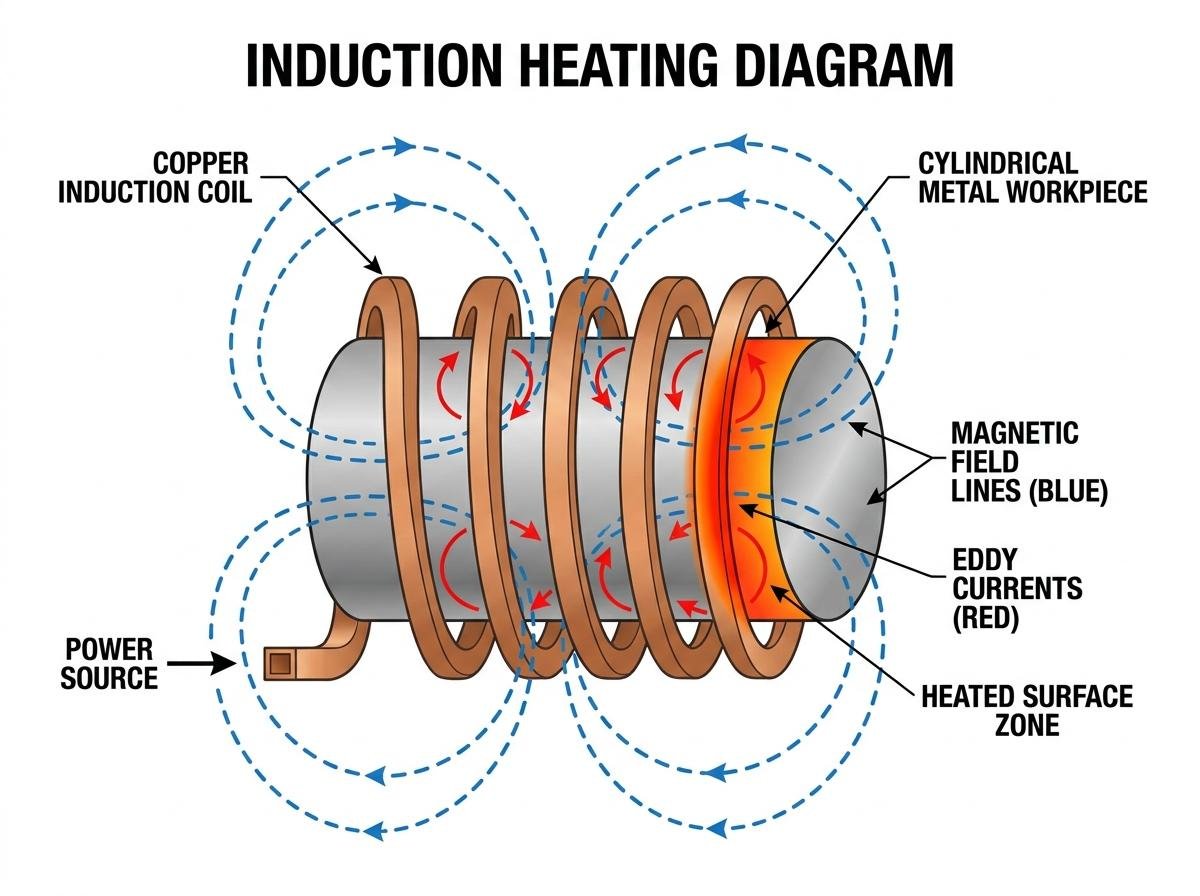
induction-heating-uses-electromagnetic-fields-to-h-2

Induction heat treating is a contactless heating method that uses electromagnetic induction to heat metal parts quickly and with pinpoint accuracy. An alternating current passes through a copper coil, creating a rapidly changing magnetic field. When a metal workpiece is placed in that field, eddy currents form within it. Those currents generate heat through electrical resistance, bringing the surface to the exact temperature needed. The depth of heating depends on the current frequency – higher frequencies heat a thinner surface layer, while lower frequencies penetrate deeper.

The process follows a two-step cycle. First, rapid heating brings the metal surface above its transformation temperature (austenitization). Then a quenching step – usually water, oil, or polymer – cools it instantly. This creates a hard martensitic layer on the surface while the core of the part stays tough and ductile. That combination is what makes induction heat treating such a powerful tool for creating metal components that can withstand heavy use without becoming brittle.

Speed and precision are what set induction apart. A typical cycle takes seconds, not hours. The operator can dial in exact temperatures and hold times for each part. That level of control matters when you are hardening a single critical surface – like the bearing race on a motor shaft or the threads on a pipe fitting – without softening adjacent areas.

Key Benefits Over Conventional Heat Treatment

Traditional furnace heat treating works by heating an entire part in a gas-fired or electric oven for hours. Induction does the same work in seconds or minutes while using less energy. According to a February 2026 report from ABP Induction Systems published by Heat Treat Today, induction heating achieves practical energy efficiencies of up to 90%. That’s far better than conventional gas furnaces, which lose significant energy through convective and radiant heat transfer.

The same report notes that hybrid induction systems retrofitted onto existing gas furnaces can cut fossil energy consumption by up to 60%. The induction coil handles the rapid preheating phase, and the gas burner finishes the job. That kind of efficiency matters both for operating costs and for environmental compliance – especially as building codes push contractors toward lower-carbon supply chains.

Another major advantage is selective heating. Induction treats only the areas that need hardening – a gear tooth, a bearing surface, a pipe thread – while leaving the rest of the part unchanged. That means less distortion, fewer rejected parts, and better dimensional accuracy. The compressive residual stresses left on the surface also improve fatigue life, so parts last longer before they crack or wear out.

The energy and material savings add up across a whole construction project. Fewer rejects mean less scrap. Better wear resistance means fewer replacements. When you multiply those factors across thousands of components in a single building, the cost difference between induction-treated parts and conventionally treated ones becomes significant.

Induction Heat Treating in Construction and Building Maintenance

The connection between induction heat treating and building durability is straightforward. Hardened steel components resist wear, corrosion, and mechanical stress better than untreated ones. That translates into longer service life for plumbing fittings, HVAC components, structural connectors, and fasteners.

Recent research supports this. A March 2026 study published in De Gruyter’s Materials Testing journal looked at martensitic stainless steel (440B) treated with induction thermal cycling. The researchers found that the induction process produced finer, more uniform microstructures with reduced wear loss and improved intergranular corrosion resistance compared to conventional furnace treatment. For building owners and maintenance professionals, that means fewer pipe replacements, less fastener corrosion, and lower long-term repair costs.

The benefits extend beyond raw materials. Every hardware component in a building envelope experiences temperature fluctuations, moisture, and mechanical loads. That includes the brackets, connectors, and fittings that hold mechanical systems together in walls and crawl spaces. Parts made with induction hardening simply hold up longer under those conditions.

Think about a typical commercial building. It has hundreds of threaded fasteners holding ductwork in place, dozens of motor shafts driving pumps and fans, and miles of pipe fittings carrying water and refrigerant. Every one of those components experiences cyclic stress and environmental exposure. When they are made with induction-hardened surfaces, the maintenance interval stretches. That is not a theoretical benefit – it is measurable in reduced service calls and deferred replacement costs.

Market Trends and the Push for Energy Efficiency

The induction heat treating market reflects growing demand for stronger, more sustainable metal processing. WiseGuyReports estimates the global induction heat treating services market was valued at roughly $2.23 billion in 2025, with projections reaching $3.5 billion by 2035 at a compound annual growth rate of 4.6%. That growth is driven largely by the construction, automotive, and heavy equipment sectors, which need higher-performance components.

On the technology side, a University of Florida project, backed by $11 million in Department of Energy funding, is developing a superconducting magnet combined with induction technology that could cut steel heat-treatment time by up to 80%. That kind of breakthrough would turn 8-hour furnace cycles into minute-scale processes, reshaping how metal components are made for the construction industry.

For contractors and property owners, these trends connect back to everyday buying decisions. When manufacturers adopt more efficient heat-treating processes, the savings can affect the price of the equipment you install. Knowing your new furnace costs and replacement options helps you plan for upgrades that take advantage of better-engineered components. The same logic applies to pumps, compressors, and any mechanical equipment with hardened internal parts.

Looking Ahead

Induction heat treating is evolving beyond its traditional industrial base. Manufacturers are integrating AI-assisted temperature control and real-time monitoring systems that adjust heating parameters on the fly. The result is even tighter process control and fewer quality defects. At the same time, the technology is expanding into new sectors – defense, shipbuilding, and renewable energy infrastructure all rely on the material properties that only induction can deliver efficiently at scale.

These advances matter for construction and property maintenance because they change the economics of quality. As induction equipment becomes cheaper and more widely available, the cost premium for induction-treated parts shrinks. More manufacturers will adopt the process, which means more building components will come with better surface hardness and longer service life as standard features rather than upgrades.

As these advances reach the construction supply chain, they’ll affect even routine building systems. Your next high-efficiency furnace venting installation will likely include hardware made with better materials and more consistent heat treatment than what was available five years ago. That means fewer service calls and longer replacement cycles for the components you rely on.

Conclusion

Stronger metal components mean longer-lasting buildings. Induction heat treating delivers that strength faster, more efficiently, and more precisely than conventional furnace methods. The energy savings, reduced waste, and superior metallurgical properties make it a clear upgrade for any application where durability matters.

Understanding the process behind the parts you specify, install, or maintain helps you make better decisions about materials and quality. In a world where building standards keep rising and sustainability requirements grow stricter, the way metal components are treated matters more than ever.