
Sump Pump Battery Backups: What to Know Before Using

A sump pump battery backup is an auxiliary power system that keeps a sump pump operating during a power outage or when the primary pump fails, helping to prevent basement flooding. Sump pump battery backups are mainly of 4 types: Lead-acid (wet cell), AGM (Absorbed Glass Mat), Li-Fe, and Li-AlH₄.
Sump pump battery backups are available in 12V and 24V DC. The capacity of the sump pump battery back up is ranging from 75Ah to 200Ah. A sump pump battery backup can run a sump pump intermittently over a 24 to 72-hour period. But it depends on the sump pump size and battery capacity.
To recharge the sump pump battery backup, it will take approximately 10-12 hours to fully recharge from a depleted state. To install this batterybackup system, you should follow the steps mentioned below. During the installation process, you should place the sump pump system in a dry, elevated, and accessible location near the sump pump system to ensure safe operation and maintenance. If you do not maintain and install it propely it may rise diffrent problems. The most important thing is that you should detect whether it is working or not before the rainy season. So, read the guide below to know more about the sump pump battery backup system.
What Is a Sump Pump Battery Backup?
A sump pump battery backup is an auxiliary power system that keeps a sump pump operating during a power outage or when the primary pump fails, helping to prevent basement flooding.
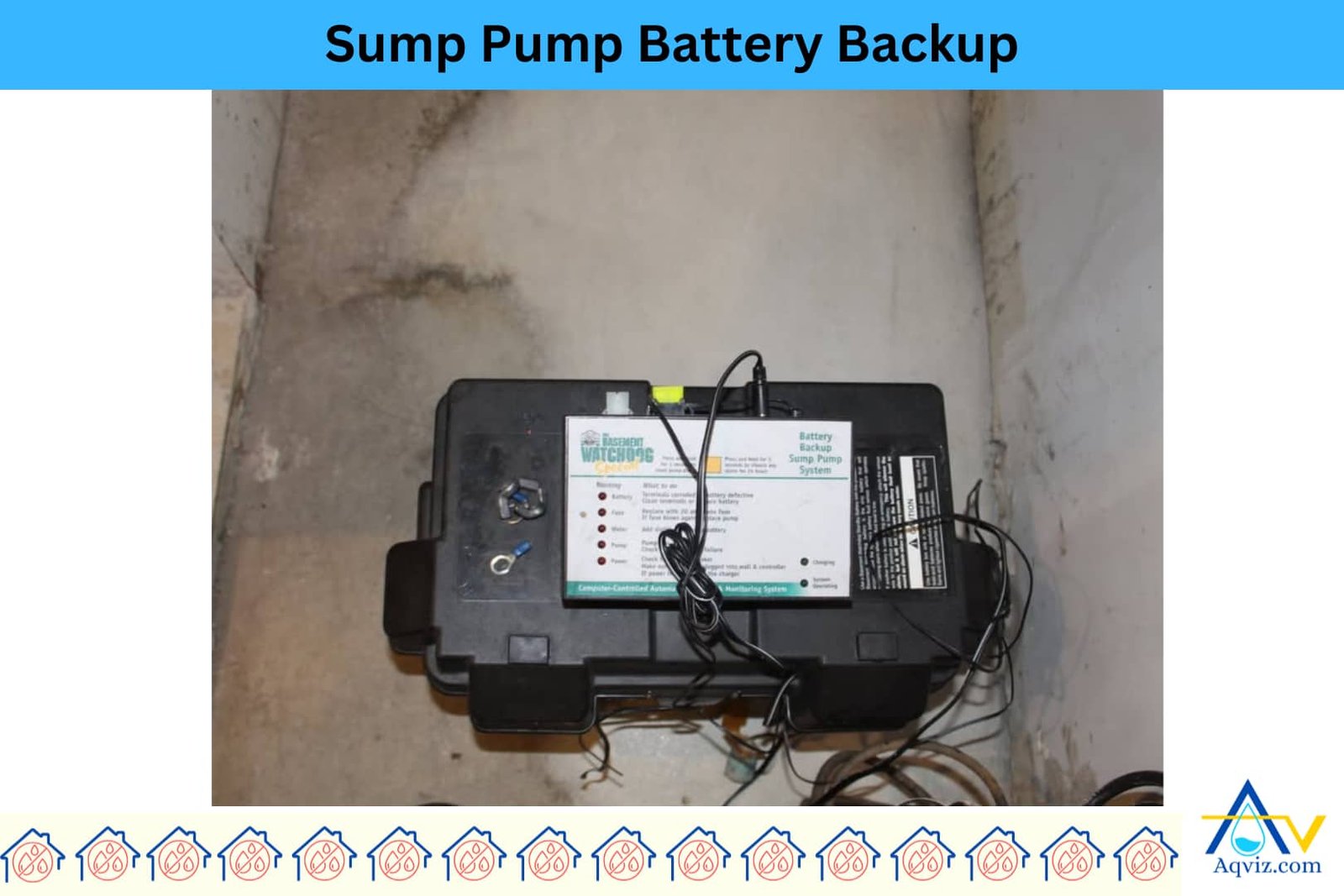
This backup system typically includes a deep-cycle battery, an automatic controller, and a charger to ensure continuous sump pump activation when there is a power failure.
There are five key advantages of installing a sump pump battery backup system
- A sump pump battery backup keeps the system running during power loss.
- It automatically activates when the main pump fails.
- A sump pump backup system helps avoid basement flooding during heavy storms.
- It supports the primary pump during high water inflow.
- Most battery backup sump pumps include alarms to alert for low battery or failure.
What Are the Types of Sump Pump Battery Backups?
Sump pump battery backups come in various types based on battery chemistry, capacity, and physical size. Each sump pump backup battery type offers different performance levels, maintenance needs, and runtime duration during an outage.
The most common types of sump pump battery backups include:
- Lead-acid (wet cell): Lead-acid sump pump backup batteries are affordable and widely used, but require regular maintenance and venting.
- AGM (Absorbed Glass Mat): AGM sump pump backup batteries are sealed, maintenance-free, and longer-lasting than standard lead-acid.
- Li-Fe (Lithium Iron Phosphate): Li-Fe sump pump backup batteries are lightweight, fast-charging, highly efficient, and offer long cycle life.
- Li-AlH₄ (Lithium Alanate): Li-AlH₄ sump pump batteries are high energy density, compact in size, ideal for extended runtime in limited space.
- High-capacity backups (100Ah-200Ah): High-capacity sump pump backup batteries are designed for multi-pump or high-flow systems with extended operation needs.
What Is the Capacity Sump Pump Battery Backup?
The capacity of a sump pump battery backup refers to the amount of electrical energy the battery can store and supply to operate the sump pump during a power outage. It’s measured in ampere-hours (Ah) and directly impacts how long the backup system can run the pump without recharging.
Most sump pump battery backup systems range from 75Ah to 200Ah, depending on the battery type and pump load. A 100Ah battery typically powers a ⅓ HP sump pump for 6 to 8 hours of continuous use or 1-2 days of intermittent pumping, which is common during storms.
What Is the Voltage of the Sump Pump Battery Backup?
The voltage of a sump pump battery backup refers to the electrical pressure used to store and deliver energy from the battery to the sump pump system. Voltage plays a key role in determining how efficiently the battery powers the pump and whether it’s compatible with household electrical standards.
Most sump pump battery backup systems operate with a 12-volt DC input, which is standard for deep-cycle backup batteries. This 12V DC power is converted through a built-in inverter or control unit to deliver 120V AC output, which is required to run most residential sump pumps. Ensuring voltage compatibility is essential to prevent motor strain, overheating, or failure during operation.
How Does a Battery Backup Sump Pump Work?
A battery backup sump pump system operates through a coordinated sequence of components that activate during power loss or pump failure. Here’s a step-by-step guide explaining how it works.
- The charger maintains the sump pump backup battery: A built-in smart charger constantly supplies power to the 12V battery, keeping it fully charged during standby.
- The inverter or controller monitors power: When utility power is lost, the system detects the outage and automatically switches to battery mode.
- The battery powers the backup pump: The battery sends 12V DC to the inverter, which converts it to 120V AC to run the backup sump pump.
- The pump removes water from the basin: The battery-powered sump pump activates via its own float switch and discharges water through a dedicated outlet line.
- The system sends alerts: Most units include alarms or indicator lights to notify users about power loss, low battery, or pump activity.
Read More About: How Does a Sump Pump Work?
What Is the Main Purpose of the Sump Pump Battery Backup?
The main purpose of a sump pump battery backup is to ensure continuous basement drainage when the primary sump pump loses power, preventing water accumulation, flooding, and structural damage during emergencies.
In addition to its core function, a sump pump battery backup system also serves these five purposes:
- Provides uninterrupted pumping during severe storms or electrical failures
- Activates automatically when the main pump malfunctions or overloads
- Extends the protection window during prolonged power outages
- Supports water removal when the water table rises suddenly
- Offers real-time alerts through alarms or control panels for maintenance and battery status
How Long Can a Sump Pump Run With a Battery Backup?
The run time of a sump pump battery backup depends on several factors, including battery capacity, pump wattage, and how frequently the pump cycles during an outage. Most battery backup systems are designed to operate the sump pump intermittently over a 24 to 72-hour period.
For example, a typical 100Ah battery stores 1,200 watt-hours (12V × 100Ah = 1,200Wh).
If your sump pump uses 400 watts, it can run continuously for about 3 hours (1,200Wh ÷ 400W).
In real-world use, where the pump runs intermittently (e.g., 10 minutes per hour), the same battery can last 24-36 hours depending on water inflow and cycle frequency.
Larger batteries or dual battery setups can significantly extend this run time.
How Long Does It Take to Charge a Sump Pump Battery Backup?
The charging time of a sump pump battery backup depends on the battery’s capacity (Ah), the charger’s output voltage and amperage, and the battery’s current state of charge. Most sump pump battery backup systems use a 12V battery with a 12V or 14.4V smart charger designed for deep-cycle charging.
For example, a 100Ah sump pump battery backup connected to a 12V 10-amp charger will take approximately 10-12 hours to fully recharge from a depleted state.
But when using a smart charger, its charging time will decrease. In any case, you charge the sump pump battery backup using another charger, you should avoid overcharging or undercharging.
Overcharging can damage the sump pump backup battery, or undercharging, which shortens its lifespan. Hence, always use a compatible charger with built-in voltage control to maintain battery health and ensure it’s ready when needed.
How to Install a Sump Pump Battery Backup?
Installing a sump pump battery backup involves connecting a secondary power source and backup pump to your existing sump system.
You should follow these 5 step-by-step guide for proper sump pump installation.
- Position the battery unit: Place the battery backup system on a raised, dry platform near the primary sump pump.
- Install the backup pump: Mount the backup sump pump inside the basin, either beside or above the main pump.
- Connect discharge piping: Use a separate check valve and tie into the main discharge line or install a dedicated outlet.
- Wire the system: Connect the battery to the controller or inverter, and then to the backup pump.
- Plug in the charger: Power the system through a GFCI outlet and test with water to verify proper activation.
Read More About: How to Install a Sump Pump?
Where to Place the Sump Pump Battery Backup?
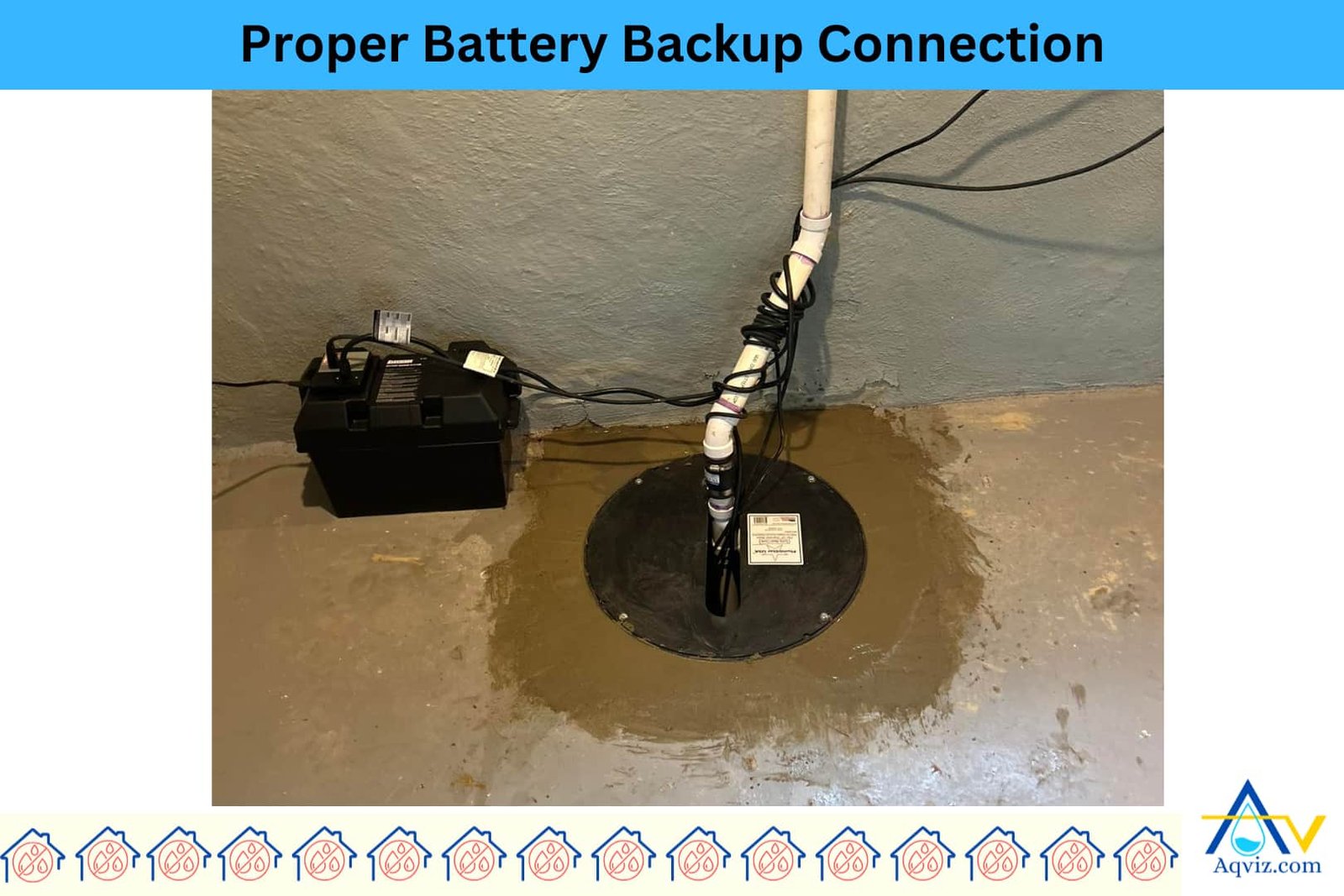
The sump pump battery backup should be placed in a dry, elevated, and accessible location near the sump pump system to ensure safe operation and maintenance.
Position the sump pump battery backup system within 3 to 4 feet (0.9 to 1.2 meters) of the pump to keep cable runs short and efficient.
Place the battery backup unit on a sturdy shelf or platform at least 12 inches (30 cm) above the floor to protect it from potential water damage during flooding.
Avoid placing a sump pump battery backup system directly on concrete or in damp areas. Ensure it stays away from direct contact with the sump basin to minimize corrosion risk and keep it clear for airflow and inspection.
What Are the Problems of Sump Pump Battery Backup?
A sump pump battery backup system provides crucial protection, but it can face several issues that reduce its reliability and performance.
Here are 8 common problems that arise in sump pump battery backup systems:
- Battery failure due to age, sulfation, or deep discharging
- Low battery charge from faulty or undersized chargers
- Corroded terminals that disrupt current flow
- The inverter malfunction is causing no power conversion from DC to AC
- Loose or damaged wiring leading to intermittent operation
- The float switch failure in the backup pump is preventing activation
- Overcharging from non-regulated chargers, damaging battery cells
- False alarms or sensor errors from moisture or poor connections
How to Detect Battery Backup Is Not Working?
A sump pump battery backup system can fail silently if not regularly inspected.
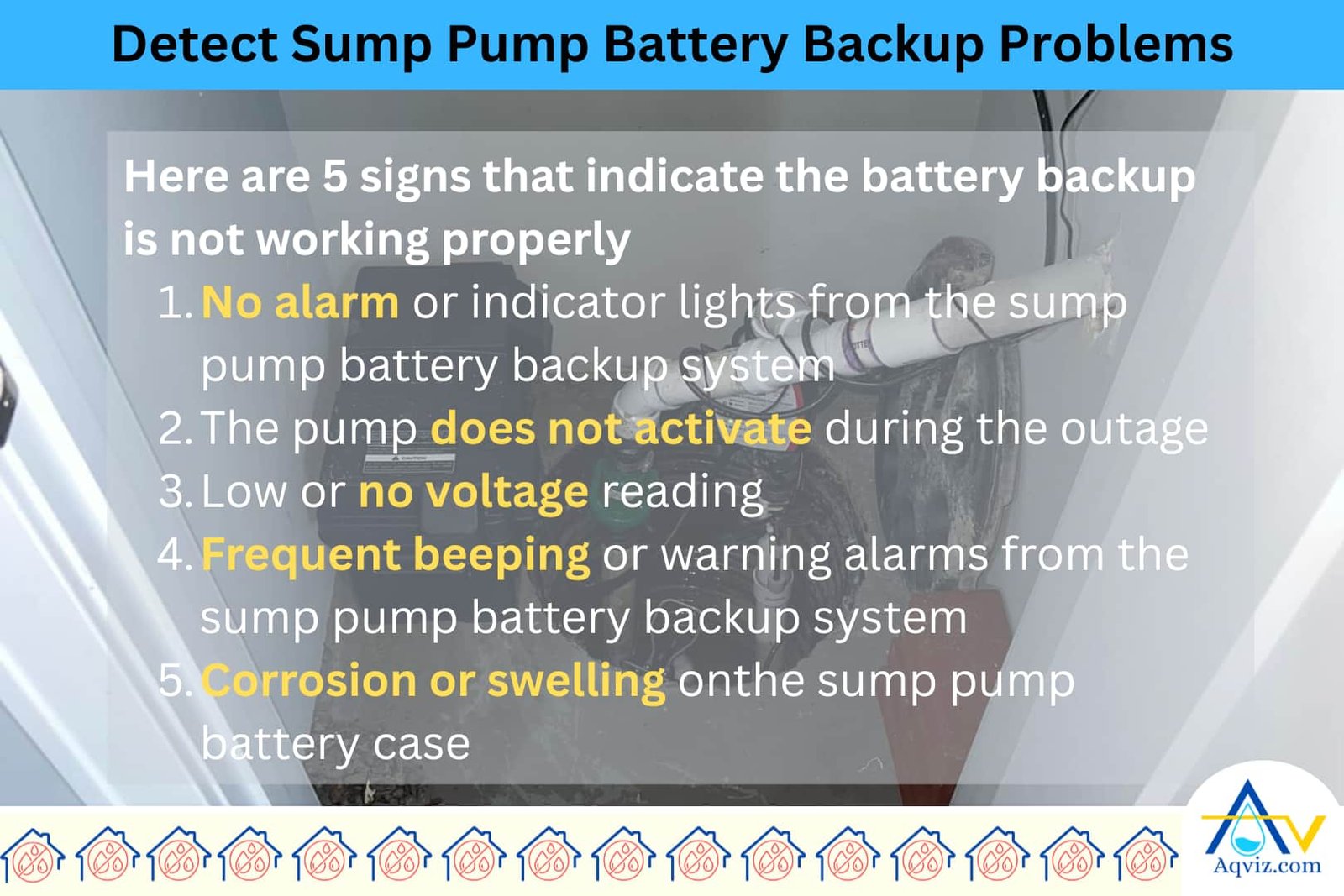
Here are 5 signs that indicate the battery backup is not working properly:
- No alarm or indicator lights from the sump pump battery backup system
- The pump does not activate during the outage
- Low or no voltage reading
- Frequent beeping or warning alarms from the sump pump battery backup system
- Corrosion or swelling onthe sump pump battery case
Can the Backup Sump Pump Run With the Battery Backup?
Yes, a backup sump pump is specifically designed to run with a battery backup system. When the main power supply fails or the primary pump malfunctions, the battery backup automatically powers the secondary pump to continue removing water from the sump basin.
A battery-operated backup sump pump runs independently using 12V DC power, often supported by an inverter or integrated controller. It activates through its own float switch and functions as a standalone system, ensuring your basement stays protected even during power outages or equipment failure.
Is Sump Pump Battery Backup Waterproof?
No, a sump pump battery backup is not fully waterproof. While some components, like sealed batteries or weather-resistant cases, offer limited moisture protection, the system as a whole should never be exposed to direct water or submersion.
High humidity and damp environments can corrode terminals, damage electronic controllers, and reduce battery life. Over time, moisture may cause electrical shorts or false alarms. To protect the battery backup system, always place it on an elevated, dry platform away from potential water splashes or standing moisture near the sump basin.