
Crawl Space Waterproofing: Know these Before Starting

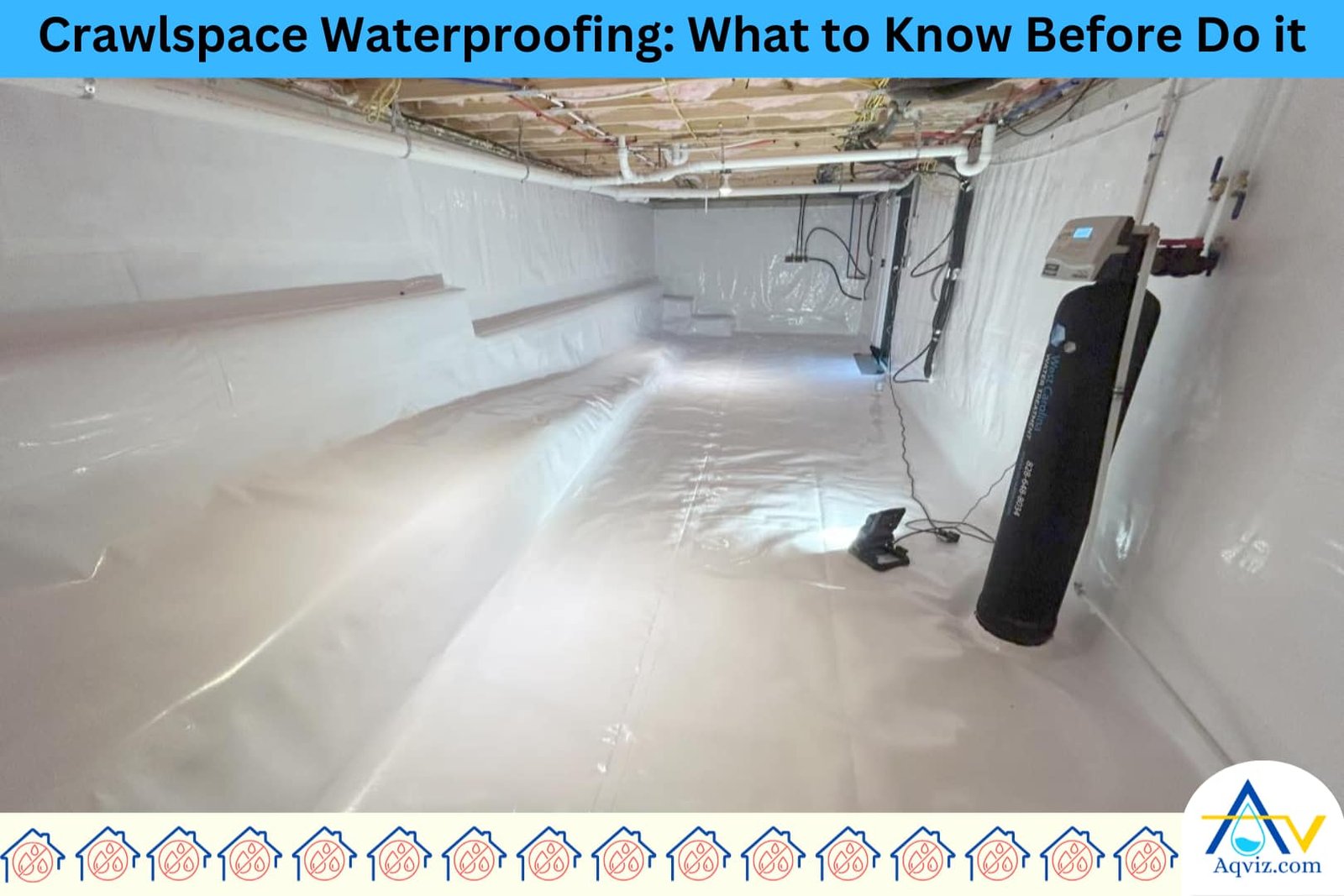
Crawl space waterproofing is the process of preventing water, moisture, and humidity from entering the underfloor area located between the soil and the ground floor of a building. The main purpose of crawl space waterproofing is to protect the underfloor space from water and maintain a healthy crawl space.
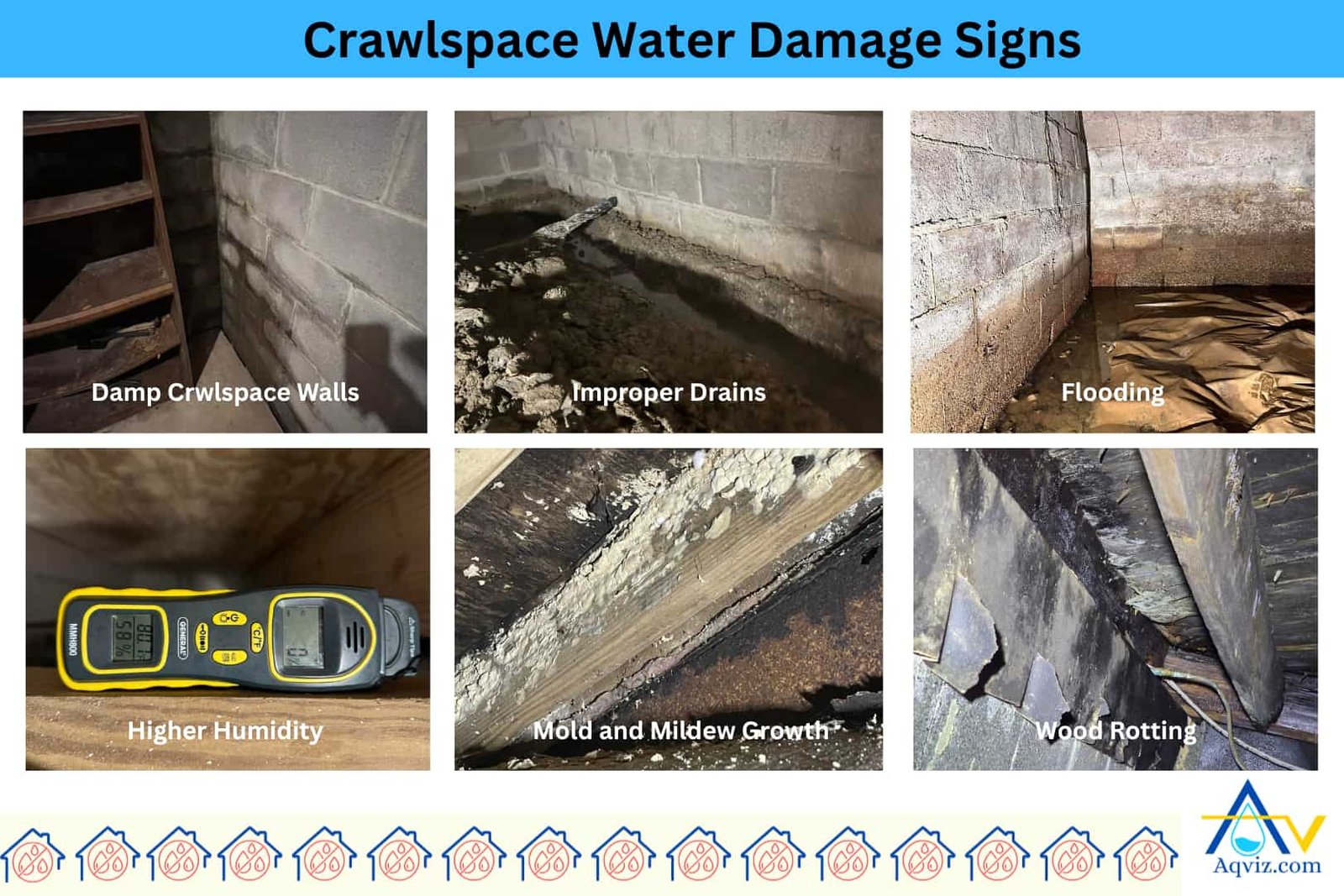
You should waterproof the crawl space when you observe water standing, mold and mildew growth, damp walls and floor, higher humidity, musty odor, efflorescence on walls, wood damage, insect infestation, paint peeling, and water stains in the crawl space. This process includes crawl space encapsulation, installing a sump pump, drainage, a vapor barrier, dehumidifier in the crawl space.
A crawl space waterproofing project will take 5-10 days. We highly recommend that you choose a date for crawlspace waterproofing in late spring, summer, and early fall. Crawl space waterproofing requires a combination of essential materials, tools, and equipment to create a sealed and moisture-resistant environment. The crawl space can be waterproofed by following the 9 steps below.
Aqviz experts always recommend that you should not conduct this as a DIY project without expert observation, because it is more complex, and you should have professional knowledge. Hence, it costs a lot. Aqviz experts have prepared this guide to understand the process. Aqviz experts can help you to do it. So contact us now.
What is Crawl Space Waterproofing?
Crawl space waterproofing is the process of preventing water, moisture, and humidity from entering the underfloor area located between the soil and the ground floor of a building. Crawl space waterproofing includes crawl space inspection, cleaning, sealing vents, improving drains, sealing cracks and damages, installing a vapor barrier, adding insulation, and installing a dehumidifier. The main purpose of crawl space waterproofing is to protect the underfloor space from water and maintain a healthy crawl space.
What are the 6 Benefits of Crawl Space Waterproofing?
Crawlspace waterproofing is highly beneficial to the home’s structure and function. Crawl space waterproofing controls the ground moisture, prevents wood and structural decay, stops mold and mildew growth, improves indoor air quality, increases energy efficiency, and protects the property value.
- Control ground moisture in the crawl space: Proper crawl space waterproofing helps prevent groundwater seepage, rainwater runoff, and soil moisture vapor from entering the crawl space. This control reduces capillary rise and condensation, which helps keep indoor humidity levels below 60%.
- Prevent wood rot and structural decay: Crawl space waterproofing helps protect wooden floor joists, beams, and subfloor panels from prolonged moisture exposure. This prevention reduces fungal decay and material weakening, which helps increase structural lifespan by 15-25 years.
- Prevent mold and mildew growth: Crawl space waterproofing helps eliminate damp surfaces and stagnant air conditions in the crawl space. This prevention removes mold and mildew colonies on soil, insulation, and framing, which helps improve indoor air quality throughout the house.
- Improve indoor air quality: Crawl space waterproofing helps block mold spores, musty odors, and soil gases from migrating into living areas. This improvement increases overall air quality and helps reduce allergy and respiratory irritation.
- Increase energy efficiency: A sealed and waterproofed crawl space helps stabilize temperature and humidity below the floor system. This stabilization reduces HVAC load, prevents insulation saturation, and helps lower energy consumption by 10-20%.
- Protect property value: Crawl space waterproofing helps maintain a dry and structurally sound foundation area. This protection increases property value, improves buyer confidence, and reduces future repair and remediation costs.
What are the Reasons for Crawl Space Waterproofing?
You should waterproof the crawlspace due to these 15 reasons such as.
- Standing water in the crawl space
- Damp or wet crawl space soil
- High humidity in the crawl space
- Mold or mildew growth in the crawl space organic materials
- Musty odors in the home
- Efflorescence on crawl space walls
- Rotting wood or floor joists
- Insect infestations (e.g., termites)
- Rust on the crawl space metal components
- Condensation on crawl space pipes or walls
- Sagging or uneven crawl space floors above
- Cracks in foundation walls
- Water stains on walls or floors
- Peeling paint or bubbling in crawl space walls
- White powdery substance (mineral deposits) outside the crawl space walls
What is the Best Method for Crawl Space Waterproofing?
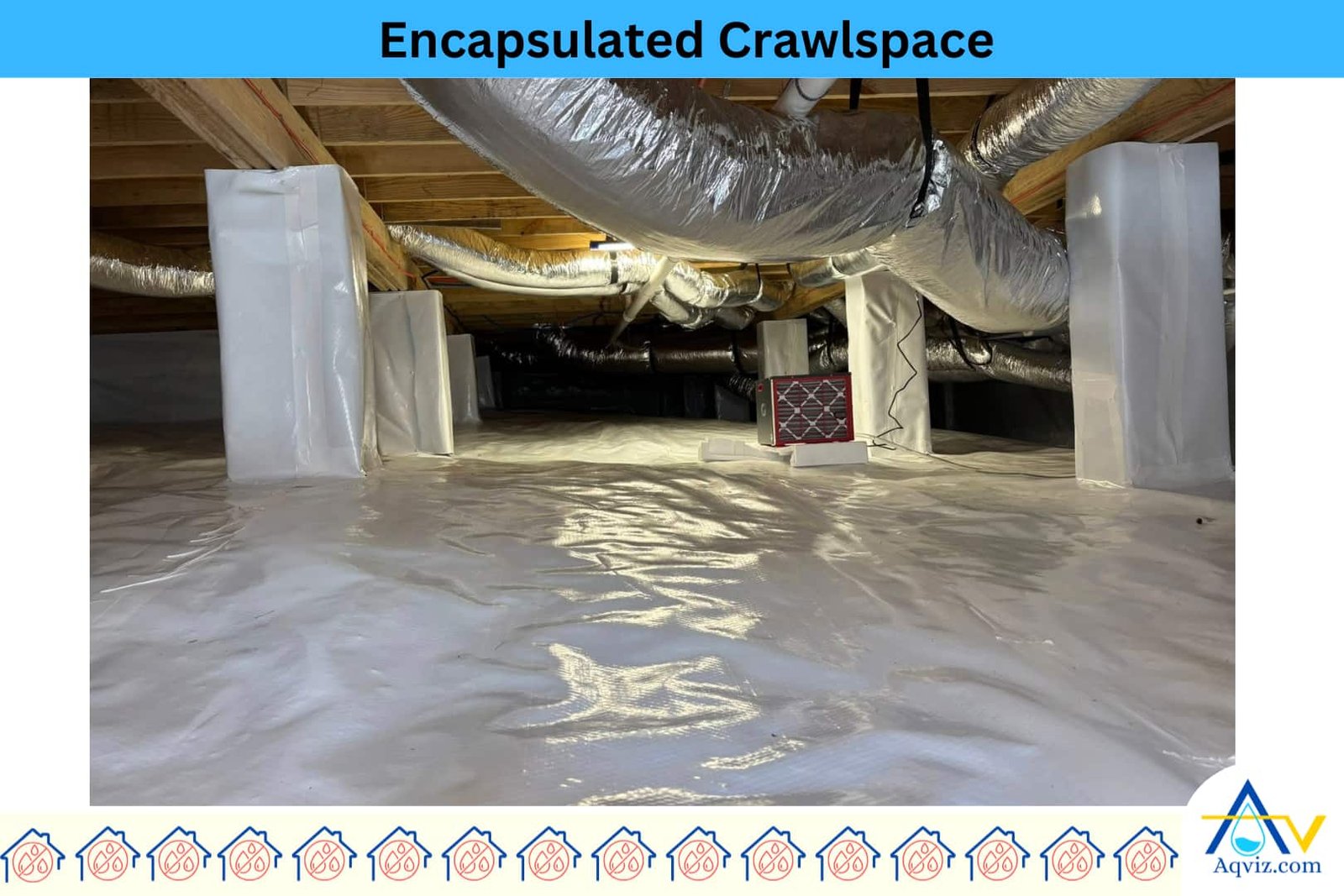
The best crawl space waterproofing method is encapsulation, which involves sealing the entire crawl space with a heavy-duty vapor barrier and isolating it from external moisture sources. crawl space encapsulation covers the floor, foundation walls, and sometimes the ceiling with a polyethylene membrane (usually 12 to 20 mil thick), effectively locking out ground moisture, radon gas, and humid air.
Other effective crawl space waterproofing methods include installing an interior French drain system, applying waterproof coatings to foundation walls, and using sump pumps to evacuate collected water.
How to Waterproof a Crawl Space in 9 Steps?
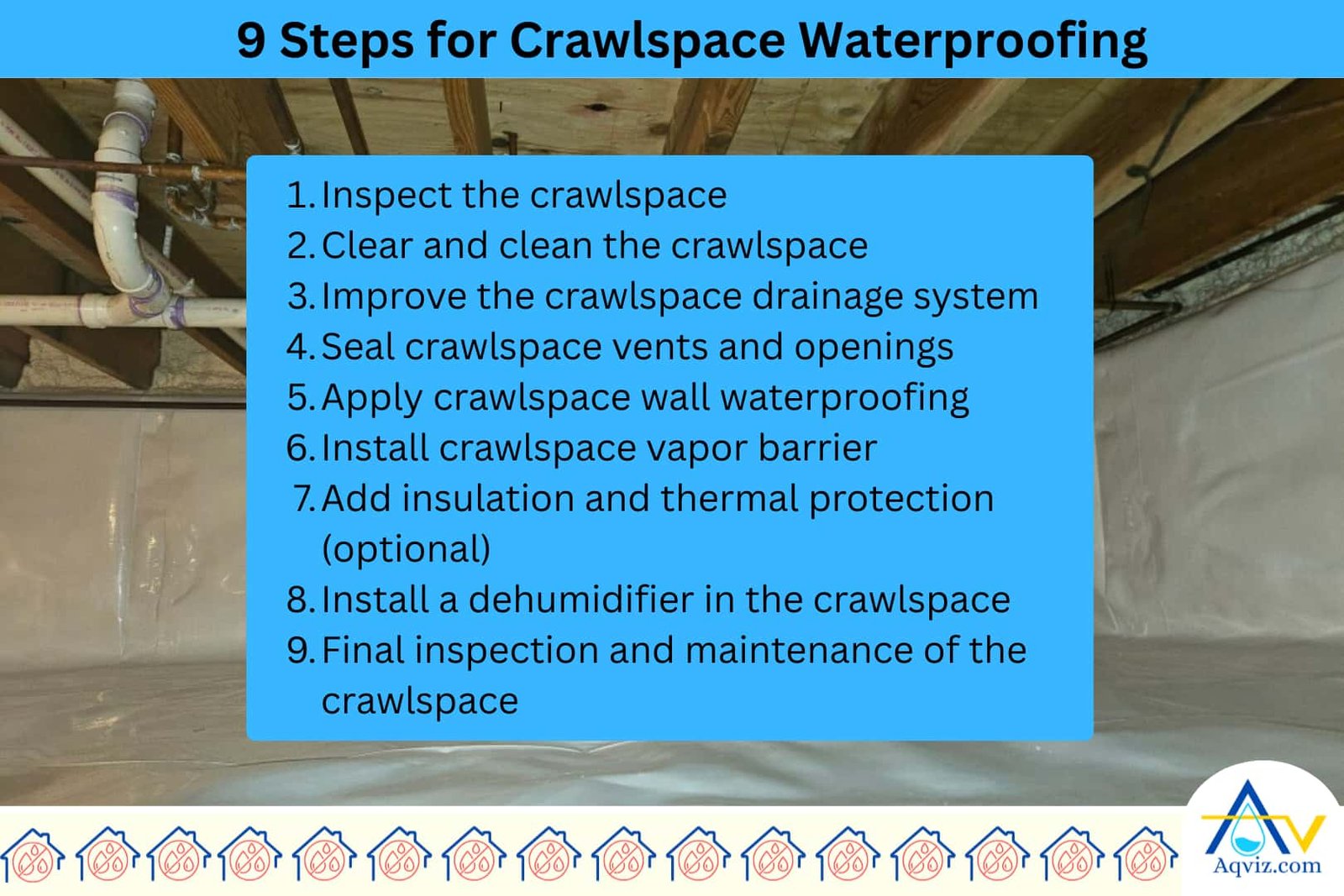
Follow these 9 steps for crawlspace waterproofing
- Inspect the crawl space: Crawl space waterproofing starts with a full inspection to identify water damage, moisture sources, foundation cracks, plumbing leaks, and improper exterior grading.
- Clear and clean the crawl space: Crawl space waterproofing requires the removal of all debris, wet insulation, and standing water from the crawlspace floor. Dry the crawlspace using fans for 24-48 hours before waterproofing.
- Improve crawl space drainage system: Crawl space waterproofing includes installing a French drain and sump pump inside the crawlspace. Ensure downspouts discharge water at least 6 feet away from the foundation.
- Seal crawl space vents and openings: Crawl space waterproofing involves sealing exterior vents and openings around pipes, ducts, and rim joists using foam or rigid insulation to block air and moisture entry.
- Apply crawl space wall waterproofing: Crawl space waterproofing includes coating interior foundation walls with cementitious slurry or liquid-applied membrane to stop lateral moisture infiltration.
- Install crawl space vapor barrier: Crawl space waterproofing requires installing a 12-20 mil polyethylene vapor barrier over the crawl space floor. Overlap seams by 12 inches and seal edges up the walls using fasteners and caulk.
- Add crawl space insulation (optional): Crawl space waterproofing can be enhanced by applying rigid foam insulation boards to foundation walls. You should avoid fiberglass insulation, which absorbs moisture and promotes mold.
- Install a dehumidifier in the crawl space: Crawl space waterproofing uses a dehumidifier rated for crawl spaces to maintain humidity below 60%. Connect the dehumidifier to an auto-drain system and monitor with a hygrometer.
- Perform final crawl space inspection and maintenance: Crawl space waterproofing must include checking all seals, overlaps, and drainage components. Schedule inspections every 6-12 months to maintain the waterproofing system’s performance.
Read More About:
What Should you use for Crawl Space Waterproofing?
Crawlspace waterproofing requires a combination of essential materials, tools, and equipment to create a sealed and moisture-resistant environment.
- Safety gear: Safety tools, head lamps, and torches are essential for crawl space inspections.
- Excavation tools: Excavation tools like shovel, trenching shovel, bucket, rake, hand trowel, mattock are essential for excavations in the crawl space.
- Vapor barriers: Vapor barriers are typically made from reinforced polyethylene sheeting with a thickness of 12 to 20 mil, used to cover the floor and walls.
- Sealing tapes: Sealing tapes like waterproof tape, seam sealants, and polyurethane caulk are needed to secure seams and joints tightly.
- Sump pump, French drain, Dehumidifier: Sump pumps, French drains, and dehumidifiers are additional components that help to remove water and vapor from the crawl space.
- Waterproofing membranes: Waterproofing membranes and crack injections are essential to seal all the cracks, joints, voids, and damage in the crawl space wall. These membranes block all the possible leaks and seepage in the crawlspace.
- Insulation boards: Insulation boards are used to improve thermal performance in the crawl space.
When Should You Start Crawl Space Waterproofing?
Aqviz experts highly recommend that you start your crawlspace waterproofing based on the ground conditions, humidity levels, and work efficiency. So you should start crawlspace waterproofing in late spring, summer, and early fall.
- Late spring (April-May): Late spring is a suitable period because soil moisture starts stabilizing after winter thaw, and groundwater levels become predictable. In this period, we can identify the real seepage points, and temperatures range between 15-25 °C (59-77 °F), which helps vapor barriers, sealants, and polyurethane injections cure properly.
- Summer (June-August): Summer is the best period for crawlspace waterproofing. Dry weather lowers groundwater pressure around foundation walls, making excavation, drainage mat installation, and sump pit cutting safer and faster. Relative humidity outside drops compared to spring, which reduces condensation risk during encapsulation. We regularly complete full crawlspace encapsulation systems in summer because materials like polyethylene vapor barriers, elastomeric coatings, and sealants perform optimally above 20 °C (68 °F). Labor efficiency also increases due to longer daylight hours.
- Early fall (September-October): Early fall is another reliable period, especially before heavy rains begin. In this period remains workable, and temperatures stay within 10-20 °C (50-68 °F), which is ideal for mechanical fastening and adhesive bonding.
How Long Does it Take to Waterproof a Crawl Space?
The total duration of crawlspace waterproofing usually ranges between 5-10 days, depending on the crawlspace size, access, and moisture severity.
- Inspection and preparation: This step takes 1 day because it includes moisture assessment, leak identification, debris removal, and surface cleaning to prepare the crawlspace for waterproofing work.
- Drainage system installation: This stage needs 2-3 days because it covers trenching, perimeter drains, sump pit installation, and pipe connections to manage groundwater and hydrostatic pressure.
- Sealing and crack treatment: This step takes 1-2 days. In this step, foundation cracks, joints, and penetrations are sealed using cementitious fillers, polyurethane injections, or elastomeric sealants to stop active seepage paths.
- Vapor barrier or encapsulation: This step takes 1-2 days. In this step, heavy-duty polyethylene sheets are installed on the floor and walls, sealed at overlaps, and mechanically fixed to block ground moisture and vapor transmission.
- Drying, curing, and final checks: This final step takes one day. In this step, the materials are cured, verify drainage flow, and ensure airtight sealing before long-term moisture control begins.
How Much Does it Cost to Waterproof a 1000 sq ft Crawl Space?
Crawl space waterproofing for a 1,000 sq ft area typically costs between $5,000 and $15,000, depending on the system design, material quality, and site conditions. Basic crawl space waterproofing with a vapor barrier averages $3 to $7 per sq ft, while full encapsulation with drainage, sump pump, and dehumidification ranges from $10 to $15 per sq ft.
The cost of crawl space waterproofing increases due to severe water intrusion, foundation wall cracks, high groundwater levels, existing mold, and the use of premium materials such as 20-mil reinforced vapor barriers or commercial-grade drainage systems. Crawl space waterproofing also becomes more expensive if access is limited or the floor height is below 18 inches.
Are Crawl Space Waterproofing and Encapsulation the Same?
Crawl space waterproofing and crawl space encapsulation are not the same.
Crawl space waterproofing refers to a broad set of techniques used to prevent water intrusion and control moisture in the underfloor space. Crawl space waterproofing may include drainage systems, vapor barriers, sump pumps, coatings, and dehumidifiers, depending on the moisture source and severity.
Crawl space encapsulation involves sealing the entire cavity space using a continuous vapor barrier over the floor and walls, along with air sealing and humidity control. Crawl space encapsulation creates a conditioned and isolated environment, while crawl space waterproofing includes both partial and full protection methods.
What Causes Damage to Crawl Space Waterproofing?
Crawlspace waterproofing damages occur when moisture management systems fail or materials degrade over time.
Here are the main 8 Causes of Crawl Space Waterproofing Damages.
- Tears and punctures on the crawl space vapor barrier due to heavy foot traffic, sharp debris, or improper installations allow ground moisture to seep through.
- Gaps at seams and unsealed wall edges on the crawl space vapor barrier due to improper sealing break the vapor seal and reduce its moisture-blocking effectiveness.
- Sump pump failure in the crawl space due to electrical issues, clogged pumps, or float switch malfunctions prevents active water removal and leads to water buildup.
- Clogged or crushed drainage pipes in crawlspace systems due to sediment buildup, root intrusion, or pipe collapse block proper water flow and cause drainage failure.
- Dehumidifier malfunction or neglect in the crawl space due to undersized units, mechanical failure, or lack of maintenance leads to poor humidity control, condensation, and mold growth.
- Foundation wall cracks or shifting in the crawl space due to structural movement or untreated settling create new moisture pathways through walls and footings, leading to water intrusion.
- Poor maintenance or skipped inspections in the crawl space allow minor issues like loose seams, sump pump failure, or drainage obstructions to escalate into major waterproofing failures.
Read More About Crawlspace Water Damages
- Crawl Space Mold: Warning Signs, Damage and Removal Tips
- Crawl Space Flooding: Causes, Warning Signs and How to Fix
- Crawl Space Humidity: Ideal Levels, Damage Risks and Fixes
Can I Waterproof My Crawl Space (DIY)?
Crawl space waterproofing is not recommended as a DIY project due to the technical complexity, safety risks, and long-term consequences of improper installation. crawl space waterproofing requires professional assessment of water intrusion sources, soil grading, foundation condition, and ventilation behavior, which DIY homeowners typically overlook or misjudge.
Does Interior Crawl Space Waterproofing Affect the Exterior?
Interior crawl space waterproofing improves the moisture condition inside the subfloor area but does not directly resolve exterior water intrusion problems. Interior crawl space waterproofing manages internal symptoms like standing water, condensation, and vapor buildup using methods such as vapor barriers, sump pumps, and dehumidifiers.
Is Crawl Space Waterproofing a Permanent Solution?
Crawlspace waterproofing provides long-term protection, but it requires periodic inspection and maintenance. Sump pumps, dehumidifiers, and drainage lines should be tested and cleaned regularly to keep the system functional.