
Deck Waterproofing: What to Know Before Starting

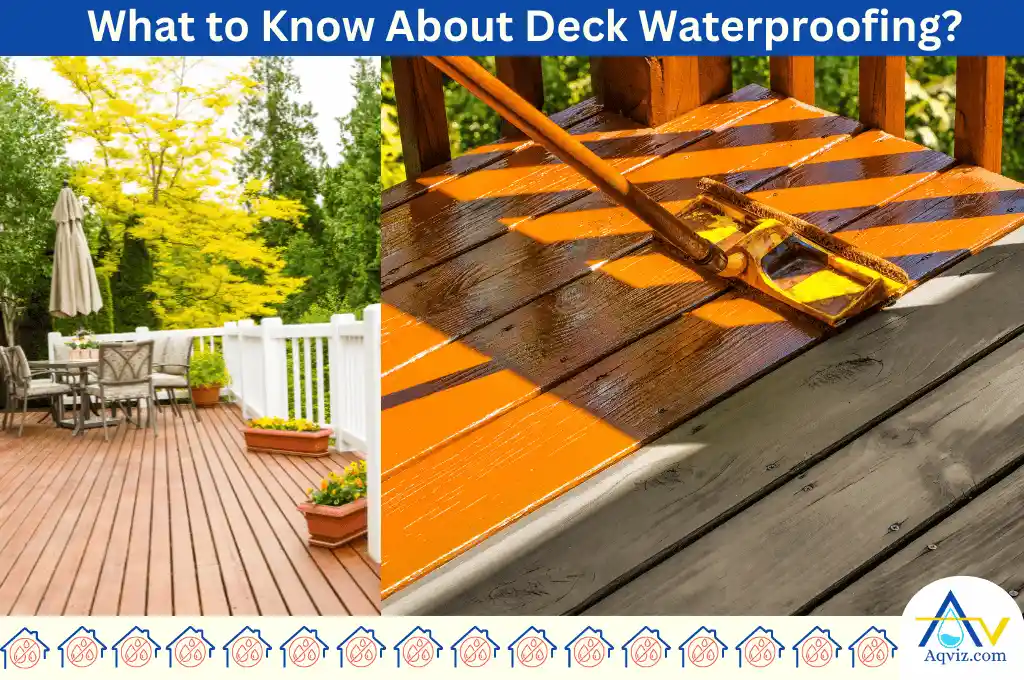
The deck waterproofing is applying a waterproofing membrane on the deck to prevent water leaks through the deck floor. Deck waterproofing is mainly of two types: deck floor waterproofing and under-deck waterproofing. Deck waterproofing is mainly of 2 types: liquid and sheet waterproofing. The most used 5 deck waterproofing membranes are PVC, EPDM, HDPE, PU, and EPOXY. Plywood decks are the most used deck types, and they can be waterproofed using both liquid and sheet membrane waterproofing methods.
When waterproofing a deck, you should maintain a proper oncline angle to direct away the water from the roof. As well as all the seams, corners, joints, and connections should be sealed properly to prevent water ingress to the substrate. If you use a liquid waterproofing membrane, you always install the recommended number of coatings on the surface for better protection. You should not increase or decrease the number of coatings as per the manufacturer’s instructions. To waterproof a wood deck, you should follow the guide below, which is prepared by the Aqviz experts.
A waterproof deck can last about 2-5 years when it is maintained and protected properly. A waterproof deck should be protected by doing regular inspections, repairs, cleaning, not use on harmfull chemicals, and applying a UV resistant selant on the surface. If the deck waterproofing membrane is not protected well, it can be damaged due to many reasons. When you waterproof your deck, we highly recommend that you clean the surface properly, apply waterproofing on a wet surface, fix the cracks and joints, use the recommended coating thicknes and mix the coating properly. These always give you a higher effective waterproofing membrane on the surface. So contact Aqviz for your deck waterproofing. We will help you to do it from scratch.
What is Deck Waterproofing?
The deck waterproofing is applying a waterproofing membrane on the deck to prevent water leaks through the deck floor. Deck waterproofing is mainly of two types: deck floor waterproofing and under-deck waterproofing. The most used 5 deck waterproofing membranes are PVC, EPDM, HDPE, PU, and EPOXY. Plywood deck is the most essential deck material to be waterproofed in the home. Deck waterproofing always helps prevent water leaks, extend the deck’s lifespan, control mold and rot, improve surface durability, and lower maintenance costs.
What is Upper Deck Waterproofing?
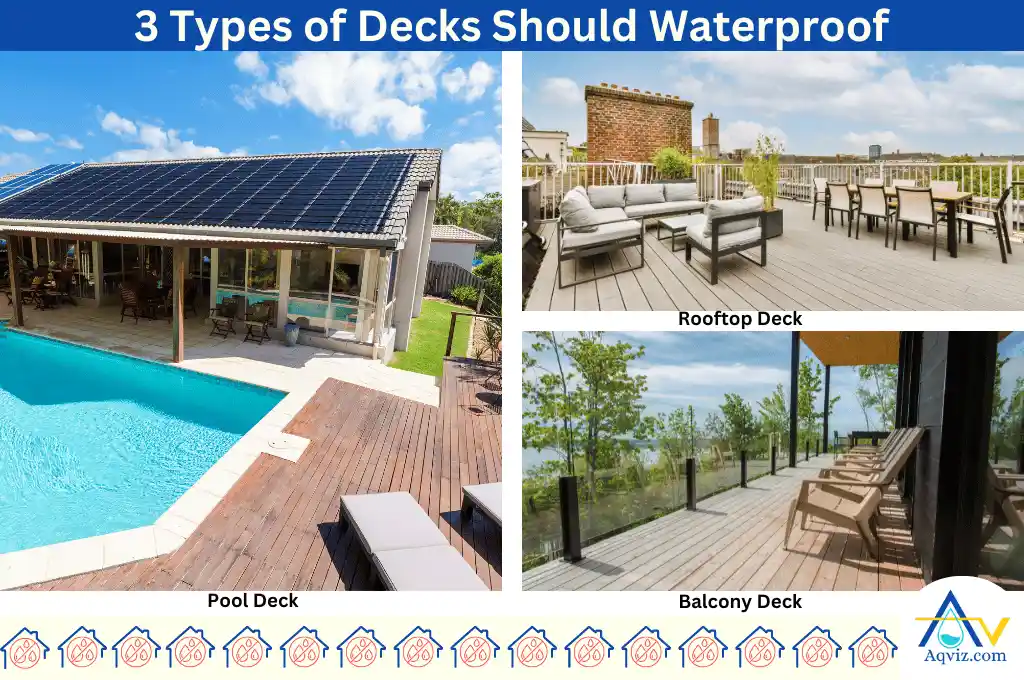
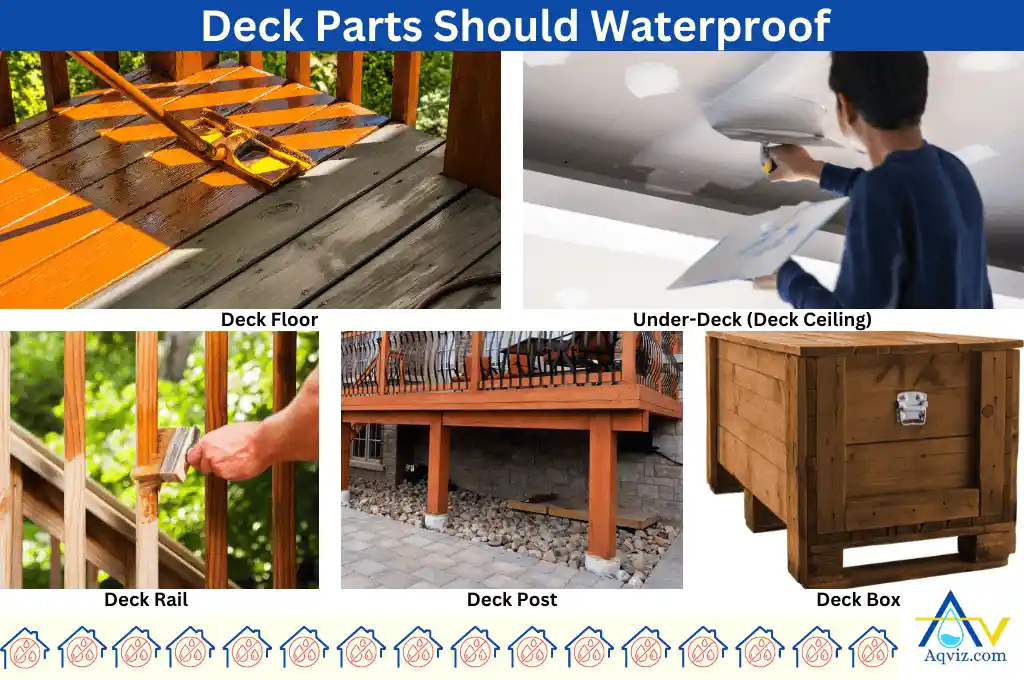
Upper deck waterproofing (deck floor/surface waterproofing) is installing a waterproofing membrane on the deck surface to prevent water penetration into the structure before it reaches the wood deck floor and supporting components. You should waterproof the deck floor due to constant exposure to rainwater, UV radiation, thermal movement, and standing water that accelerate wood rot, concrete cracking, fastener corrosion, and mold growth.
The most waterproof deck floor is upper deck in plywood. These 5 deck materials, such as plywood, concrete, wood plank, steel, and tile-finished decks, must be waterproof to ensure long-term durability, structural safety, and moisture control. To waterproof a deck floor, you can use EPDM rubber sheets, PVC membranes, epoxy waterproof coatings, acrylic elastomeric coatings, and polyurethane liquid-applied membranes.
What is Under Deck Waterproofing?
Under deck waterproofing is the installation of a waterproofing and drainage system below the deck structure to collect and divert water away before it drips to the space underneath and contacts beams, joists, and supporting components. You should waterproof the under deck due to constant water runoff through deck board gaps, wind-driven rain, snowmelt, and condensation that accelerate wood decay, steel corrosion, fastener failure, and mold growth.
The most effective under deck waterproofing system is installed beneath an upper wood or composite deck. These 5 deck materials, such as wood plank, composite boards, plywood sheathing, steel framing, and concrete decks, must be waterproofed on the underside to ensure long-term durability, structural safety, and dry usable space below. To waterproof an under deck, you can use PVC under-deck drainage panels, EPDM rubber sheets, corrugated metal or vinyl drainage systems, liquid-applied polyurethane coatings on soffits, and waterproof membrane-lined gutter systems.
Benefits of Plywood Deck Waterproofing
Plywood deck waterproofing is applying a continuous waterproofing membrane over plywood decking to block water absorption and protect the structural wood layers from moisture-related damage.
There are 7 main benefits of plywood deck waterproofing.
- Increase service life: Plywood deck waterproofing helps to prevent water absorption beyond 12-15% moisture content, which protects plywood from delamination, swelling, and premature structural failure.
- Enhance structural strength: Plywood deck waterproofing helps to maintain plywood panel integrity under live loads of 40-60 lbs/ft² (195-293 kg/m²) by preventing fiber softening and fastener loosening.
- Reduce wood rot formation: Plywood deck waterproofing helps to block prolonged moisture exposure that triggers fungal decay and rot development in exterior-grade plywood.
- Improve UV resistance: Plywood deck waterproofing helps to shield plywood surfaces from ultraviolet radiation that degrades surface fibers and weakens adhesive bonds.
- Minimize maintenance frequency: Plywood deck waterproofing helps to cut recoating and repair cycles from every 2-3 years to 8-10 years, depending on membrane type.
- Limit water leakage: Plywood deck waterproofing helps to stop water migration through joints, screw penetrations, and panel seams that cause ceiling stains and underside damage.
- Increase safety performance: Plywood deck waterproofing helps to reduce surface softening and coating failure that can lead to slip hazards and localized deck collapse.
What is the Inclined Angle for the deck?
The recommended inclined angle for plywood deck waterproofing is 1.2° to 2.4°, which equals a slope of 1:48 to 1:24, or 1/4 inch per foot (6 mm per 300 mm), to ensure positive drainage without affecting usability.
Maintaining a recommended incline angle for the plywood deck helps to: reduce standing water, enhance membrane performance, increase drainage efficiency, minimize plywood swelling, reduce leakage risk, improve freeze-thaw cycle, and enhance the long term durability of the deck.
What Can I use for Deck Waterproofing?
You can use sheet membrane, liquid membrane, sealants, and stains, for deck waterproofing.
- Sheet membrane: Sheet membranes are factory-manufactured waterproofing sheets installed over deck substrates. Using sheet membranes on deck surfaces helps to deliver a uniform thickness of 1.2-4.0 mm, provide long-term durability, resist puncture and chemical exposure, control vapor transmission, protect structural decks, and perform reliably under heavy load conditions. The most used sheet membrane materials are EPDM, PVC, TPO, HDPE, and modified bitumen systems from Firestone, Carlisle, Soprema, GAF, and Johns Manville.
- Liquid membrane: Liquid membranes are fluid-applied waterproofing coatings that cure into seamless elastic layers. Using liquid membranes on deck surfaces helps to create joint-free protection, bridge cracks up to 2.0 mm, accommodate structural movement up to 300-400% elongation, provide UV resistance, allow easy detailing at corners and drains, and support foot traffic loads of 250-300 lbs (113-136 kg). The most used liquid membrane brands are Sika, Mapei, Tremco, GAF, Henry Company, and Master Builders Solutions.
- Sealants: Sealants is one of the most used waterproofing membranes on wood decks. Using sealants on the wood deck helps to reduce surface water absorption, block moisture entry through joints and fastener holes, slow down wood fiber swelling, protect against UV degradation, minimize surface cracking, and extend recoating intervals by 3-5 years. The most used sealants for deck waterproofing are Sikaflex, Tremco, DAP, Loctite PL, Bostik, and Henry Company products.
- Stains: Stains are pigmented or clear penetrating coatings used mainly on wood decks. Using stains on the wood deck helps to repel water, reduce surface checking, enhance wood grain appearance, slow UV fading, control mildew growth, and improve slip resistance on walking surfaces. The most used deck waterproofing stains are Thompson’s WaterSeal, Behr, Cabot, Ready Seal, Olympic, and Defy Extreme.
What are the 5 Deck Waterproofing Membranes?
Deck waterproofing membranes are synthetic layers installed on the deck surface. The main task of the deck waterproofing membrane is to stop water and UV light from reaching the deck surface. These are the most used 5 deck waterproofing membranes: EPDM, PVC, TPO, PU, and EPOXY. We have observed that these are always more durable and minimum cistomer complaints over the past 10 years.
- EPDM waterproofing: EPDM waterproofing membrane is a sheet membrane waterproofing system. Installing an EPDM waterproofing on the deck surface creates a uniform thickness of 1.1-1.5 mm (45-60 mil) layer that resists water penetration, UV radiation, ozone exposure, thermal cycling, and weather aging. EPDM deck waterproofing increases flexibility up to 300% elongation, improves long-term durability of 25-30 years, reduces seam failure due to heat stability, and performs well on plywood and concrete decks.
- PVC waterproofing: PVC waterproofing membrane is a thermoplastic sheet membrane waterproofing system. Installing a PVC waterproofing membrane on the deck surface creates a uniform thickness of 1.2-2.0 mm (48-80 mil) layer that resists water, UV radiation, grease, chemicals, and fire spread. PVC deck waterproofing enhances seam strength through heat welding, improves puncture resistance, reduces microbial growth, and supports high-traffic deck applications.
- TPO waterproofing: TPO waterproofing membrane is a single-ply thermoplastic sheet membrane waterproofing system. Installing a TPO waterproofing membrane on the deck surface creates a uniform thickness of 1.2-1.8 mm (45-70 mil) layer that resists water infiltration, UV radiation, heat aging, and dirt accumulation. TPO deck waterproofing improves energy efficiency due to heat reflectivity, increases seam reliability with hot-air welding, reduces thermal stress on decks, and supports large flat deck surfaces.
- PU waterproofing: PU waterproofing membrane is a liquid-applied polyurethane waterproofing system. Installing a PU waterproofing membrane on the deck surface creates a seamless elastic layer of 1.5-2.0 mm thickness that resists water ingress, standing water, structural movement, and surface cracking. PU deck waterproofing increases crack-bridging ability up to 2.0 mm, improves flexibility up to 400% elongation, allows easy detailing at corners and drains, and performs well on plywood, concrete, and steel decks.
- Epoxy waterproofing: Epoxy waterproofing membrane is a rigid liquid-applied resin-based waterproofing system. Installing an epoxy waterproofing membrane on the deck surface creates a hard, dense layer of 0.8-1.5 mm thickness that resists water penetration, abrasion, chemicals, and heavy loads. Epoxy deck waterproofing increases compressive strength up to 70-90 MPa, improves surface durability, reduces wear from foot traffic, and suits tiled decks and commercial deck areas.
How to Waterproof a Wood Deck?
Deck waterproofing is a process of laying a waterproofing membrane. To waterproof a deck, you should follow the 9 steps below.
- Clean the deck surface: Start by cleaning the deck surface and removing dirt, debris, and any old materials on the surface. You can use a deck cleaner or a mixture of water and mild detergent. In this step, you can use a power washer.
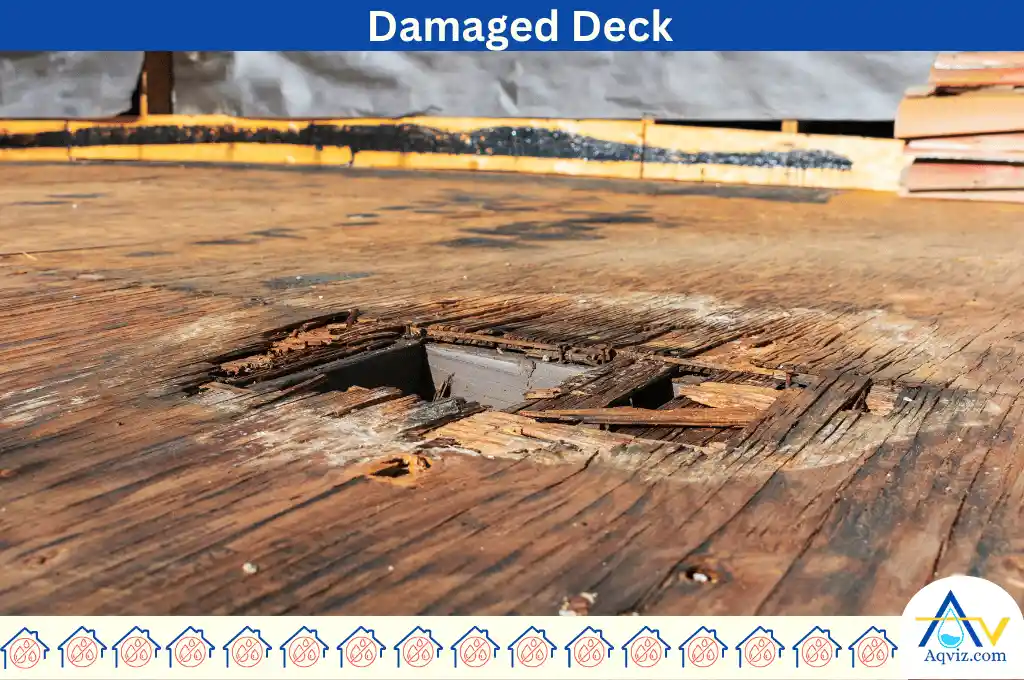
- Repair damaged wooden boards: Inspect the deck for any damaged or rotten boards. Replace or repair them before proceeding with waterproofing. Ensure that the deck structure is in good condition.
- Sand the wood surface: Sand the deck surface to smooth out any rough spots and create a better surface for the waterproofing material to adhere to.
- Apply wood brightener:
- Install wood joint sealants:
- Apply waterproofing material on the deck: Follow the manufacturer’s instructions for the chosen waterproofing material. Typically, you’ll use a brush, roller, or sprayer to apply the product evenly. Ensure that you cover the entire surface, including the edges and ends of the planks.
- Apply finishing topcoat on the wood surface: Depending on the product used, you may need to apply multiple coats for effective waterproofing. Follow the recommended drying time between coats.
This guide help you to waterproof your wood deck properly. How to Waterproof a Wood Deck?
How Many Coats of Waterproof Membrane Should You Apply?
When applying liquid waterproofing membranes on deck surfaces, the number of coats is important to ensure continuous protection, flexibility, and durability over time. Based on our Aqviz experience, here is the recommended coating for each type:
- Sealants: Sealants should be applied in 2-3 coats on the deck surface to fill joints, gaps, and surface pores completely.
- Stains: Waterproofing stains should be applied in 2 coats on the deck surface to ensure uniform penetration and water repellency.
- Polyurethane (PU): PU liquid membranes should be applied in 2-3 coats on the deck surface, achieving a total thickness of 1.5-2.0 mm.
- Epoxy: Epoxy coatings should be applied in 2 coats on the deck surface, building a dense, hard layer of 0.8-1.5 mm thickness for water and chemical resistance.
- Acrylic: Acrylic elastomeric coatings should be applied in 2-3 coats on the surface, achieving a total thickness of 1.0-1.2 mm and full crack-bridging capability.
What happens if the number of waterproofing coatings is reduced:
- Reduced water resistance, leaving gaps in the membrane.
- Increased risk of cracking, blistering, and water infiltration.
- Shorter service life and more frequent maintenance cycles.
What happens if the number of waterproofing coatings is increased:
- Longer curing time and increased material cost.
- Risk of surface unevenness or trapping solvents under thick layers.
- Slightly improved protection, but over-application beyond recommended thickness does not significantly improve performance and can cause adhesion issues.
How Long Does a Deck Waterproofing Last?
Deck waterproofing consists of deck sealant, stains, waterproofing membrane, and deck paints. Deck sealant can last 1 to 3 years. Deck stain can last 2 to 5 years, Deck waterproofing membrane can last long, 5 to 10 years, and deck paint can last 2 to 5 years.
The durability of the waterproofing on the deck depends on the climate, sun exposure, foot traffic, structural stability, maintenance, and quality of the application.
How to Protect a Waterproof Deck?
A waterproof deck should be protected in order to keep the performance of the waterproofing layer. You can follow the steps to protect the waterproof deck.
- Do regular deck inspections: You should periodically inspect the deck for signs of wear, damage, or water intrusion. Check for any areas where the waterproofing may be compromised, such as peeling, cracking, or discoloration.
- Do regular deck repair: You should do regular repairs If you notice any damage or areas where the waterproofing is compromised, make repairs as soon as possible to prevent further deterioration.
- Do regular deck cleaning: You should clean the deck regularly to remove dirt, debris, and other contaminants. You can use a mild detergent or a cleaner recommended by the waterproofing product manufacturer.
- Do not use harsh chemicals on the deck: You should be careful not to use any harsh chemicals on the deck because they can degrade the waterproofing material.
- Protect deck from UV rays: You should apply UV-resistant coating or sealant If your deck is exposed to direct sunlight.
How to Damage a Waterproofed Deck?
A waterproof deck can be damaged due to these 7 reasons, such as
- Deck stability fluctuation: When the deck stability fluctuates due to external forces, the waterproofing membrane can be damaged easily.
- Deck Repairs and Renovation: When you cut and drill on the deck floor for renovation projects, the deck floor can be damaged by the waterproofing layer.
- Exposure of the deck to UV rays: When the deck is directly exposed to the sunlight, the waterproofing layer can be damaged
- Using low-quality materials for the deck waterproofing: With an aging deck, waterproofing can be damaged due to using low-quality materials, because Low-quality waterproofing materials reduce the strength of the waterproofing layer.
- Lack of Deck maintenance: The deck waterproofing membrane can be damaged due to a lack of regular maintenance and inspections.
- Inadequate deck floor preparation: A deck floor waterproofing system can be damaged due to inadequate floor preparation. When you apply the waterproofing layer on the dirt and loose material, its bonding can be reduced.
- Deck exposure to harsh chemicals: When the deck is exposed to harsh chemicals, such as certain cleaning agents or pool chemicals, it can degrade the waterproofing layer.
What are the Dont’s for Deck Waterproofing?
Here are 5 Don’ts for deck waterproofing. Skipping these 5 always damages the waterproofing membrane early.
- Don’t skip surface preparation: You should not skip the surface preparation because dirty, uncleaned, or uneven surfaces reduce the membrane adhesion and cause early failures over time.
- Don’t apply waterproofing on wet surfaces: You should not apply waterproofing on wet or damp surfaces because trapped moisture causes blistering, bubbling, and reduces membrane effectiveness.
- Don’t ignore cracks and joints: You should not ignore cracks and joints because untreated gaps allow water penetration that damages plywood, concrete, or wood decks.
- Don’t reduce recommended coating thickness: You should not reduce the recommended coating thickness because thin or partial layers compromise water resistance and shorten the waterproofing system’s service life.
- Don’t mix incompatible materials: You should not mix incompatible waterproofing materials because adhesion loss and membrane peeling can occur, leading to early failure.
Read More About: 6 Deck Water Problems and Solutions
What is Waterproof Decking?
Waterproof decking is a deck construction system where the deck surface is protected with a waterproofing membrane or coating to prevent water penetration into the deck structure. It ensures that rainwater, snow, or condensation does not damage the underlying plywood, wood, concrete, or steel, maintaining structural integrity, reducing rot or corrosion, and extending the deck’s service life.

Is Composite Decking Fully Waterproof?
Composite decking is not fully waterproof. While it is made from a mix of wood fibers and plastic, which makes it more water-resistant than natural wood, water can still seep through gaps between boards, fastener holes, or edges. Without proper under-deck waterproofing or drainage, moisture can accumulate underneath, leading to structural damage, mold growth, or corrosion of supporting components over time.