
Sump Pump: What it is, Mechanism, Specifications, and Installation

A sump pump is an electrically powered mechanical device that consists of an electric motor and impeller installed in a sump pit or basin to remove accumulated water from basements, crawlspaces, or other below-ground areas prone to flooding or water intrusion. Sump pumps are mainly of 5 types: submersible, pedestal, battery powered, water powered, and combined sump pumps.
The maintask of the sump pump is removing accumulated water from the sump basin to the outside. To do this process therre is a built-in repetitive mechanism in the sump pump system. Sump pump size is measured by the capacity (GPH) and horsepower (HP). To determine the size of the sump pump, you will need these factors: basement area, average annual rainfall, soil type, water table height, vertical lift, and discharge distance.
Normally A standard 1/3 HP sump pump will consume 250 watts, a 1/2 HP will consume 375 watts, and a 3/4 HP will consume 560 watts per day on average. Battery backup is the auxiliary power system for the sump pump.
When installing a sump pump system, you should place the sump basin in the lowest location of the area to receive the gravity flow through the French drain. The discharge distance of the sump pump is 10 -20 feet away from the house’s basement. When you install a sump pump properly, it may last for 7- 10 years on average. So there are many benefits of sump pumps. You should install your right now. We will help you.
What is a Sump Pump?
A sump pump is an electrically powered mechanical device that consists of an electric motor and impeller installed in a sump pit or basin to remove accumulated water from basements, crawlspaces, or other below-ground areas prone to flooding or water intrusion. A sump pump consists of these 5 important specifications, including flow rate (GPH), horsepower (HP), vertical lift, floating switch type, and materials used to build the housing and impeller.
Sump pump flow rate is measured by the Gallons Per Hour (GPH). It determines the number of gallons of water that the sump pump can pump within an hour. Sump pump horsepower is the power of the sump pump. The most available sump pump horsepower are 1/2 HP, 1/3 HP, 3/4 HP. Vertical lift is the maximum height that a sump pump can pump water from its bottom level. The vertical lift of the sump pump decreases with the height of the pump.
The sump pump vertical switch is a type of automatic on/off switch used to control when the pump turns on and off based on the water level in the sump pit. Sump pumps are made of different materials as they withstand corrosion and water impact. The most commonly used sump pump materials are cast iron and thermoplastic. More than that, other minor specifications are cord length, weight, discharge port size, warranty, and solid handling capacity.
Read More About: 7 Best Sump Pump for Basement and Crawlspace: Tested and Used

What are the 5 Types of Sump Pumps?
Sump pump types are mainly 5 types based on the sump pump design and its function.
- Submersible sump pump: A submersible sump pump is a fully enclosed unit designed to sit inside the sump pit, and it is completely submerged in water.
- Pedestal sump pump: A pedestal sump pump is a type of sump pump where the motor sits above the sump pit while the intake pipe extends down into the water.
- Battery-Powered Backup Sump Pump: A battery-powered backup sump pump is a secondary sump pump that activates when the primary sump pump fails due to power outages or mechanical failure.
- Water-Powered Backup Sump Pump: A water-powered backup sump pump is an emergency pump that operates using water pressure instead of electricity or batteries.
- Combination Sump Pump System: A combination sump pump system integrates a primary sump pump (either submersible or pedestal) with a backup pump (battery-powered or water-powered) in a single unit.
We highly recommend that you read more about these 5 types of sump pumps. It includes detailed information about each type and ideal use case.

How Does a Sump Pump Work?
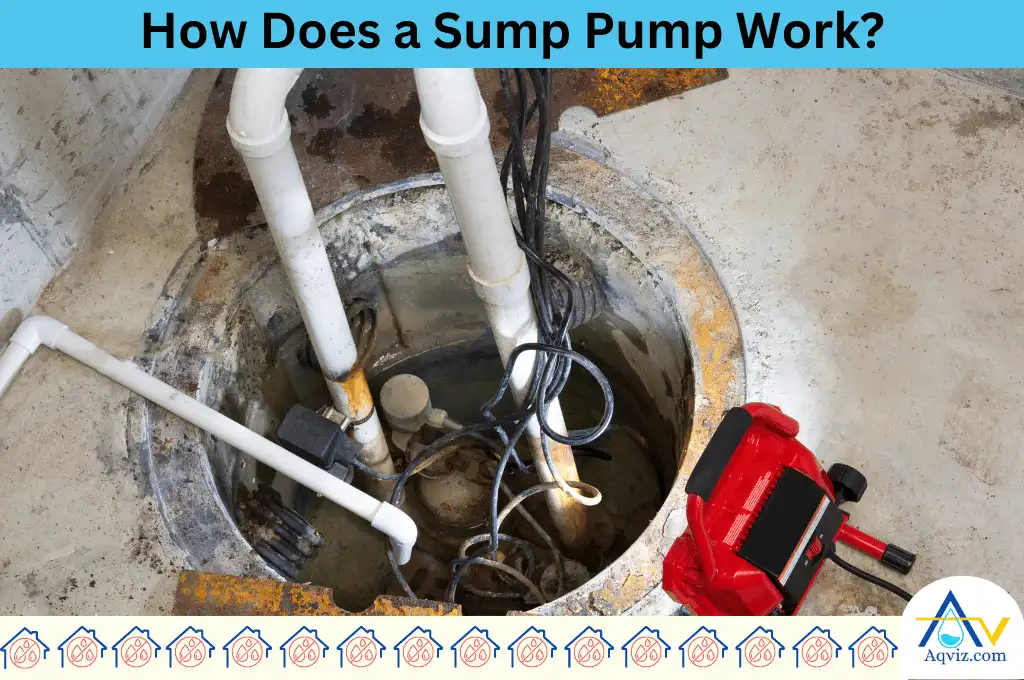
A sump pump works according to the following mechanism. When the sump pit is filled with water following mechanism starts to run, and once the water level drop pump stops.
7 Steps of the sump pump mechanism
- Water collects in the sump pit
- The float rises with the water level
- Float activates the pump motor
- The impeller spins, pushing water into the discharge pipe
- The check valve prevents backflow
- Water is discharged away from the foundation
- The water level drops, the float lowers, and the pump turns off
Aqviz experts have prepared an in-depth guide about How Does a Sump Pump Work?. It will help you to understand the working mechanism of the sump pump.
What is Sump Pump Capacity?
The sump pump capacity is the volume of water a sump pump can remove from a sump pit within a specific time frame, typically measured in gallons per hour (GPH) or gallons per minute (GPM) at a given head height (vertical lift).
The sump pump flow rate decreases with the vertical lift. Most of the sump pumps have a 1500-2000 GPH in 0-10 ft verticle lift.
What is Sump Pump Horse Power?
Pump horsepower (HP) is the measurement of a pump motor’s mechanical power output. It indicates how much work the pump can do to move water against resistance, such as elevation (head height), pipe friction, and flow rate demand. The most commonly used sump pump horsepower are 1/4 HP, 1/3 HP, 1/2 HP, 3/4 HP, and 1 HP.
The higher horsepower sump pumps are more efficient, and it has a higher flow rate and vertical lift.
What is Sump Pump Vertical Lift?
Sump pump vertical lift (also known as static head or head height) is the maximum vertical distance a sump pump can move water from the bottom of the sump pit to the highest point of discharge, usually where the pipe exits the home.
More than that, other minor sump pump specifications are cord length, weight, discharge port size, warranty, and solid handling capacity.
What is the Size of a Sump Pump?
The size of the sump pump is measured by its capacity GPH (Gallons Per Hour). and horsepower HP (1 HP = 735.499 W). To determine the size of the sump pump, you should consider these factors: basement area, average annual rainfall, soil type, water table height, vertical lift, and discharge distance.
By considering all the above factors, Aqviz has prepared a Sump Pump Calculator. It helps you find the best sump pump size according to your data. After years of experience, we can recommend a sump pump size based on your basement area.
If your basement is
- Large basements that exceed 2500 sq. ft need a 3/4 HP sump pump with a capacity exceeding 75 GPH.
- Basement above 2500 sq. ft needs a sump pump exceeding 125 GPH.
- Basement between 1500- 2500 sq. ft needs a sump pump exceeding 100 GPH
- Basements below 1500 sq. ft with heavy rainfall need a sump pump exceeding 75 GPH.
The three main sizes of the sump pumps are 1/3 HP, 1/2 HP, and 3/4 HP. Among them, a 1/3 horsepower sump pump is the best solution for domestic use.
A sump pump with a capacity of 14 GPH is needed for sandy soil, while an 8 GPH sump pump is needed for dense clay soil.
How Much Power Does a Sump Pump Use?
The power of a sump pump is measured by horsepower (HP), while the capacity of a sump pump is measured by gallons per minute(GPM). A standard 1/3 HP sump pump will consume 250 watts, a 1/2 HP will consume 375 watts, and a 3/4 HP will consume 560 watts per day on average.
The sump pump uses electrical energy to collect and pump excess water away from the basement. Using a sump pump depends on the basement size, rainfall, and water accumulation rate.
What are the 8 Parts of a Sump Pump?
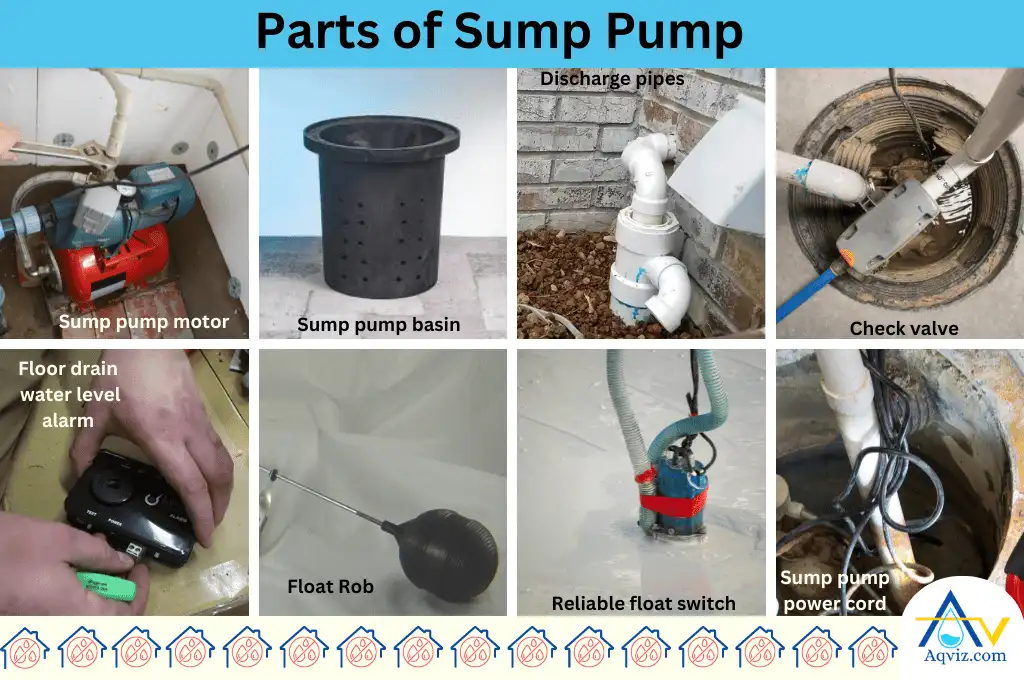
These are the 8 main parts of the sump pump system. Each part is designed for specific tasks.
- Sump pump motor: The sump pump motor’s primary role is to provide electrical energy to power the sump pump. The sump pump motor is a brushless DC motor with a wattage range of 400-1050 Watts. The average speed is 1725 RPM.
- Sump pump basin: The sump pump basin can receive the accumulated water from the French drain. It is placed below the ground level and made out of polyethylene, fiberglass, plastic, and concrete. The average basin size is 18-24 inches in diameter and 30 – 36 inches in depth. The sump pump basin is a central hub that connects the drain and discharge pipes.
- Discharge pipes: The main function of the discharge pipe is to transport water collected into the sump pump basin away from the basement. Discharge pipes should connect to the municipal storm drain system.
- Check valve: Check valves reduce the short cycling and improve the sump pump’s performance.
- Floor drain water level alarm: The floor drain water level alarm signals users when the sump pump basin reaches its maximum capacity by triggering an audible alarm and visual indicators like LED bulbs.
- Float Rob: Float Rob acts as a water level sensor and signals when the sump pump is activated.
- Reliable float switch: A reliable float switch acts as a water level sensor and controls the activation and deactivation of the sump pump automatically.
- Sump pump power cord: The sump pump power cord provides electrical energy to the sump pump motor. It indirectly helps to maintain the water tightness by delivering electrical energy.
There are 20 parts in the sump pump system. These 20 sump pump parts have a specific task and purpose.
Read more: What you should know about Basement Waterproofing?
What is Sump Pump Battery Backup?
A sump pump battery backup is an auxiliary power system that keeps a sump pump operating during a power outage or when the primary pump fails, helping to prevent basement flooding.
The baterry powered system automatically activates when utility power drops and supplies DC power to a dedicated backup pump. Common battery types include lead-acid batteries, such as AGM or deep-cycle flooded batteries, and lithium-ion (Li-ion) batteries. Lead-acid batteries are widely used due to lower cost, while Li-ion batteries offer higher energy density, lighter weight, longer service life, and faster charging.
Most systems operate on 12 V or 24 V DC. Battery capacity typically ranges from 75-200 Ah for lead-acid and 40-100 Ah (equivalent) for Li-ion. During a power cut, runtime usually lasts 6-24 hours, depending on water inflow rate and pump load. Recharge time averages 6-10 hours for lead-acid batteries and 3-5 hours for Li-ion batteries once power is restored.
What is a Sump Basin?
A sump basin is a pit with a container installed below floor level to collect groundwater before it enters a building. The sump pump is placed in the sump basin, and the French drain directs the water to the sump basin.
Standard residential sump basins typically measure 450-600 mm (18-24 in) in diameter and 600-900 mm (24-36 in) in depth, providing a holding volume of approximately 75-190 L (20-50 gal). The basin is usually placed at the lowest point of a basement or crawlspace, directly below the slab or inside a pump pit lined with perforated or solid high-density polyethylene (HDPE) to allow efficient water entry while preventing soil intrusion.
How to Install a Sump Pump?
To install a sump pump properly, you should follow these 10 steps. We have been using these 10 steps for more than 10 years, and it is the most efficient way to install a sump pump easily.
10 Steps for Sump Pump Installations
- Gather relevant tools and materials for sump pump installation
- Identify the lowest point for sump pump installation
- Mark and dig the sump pit
- Install the sump basin (liner)
- Backfill around the sump basin
- Place the sump pump
- Connect the sump pump discharge pipe
- Route sump pump discharge pipe out of the home
- Seal and restore the floor
- Test and power the sump pump system
Our experts have prepared a complete guide on how to install a sump? Including all the professional tips and tricks for the homeowners.
Where Should You Discharge the Sump Pump?
The sump pump should discharge 10 -20 feet away from the house’s basement. The sump pump discharging pipe should be connected to the municipal storm drain or a proper ditch to prevent the water from reentering the cellar.
Sump pump water discharge should not be directed to the neighborhood property or public streets. Improper discharge of the sump pump can raise the water table in the basement, increase basement leaks, cause continuous use of the sump pump, and cause continuous failures in the sump pump.
How Long Do Sump Pumps Last?
The life span of a sump pump is 7- 10 years on average. The life span of the sump pump can be reduced due to frequent usage, the installation of a low-quality sump pump, and improper maintenance habits, such as not cleaning the sump pit and not checking the pump switch.
The parts, such as the impeller, can wear out first due to irregular cleaning practices, accumulation of abrasive materials in the impeller’s blades, the float switch due to short cycling, and the pump motor due to overheating and frequent usage.
What are the Benefits of a Sump Pump?
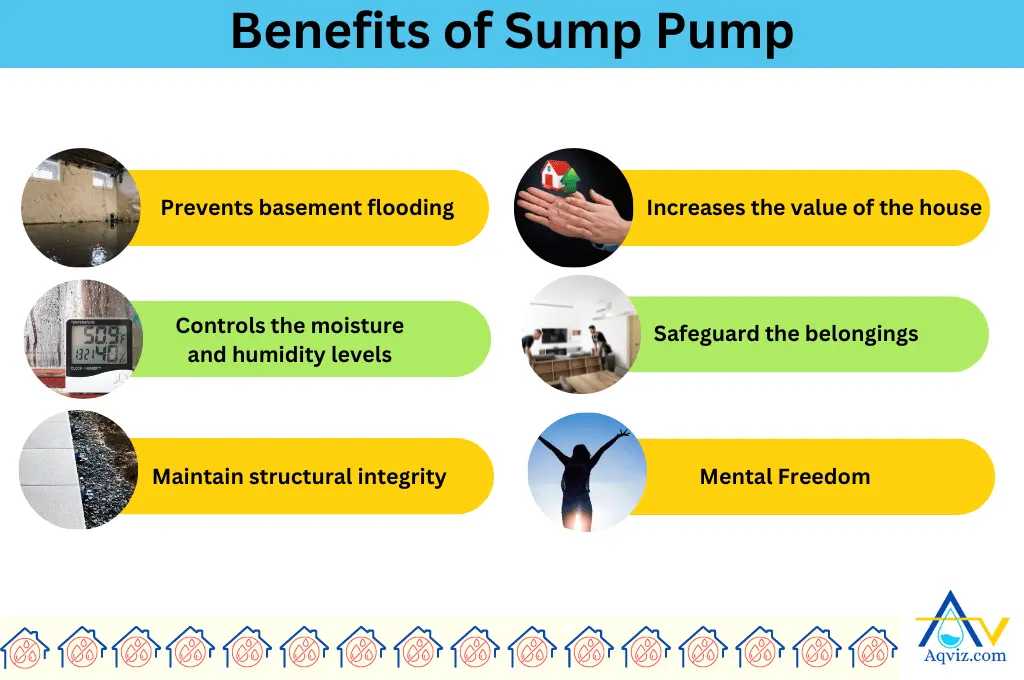
6 benefits of using a sump pump in the basement. These benefits reduce the problems and challenging experience of basement leaking.
- Prevents basement flooding: The sump pump pumps away the excessive rainwater from the foundation during rainy and snow-melting seasons. This helps to reduce water accumulation and basement flooding.
- Controls the moisture and humidity levels: The sump pump removes excess water and keeps the basement dry, avoiding dampness. Therefore, the sump pump maintains the optimum humidity levels and keeps the basement dry, avoiding mold growth and musty odours.
- Maintain structural integrity: The sump pump prevents the basement from exposure to excessive moisture. Excessive moisture can dampen and weaken the basement, reducing the property value.
- Increases the value of the house: The sump pump provides a dry and healthy basement. A dry basement adds value to the house and will be more accessible when reselling the home.
- Safeguard the belongings: The sump pump can divert the excess water and protect the stored furniture, electronic appliances and fabric items in the basement.
- Mental Freedom: The sump pump can relax users during rainy periods by preventing basement flooding and leaks.
What are the Problems of a Sump Pump?
These are the 4 problems of using a sump pump in the basement. These are common 10 sump pump problems. As a result of that, the basement can flood and cause many water-related problems to the house.
- Smell of the sump pump: Since the sump pump transports excess water, water can stay longer and get spoiled. Spoiled water will spread musty and earthy smells to the basement.
- Loudness of the sump pump: The sump pumps can generate whirring and grinding loud noises when running. These loud noises can be disruptive and irritating for users.
- Clogging in the sump pump: The clogs in the sump pump will reverse the flow of water into the basement. Due to clogs, basement flooding can happen, and the sump pump will have to operate continuously, causing money for energy.
- The hose freezing in the sump pump: The hose freezing can occur when the temperature drops below 32℉ and forms ice inside the discharging pipes. The hose freezing can directly affect the sump pump’s performance and cause it to malfunction.
When Should You Replace the Sump Pump?
If you observe these 11 problems in your sump pump, you should replace it.
- Sump Pump Power Failure
- Clogged Sump Pump Discharge Pipe
- Frozen Discharge Pipe
- Stuck or Faulty Sump Pump Float Switch
- Sump Pump is Continuously Running
- Sump Pump Not Turning On
- Overwhelm the Sump Pump
- Sump Pump Backflow
- Sump Pump Humming But Not Pumping
- Sump Pump Motor Burnout
So how to replace a sump pump? Sump pump replacement can be done using this important guide. It includes everything as a step-by-step guide. So we highly recommend you to read it before conducting the process.