
How to Waterproof the Basement Interior?

The basement should be waterproof in order to protect it from seepage and water inside the basement. When you waterproof the basement, you should follow these 7 recommended steps by the Aqviz experts.
7 Recommended steps for interior basement waterproofing
- Identify the water-related problem inside the basement
- Clean the inside of the basement floor and walls
- Repair cracks inside the basement floor and walls
- Install a French drain system in the basement
- Install a sump pump in the basement below the floor level
- Apply a waterproofing membrane on the interior basement floor and walls
- Install a dehumidifier in the basement
After installing the basement waterproofing you should protect it by doing regular inspections and maintenance, keeping gutters and downspouts clean, installing window well covers, doing regular maintenance, insulating the water pipes, and avoiding overwatering the garden. Damproofing the foundation is essential for increasing the basement water protection of a building.
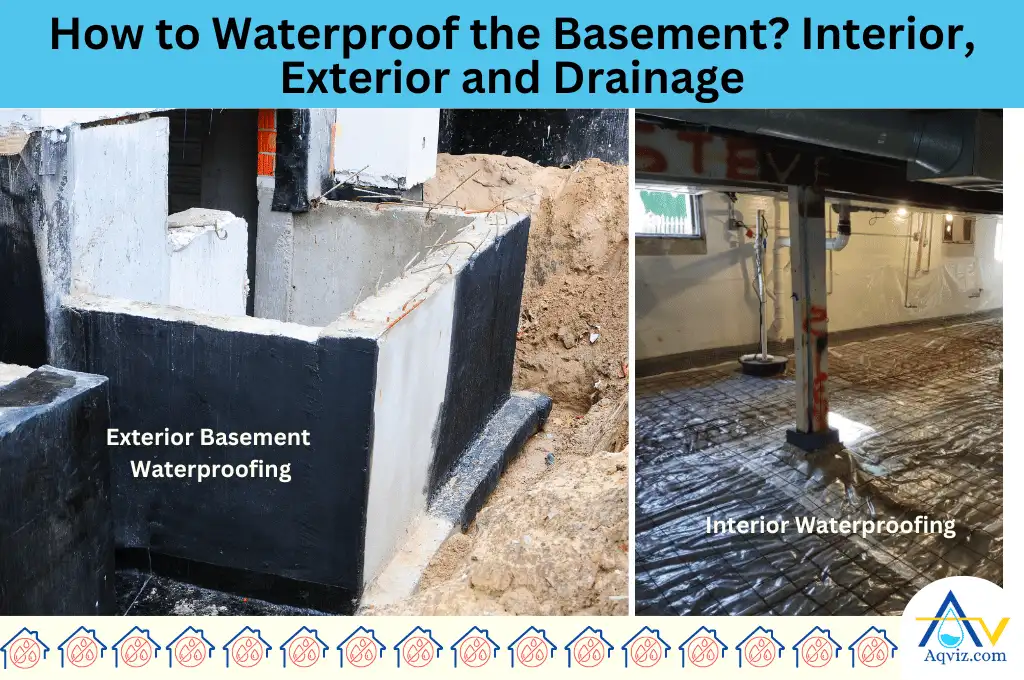
1. Identify the water-related problem inside the basement
The first step of interior basement waterproofing is to identify the source of the water problem. Check if there are any cracks and holes in the basement walls and floor, and mark the seeping areas in the basement. You can do this during the rainy season.
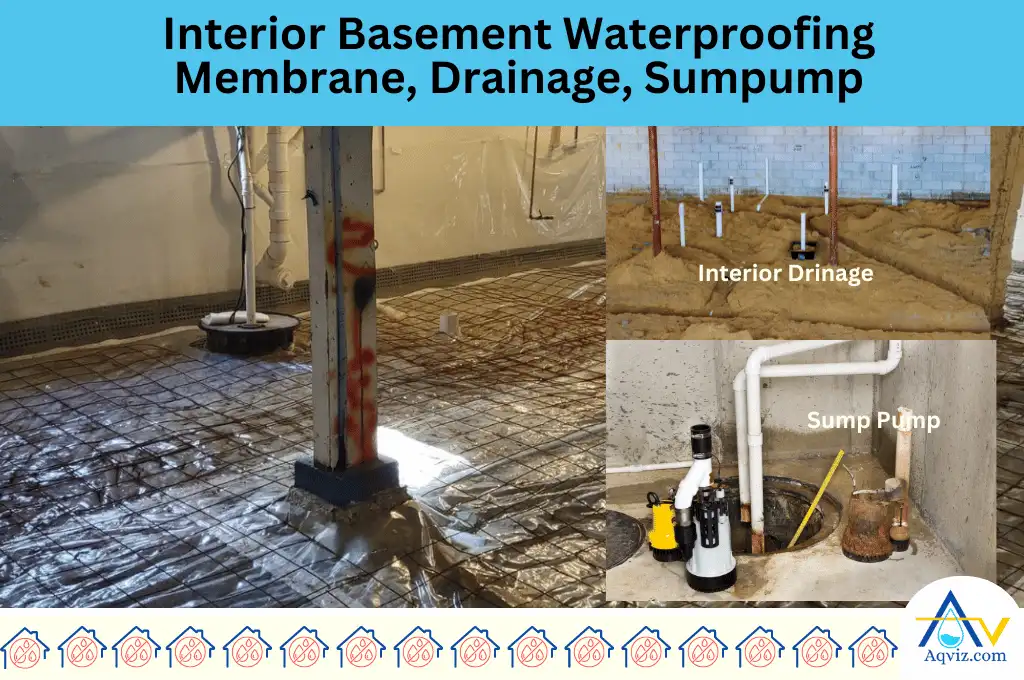
2. Gather essential tools and materials for basement waterproofing
When you waterproof the basement, you will need waterproofing tools and recommended products. Tools are essential for surface preparation and applying the waterproof layer. Waterproof materials are used to create a waterproof layer on the substrate. Hence, you should use below tools and materials below for your basement waterproofing project.
Essential tools for basement waterproofing
- PPE equipment: Use Gloves, glasses, and boots as personal safety equipment.
- Sump Pump and dehumidifier: The Sump Pump is used to remove accumulated water in the basement from the sump well. A dehumidifier is used to control the humidity level in the basement.
- Caulking Gun: A Caulking Gun is used to apply caulk for sealing joints and small cracks in the basement.
- Utility Knife: The utility knife is used to cut the vapour barrier or waterproofing membrane for the basement.
- Hammer Drill and masonry drill bit: Use a hammer drill and masonry drill bit for drilling the basement when needed.
- Trowel: A Trowel is used to apply concrete mix or hydraulic cement in the basement.
- Bucket: A Bucket is used for cleaning the basement surface before waterproofing.
- Sponge: Sponge is used for cleaning the basement surface before waterproofing.
- Paint Roller, brushes, and trowel: Used to apply waterproofing paint in the basement.
Essential materials for basement waterproofing
- Waterproofing Paint: Waterproofing Paint is used to create a seal on the interior basement walls and floor.
- Concrete Sealer: The concrete sealer is used to fill any cracks or holes in the basement’s concrete.
- French Drain: A French drain is used to redirect water away from the basement.
- Vapor Barrier: A Vapor barrier is used to prevent moisture from seeping into the basement.
- Hydraulic Cement: Hydraulic cement is used to repair large cracks or holes in the basement.
- Waterproofing Membrane: A Waterproofing membrane is used to create a waterproof barrier on the exterior of the basement walls.
- Insulation: Insulation is used to help regulate the temperature in the basement and reduce condensation.
- Caulk: Caulk is used to seal joints and small cracks in the basement.
3. Clean inside the basement floor and walls
Once you have identified the problem areas on the basement floor and wall, you should clean them thoroughly. If the water leakage is high, you have to stay until the dry season to clean the surface. You should remove any dirt, debris, or loose concrete on the surface when you clean the basement interior. Waterproof sealants can adhere tightly to the cleaned surface.

4. Repair cracks inside the basement floor and walls
If there are cracks on the basement floor and walls, they must be repaired before applying the waterproofing membrane in the basement. You can use concrete patch products to fill in the cracks. The purpose of this step is to prevent water from seeping through the cracks.
- Tools and Materials for basement crack repairing: Putty Knife, Concrete Patch Product
- Recommended Products for basement: Dap 37584 Liquid Cement Crack Filler, Quikrete Concrete Crack Seal
5. Install a French drain in the basement?
Building an interior drainage system is essential to control the seepage of water in the basement. The interior drainage system is essential for the interior basement waterproofing. Follow these 5 steps to install a French drain system in the basement.
- Identify the heavy water-seeped areas inside the basemen: First, identify where water is seeping into the interior of the basement. This could be anywhere from the basement to the walls or the roof.
- Install Interior Footing Drains: This involves cutting a channel around the perimeter of the basement floor, laying down the perforated drain pipe, and covering it with gravel. The drain pipe should be sloped towards the sump pump pit.
- Install a Sump Pump in the basement below the floor level: The sump pump will pump the water out from the pit and away from the building. Make sure to choose a pump that’s the right size for your basement area and accumulated water volume.
- Seal the basement wall interior cracks: After the sump pump is installed in the basement, you should use a waterproof sealant to seal any cracks or holes in the walls where water might be getting in.
- Fix and finish the basement floor: Once the drainage system is installed, you can pour new concrete over the floor to cover the system.
If there is a higher water table and a higher seepage, Aquiz experts highly recommend you to install a French drain system outside the basement walls. It helps to control the water table and seepage even in heavy rainfall seasons.
Read this guide: How to Install a French Drain?
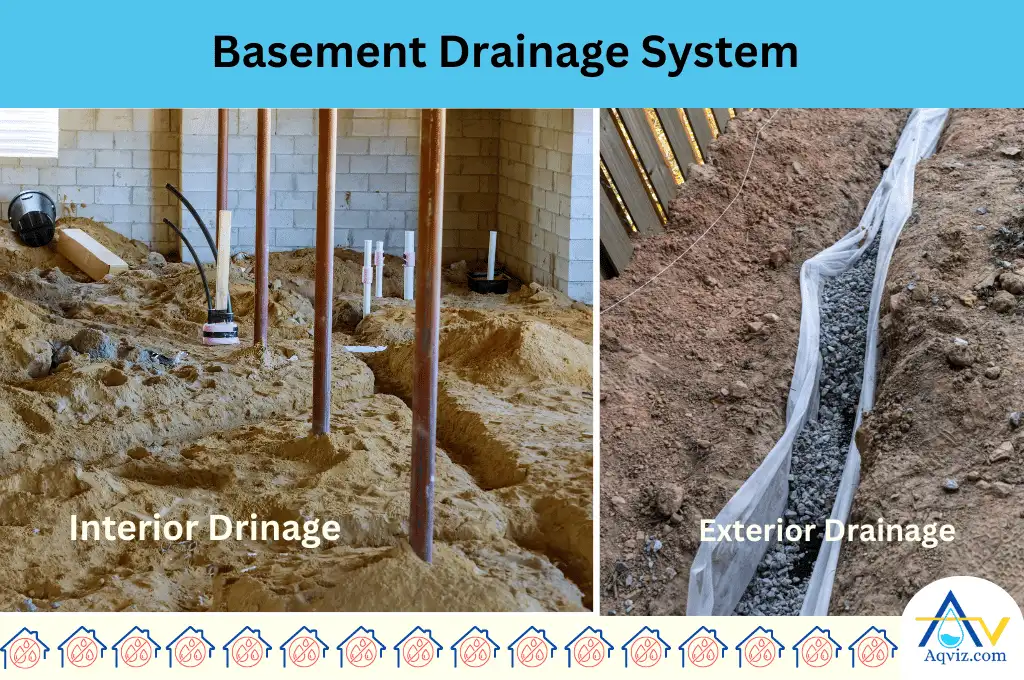
6. Install a sump pump in the basement below the floor level
If your basement tends to have heavy water leaks, you should build a drainage system along the perimeter of the basement. The drainage system can accumulate the seeped interior basement water in the sump well. The sump pump can pump out the accumulated water in the sump well.
- Tools and Materials: Sump pump, PVC pipes, check valve, Gravel
- Recommended Products: WAYNE CDU980E Submersible Sump Pump, Zoeller M53 Mighty-mate Submersible Sump Pump
Read this Aqviz expert guide How to Install a Sump Pump? to know more about sump pump installation process.
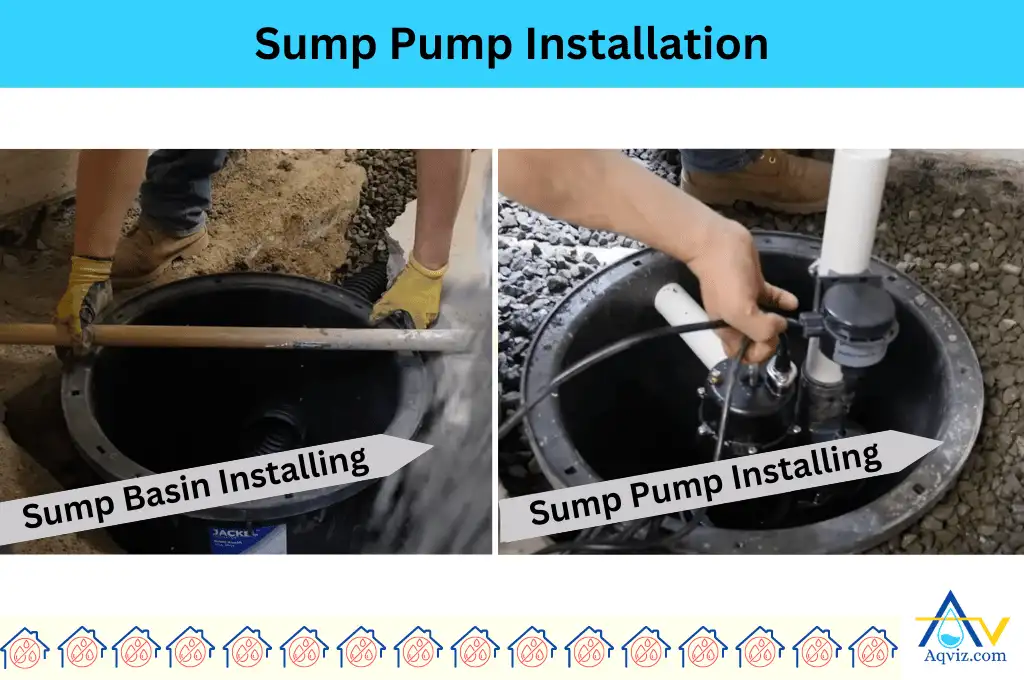
7. Apply a waterproofing membrane on the basement
After crack repairs, you can start sealing the basement floor and walls by using a suitable waterproofing membrane. Basement waterproofing membranes are available as liquid and sheet waterproofing membranes.
You should follow the manufacturer’s instructions and guidelines when you apply the product. After applying the waterproofing membrane, you should keep it for curing. Do not check it for water until it is completely dry.
- Tools and Materials: Waterproofing product, Paint roller, Paintbrush
- Recommended Products: Drylok Waterproofer, RadonSeal Plus Deep-Penetrating Concrete Sealer
8. Install a dehumidifier in the basement.
After the sump pump is installed, you should control the humidity in the basement because humidity inside the basement can cause to build-up mold and mildew. Using a dehumidifier, you can reduce the basement’s interior humidity and prevent mold growth. You can keep the basement inside an always dry condition after this installation.
- Tools and Materials: Dehumidifier
- Recommended Products: hOmeLabs 4,500 Sq. Ft Energy Star Dehumidifier, Vremi 50 Pint 4,500 Sq. Ft. Dehumidifier
How to Protect Basement Waterproofing?
You can protect basement waterproofing by doing regular inspections and maintenance, keeping gutters and downspouts clean, installing window well covers, doing regular maintenance, insulating the water pipes, and avoiding overwatering the garden.
- Do regular maintenance on basement waterproofing: Check your basement regularly for signs of water damage, such as damp spots or mold. If you find any, address them immediately to prevent further damage.
- Keep gutters and downspouts clean around the basement: Clogged gutters can cause water to overflow and accumulate around your foundation, which can damage your waterproofing. Ensure your gutters and downspouts are clean and directing water away from your house.
- Install window well covers to prevent rainwater accumulation in the basement: If your basement has windows, install window well covers to prevent rainwater from accumulating in the wells and potentially leaking into your basement.
- Regularly check and maintain your sump pump in the basement: If you have a sump pump, make sure it’s in good working order. Test it regularly, especially before periods of heavy rain.
- Control interior basement humidity: Use dehumidifiers and/or air conditioners to maintain less humidity.
- Regularly check and repair the exterior basement: Cracks and damage to the exterior foundation can lead to water seeping into your basement. Regular inspections and prompt repairs can help protect your basement waterproofing.
- Avoid overwatering your garden: Overwatering plants located near the foundation of your home can result in water seeping into your basement.
What is Exterior Basement Waterproofing?
Exterior basement wall waterproofing is installing a waterproofing membrane outside the basement wall in order to prevent water from entering the basement. Exterior basement wall waterproofing is more effective than interior waterproofing systems. You can do exterior basement waterproofing on old and new basements. You should follow the steps below to seal your basement properly.
- Excavate the basement outside up to the basement floor level: You should excavate the exterior of the basement up to the basement floor level outside.
- Inspect basement exterior and interior damages: When the basement exterior walls are excavated, you can clearly see the cracks and damage on the basement wall that can cause water to seep inside the basement.
- Repair cracks on the basement wall: After inspecting the process, you should repair cracks on the basement wall. You can do both interior crack repair and exterior crack repair by using waterproof sealants.
- Install Exterior waterproofing membrane: After the crack repair process, you can install an exterior waterproofing membrane on the basement walls. You can use sheet membranes such as bituminous, EPDM, or HDPE as the exterior waterproofing membranes. And manufacturer-recommended waterproof sealant, coating, or paint on the exterior basement walls.
- Install Exterior Drainage System: After exterior waterproofing is done, you should install an exterior drainage system without damaging the basement waterproofing membrane. An exterior basement drainage system is installed at the base of the wall to carry water away from the foundation. This system usually includes a perforated drain pipe covered with gravel.
- Backfill the exterior basement using the excavated soil: After exterior waterproofing is done and the water channel is built, you should backfill the basement outside using the excavated soil.
Read More About: Crawlspace Waterproofing: All You Should Know Before Do it

Should You Waterproof the Foundation?
Yes, you should damp-proof the foundation to protect your home from moisture damage. A waterproof foundation can prevent water from seeping into your basement and causing problems like mold, mildew, and structural damage. You can waterproof the foundation using these 8 step guide to reduce cost and time.