
Bathroom Floor Waterproofing: What to Know Before Installation

Bathroom floor waterproofing involves installing a waterproofing membrane on the bathroom floor in order to prevent water penetration into the structure. You should waterproof the bathroom floor when it is constructed, or see water damage in the bathroom, says Kissimmee property management.
You can install both liquid and sheet waterproofing membranes, including cementitious waterproofing, epoxy, acrylic, bituminous, EPDM, HDPE, PVC, and polymer waterproofing, depending on the substrate material. The average thickness of the bathroom waterproofing coating is between 2.5 and 4mm. You have to spend 6 × 10 feet size bathroom about $750 to $2000, including surface preparation, materials, waterproofing membranes, and labor.
The bathroom floor waterproofing layer can last about 10 to 15 years. To waterproof a bathroof floor, you should follow the steps below. After installing it, you should protect it properly to avoid damage to the layer. So please contact Aqviz, and we will support you to install this properly.

What is Bathroom Floor Waterproofing?
Bathroom floor waterproofing involves installing a water-impervious membrane on the substrate to prevent water and moisture penetration into the structure. Water-sealed bathroom floors can prevent severe water damage, such as preventing water leaking, preventing mold and mildew growth, protecting walls and structure, and improving aesthetic views.
What are Waterproofing Membranes for a bathroom?
You can use the below 8 waterproofing membranes for bathroom water floor stops. All of these waterproofing membranes can be categorized into liquid and sheet membranes. Liquid waterproofing membranes and sheet waterproofing membranes are suitable for bathroom floors.
- Cementitious waterproofing: Cementitious waterproofing can be applied as a liquid coating on the bathroom floor and walls to stop water from leaking.
- Epoxy waterproofing: Epoxy waterproofing is an impermeable, liquid waterproofing membrane that can be used on the bathroom floor and walls. Epoxy can be used for old bathroom water stops, also.
- Acrylic coating waterproofing: Acrylic waterproofing is a liquid waterproofing membrane that can be used for bathroom floors and walls.
- Bituminous coating waterproofing: Bituminous coating waterproofing is a liquid waterproofing membrane that can be used for both bathroom walls and floors to prevent water leaking.
- EPDM Rubber waterproofing: EPDM rubber waterproofing is a sheet waterproofing membrane that can be used to waterproof bathroom shower areas, walls, and floors.
- HDPE waterproofing: HDPE is a sheet membrane waterproofing that can be used for bathroom wall and floor waterproofing.
- PVC waterproofing: PVC is a sheet membrane waterproofing. PVC can be used to waterproof the shower area and bathroom waterproofing.
- Polymer waterproofing: Rubber polymer can be used as positive side waterproofing for the shower areas.

How Many Coats are Needed for Bathroom Floor Waterproofing?
The recommended number of waterproofing coats for the bathroom floor is 3. The average waterproofing coating thickness should be between 2.5 and 4mm uniformly. The first coating thickness should be 1mm. The second coating thickness is 1mm – 2mm. If the manufacturer instructs for the third layer, 3rd coating thickness should be 1mm – 2mm thickness.
Before applying the first coating, you should apply a primer. It can improve the adhesion between the surface and the waterproofing membrane. The number of waterproof coatings depends on the specific waterproofing product that you are using because different waterproofing products have varying application instructions and requirements; hence, you should always read the manufacturer’s guidelines and recommendations for the specific waterproofing product that you are using.
What is the Cost for Bathroom Floor Waterproofing?
The average cost for waterproofing 6 × 10 feet bathroom floor is between $750 to $2000, including surface preparation, materials, waterproofing membranes, and labor. The cost of bathroom waterproofing may vary with the material quality, waterproofing floor size, surface preparation effort, type of waterproofing method, labor rate, and installer’s skill.
You can reduce the cost of bathroom floor waterproofing by doing it yourself (DIY), choosing cost-effective materials, applying a basic waterproofing system, using sealants and paint options, doing regular maintenance, and contacting local suppliers.
How Long Does a Waterproof Bathroom Floor Last?
The durability of the bathroom floor is between 10 to 15 years. Bathroom floors can last long by applying proper waterproof materials, doing proper surface preparation, using a professional service, regular cleaning and maintenance, avoiding using harsh chemicals, improving proper ventilation, and installing floor protectors.
Waterproofing companies offer two types of waterproofing warranties: a 10-year warranty and a lifetime warranty. You can ask them for any repair if the water is leaked during that period. A fully covered warranty will provide you all free, while a partially covered warranty will not cover everything.
How to Waterproof a Bathroom Floor?
To waterproof a bathroom floor, you should follow the below 10 steps guide. Before that, we highly recommend that you provide the essential waterproofing tools and membrane above.
- Clean the bathroom floor: Start bathroom floor waterproofing by removing any dirt, dust, debris, or any oil marks on the surface. After cleaning, let the bathroom floor surface dry.
- Apply primer on the bathroom floor: You should apply the primer on the bathroom floor. Primer helps to improve the adhesion between the waterproofing membrane and substrate properly.
- Cut the membrane according to the bathroom floor width and length: If you use sheet membrane on the bathroom floor waterproofing, you should cut the waterproofing membrane to the measured distances. You had better keep the recommended space for joints and seams.
- Apply adhesive for sheet membranes on the bathroom floor: You should apply the adhesive on the bathroom floor if you lay the sheet membrane on the bathroom floor.
- Lay the membrane on the bathroom floor.
- If you use sheet membrane waterproofing on the bathroom floor, you can lay the waterproofing membrane onto the adhesive while it is still wet. Do not let the air bubbles to included in the waterproofing layer.
- If you use a liquid waterproof membrane, you can apply the coating on the floor by using a spray, brush or roller.
- Seal the joints in the sheet membrane on the bathroom floor: You should seal the joints and seams on the waterproofing membrane on the floor using a waterproof tape that is recommended by the manufacturer.
- Seal edges in the bathroom floor: You should use a silicone sealant to seal the edges where the floor meets the walls, around the toilet base, or any other fixtures that are bolted to the floor.
- Let the waterproof membrane dry: After applying the waterproofing membrane, you should keep it for drying as per the manufacturer’s recommendation. During this time, do not expose the bathroom floor for water.
- Check for bathroom floor leaks: After the bathroom floor is dry, check for any potential leaks. Pay special attention to the seams and edges.
- Install flooring on the bathroom floor: Once the waterproofing layer is completely dry and secure, you can install your desired flooring on top. You can use waterproof grout for grout line waterproofing. It improves the waterproofing capacity of the bathroom floor.
You should not only waterproofing bathroom floor, but you should also waterproof the bathroom walls as well. So read this Bathroom Wall Waterproofing guide, which is prepared by the Aqviz Experts with their 10+ experience.
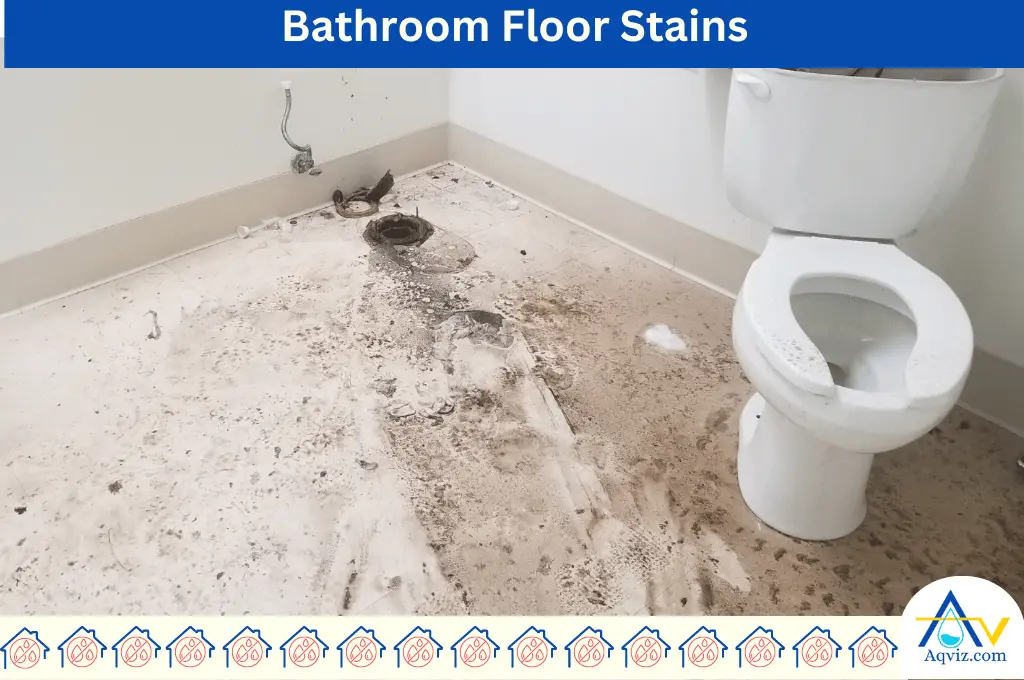
Is a Waterproof Bathroom Floor Stain-resistant?
The stain resistance is a characteristic of the bathroom flooring. Hence, bathroom floors that are made with these materials are stain-resistant.
- Ceramic tile/porcelain tiles
- Vinyl flooring
- Natural stone (glazed)
- Laminating flooring
- Epoxy flooring
Can I Waterproof the Bathroom Over the Tile Floor?
Yes, you can waterproof the bathroom over the tile floor by using waterproofing paint, sealers, and epoxy coatings. If you wish to use the old tile floor as the base of the waterproofing surface, you can use any sheet or liquid membrane on the old tile floor.
What Bathroom Flooring Should Be Waterproof?
You should install a waterproofing layer below these 12 bathroom floorings. These materials are not water-impervious. Hence, their seams and joints can leak water.
- Ceramic tile
- Porcelain tile
- Wood
- Natural Stone
- Bricks
- Burnt clay tiles
- Concrete
- Cork flooring
- Vinyl
- Laminate flooring
- Rubber flooring
- Epoxy flooring
How to Protect Bathroom Floor Waterproofing?
You can protect bathroom floor waterproofing by following the below steps.
- Do regular maintenance: You can protect the bathroom floor’s waterproofing layer and its performance by doing regular maintenance. You should make a way to remove the water properly, reduce the humidity and moisture, let the surface dry, and not apply an unbearable load on the bathroom floor.
- Do not use Abrasive cleaners: You can protect the bathroom floor by using mild, non-abrasive cleaners for the cleaning.
- Avoid heavy loads: You should not place unbearable loads on the bathroom floor. Unbeatable loads can damage the surface as well as the waterproofing layer, which causes wear and tear.
- Fix leaks immediately: High water pressures can deteriorate and loosen the materials. Finally, this can affect the waterproofing layer of the bathroom floor, causing wear and tear. Hence, you should fix the leaks immediately after you observe them.
- Install the waterproofing layer properly: You should install the waterproofing layer with the recommended thickness, coatings, and conditions by using skilled labor. That will prevent the waterproofing damage to the bathroom floor.
How to Damage Bathroom Floor Waterproofing?
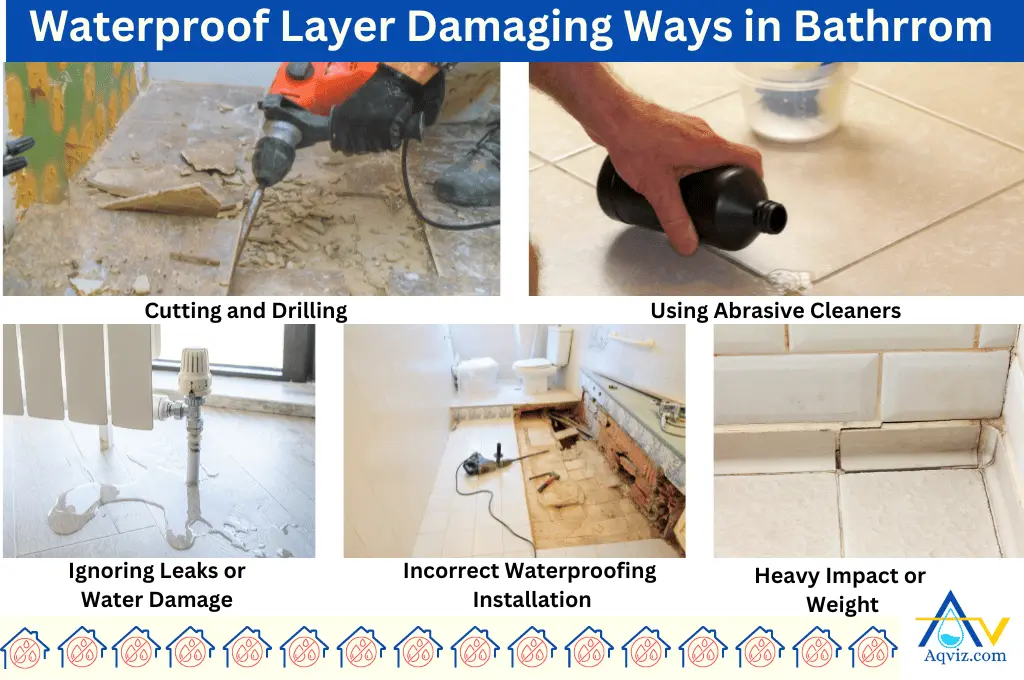
Bathroom floor waterproofing can be damaged due to these 5 common reasons. A damaged waterproof layer always leaks water and causes many water-related problems to the structure.
- Cutting and drilling: Bathroom waterproofing sealant can be damaged due to cutting wheels and drill bits while renovation and fixtures are attached to the bathroom.
- Using abrasive cleaners: The bathroom waterproofing layer can be damaged due to harsh or abrasive cleaners.
- Ignoring leaks or water damage: The bathroom floor waterproofing layer can be damaged due to continuous water leaking. When the water seeps through cracks or gaps and causes the material to loosen and deteriorate over time
- Incorrect waterproofing installation: Incorrect waterproofing installation, such as choosing the wrong membrane, non-uniformity, poor adhesion, and poorly skilled labor, can cause the waterproofing on the bathroom floor.
- Heavy impact or weight: Dropping heavy objects or placing heavy furniture on the bathroom floor can cause the waterproofing material to crack or break.
Should You Waterproof Bathroom Walls?
You should waterproof the bathroom walls in order to prevent water damage from the shower. The bathroom shower wet the attached wall during the shower time. This can increase the dampness of the bathroom shower wall. As a result of this, water can seep into the structure and walls, then create stain marks, mold, and mildew growth over time. First, you should know about bathroom wall waterproofing and bathroom shower waterproofing in order to protect the wall from shower water.