
Deck Construction: 7 Experts’ Advice Before It Begins
Deck construction is the process of designing and building an elevated or ground-level outdoor platform using structural framing, decking boards, fasteners, and protective systems to create a safe, durable, and usable exterior space.
Before starting deck construction, you should consider these 7 things.
- Decide the deck size, load capacity, and layout
- Determine the deck support structure
- Choose the right type of wood material
- Choose non-corroded materials
- Decide the joist spacing
- Choose deck waterproofing and flooring
- Manage the moisture and drainage system
By considering these 7 things, you will optimize your work, save money, save time, choose the best materials, build a prolonged deck structure, protect the deck structure from moisture and corrosion, and maintain and troubleshoot any problem in the deck effectively over its service life.
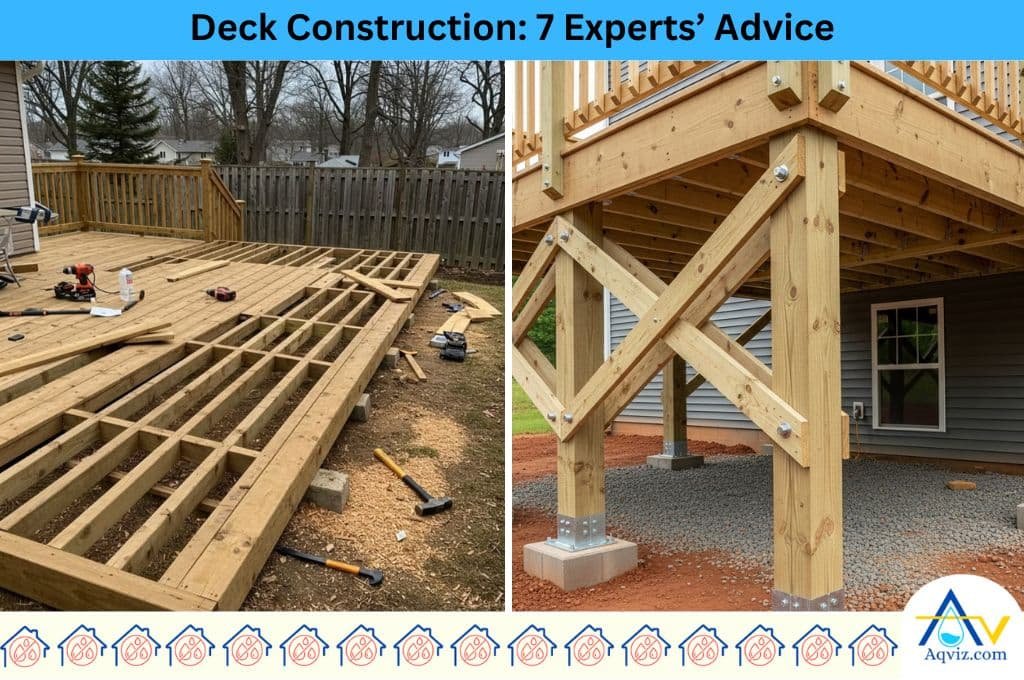
1. Decide the Deck Size, Load Capacity, and Layout
Before constructing your deck, we highly recommend that you pay your attention to the deck size, load capacity, and layout.
Deck size is important to determine the required area of the deck. To determine the size of the deck, you should consider these 8 factors, such as:
- Available yard or rooftop space
- Intended use (dining, lounging, or entertainment)
- Number of people expected to use it
- Furniture and fixtures placement
- Local building codes and setbacks
- Proximity to the house or other structures
- Accessibility and circulation space
- Future expansion plans
Considering these factors helps ensure the deck is functional, safe, and visually balanced.
Load capacity is important in designing the deck structure with materials. So you can determine the rough load capacity for a home deck by calculating a live load of 40 psf (195 kg/m²) and a dead load of 10-15 psf (48-73 kg/m²). This ensures the deck supports people, furniture, and small appliances without sagging or structural failure. Elevated or commercial decks may require higher load ratings up to 60-100 psf (293-488 kg/m²).
Deck layout is the plan of your deck. It includes all the numerical dimensions and aesthetic appeal of the deck you are going to build. It helps to determine the space, materials, joist placement, railing positions, and drainage paths. We highly recommend that you have a clear layout, as it helps for proper estimates and save the money.
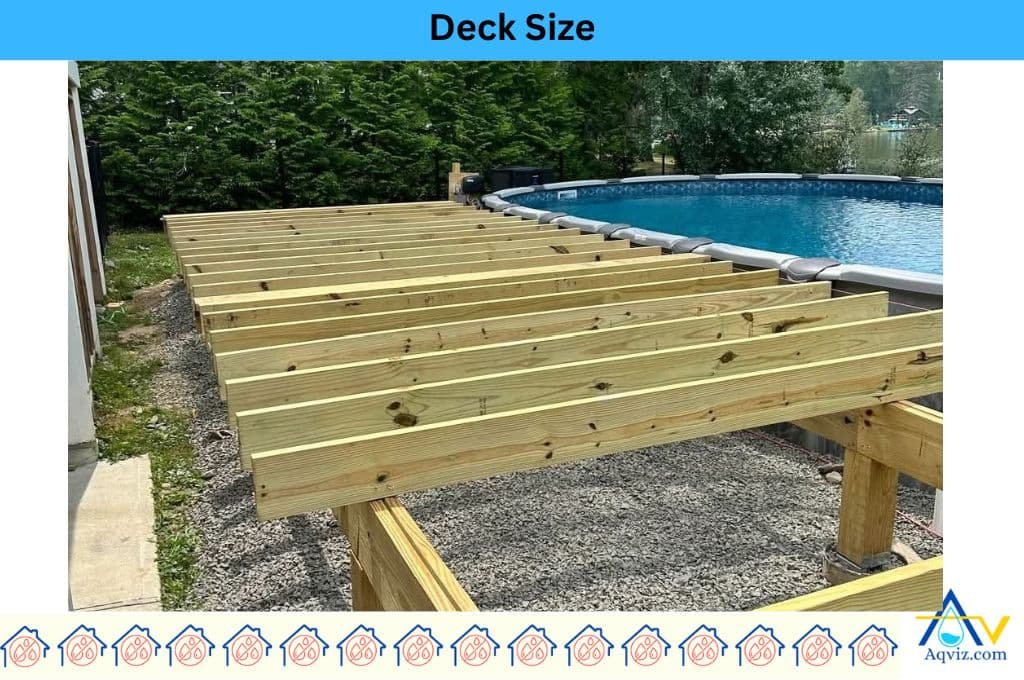
2. Determine the Deck Support Structure
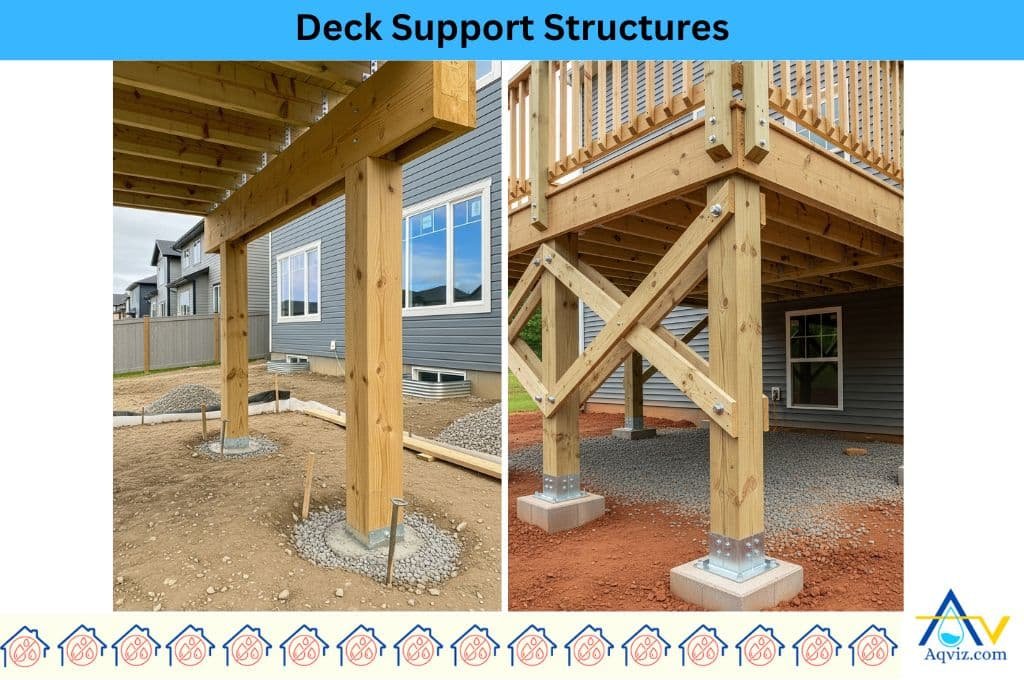
The deck support structure is the backbone of a deck. Deck support structure is responsible for transferring loads from the deck surface safely to the ground. A deck support structure consists of 5 main parts: footings, posts, beams, joists, and ledger boards.
- Footings: Footing is the concrete poured below the frost line. It helps to transfer the deck load to the ground, providing a stable base that prevents settling, heaving, or shifting due to soil movement or seasonal freeze-thaw cycles.
- Posts: Posts are vertical members that support the beams and joists. They help to transfer the deck load from the beams to the footings, providing stability and preventing sagging or collapse.
- Beams: Beams are horizontal members that span between posts. They help to distribute the deck load evenly across the support posts, increasing strength and reducing deflection under heavy furniture or foot traffic.
- Joists: Joists are horizontal boards installed on top of beams. They help to support the deck boards and transfer the load to the beams, ensuring a level and sturdy walking surface.
- Ledger board: The ledger board is the board attached to the house structure. It helps to anchor the deck securely to the house and transfer part of the deck load to the building, providing stability and preventing separation or movement.
3. Choose the Right Type of Wood Material
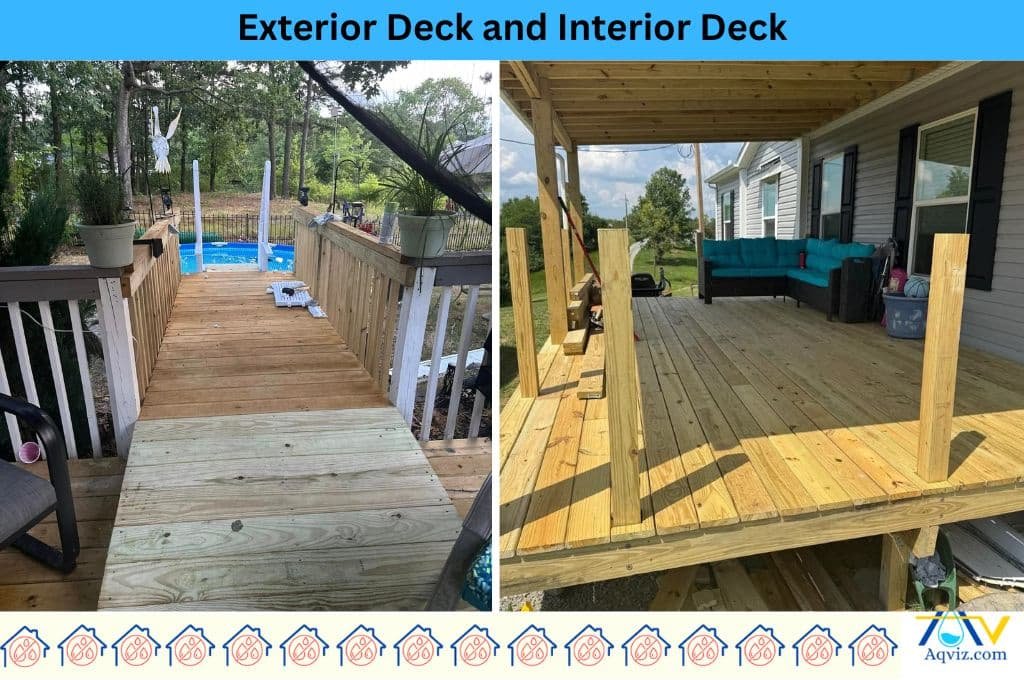
To choose the right types of wood material for the deck, you should consider its strength, water absorption capability, UV resistance, aesthetic appeal, repairs and maintenance frequency, dimensional stability, and load-bearing capacity. By considering these aqviz experts have selected these 5 types of wood materials.
- Natural wood: Natural woods such as Ipe, Cumaru, Teak, Redwood, and Cedar are suitable for deck boards and handrails. Natural woods are dense, rot-resistant, and durable. Hence, they provide premium aesthetics, resist surface wear, and can last 25-50 years on the deck with proper maintenance.
- Composite wood: Composite wood is suitable for deck boards and stair treads. Composite wood consists of wood fibers and recycled plastics, making it moisture-resistant, rot-proof, and UV stable. Hence, it reduces maintenance, improves dimensional stability, and lasts 25-30 years on the deck.
- Engineered wood: Engineered wood, such as LVL and PSL is suitable for joists and beams. Engineered wood is manufactured by bonding wood veneers under pressure, which increases structural strength and span capacity. Hence, it supports higher loads, reduces deflection, and improves overall deck stability.
- Laminated beams: Laminated beams, such as glulam, are suitable for primary beams and long-span supports. Laminated beams are made by bonding multiple wood layers together, which increases load-bearing capacity and dimensional stability. Hence, they are ideal for elevated decks and wide spans with heavy loads.
- Engineered decking boards: Engineered decking boards, such as capped composite or PVC, are suitable for deck flooring and stairs. Engineered decking boards include a protective outer shell that resists stains, scratches, and UV fading. Hence, they maintain the appearance longer and reduce long-term maintenance on the deck.
Read More About:
4. Choose Non-Corroded Materials
When you choose fasteners, nuts and bolts, beams, planks for deck concstruction make sure they are non-corroded. Below is the list of non-corroded materials you can use for deck constructions.
- Stainless steel fasteners
- Hot-dipped galvanized screws and bolts
- Polymer-coated deck screws
- Aluminum railings and connectors
- Epoxy-coated steel hardware
- Copper-compatible connectors
- PVC or composite brackets
Using these non-corroded materials helps to prevent rust formation, fastener failure, and structural weakening caused by moisture exposure. Non-corroded materials improve load-holding capacity, increase connection strength, and reduce the risk of deck collapse over time. They also extend the service life of the deck to 20-30 years, reduce maintenance and replacement costs, and ensure long-term safety in outdoor environments exposed to rain, humidity, and temperature fluctuations.
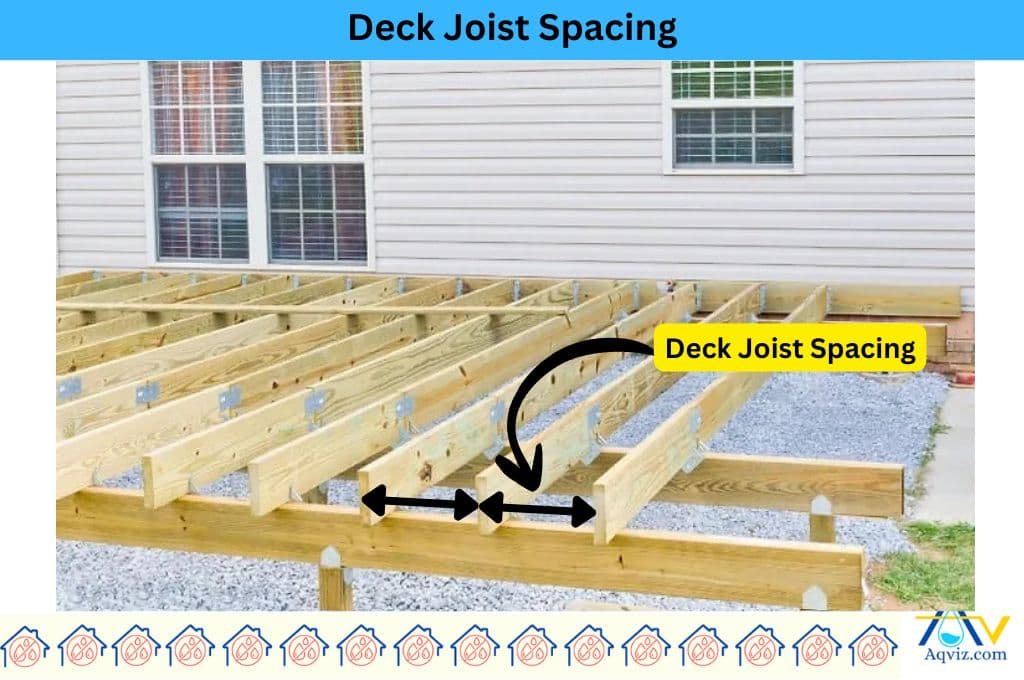
4. Decide the Joist Spacing
Joist spacing is the center-to-center distance between deck joists that support the decking boards and transfer loads to the beams. Proper joist spacing controls deck strength, stiffness, and surface deflection.
These are the recommended joist spacing
- 12 in (305 mm): Used for thin decking boards, diagonal board layouts, and heavy-load areas.
- 16 in (406 mm): Standard spacing for most residential decks with 25 mm (1 in) thick wood decking.
- 24 in (610 mm): Used only for thicker decking or engineered boards designed for wider spans.
Correct joist spacing helps to increase load capacity, reduce board sagging, prevent bounce, and improve long-term deck durability. Proper spacing also improves fastener holding strength and ensures the deck performs safely under live loads of 40 psf (195 kg/m²)
5. Choose Deck Waterproofing and Flooring
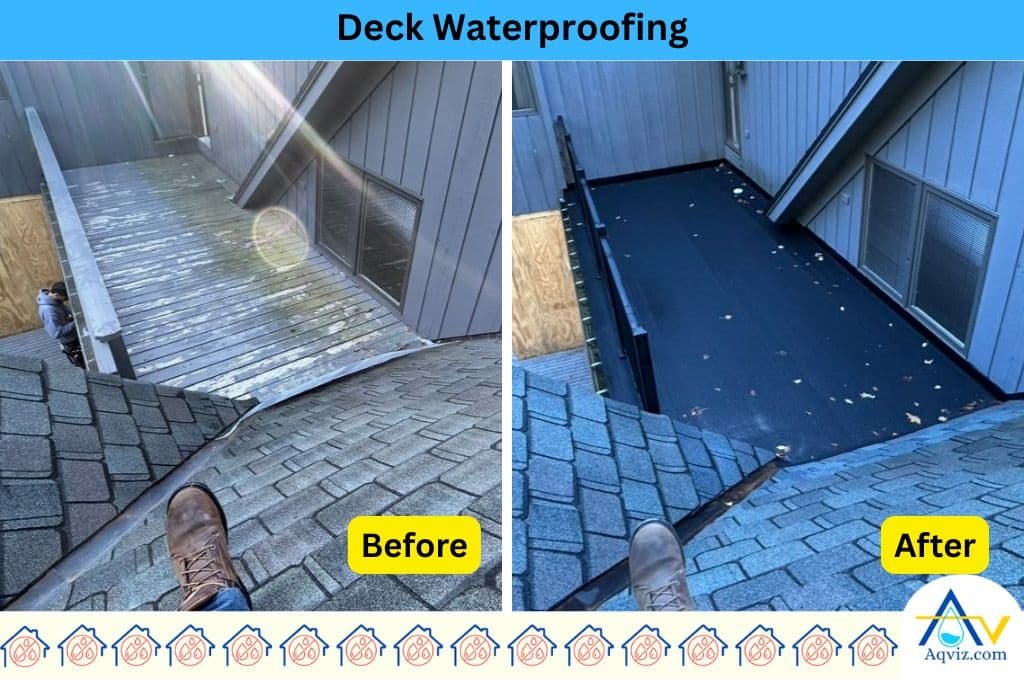
Deck waterproofing is the application of a protective barrier on the deck surface to prevent water from penetrating through the deck surface and damaging joists, beams, and the structure below. To waterproof a deck, you can apply both liquid and sheet membrane waterproofing.
- Liquid-applied membrane waterproofing: Acrylic, PU, Epoxy, and liquid rubber are the most commonly used liquid waterproofings on the deck surface. These can be applied on the deck surface using a roller, brush, or spray. After it is applied, it forms a seamless, flexible coating on the deck surface.
- Sheet membrane waterproofing: PVC, EPDM, TPO, and HDPE are the most used sheet membrane waterproofings on the deck. Sheet membrane applied on the deck surface by gas torch, fastners or ballasted, depending on the membrane type. Sheet membranes are flexible, more water-proof, and have uniform thickness over the surface.
When selecting a proper waterproofing membrane for deck waterproofing you should consider the nature of the surface, location, waterproofing capability, damages, maintenance, and repair frequency.
Deck flooring is the top walking surface of the deck installed over joists, designed to carry foot traffic, furniture loads, and weather exposure. Deck flooring includes several types such as natural wood boards, composite decking, PVC decking, and engineered decking boards. Each deck flooring is selected based on durability, maintenance level, and appearance.
6. Manage the Moisture and Drainage System
Moisture management is the control of water exposure on the deck surface and within the structural components to prevent rot, mold, and material deterioration.
You can manage the moisture on the deck by following 3 ways.
- Maintain proper board spacing of 3-5 mm (1/8-3/16 in) to allow surface water to drain
- Apply water-repellent sealers or stains every 24-36 months
- Ensure adequate airflow below the deck to promote drying.
When you manage the deck moisture properly, it helps reduce wood swelling, cupping, and fungal growth over time.
Drainage management is the system that directs water away from the deck surface and substructure. You should manage drainage by sloping the deck surface at 1-2% (1/8-1/4 in per ft) away from the building, installing drainage channels or under-deck drainage systems, and keeping gutters and downspouts clear.