

In an era of rising energy costs and increasing environmental awareness, the energy efficiency of a home has become a critical factor for both homeowners and prospective buyers. An energy-efficient house not only contributes to a healthier planet but also translates into significant savings on utility bills, enhanced indoor comfort, and often a higher resale value. Understanding how to evaluate a home’s energy performance is essential for making informed decisions, whether you’re looking to reduce your carbon footprint or simply save money. This comprehensive article will guide you through various methods of assessing a home’s energy efficiency, highlight key features to look for, and explain the benefits of professional energy audits and certifications, empowering you to create or choose a more sustainable and cost-effective living space, with property management Richmond VA offering another lens for long-term property planning.
Understanding Home Energy Audits
A home energy audit, also known as a home energy assessment, is a systematic evaluation of a home’s energy consumption. Its primary purpose is to identify areas where energy is being wasted and to recommend improvements that can enhance efficiency.
A. What is a Home Energy Audit?
An energy audit involves a thorough inspection of a home’s structure, systems, and appliances to pinpoint inefficiencies. This can range from obvious issues like leaky windows to hidden problems such as inadequate insulation or inefficient HVAC systems. The goal is to provide a holistic view of a home’s energy performance and suggest cost-effective solutions.
B. DIY Home Energy Assessment
While a professional audit offers the most comprehensive insights, homeowners can perform a basic DIY assessment to identify common energy waste culprits:
- Visual Inspection: Look for obvious signs of wear and tear, such as cracks in walls, gaps around pipes, or damaged weatherstripping around doors and windows.
- Checking Insulation Levels: Inspect insulation in the attic, walls, and floors. Ensure it meets recommended R-values for your climate zone and is free from gaps or compression.
- Identifying Air Leaks: Perform a simple
candle test around windows, doors, and electrical outlets to detect drafts. Smoke pencils or incense sticks can also reveal air movement. - Inspecting Heating and Cooling Equipment (HVAC): Check filters regularly and ensure the system is properly maintained. Note the age of the unit, as older systems are typically less efficient.
- Assessing Lighting and Appliance Efficiency: Replace incandescent bulbs with LEDs and consider the energy ratings of major appliances.
C. Professional Home Energy Audit
For a more detailed and accurate assessment, a professional home energy audit is recommended. Certified energy auditors use specialized tools and techniques to provide a comprehensive analysis:
- Blower Door Test: This test depressurizes the house to locate and quantify air leaks, revealing areas where conditioned air is escaping.
- Thermographic Scan: Using infrared cameras, auditors can visualize heat loss and gain through walls, ceilings, and windows, identifying areas of poor insulation or air leakage.
- Combustion Analysis: This ensures that heating systems are operating safely and efficiently, checking for proper ventilation and potential carbon monoxide leaks.
The auditor provides a detailed report with prioritized recommendations for improvements, often including estimated cost savings and payback periods.
Key Features of an Energy-Efficient Home
When evaluating a home, several key features contribute significantly to its overall energy efficiency.
A. Insulation and Air Sealing
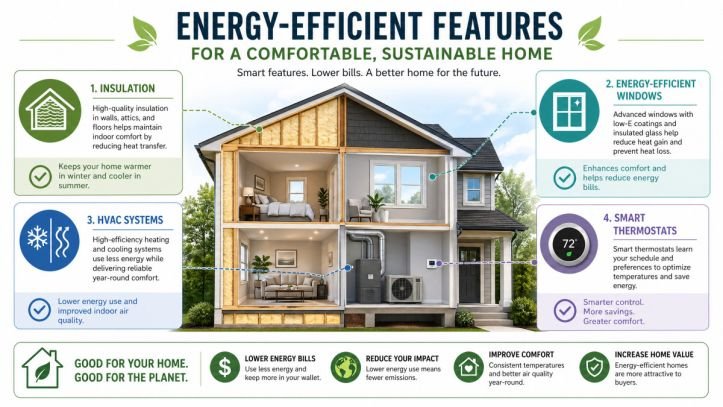
Proper insulation in the attic, walls, and floors is paramount for maintaining comfortable indoor temperatures and reducing the workload on HVAC systems. The effectiveness of insulation is measured by its R-value, with higher values indicating better thermal resistance. Equally important is air sealing, which involves caulking and weatherstripping gaps and cracks to prevent conditioned air from escaping and unconditioned air from entering.
B. Windows and Doors
Windows and doors can be major sources of heat loss or gain. Energy-efficient windows, such as double or triple-pane with low-emissivity (low-E) coatings, significantly reduce heat transfer. Properly sealed and insulated doors also play a crucial role in preventing drafts and maintaining indoor comfort.
C. HVAC Systems
The heating, ventilation, and air conditioning (HVAC) system is often the largest energy consumer in a home. High-efficiency furnaces, air conditioners, and heat pumps, particularly those with ENERGY STAR ratings, can drastically reduce energy consumption. Regular maintenance, including filter changes and professional tune-ups, ensures optimal performance. Proper sizing of the HVAC system is also critical; an oversized unit will cycle on and off frequently, leading to inefficiency and discomfort.
D. Water Heating
Water heating accounts for a significant portion of household energy use. Tankless water heaters, which heat water on demand, and heat pump water heaters, which extract heat from the air, are more energy-efficient alternatives to traditional storage tank models. Insulating hot water pipes and the water heater tank itself can also reduce heat loss.
E. Appliances and Electronics
Modern appliances with ENERGY STAR certification are designed to consume less energy. Beyond major appliances, smart thermostats and home energy management systems can optimize energy use by learning household patterns and adjusting settings accordingly. Unplugging electronics when not in use (vampire load) also contributes to savings.
F. Lighting
Switching from incandescent bulbs to LED lighting can dramatically reduce electricity consumption. Maximizing natural daylight through strategic window placement and interior design can also lessen the reliance on artificial lighting.
G. Roofing and Siding
The exterior envelope of a home plays a vital role in its energy performance. Cool roofs, which use reflective materials, can reduce heat absorption, especially in warmer climates. Insulated siding can add an extra layer of thermal protection to the home’s exterior.
Energy Ratings and Certifications
Several standardized ratings and certifications help quantify a home’s energy efficiency.
A. Home Energy Rating System (HERS) Index
The HERS Index is a nationally recognized system for inspecting and calculating a home’s energy performance. A HERS Index score of 100 represents the energy use of a standard new home, while a score of 0 indicates a net-zero energy home. The lower the HERS Index score, the more energy-efficient the home. This index provides a clear benchmark for comparing the energy performance of different properties.
B. ENERGY STAR Certification
Homes and appliances that earn the ENERGY STAR label meet strict energy efficiency guidelines set by the U.S. Environmental Protection Agency. ENERGY STAR certified homes are typically 10-20% more energy-efficient than standard homes, offering superior comfort and lower utility bills.
C. Other Green Building Certifications
Other certifications like LEED (Leadership in Energy and Environmental Design) and Green Globes also recognize homes built with sustainable and energy-efficient practices, often encompassing broader environmental considerations beyond just energy use.
Improving Your Home’s Energy Efficiency
Even if a home isn’t perfectly energy-efficient, there are many ways to improve its performance.
A. Prioritizing Upgrades
Energy auditors can help prioritize upgrades based on their cost-effectiveness and potential return on investment (ROI). Often, sealing air leaks and improving insulation offer the quickest and most significant savings.
B. Available Incentives and Rebates
Many federal, state, and local governments, as well as utility companies, offer incentives, rebates, and tax credits for energy-efficient home improvements. Researching these programs can significantly reduce the cost of upgrades.
C. Behavioral Changes
Simple behavioral changes, such as adjusting thermostat settings, turning off lights when leaving a room, and using appliances during off-peak hours, can also contribute to reduced energy consumption.
Conclusion: Investing in a Sustainable Future
Evaluating the energy efficiency of a house is a crucial step for any homeowner or prospective buyer. By understanding the principles of energy audits, recognizing key energy-efficient features, and leveraging available ratings and certifications, you can make informed decisions that lead to a more comfortable, cost-effective, and environmentally friendly living space. Investing in energy efficiency not only benefits your wallet and well-being but also contributes to a more sustainable future for everyone. Proactive engagement with your home’s energy performance is an investment that pays dividends for years to come.