

The best place to buy spot welders and frame machines depends on the type of collision repairs a shop performs, its budget, the vehicle manufacturers it services, and the technical support available after purchase. Established suppliers worth comparing include Lombard Equipment, Car-O-Liner, Chief Collision Technology, and Pro Spot International. Each offers a different combination of equipment, specialization, and purchasing support.
For auto body shops planning to upgrade their repair capabilities, the supplier’s ability to provide compatible equipment, training, replacement parts, and ongoing service can matter as much as the initial purchase price. A frame machine or resistance spot welder represents a substantial investment, particularly when modern vehicles require increasingly precise repair procedures.
Shops searching for spot welders and frame machines for sale should begin by identifying their operational requirements before requesting quotes. The right equipment for a small independent collision center may differ considerably from what a high-volume repair facility or manufacturer-certified shop needs.
1. Lombard Equipment: A Supplier Worth Considering for Collision Repair Equipment
Lombard Equipment is one of the names collision repair businesses can investigate when comparing professional auto body equipment suppliers. It belongs on a shortlist for shops interested in evaluating welding equipment, frame repair solutions, and related collision repair tools.
For buyers, the practical starting point is to request information about available equipment models, technical specifications, and purchasing arrangements. Frame repair equipment varies significantly in its lifting capacity, anchoring systems, pulling configurations, and compatibility with measuring equipment. Similarly, resistance spot welders differ in their electrical requirements, welding force, control systems, and suitability for specific vehicle materials.
When contacting Lombard Equipment, shop owners should ask which machines meet their vehicle repair requirements and whether installation, operator training, replacement parts, and technical assistance are available for the equipment under consideration.
A supplier that can provide detailed product documentation and clear service arrangements helps buyers make more informed decisions. However, shops should verify these details directly rather than assume that every machine or support service is available through a particular distributor.
Lombard Equipment may be a useful option for businesses comparing collision repair equipment through a specialist supplier. Its suitability ultimately depends on the models offered, total purchase cost, and the level of support available in the buyer’s location.
2. Car-O-Liner: Integrated Structural Repair and Measuring Systems
Car-O-Liner is an established manufacturer of collision repair equipment, particularly known for structural repair systems, vehicle measuring technology, and welding solutions.
Its product portfolio includes frame benches, anchoring systems, electronic measuring equipment, and welding products designed for professional collision repair environments. These systems can appeal to repair facilities that want to coordinate structural pulling, measurement, and documentation within a broader equipment ecosystem.
One consideration is integration. Shops using a Car-O-Liner bench may benefit from investigating compatible measuring systems and accessories, especially when structural repairs require accurate vehicle dimensions and repeatable procedures.
However, the cost of a complete system can extend beyond the primary machine. Anchoring accessories, measuring components, training, installation, and maintenance may add to the total investment.
Car-O-Liner deserves consideration from shops performing frequent structural repairs, particularly those looking to develop a coordinated repair workflow. Buyers should confirm current product availability, manufacturer requirements, and local distributor support before making a decision.
3. Chief Collision Technology: Frame Repair and Structural Measuring Equipment
Chief Collision Technology is another established name in the automotive collision repair industry. Its equipment portfolio includes structural repair systems, frame racks, pulling equipment, and vehicle measuring solutions.
Chief equipment can be relevant for shops that regularly handle collision damage involving vehicle structure, alignment, and dimensional restoration. Its range allows buyers to investigate different equipment configurations based on repair volume, available floor space, and the types of vehicles being serviced.
A major consideration when evaluating a frame machine is the physical layout of the workshop. Some systems require dedicated working areas, while others offer configurations suited to different shop arrangements.
Buyers should also examine anchoring capabilities, pulling arrangements, measurement compatibility, and the availability of appropriate accessories.
Chief is particularly relevant to businesses prioritizing structural repair capabilities. Shops that also need resistance spot welding equipment should separately compare suitable welding systems and verify their compatibility with manufacturer repair procedures.
4. Pro Spot International: A Specialist in Resistance Spot Welding
Pro Spot International is particularly relevant for collision repair shops researching resistance spot welders and related joining equipment.
The company manufactures welding and repair equipment for automotive applications, including resistance spot welding systems, MIG welding equipment, and other collision repair tools.
For shops replacing an older spot welder, Pro Spot provides an opportunity to compare welding technology without necessarily purchasing a complete structural repair system.
When evaluating its equipment, technicians should examine welding current, electrode force, cooling arrangements, welding gun accessibility, and available automatic operating functions.
These specifications matter because modern automotive steels require controlled joining procedures. A machine must also be suitable for the repair methods specified by the relevant vehicle manufacturer.
Pro Spot is worth comparing for welding-focused purchases. Buyers seeking both a frame machine and a welder should establish whether their chosen distributor can supply and support both categories.
5. GYS: Welding Technology for Modern Vehicle Materials
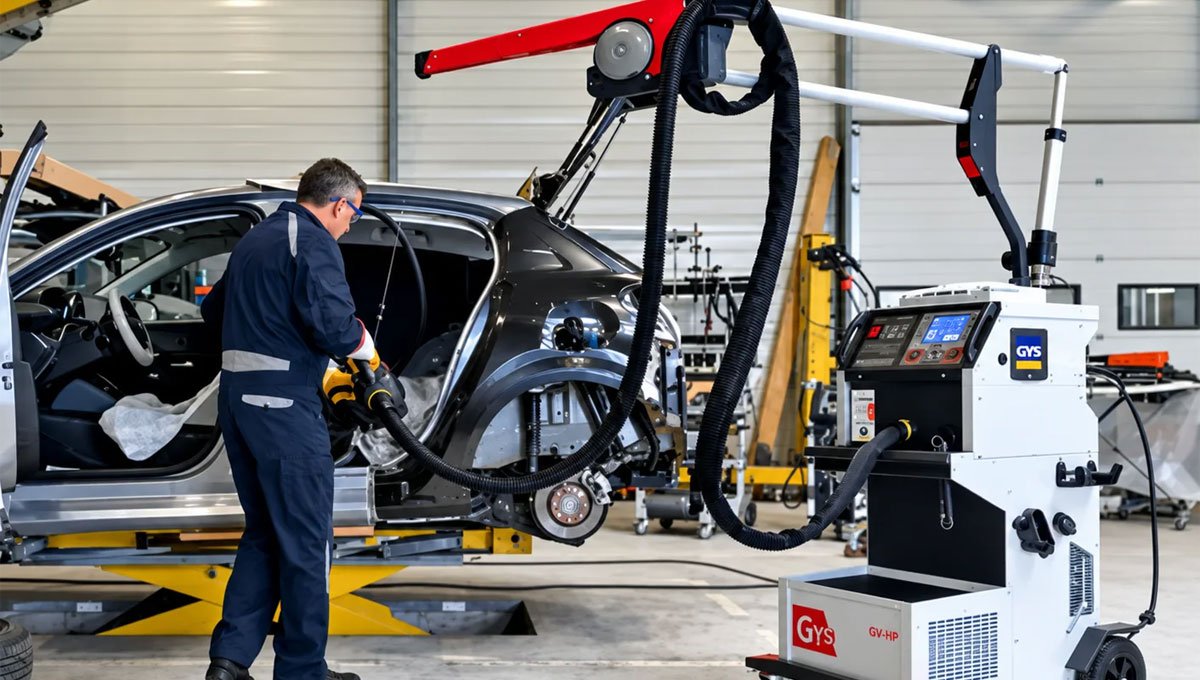
GYS is a French manufacturer offering welding equipment for automotive repair, including resistance spot welders, MIG/MAG systems, and other metal joining solutions.
Its welding products are relevant to shops working with modern vehicle structures, where material specifications and manufacturer repair procedures influence equipment selection.
GYS equipment is also distributed through specialist collision repair suppliers, including Lombard Equipment. This gives buyers an opportunity to evaluate the manufacturer’s welding technology alongside distributor services such as installation and technical support.
The main limitation for buyers seeking a complete structural repair setup is that GYS should be evaluated primarily for its welding and joining products. Frame machines may need to be sourced separately through another manufacturer or distributor.
For businesses concentrating on welding upgrades, GYS belongs on the comparison list.
What Should Auto Body Shops Look for in a Spot Welder?
Choosing a resistance spot welder requires more than comparing maximum output figures.
Modern vehicle manufacturers specify repair methods according to material type, structural location, and joining requirements. High-strength steels and other advanced materials can require carefully controlled welding parameters.
Automatic parameter adjustment, electrode force, cooling performance, and welding gun accessibility are important considerations. Shops should also confirm whether the machine supports the procedures required by their vehicle manufacturers.
Electrical infrastructure deserves attention as well. Some professional welding systems require specific power supplies or electrical installations.
A supplier should provide documentation explaining the machine’s operating requirements, maintenance schedule, and compatible accessories.
How to Choose the Right Frame Machine
Frame machines represent another significant investment, particularly for facilities expanding their structural repair services.
The first consideration is vehicle compatibility. Shops repairing passenger vehicles, SUVs, light trucks, or larger commercial vehicles may require different lifting capacities and anchoring arrangements.
Available workshop space also affects equipment selection. Buyers should measure their repair bays and consider technician access, vehicle loading, pulling equipment, and surrounding workflow.
Structural measuring technology is equally important. Electronic measuring systems can help technicians evaluate vehicle dimensions against applicable reference data and document repairs.
Shops should confirm whether measuring equipment is included in the quoted package or sold separately.
Finally, training and service availability should influence the purchase decision. A frame machine requires proper setup and operation, and access to replacement components can affect workshop productivity over time.
Should Shops Buy New or Refurbished Equipment?
New equipment generally provides access to current product configurations, manufacturer warranty arrangements, and updated technical documentation.
Refurbished equipment may offer lower initial costs, particularly for smaller businesses or shops replacing existing machinery.
However, buyers should investigate the equipment’s service history, refurbishment process, warranty coverage, and availability of replacement parts.
Lombard Equipment advertises both new and refurbished collision repair equipment, including refurbished Pro Spot welding systems. Buyers considering these options should request information about inspection procedures, included accessories, and warranty terms.
Used frame machines require additional scrutiny. Their structural condition, hydraulic components, anchoring systems, and compatibility with current repair procedures should be assessed before purchase.
Comparing Total Ownership Costs
The purchase price is only one part of the financial calculation.
Installation, electrical upgrades, operator training, maintenance, consumables, replacement electrodes, measuring accessories, and potential software requirements can all influence long-term costs.
Requesting itemized quotations makes comparisons easier. Each quote should identify the equipment model, included accessories, delivery charges, installation arrangements, warranty conditions, and available support.
For shops pursuing manufacturer certification, verifying equipment acceptance before purchasing is particularly important. Approval may depend on the exact model, configuration, and applicable certification program.
Where Should Auto Body Shops Buy Their Equipment?
For shops seeking both spot welders and frame machines, the strongest starting points are established collision repair equipment distributors and manufacturers with accessible service networks.
Car-O-Liner offers a broad equipment ecosystem covering structural repair, measurement, and welding. Chief is particularly relevant for frame repair and measuring systems. Pro Spot and GYS deserve consideration when welding technology is the primary purchasing priority.
Lombard Equipment provides another option, particularly for shops in its eastern United States service regions that want to compare welding systems and frame machines through one distributor. Its published product range includes GYS welding equipment and Chisum structural repair systems, with installation and training services advertised alongside equipment sales.
There is no universally best supplier for every collision repair business. The most suitable purchasing decision comes from comparing equipment compatibility, documented manufacturer requirements, total ownership costs, and the availability of qualified technical support.
A shop that gathers detailed quotations from several established suppliers can make its final decision based on measurable operational needs rather than brand recognition alone.
