
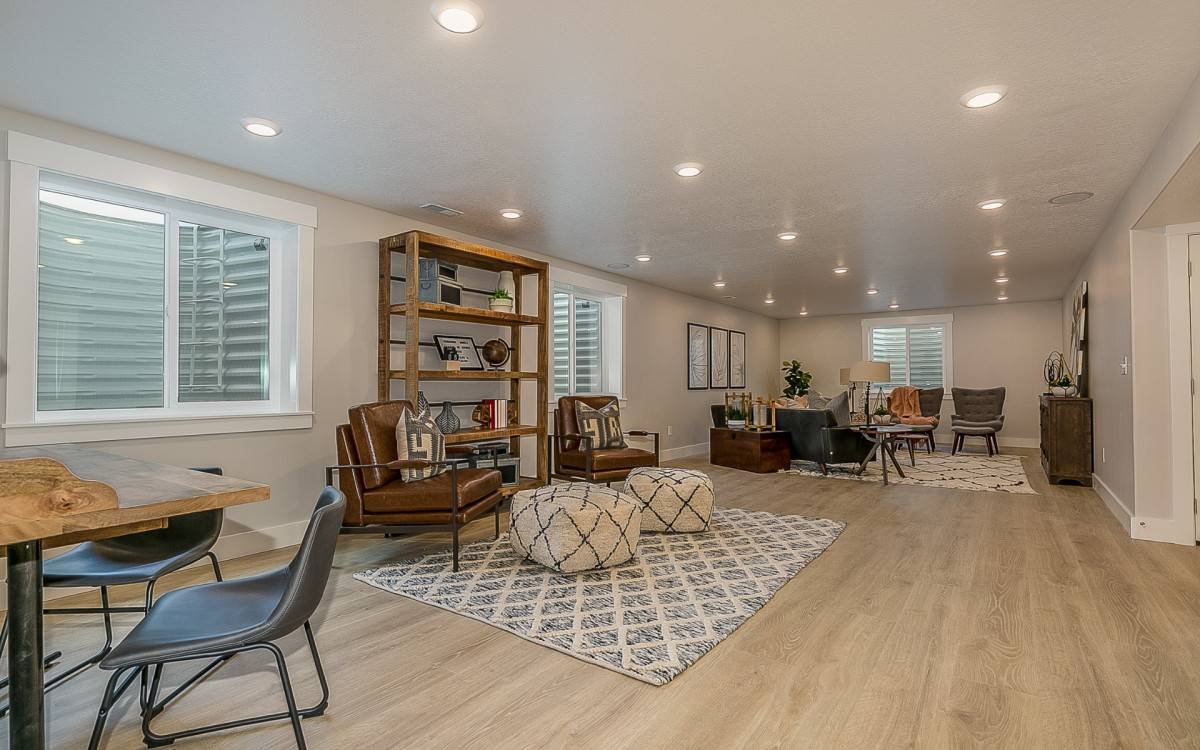

You have 800 square feet of empty basement space. It is currently concrete floors, exposed joists, and a single bare lightbulb. You want to turn it into a family room, a home office, a guest bedroom, and a bathroom, notes property management specialists. You have been watching basement renovation videos for three months, and you still cannot find a straight answer on what it will actually cost.
Finishing a basement costs between $30 and $75 per square foot for a standard build-out, with most projects falling between $40 and $60 per square foot. An 800-square-foot basement finished to a mid-range standard costs $32,000 to $48,000. A high-end finish with a bathroom, wet bar, custom built-ins, and premium flooring can exceed $80,000. The range is wide because basements vary dramatically in their starting condition, and the cost depends far more on what is already in your basement than on what you want to put there.
Cost Per Square Foot: The Real Numbers
| Finish Level | Cost Per Square Foot | What You Get |
| Basic | $30–$40 | Framed walls, drywall, painted, basic electrical, carpet or vinyl plank flooring, drop ceiling |
| Mid-range | $40–$60 | Basic plus: drywall ceiling, recessed lighting, LVP or engineered wood flooring, a half bathroom, upgraded trim, solid-core doors |
| High-end | $60–$100+ | Mid-range plus: full bathroom, wet bar or kitchenette, custom built-ins, soundproofing, premium flooring, custom lighting, home theater wiring |
These numbers assume the basement is already dry, has adequate ceiling height of at least seven feet, and has no significant structural issues. If your basement needs waterproofing, underpinning to increase ceiling height, or structural repairs, the cost increases substantially before the finishing work even begins.
What Drives the Cost Up or Down
The biggest cost variable is whether you are adding a bathroom. A half bathroom adds $5,000 to $10,000. A full bathroom with a shower adds $10,000 to $20,000. The cost is driven by the plumbing rough-in. If your basement already has a roughed-in bathroom drain in the concrete floor, the cost is at the low end. If the plumber must jackhammer the concrete slab to install new drain lines, the cost is at the high end. A bathroom located far from existing plumbing lines costs more than one located near the main stack.
Ceiling height matters. Building codes require a minimum ceiling height of seven feet for habitable space. If your basement ceiling is below seven feet, you cannot legally finish it as living space. Some homeowners finish low-ceiling basements anyway and use them as storage or utility rooms, but you cannot call them bedrooms or living areas when you sell. If the ceiling is between six and seven feet, you can sometimes gain height by removing the existing ceiling finish and exposing the joists, or by lowering the concrete floor through underpinning, which costs $50 to $150 per square foot on its own and is rarely worth the expense unless the basement is large and the rest of the house is valuable.
Egress requirements add cost. Building codes require every bedroom to have an emergency exit directly to the outside. An egress window or door costs $2,500 to $5,000 installed, including cutting the foundation wall, installing the window well, and adding a drain and ladder. If you are adding a bedroom, budget for the egress. If the basement has a walk-out door to grade, you save this cost.
Moisture and waterproofing problems must be fixed before finishing. Painting over a damp foundation wall traps moisture and guarantees mold within two years. Exterior waterproofing costs $5,000 to $15,000. Interior waterproofing with a French drain and sump pump costs $3,000 to $8,000. Test your basement for moisture before you start. Tape a square of plastic sheeting to the concrete floor and the foundation wall. Leave it for 24 hours. If condensation forms under the plastic, you have a moisture problem that must be addressed before finishing.
HVAC extension adds $2,000 to $5,000 to extend existing ductwork into the basement. If your furnace does not have enough capacity to heat and cool the additional square footage, you may need a separate mini-split system, which adds $3,000 to $7,000.
Electrical and lighting costs run $3,000 to $6,000 for a standard basement with outlets every twelve feet, overhead lighting, and dedicated circuits for a home theater or workshop equipment. If your electrical panel does not have space for additional circuits, a panel upgrade adds $1,500 to $3,000.
Cost Breakdown by Component
| Component | Cost Range (800 sq ft basement) |
| Framing and insulation | $3,000–$6,000 |
| Drywall (walls and ceiling) | $4,000–$8,000 |
| Flooring (LVP, carpet, or engineered wood) | $3,000–$7,000 |
| Electrical rough-in and fixtures | $3,000–$6,000 |
| Plumbing (half bath) | $5,000–$10,000 |
| Plumbing (full bath) | $10,000–$20,000 |
| HVAC extension | $2,000–$5,000 |
| Doors, trim, and millwork | $2,000–$4,000 |
| Paint | $1,500–$3,000 |
| Egress window (if needed) | $2,500–$5,000 |
| Permits | $500–$2,000 |
These are installed costs using licensed contractors for a mid-range finish in an average market. Costs in major metropolitan areas are 20 to 40 percent higher. Costs in rural areas with lower labor rates are 10 to 20 percent lower.
DIY vs. Hiring a Contractor
DIY basement finishing can reduce the cost by 40 to 60 percent. An 800-square-foot basement that costs $40,000 with a contractor might cost $16,000 to $24,000 in materials if you do the work yourself. The savings come entirely from labor. Materials cost the same whether you buy them or the contractor does.
The trades you can reasonably DIY are framing, insulation, drywall hanging, painting, trim installation, and flooring installation. The trades you should hire a professional for are electrical rough-in, plumbing rough-in, HVAC extension, drywall finishing if you want a smooth ceiling, and egress window installation. A framing error is fixable. An electrical error is lethal.
If you hire a general contractor, get at least three bids. Ask each contractor for a line-item breakdown of costs. A contractor who gives you a single number with no breakdown cannot explain where the money is going. Ask whether the bid includes permits, which are required for basement finishing in virtually every jurisdiction. A contractor who suggests skipping permits to save money is asking you to accept legal and safety liability for their work. Do not hire that contractor.
Permits: Not Optional
Finishing a basement requires building permits in every jurisdiction that has a building code. The permits cover framing, electrical, plumbing, and HVAC. A permit ensures that the work is inspected by the city or county and meets minimum safety standards. Work done without a permit creates problems when you sell the house. The buyer’s inspector will note the unpermitted square footage, and the buyer’s lender may refuse to finance the property until the work is retroactively permitted or removed.
Permit costs vary by jurisdiction but typically range from $500 to $2,000 for a basement finish. The cost is included in a contractor’s bid unless the contractor is working without permits, which is a red flag.
Return on Investment
Finished basement square footage does not appraise at the same value per square foot as above-grade living space. Appraisers typically value finished basement square footage at 25 to 50 percent of the value of above-grade square footage. If your above-grade space appraises at $200 per square foot, your finished basement appraises at $50 to $100 per square foot. You will not recover the full cost of a high-end basement finish when you sell. You will recover a higher percentage of the cost if you add a bathroom and a bedroom, because those are the features that buyers value most.
A mid-range basement finish with a bathroom typically recovers 70 to 75 percent of its cost at resale. A basic finish recovers 60 to 70 percent. A high-end finish with custom features recovers 50 to 60 percent. The return is higher in markets where basements are common and expected and lower in markets where they are unusual. In the Midwest and Northeast, a finished basement is expected and adds significant value. In the South and Southwest, where basements are less common, the return is lower.
Hidden Costs That Surprise Homeowners
Asbestos abatement in older homes adds $2,000 to $10,000 if your basement has asbestos-wrapped pipes, asbestos floor tiles, or asbestos insulation. The home must have been built before 1980 for this to be a concern, but if it was, test for asbestos before disturbing any materials.
Radon mitigation costs $800 to $2,500 if your basement has radon levels above the EPA action level of 4 picocuries per liter. Test for radon before you finish the basement. A radon mitigation system is cheaper and easier to install in an unfinished basement. Finishing the basement first and discovering the radon problem later costs more to fix.
Staircase replacement or modification costs $2,000 to $5,000 if the existing basement stairs do not meet code for finished space. Stairs to finished basements must have a minimum width, maximum riser height, and handrails on both sides. The raw lumber stairs that came with the house when it was built probably meet none of these requirements.
Unexpected structural repairs. Opening the walls to run electrical and plumbing often reveals problems that were hidden behind the framing: rotted sill plates, termite damage, foundation cracks, or improperly supported beams. Budget a 15 to 20 percent contingency above your contractor’s bid for problems discovered during construction. If the contingency goes unspent, you have money left over for furniture.
Frequently Asked Questions
How much does it cost to finish a 1,000-square-foot basement?
$40,000 to $60,000 for a mid-range finish with a bathroom, using a general contractor in an average market. The range depends on the bathroom type, the ceiling height, the egress requirements, and the condition of the existing space. A basic finish without a bathroom costs $30,000 to $40,000. A high-end finish with a wet bar costs $60,000 to $100,000.
What is the cheapest way to finish a basement?
DIY the framing, insulation, drywall hanging, painting, and flooring. Hire licensed electricians and plumbers for the rough-in work only. Use carpet instead of hard-surface flooring to avoid the cost of floor leveling. Install a drop ceiling instead of drywall to avoid the labor of drywall finishing overhead. Skip the bathroom if your budget is tight. A basic finish with no bathroom, DIY labor, and budget materials can be done for $15 to $25 per square foot.
How long does it take to finish a basement?
Four to eight weeks for a contractor crew working full-time. Eight to sixteen weeks for a homeowner working weekends and evenings. The timeline is driven by the sequence of trades: framing, rough-in inspections, drywall, finish inspections, flooring, and trim. Each inspection requires scheduling with the building department, which adds days or weeks to the timeline depending on the jurisdiction.
Does a finished basement count as square footage?
No, not for the listed square footage of the home. Below-grade space is not included in the above-grade square footage reported on a real estate listing. It is listed separately as finished basement square footage. It counts for appraisal purposes at a reduced rate, typically 25 to 50 percent of above-grade value. It counts for your enjoyment of the home at 100 percent.
The Short Version
Finishing a basement costs $30 to $75 per square foot. An 800-square-foot basement with a bathroom and mid-range finishes costs $32,000 to $48,000. DIY reduces the cost by 40 to 60 percent. A bathroom adds $10,000 to $20,000. An egress window adds $2,500 to $5,000. Permits add $500 to $2,000. Budget a 15 to 20 percent contingency for problems discovered during construction.
Test for moisture, radon, and asbestos before you start. Get three bids with line-item breakdowns. Hire licensed electricians and plumbers for the rough-in work. The money you save by finishing the basement yourself is real. The money you lose by hiring the wrong contractor or skipping the permits is also real. Choose which one you want to experience.