
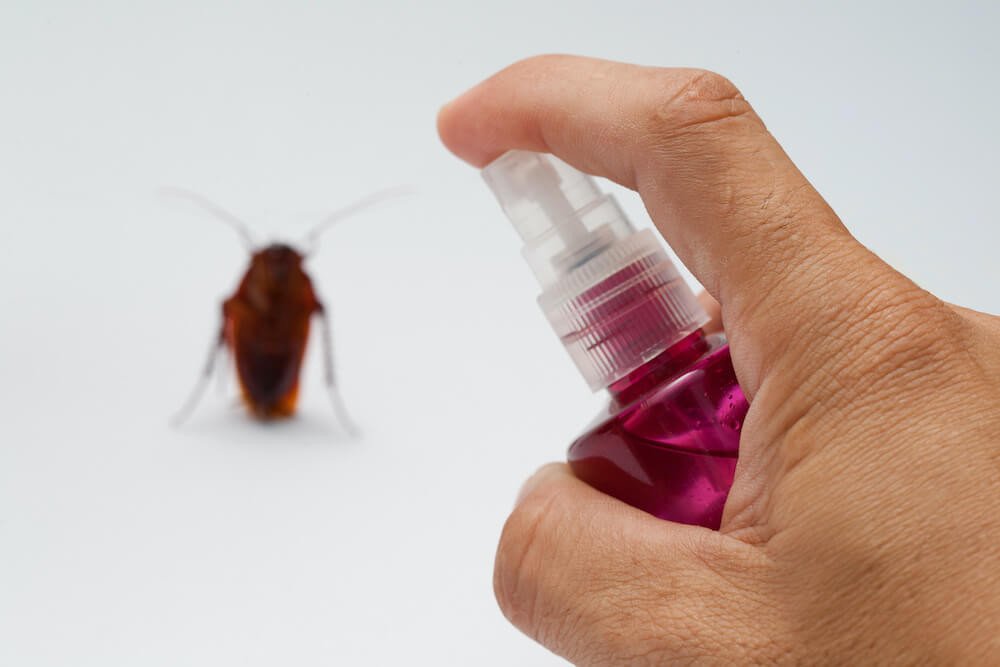

You walked into the kitchen at midnight and a roach was sitting on the counter like it owned the place. You did not have a can of Raid. You had vinegar, baking soda, and a box of borax under the sink from a laundry experiment three years ago, explains Keyrenter Gilbert specialists.
The question was not whether home remedies work. The question was which ones work overnight and which ones just make your kitchen smell like a salad.
What Vinegar Actually Does to Roaches (And What It Does Not)
Vinegar does not kill roaches on contact in any meaningful way. You can spray a roach directly with white vinegar, and it will walk away irritated but alive. Vinegar is not an insecticide. It is a pheromone disruptor, and that distinction matters.
Roaches navigate by following chemical trails left by other roaches. When a forager finds food on your counter, it leaves a pheromone path back to the nest. Every roach that follows reinforces the trail. Vinegar contains acetic acid, which denatures the proteins in those pheromone markers. Spraying vinegar on a roach trail erases the chemical map. The roaches are not dead. They are lost.
This means vinegar works as a deterrent, not a killer. Spray a 50/50 vinegar and water solution along baseboards, under sinks, and on counter edges before going to bed. Roaches that enter overnight will not find the established trails and are less likely to linger. Combine vinegar trail erasure with a killing method and the roaches that survive the night have no chemical breadcrumbs to follow back to the food source.
Use white distilled vinegar, not apple cider vinegar. Apple cider vinegar contains residual sugars that can actually attract roaches if not wiped down completely. White vinegar evaporates clean and leaves no food residue behind.
What Kills Roaches Overnight: The 3 Home Remedies That Work
For a roach to be dead by morning, the method must either kill on contact or deliver a lethal dose within a few hours. Most home remedies fail this timeline. Diatomaceous earth takes 24 to 48 hours. Boric acid bait takes three to seven days. Here are the three that work on an overnight clock.
Soapy water is the fastest contact kill available outside of aerosol insecticides. Mix two tablespoons of liquid dish soap with water in a spray bottle. Spray it directly on any roach you see. The soap clogs the spiracles on the sides of the roach’s body that it uses to breathe. Death occurs within 30 to 60 seconds. The soap also strips the protective wax coating from the exoskeleton, causing dehydration even if the initial spray does not fully suffocate the roach.
Baking soda and sugar bait works because roaches cannot burp. Mix equal parts baking soda and granulated sugar in a small dish. Place it near the ant or roach trail before bed. The sugar attracts the roach. The baking soda reacts with the acid in the roach’s digestive system and produces carbon dioxide gas that builds up inside the roach’s body. Because roaches cannot expel gas, their digestive system ruptures internally. Death occurs within four to eight hours of ingestion. Replace the bait every night because baking soda absorbs moisture from the air and loses effectiveness.
Borax and sugar gel bait is the most effective overnight home remedy if you prepare it correctly. Mix one teaspoon of borax with three tablespoons of sugar and enough warm water to create a paste the consistency of honey. Spread the paste on small squares of wax paper or bottle caps and place them along baseboards, under the sink, and behind appliances. Roaches consume the sugar and ingest the borax, which destroys their digestive system. Death occurs within 8 to 24 hours. The critical ratio is one part borax to three parts sugar. More borax makes the bait taste bitter, and roaches will avoid it. Less borax and the dose is sublethal.
The Vinegar Plus Strategy: Combine for Overnight Results
The most effective overnight approach uses vinegar for trail disruption and one of the three killing methods above for lethal action. Here is the sequence to run before going to bed.
Step one: spray every surface where you have seen roaches with the 50/50 vinegar solution. Wipe dry with a paper towel after two minutes. This erases existing pheromone trails. Step two: place baking soda and sugar bait in shallow dishes at the two or three locations where roach activity has been highest. Step three: spray the baseboards and cabinet edges with undiluted vinegar and leave it wet. The wet vinegar creates an odor barrier that roaches are reluctant to cross.
In the morning, you will find dead roaches near the bait stations. Wipe up the dead roaches and the bait stations with a paper towel and dispose of them immediately. Spray the area again with the vinegar solution to erase any new pheromone trails laid by roaches that visited the bait but did not die.
Repeat this sequence for three consecutive nights. The first night kills the foragers. The second night kills the roaches that emerged after the first wave did not return. The third night catches the stragglers. Three nights of vinegar trail erasure plus bait is usually enough to collapse a counter-level roach presence. It will not kill the colony in the wall, which requires gel bait and an IGR applied over two to four weeks.
Home Remedies That Do Not Work for Roaches (Despite What You Read Online)
Bay leaves contain eucalyptol, a compound that roaches find mildly irritating at close range. They do not repel roaches from your kitchen. They make your silverware drawer smell like soup. A roach will walk directly over a bay leaf to reach a crumb behind it.
Cucumber peels are cited on dozens of blogs as a natural roach repellent. The claim is that cucumber peel releases a compound roaches dislike. Controlled tests show roaches show no avoidance of cucumber peel at distances greater than one to two inches. The peel rots within 48 hours and becomes a food source for the roaches it was supposed to repel.
Essential oils, including peppermint, eucalyptus, and tea tree oil, repel roaches only at concentrations that are also toxic to cats and irritating to human respiratory systems when diffused in enclosed spaces. A few drops on a cotton ball placed in a cabinet may deter a roach from walking directly over that exact cotton ball. It will not deter roaches from walking around it.
Garlic and onion are not roach repellents. The claim originates from their use as general insect deterrents in garden settings, where their effect on aphids and certain beetles has been documented. Roaches are not aphids. They feed on rotting plant matter, including garlic and onion. Putting garlic cloves in your cabinets is adding food to an environment you are trying to starve.
How to Make Sure They Do Not Come Back Tomorrow Night
Killing roaches overnight solves tonight. Sealing the entry points and removing food sources solves next month. Do both on the same day.
Remove every food source before going to bed. Wipe counters dry. Take out the trash. Do not leave dirty dishes in the sink. Pick up pet food bowls. A single drop of cooking oil behind the stove is enough to attract a roach from twenty feet away. Your kitchen at midnight should have nothing edible on any surface, in any sink, or in any open trash container.
Fix water sources. Roaches can survive a month without food. They die within a week without water. The condensation on toilet tanks, the slow drip under the bathroom sink, and the water that pools in the dishwasher door seal are all drinking fountains for a roach. Dry every surface that holds water overnight. Wipe sinks dry. Hang dish towels where they can fully air dry instead of leaving them bunched on the counter.
Seal the gap where the counter meets the backsplash with clear silicone caulk. This one seam is the entry point for most kitchen roaches. Run a bead of caulk along the entire length. It costs eight dollars and takes twenty minutes.
Frequently Asked Questions
Does vinegar kill roaches instantly?
No. Vinegar sprayed directly on a roach irritates it and may cause it to flee, but it does not cause death. Vinegar is not a contact insecticide. Its value is in trail disruption: erasing the pheromone paths that roaches follow to food sources. A roach sprayed with vinegar survives and can return the next night if the trail is still intact. Combine vinegar with a lethal method like soapy water spray or borax bait for actual elimination.
What is the best homemade roach killer that works fast?
Soapy water sprayed directly on a roach kills it within one minute by clogging its breathing pores. It is the fastest homemade contact killer available. For bait that kills overnight, a mix of equal parts baking soda and sugar placed in shallow dishes kills roaches within four to eight hours of ingestion. For bait that kills with higher reliability, one part borax to three parts sugar mixed with water into a paste kills within 8 to 24 hours. Borax is more consistently lethal than baking soda but takes slightly longer.
Can I mix vinegar and baking soda to kill roaches?
No. Mixing vinegar and baking soda produces carbon dioxide gas and water in an immediate chemical reaction. The fizzing is visually satisfying but functionally useless against roaches. Once the reaction is complete, you are left with sodium acetate dissolved in water, which has no insecticidal properties. Vinegar and baking soda work against roaches through completely different mechanisms: vinegar disrupts trails, and baking soda generates internal gas only when ingested dry. Mixing them neutralizes both.
Will home remedies get rid of roaches permanently?
No. Home remedies kill the roaches you can see and disrupt the trails they use to navigate. They do not kill the colony living inside your walls. Permanent elimination requires gel bait with a slow-acting poison that foragers carry back to the nest, combined with an insect growth regulator (IGR) that prevents newly hatched nymphs from reaching adulthood. Home remedies are a stopgap for tonight. Gel bait and IGR are the fix for good.
How many nights of home remedy treatment until I see results?
You should find dead roaches near bait stations on the first morning. Roach activity on counters and visible surfaces should decrease noticeably by night three. If you are still seeing live roaches on night five, the colony inside the walls is larger than home remedies can suppress, and you need commercial gel bait. Home remedies work best against light infestations caught early. A heavy infestation with daytime roach activity requires professional-grade products.
The Short Version
Vinegar erases the map. Soapy water kills on contact. Baking soda and sugar bait kills overnight from the inside. Borax paste kills more reliably but takes a few hours longer.
Spray the trails with vinegar. Place the bait where the roaches walk. Remove every crumb and water droplet before bed. Repeat for three nights. If the roaches are gone on night four, you bought yourself time. If they are back on night five, the colony in the wall needs gel bait, and home remedies have done everything they can do.