


A homeowner runs his hand along a worn window frame, feeling for dampness and soft wood that signal a failing seal.
A small leak at a window frame rarely announces itself. Water slips past a failed seal, soaks the sill, and works into the framing for months before a stain shows up on the drywall. By then, you’re often dealing with rot and mold, not just a drafty pane.
Replacing windows isn’t cheap, and the federal tax credit that once softened the bill is gone for 2026. That leaves a practical question: how do you pay for the work without borrowing blindly? We look at this the way we look at every moisture problem. Fix the entry point first, then pick the smartest way to fund it.
What Window Replacement Really Costs in 2026
Prices vary by frame material, glass package, and how much of the surrounding trim has to come off. A vinyl retrofit in a standard double-hung opening sits at the low end. A full-frame install with new flashing, which is what you need when water has already gotten in, costs roughly 25% more than a basic insert, according to aggregated contractor pricing from Fixr.
Once quotes land above a few thousand dollars, most homeowners start looking into window replacement financing rather than draining savings. That’s a reasonable instinct. Spreading the cost lets you fix the worst windows now instead of patching them for another winter.
For a benchmark, a 2026 This Old House survey of 1,000 homeowners put the average at $517 per window, or about $7,183 for a typical project. Angi’s data from nearly 18,000 verified projects is higher, with a national average of $7,348 and most whole-house jobs falling between $3,436 and $11,838. Disposal of old units typically adds $50 to $100 per window, so ask whether your quote includes it.
Why Failing Windows Are a Water Damage Risk
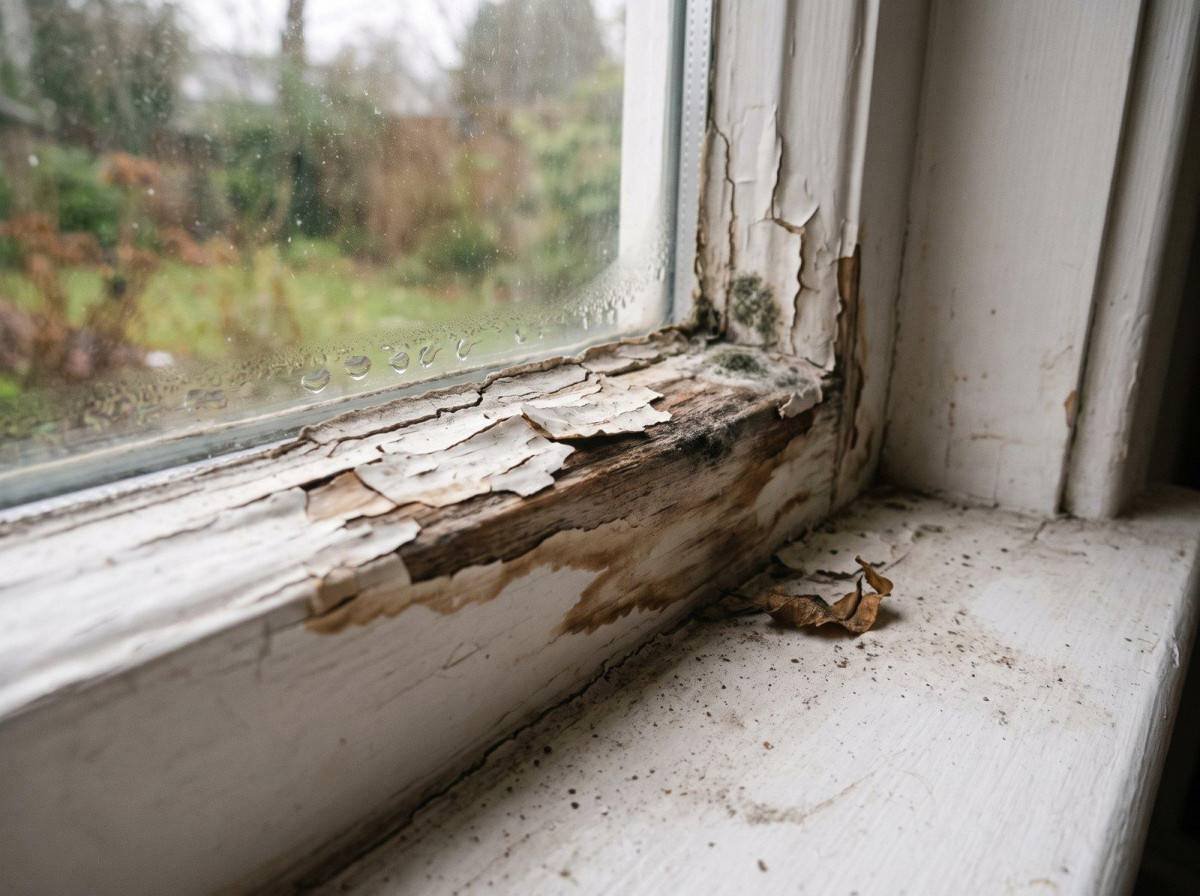 Peeling paint, dark water stains and early mildew on a sill are classic signs that water is getting past the window seal.
Windows fail at the edges. Sealant cracks, flashing lifts, and the gap between frame and wall opens just enough for wind-driven rain to enter. Water then travels down the wall cavity, which is why the visible damage is often a foot or two from the actual leak.
Watch for soft or darkened wood on the sill, bubbling paint, condensation trapped between panes, and musty smell near the wall below the window. Any one of those points to moisture getting where it shouldn’t. Our guide to common water intrusion problems and fixes walks through how to trace a leak back to its source before you commit to a repair.
There’s an energy angle too. The U.S. Department of Energy says windows account for 25% to 30% of residential heating and cooling energy use. A leaky, poorly sealed window wastes that energy while it lets moisture in.
My position is simple. If you can see rot or recurring condensation, replacement is the cheaper path. Repeated patching delays the project, and wet framing only gets more expensive to repair.
Comparing Your Financing Options
 Working through quotes and monthly payments at the kitchen table before choosing how to finance a window replacement.
No single option wins for everyone. Project size, credit, and how much equity you hold decide it.
Home Equity Loan or HELOC
These usually carry the lowest rates. Bankrate’s October 14, 2026 survey put the average HELOC rate at 7.34%, with a range from 3.99% to 11.99% depending on credit and loan-to-value. The tradeoff is real: your house is the collateral, so a missed payment puts more than a credit score at risk. Funding can also take a few weeks, which matters if water is already coming in.
Personal Loans
Unsecured loans come with fixed payments and fast funding, often within days. APRs run higher than equity borrowing, and advertised ranges are wide, so treat any headline rate as a best case. For projects under roughly $15,000, a fixed-rate personal loan is often the cleanest fit because nothing is pledged against your home.
Contractor or Manufacturer Plans
Many installers advertise 0% promotional periods. Read the terms closely. Deferred-interest plans charge interest from day one on the full balance if you don’t clear it before the promo ends, and the standard rate afterward can be steep.
Credit Cards
A card with a 0% introductory APR works for a single window or a small repair, provided you can pay it off inside the promo window. For anything larger, the math rarely holds.
For most $5,000 to $15,000 projects, a fixed-rate personal loan or a HELOC beats deferred-interest contractor plans. The payment is predictable, and no balloon of back-interest is waiting at the end.
The Federal Tax Credit Is Gone: What Still Helps
Many older guides still tell you to expect a credit of 30% up to $600 for windows. Don’t count on it. Under Public Law 119-21, signed July 4, 2025, the 25C Energy Efficient Home Improvement Credit doesn’t apply to property placed in service after December 31, 2025, as the IRS explains in its guidance. Windows installed this year get nothing federally.
Look locally instead. Some states, cities, and utilities still offer rebates for efficient windows, and the rules change often, so check your utility’s website before you sign a contract. ENERGY STAR and NFRC labels are what most programs ask for. If lower utility costs are part of your motivation, our tips on lowering your heating bills cover what to do alongside new windows.
Checking the Fine Print Before You Sign
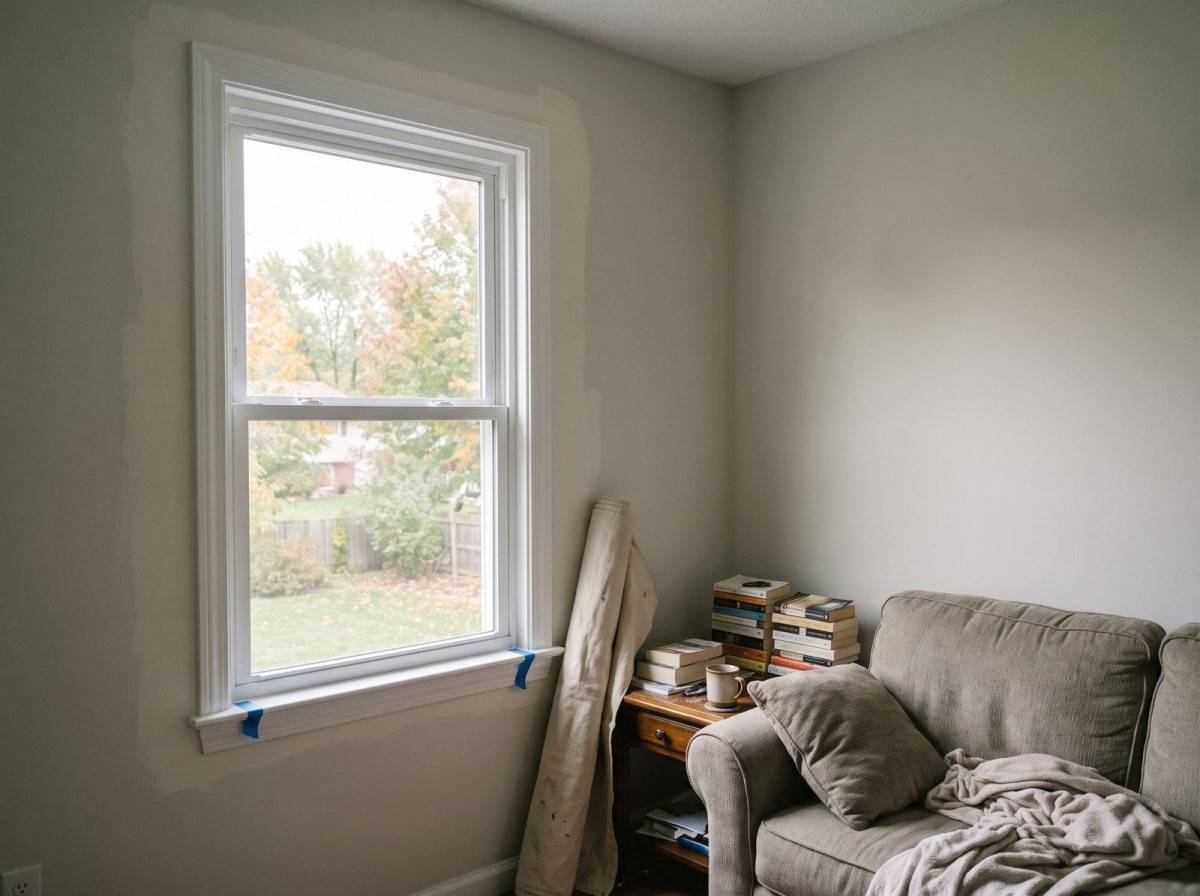 A newly installed double-pane window, with fresh paint patches around the trim still waiting for the final coat.
Get at least three written estimates, and make sure each spells out whether flashing, trim, and disposal are included. A cheap quote that leaves out flashing repair can cost you twice.
Then compare loans by APR, not monthly payment. A low payment stretched over a long term can cost far more overall. Ask about origination fees, prepayment penalties, and, with contractor plans, exactly how deferred interest is calculated.
Don’t borrow more than the job requires. If your budget is tight, rank windows by damage and replace the leakiest ones first. Staging the project over two seasons beats financing a whole-house order you can’t comfortably carry. And once the new units are in, a broader look at your home’s drainage and sealing, such as our building waterproofing guide, helps make sure the money you spent stays protected.
Final Thoughts
Treat a leaking window as urgent, because wet framing gets costlier every month. Price the whole project, including flashing and disposal, then choose the lowest-APR fixed option you can qualify for. Skip anything with deferred interest unless you’re certain you’ll clear it in time.