
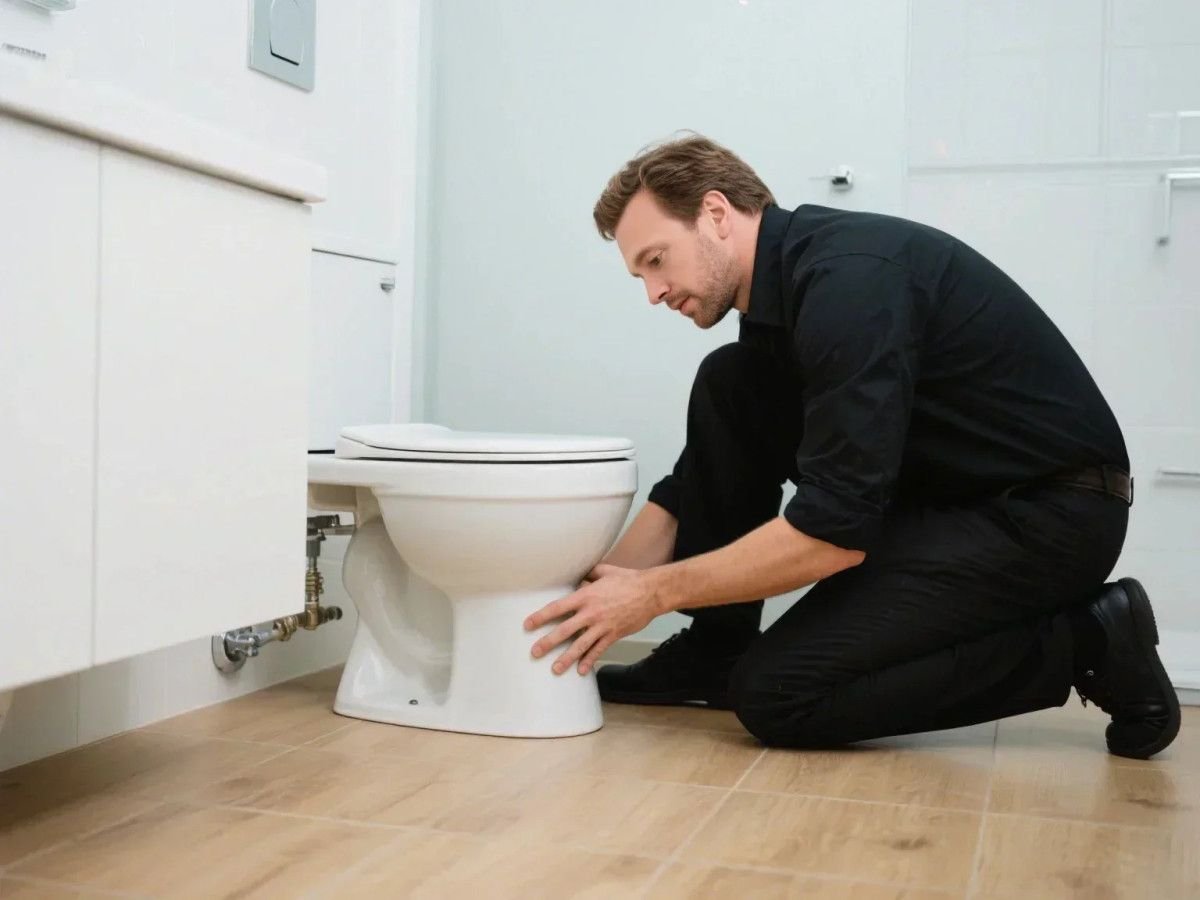

Your toilet is twenty-five years old. It uses 3.5 gallons per flush. The porcelain is stained with mineral deposits that no amount of scrubbing removes. The flapper has been replaced three times. The fill valve is on its second replacement. The handle broke last month and the universal replacement does not quite fit. You have repaired this toilet enough times that replacing it entirely is the better decision.
Replacing a toilet costs $150 to $400 for the new fixture and takes three to four hours for a first-time homeowner. The work requires no special skills beyond the ability to lift approximately 70 pounds and to tighten bolts without cracking porcelain. The most important step happens before you buy the new toilet: measuring your rough-in distance to ensure the new toilet fits.
Choose the Right Replacement Toilet
Measure the rough-in distance before you go to the store. The rough-in is the distance from the finished wall behind the toilet to the center of the closet bolts in the floor. The standard rough-in is 12 inches. Older homes may have a 10-inch or 14-inch rough-in. Measure from the wall to the center of one of the bolt caps on the toilet base. If the distance is approximately 12 inches, you have a standard rough-in. If it is 10 or 14 inches, you need a toilet with that specific rough-in measurement. A 12-inch toilet will not fit on a 10-inch rough-in. The tank will hit the wall before the bolt holes align.
Choose between a round bowl and an elongated bowl. A round bowl is approximately 26 inches from the wall to the front of the bowl. An elongated bowl is approximately 28 to 30 inches. The elongated bowl is more comfortable for adults. The round bowl saves space in small bathrooms. Measure the distance from the wall to any obstruction in front of the toilet, such as a door swing, a vanity, or a bathtub. The new toilet must fit with clearance to use it.
Choose between standard height and comfort height. A standard toilet has a seat height of approximately 15 inches. A comfort height toilet has a seat height of approximately 17 to 19 inches, which is the same height as a standard chair. Comfort height is easier for adults, seniors, and anyone with knee or back issues. It is slightly less comfortable for small children and shorter adults.
Choose between a one-piece and a two-piece toilet. A two-piece toilet has a separate tank and bowl that are bolted together during installation. Two-piece toilets are lighter to carry and easier to install because you set the bowl first, then attach the tank. They are also less expensive. A one-piece toilet has the tank and bowl molded as a single unit. It is heavier and harder to maneuver but easier to clean because there is no seam between the tank and bowl. For a DIY installation, a two-piece toilet is strongly preferred. The bowl alone weighs 50 to 60 pounds. The tank weighs 20 to 30 pounds. A one-piece toilet weighs 80 to 100 pounds and requires two people to position safely.
Remove the Old Toilet
Turn off the water supply valve behind the toilet. Turn it clockwise until it stops. Flush the toilet to empty the tank. Hold the handle down to drain as much water as possible. Sponge out any remaining water from the tank and the bowl. Disconnect the water supply line from the fill valve underneath the tank. Have a small bucket or towel ready for the water that drains from the line.
Remove the bolt caps from the closet bolts on each side of the toilet base. The caps pry off with a flathead screwdriver. Remove the nuts from the closet bolts with an adjustable wrench. If the nuts are rusted and will not turn, cut them off with a hacksaw blade. The bolts will be replaced with the new toilet.
Rock the toilet gently from side to side to break the wax seal. The toilet has been sitting on a wax ring for years, and the wax has hardened and adhered to both the toilet and the flange. Rocking breaks the bond. Lift the toilet straight up and set it aside on a drop cloth or old towels. Water will drain from the trap. The toilet is heavy. Lift with your legs.
Plug the closet flange opening with a rag. This prevents sewer gas from entering the bathroom and prevents you from dropping debris or a tool into the drainpipe.
Scrape the old wax off the closet flange with a putty knife. Wear disposable gloves. The wax will be sticky and unpleasant. Remove all of it. The flange must be clean for the new wax ring to adhere. Inspect the flange while it is exposed. The flange should be solidly attached to the floor with screws and should not be cracked or rusted through. If the flange is damaged, install a flange repair ring or replace the flange before proceeding. A new toilet on a broken flange will leak.
Remove the old closet bolts from the flange slots. Slide new closet bolts into the slots. The new toilet comes with new bolts. Position the bolts at the correct distance apart for the new toilet, typically at three and nine o’clock relative to the flange. Hold the bolts upright with a dab of wax from the old ring or with plastic bolt holder clips.
Install the New Toilet
Turn the new toilet bowl upside down on a drop cloth or a piece of cardboard. The bowl is heavy and the porcelain will scratch a hard floor. Place a new wax ring on the toilet outlet, the round opening on the bottom of the bowl. Center the wax ring on the outlet with the wax side facing away from the bowl and the plastic sleeve, if included, pointing outward. Press the wax ring firmly so it adheres to the bowl. Installing the wax ring on the bowl rather than on the flange is easier because you can see the alignment when you lower the bowl onto the flange.
Lift the bowl and position it over the flange. Align the holes in the base of the bowl with the closet bolts. Lower the bowl straight down. Do not slide it into position. Sliding smears the wax and prevents a proper seal. The weight of the bowl compresses the wax. Press down firmly on the bowl rim on both sides to seat the wax evenly. Do not rock the bowl. Press straight down.
Install the washers and nuts on the closet bolts. Hand-tighten, then tighten with a wrench, alternating sides. Tighten until the nuts are snug and the bowl does not move. Do not overtighten. Overtightening cracks the porcelain base, and a cracked base cannot be repaired. If the bowl rocks after tightening, insert plastic shims between the bowl base and the floor. Do not tighten the bolts further to eliminate rocking.
Trim the excess bolt length with a hacksaw, leaving about a quarter inch above each nut. Install the bolt caps.
Assemble the tank if it is a two-piece toilet. Install the flush valve and the tank-to-bowl gasket according to the manufacturer’s instructions. The gasket is a large rubber washer that fits between the tank and the bowl. Set the tank onto the bowl, aligning the bolts that extend from the bottom of the tank with the holes in the bowl. Install the washers and nuts from underneath the bowl. Tighten the nuts by hand, then tighten a quarter to half turn with a wrench. Do not overtighten. The gasket makes the seal. Excessive force cracks the tank or the bowl.
Connect the water supply line to the fill valve on the bottom of the tank. Hand-tighten, then tighten a quarter turn with a wrench. Turn the water on slowly and let the tank fill. Check for leaks at the supply line connection, at the tank-to-bowl connection, and at the base around the wax ring. Flush the toilet several times and check for leaks again after each flush.
Apply a bead of silicone caulk around the front and sides of the toilet base where it meets the floor. Do not caulk the back. If the wax ring leaks in the future, water will escape from the back of the toilet where you can see it.
Install the toilet seat. The seat bolts pass through the holes in the bowl rim. Tighten the nuts from underneath until the seat is secure and does not slide.
Common Mistakes That Cause Leaks or Damage
Buying a toilet with the wrong rough-in is the most expensive mistake. A toilet that does not fit must be returned, and returning a toilet is heavy and inconvenient. Measure twice. Buy once.
Overtightening the closet bolts cracks the toilet base. Tighten until the toilet does not move. Stop. Use shims if the toilet rocks.
Overtightening the tank bolts cracks the tank or the bowl. Hand-tighten, then a quarter turn with a wrench. The gasket makes the seal. The bolts hold the tank in place.
Forgetting to plug the flange with a rag during installation lets debris fall into the drain and sewer gas into the bathroom. Plug the flange the moment the old toilet is lifted off.
Reusing the old supply line with the new toilet is false economy. A new stainless steel braided supply line costs eight dollars and will not leak. An old supply line with a hardened rubber washer will leak within a year. Replace the supply line with every toilet replacement.
Dispose of the old toilet properly. Most municipalities require toilets to be taken to a designated disposal facility, not placed in regular trash. Some waste management companies offer bulk item pickup.
The old toilet is porcelain and heavy. It will not fit in a standard trash can. Plan for disposal before you start the replacement.
The Short Version
Measure the rough-in. Buy the right toilet. Turn off the water. Disconnect the old toilet. Lift it off. Clean the flange. Install new closet bolts. Place the wax ring. Set the new bowl. Tighten the nuts without overtightening. Install the tank. Connect the water. Check for leaks. Caulk the front. Install the seat.
A new toilet costs $150 to $400. A new supply line costs $8. A wax ring costs $5. New closet bolts come with the toilet. The tools are a wrench, a putty knife, a hacksaw, gloves, and rags. The time is three to four hours for a first-timer and two hours for someone who has done it before. The old toilet used 3.5 gallons per flush. The new one uses 1.28. The water savings will pay for the toilet within two years.