
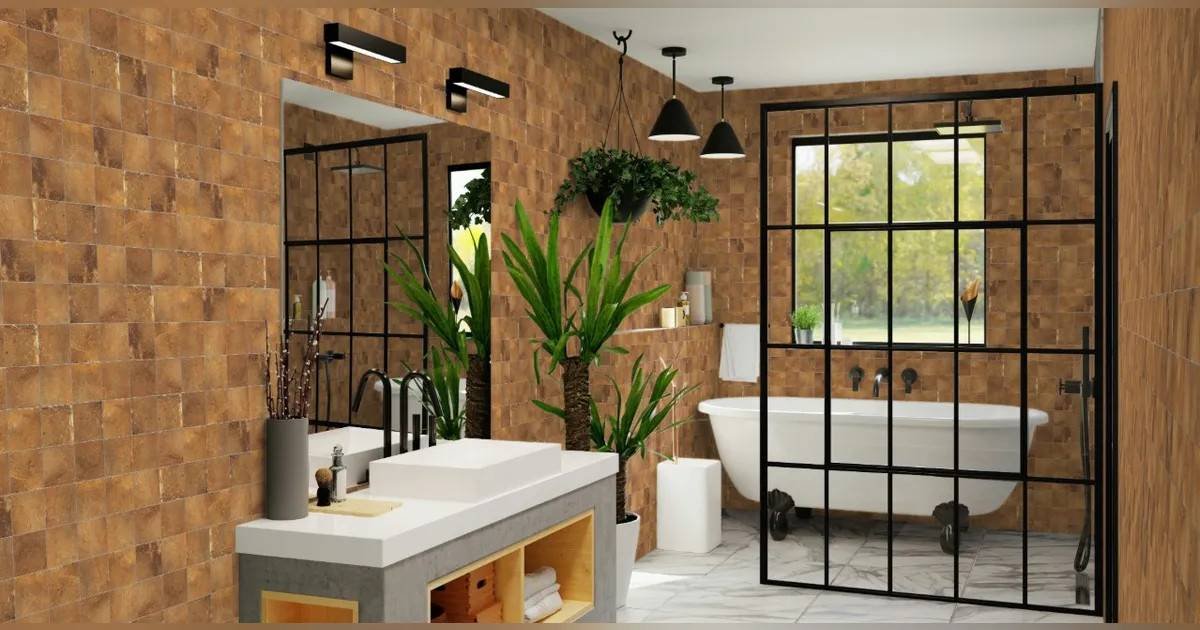

A shower ceiling does not need to be tiled unless the shower is a steam shower, where the entire enclosure must be waterproofed and tiled to contain the steam, or the ceiling is low enough that water splashes against it regularly. A standard shower with an eight-foot ceiling and a standard shower head does not require a tiled ceiling. The drywall or green board above the shower is fine. But if the shower has a steam generator, if the ceiling is below seven feet, or if you simply want the shower to look like a completely enclosed tile box, the ceiling must be waterproofed and tiled like the walls, with one difference that makes the ceiling the most physically demanding surface in the entire shower to tile. You are working above your head, gravity is pulling every tile toward the floor, and the thinset that holds the tile on the wall will not hold it on the ceiling unless it is specifically formulated to resist sagging and is applied with full coverage on both the ceiling and the back of the tile, points out BlackTree Property Management team.
Tiling a shower ceiling is not harder than tiling a shower wall in terms of the skills required. It is harder in terms of the physical endurance required to hold your arms above your head for hours, the precision required to keep the layout aligned with the walls because the ceiling is the most visible surface when you look up, and the technique required to get the tile to stay on the ceiling without sliding off before the thinset sets. The work is slow, the cleanup from dripping thinset is constant, and the stakes of a tile falling are higher than on a wall because a falling ceiling tile hits you in the face before it hits the floor.
Waterproof the Ceiling First — The Step That Is Easy to Skip and Catastrophic to Miss
A shower ceiling that will be tiled must be waterproofed as part of the continuous waterproofing envelope. The ceiling backer board, which is cement board like the walls, is screwed to the ceiling joists every six to eight inches. The seams between the ceiling boards and the wall boards are taped with alkali-resistant mesh tape embedded in thinset, and the corners where the ceiling meets the walls are waterproofed with the same liquid or sheet membrane used on the walls. The waterproofing on the ceiling must extend at least six inches down the walls to create a continuous seal. A gap in the waterproofing at the ceiling-to-wall joint is a leak path for steam, and a steam leak above the shower will condense inside the ceiling cavity and rot the joists from above.
If the shower is a steam shower, a vapor barrier is required behind the cement board in addition to the waterproofing on the surface. The vapor barrier prevents steam from penetrating the cement board and condensing inside the wall cavity. Standard shower waterproofing is water-resistant. Steam shower waterproofing must be vapor-proof. The products are different, and a steam shower built with standard waterproofing materials will fail. Confirm that every product used on a steam shower ceiling is rated for continuous vapor exposure.
Thinset for Ceilings — The Mix That Holds Tile Against Gravity
Standard thinset will not hold tile on a ceiling. The tile will sag, slide, and fall. A non-sag or non-slump thinset, labeled as LHT for large and heavy tile or simply as non-sag, is formulated with polymers that create a suction effect between the tile and the substrate. When the tile is pressed into the thinset and the ridges collapse, the polymer-modified mortar grips the tile and holds it in place against gravity. Non-sag thinset costs about five to ten dollars more per bag than standard thinset, which is a trivial amount for the peace of mind that a tile will not fall on your head while you are reaching for the shampoo.
Mix the non-sag thinset to a slightly stiffer consistency than wall thinset. It should hold a notch when combed and should not slump at all when the trowel is lifted. If the thinset sags on the trowel, it will sag on the ceiling. Mix smaller batches than you would for a wall because working overhead is slower and the thinset will skin over before you can use a full bucket. A batch that fits in a one-gallon mixing container is about right for ceiling work.
Apply the thinset to the ceiling with a notched trowel and immediately back-butter the back of the tile with a thin, even layer of thinset using the flat side of the trowel. Back-buttering fills the recesses on the back of the tile and creates a mechanical bond between the tile and the ceiling thinset that is stronger than pressing a dry tile into wet thinset. Comb the ceiling thinset in one direction, press the tile into the thinset, and wiggle it slightly to collapse the ridges. The collapsed ridges should create a continuous bed of thinset behind the tile with no air pockets. Pull a tile off the ceiling periodically to check coverage. The back of the tile should be completely covered with thinset. A coverage rate below ninety-five percent on a ceiling tile is a tile that will eventually fall.
Tile Size and Weight — What Stays Up and What Comes Down
Ceiling tile should be no larger than twelve by twelve inches, and smaller is better. A twelve-by-twelve-inch porcelain tile weighs about four to five pounds, which is near the upper limit of what non-sag thinset can reliably hold on a ceiling during the curing period. A twelve-by-twenty-four-inch tile weighs about twice as much and requires mechanical support in addition to thinset. A mosaic sheet with one or two-inch tiles weighs very little and will stay on the ceiling with standard thinset, though non-sag is still recommended. The smaller the tile, the less mass gravity has to work with, and the more surface area per pound of tile the thinset has to grip.
Large-format ceiling tile can be supported with a T-brace, a makeshift temporary support made from two-by-fours. A vertical two-by-four is cut to the ceiling height plus an inch, and a horizontal two-by-four is screwed to the top to form a T. The T-brace is wedged between the floor and the ceiling tile, pressing the tile against the ceiling while the thinset cures. The brace stays in place for at least twenty-four hours. A shower with a large-format tile ceiling may need several T-braces working in sequence as the installation progresses across the ceiling.
Natural stone tile is heavier than ceramic or porcelain of the same size and should be avoided on ceilings unless the stone is thin, the tiles are small, and the installation is professionally engineered. A piece of natural stone that delaminates from the ceiling is a falling object with the mass to cause serious injury. The risk is not worth the aesthetic benefit.
Layout, Sequence, and Working Overhead Without Ruining the Walls
Tile the ceiling before tiling the top section of the walls. The ceiling tiles overlap the wall tiles at the ceiling-to-wall joint, which means the wall tiles at the top of the shower should be cut to fit under the ceiling tile after the ceiling is installed. The sequence is: tile the walls up to the last full row below the ceiling, tile the ceiling, then cut and install the top row of wall tiles to fit the gap. This sequence hides the ceiling-to-wall transition behind the top wall tile and prevents water from running down the wall and into the joint between the ceiling and the wall.
Lay out the ceiling tiles on the floor before starting the overhead work. The ceiling is the most visible surface when you look up, and a layout that is off-center or has sliver cuts at the edges will be the first thing anyone sees when they step into the shower. Find the center of the ceiling in both directions and snap chalk lines. Dry-fit the tiles on the floor to confirm the layout produces cuts of roughly equal width on all four sides. The time spent on the ceiling layout is the most valuable layout time in the entire shower because the ceiling cannot hide a mistake behind a shower caddy.
Work from a stable platform, not a step ladder. A step ladder forces you to work with one hand while holding onto the ladder with the other, which is dangerous and produces crooked tile. A scaffolding plank set up across the shower at a height that puts the ceiling within comfortable arm’s reach allows you to work with both hands and move along the ceiling without climbing up and down. A pair of sawhorses with a plank is a makeshift scaffold. A purpose-made work platform is safer. Either is better than a ladder.
FAQ — Tiling a Shower Ceiling
Do I really need to tile the shower ceiling?
Only if the shower is a steam shower, where the ceiling must be tiled and waterproofed to contain steam, or if the ceiling is low enough that water splashes against it regularly. A standard shower with an eight-foot ceiling and no steam generator does not require a tiled ceiling. A painted ceiling with a high-gloss bathroom paint formulated for moisture resistance is adequate. If you are tiling the ceiling for aesthetic reasons, the cost is about two to three dollars per square foot in tile and thinset, plus a day of labor. The reward is a shower that looks like a high-end custom enclosure.
How do I know if a tile is going to fall before it falls?
A properly installed ceiling tile does not fall. The warning sign of a ceiling tile that may fall is a hollow sound when tapped, indicating insufficient thinset coverage behind the tile. Tap each ceiling tile with a knuckle after the thinset has cured for twenty-four hours. A solid thud means full coverage. A hollow click means an air pocket, and that tile should be removed and reset with full thinset coverage. A tile that falls from the ceiling was installed with spot-bonding, meaning thinset was applied only to the corners or the center of the tile, or with thinset that was not rated for ceiling installation. Spot-bonding on a ceiling is negligent. Full coverage with non-sag thinset is the minimum acceptable standard.
Does grout on the ceiling drip down while it dries?
Grout on a ceiling does not drip if it is mixed to the correct consistency, which is the same consistency as grout for a wall. Grout that is too wet will drip. Grout that is correctly mixed will stay in the joints. Apply the grout with a rubber float held at a sharp angle, forcing the grout into the joints with firm pressure. Remove excess grout from the tile faces with the edge of the float immediately. The grout in the joints will hold in place by surface tension and the mechanical bond to the edges of the tiles. Wait the normal curing time before wiping the haze off the tile faces with a damp sponge.