
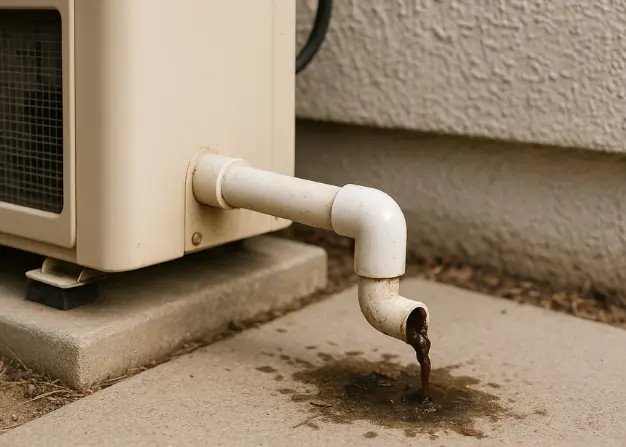

You turn on the air conditioning on a hot day and within twenty minutes the passenger side floor mat is soaking wet. There is no rain outside and the windows are closed. The problem is not a leak. It is a clogged AC drain line, and the water that was supposed to drip onto the pavement under your car is instead backing up into the evaporator housing and spilling onto your carpet, notes Avatina Property Management, a trusted Ala Moana property management. The fix takes ten minutes and costs nothing if you already own a piece of stiff wire or a can of compressed air. If you ignore it, the standing water in the evaporator housing breeds mold that you will smell every time you turn on the AC for the rest of the time you own the car.
Every car air conditioner produces condensation. Warm humid air passes over the cold evaporator core inside the dashboard, moisture condenses on the coils, and that water drains through a small rubber tube that exits through the firewall or the floor pan and drips onto the ground under the car. The drain tube is about the diameter of a drinking straw. Over time, dirt, dust, pollen, and mold spores accumulate in the tube and form a plug. The water has nowhere to go, so it rises in the evaporator housing until it spills over the edge and onto the passenger floor. The fix is to clear the blockage from either end of the tube.
Find the AC Drain Tube — Under the Car, on the Passenger Side Firewall
Park the car on level ground, set the parking brake, and let the engine cool if you have been driving. Slide under the front of the car on the passenger side with a flashlight. Look for a small black rubber tube protruding from the firewall or the floor pan, usually pointed straight down or angled slightly backward. It is about half an inch in diameter and typically has a ninety-degree bend or a small rubber grommet where it passes through the firewall. If the AC has been running recently, you may see a small wet spot on the ground directly below the tube, or you may see nothing because the tube is clogged.
On some cars, the drain tube is accessible from the engine compartment, near the bottom of the firewall on the passenger side, behind or below the air intake housing. On others, you must reach it from underneath. If you cannot find it from above, do not guess. The drain tube is always on the passenger side because the evaporator core is on the passenger side of the HVAC housing in virtually every car sold in the United States. The driver’s side has the brake pedal and steering column. The passenger side has the evaporator.
Clear the Clog — Three Methods, One Clean Floor
Method one is the simplest and works for most clogs. Pinch the rubber drain tube between your fingers and massage it. The clog is often a plug of wet debris that breaks apart with mechanical pressure. Squeeze along the length of the tube and watch for a sudden release of water. If water gushes out, the clog is cleared. If nothing happens, move to method two.
Method two uses a piece of stiff but flexible wire, such as a straightened coat hanger, a length of weed trimmer line, or a speedometer cable. Insert the wire into the drain tube and gently work it upward into the evaporator housing. Push through the clog, then withdraw the wire. Water should follow immediately. Be prepared for a cup or two of cold, dirty water to pour out onto your arm and the driveway. Do not use anything sharp that could puncture the evaporator core. A punctured evaporator is a twelve-hundred-dollar repair that requires removing the entire dashboard. A clogged drain tube is a ten-minute fix with a coat hanger. Do not turn one into the other by being aggressive.
Method three uses compressed air. Insert the nozzle of a compressed air can or an air compressor with a rubber tip into the drain tube from underneath, seal it as well as you can with a rag, and give it a short burst of air. The air pressure forces the clog back up into the evaporator housing where it can be removed from inside the car, or it blows the clog out through the tube. Do not use high-pressure air from a shop compressor at full blast. Pressurized air can blow the drain tube off the evaporator housing, and reattaching it requires removing dashboard components. A short, controlled burst from a can of compressed air or a compressor set to low pressure is sufficient.
After clearing the clog, run the AC at full cold for ten minutes with the car parked and check underneath. You should see a steady drip of water from the drain tube onto the pavement. No drip means the clog is still present or the tube has become disconnected inside the housing. A drip in the wrong place, inside the car, means the tube is disconnected and the drain water is pooling inside the dashboard.
Dry the Interior and Kill the Mold
The passenger side carpet is wet and will mildew if left untreated. Lift the carpet as much as possible, prop it up with a block of wood or a rolled towel, and point a box fan at the wet area for at least twenty-four hours. If the carpet padding underneath is saturated, the fan will not be enough. Pull the carpet back, remove the wet padding, replace it with new padding, and reinstall the carpet. Wet padding holds moisture for weeks and is the primary source of the musty smell that lingers long after the clog is cleared.
Spray a foaming evaporator cleaner into the evaporator housing through the drain tube or through the interior cabin air filter housing if accessible. The cleaner kills the mold and bacteria that grew in the standing water. Follow the cleaner with a few minutes of AC operation on the fresh air setting to dry the housing. The musty smell should disappear within a day of treatment.
FAQ — Unclogging an AC Drain
There is water on the driver’s side floor. Is that the AC drain too?
Probably not. The AC evaporator is on the passenger side. Water on the driver’s side floor is more commonly a leaking heater core, which produces coolant that smells sweet and feels greasy, not water. A leaking windshield seal or a clogged sunroof drain can also put water on the driver’s side. Touch the liquid and smell it. If it is clear and odorless, it is condensation from somewhere. If it is green, orange, or smells sweet, it is coolant and the heater core is leaking. A heater core replacement is a major job. An AC drain clog is a minor one. Identify the liquid before you begin.
I have never seen water dripping under my car. Does that mean the drain is clogged?
Not necessarily. On humid days, a working AC produces a steady drip. On dry days, it produces very little condensation and you may not see any drip. If you have never seen a drip and you have also never had wet carpets, the drain is probably fine and the humidity where you live is low. If you have wet carpets and no drip, the drain is clogged. If you have wet carpets and a drip under the car, the water is coming from somewhere other than the AC drain. A windshield leak, a door seal, or a clogged sunroof drain is the next place to look.
How often do AC drains clog, and can I prevent it?
There is no fixed interval. Some cars go their entire service life without a clog. Others clog every two or three summers depending on how much debris the HVAC system ingests. Running the AC on the recirculate setting reduces the amount of outside air, and the debris in it, that passes through the evaporator. Replacing the cabin air filter on schedule prevents most of the dust and pollen that eventually finds its way into the drain tube. Once a year, before the hot season, locate the drain tube and run a piece of wire through it as preventive maintenance. Thirty seconds of prevention replaces a weekend of drying out a wet carpet.