
Plywood Waterproofing: What to Know Before Start

Plywood waterproofing is applying any method used to protect plywood from water damage by creating a moisture-resistant barrier on or around the wood. Plywood waterproofing can resist water damage, prevent mold and mildew, improve durability, protect from stain, maintain strength and prevent swelling when it is exposed to water.
There are 6 methods to waterproof the plywood, including sealants, paint-based, bituminous coating, membrane, epoxy, and pressure-treated methods. The most durable plywood waterproofing method is epoxy waterproofing, which can last more than 8 years.
Plywood waterproofing does not directly affect its strength. When the plywood is too flexible, its waterproofness will be lost due to cracks and damage in the layer.
After plywood is applied on the surface, it is more resistant to moisture, rotting, decay, chemicals, insects, and fire. You should follow a proper step-by-step guide with suitable tools, materials, and safety instruments to waterproof plywood.
The durability of the waterproofed plywood depends on the waterproofing method used and the conditions to which the plywood is exposed. Marine plywood has a higher water resistance capability among plywood types such as BC, OSB, Hardwood, MDF, and RTD types. Weatherproof plywood is considered exterior plywood, which is prone to more water.
You should protect waterproof plywood by preventing overbending, exposure to chemicals, higher temperature fluctuation, and cutting and drilling the surface, as it damages the waterproofing layer.

What is Plywood Waterproofing?
Plywood waterproofing is the application of any method used to protect plywood from water damage by creating a moisture-resistant barrier on or around the wood. To waterproof the plywood, you can use sealers and coatings, penetrating oils, install waterproofing membranes, and edge sealing. After plywood is protected by waterproofing, its problems due to moisture, humidity, and water, such as warping, delamination, mold and mildew growth, staining, and swelling, can be fixed successfully.
What are the 6 Methods of Plywood Waterproofing?
These are 6 main methods of plywood waterproofing used in residential and commercial constructions mentioned below.
- Sealant waterproofing method: This method uses clear or pigmented sealants such as polyurethane, silicone, or acrylic sealers. The sealant penetrates the plywood surface and blocks moisture entry through pores and joints. This method is suitable for interior plywood, furniture bases, and low-moisture exposure areas.
- Paint-based waterproofing method: This method involves applying waterproof or exterior-grade paints, including epoxy and elastomeric paints. The paint forms a surface film that resists water penetration. This method works well for plywood walls, ceilings, and decorative panels exposed to occasional moisture.
- Bituminous coating method: This method uses liquid bitumen or bitumen-based emulsions applied by brush or roller. Bituminous coating creates a thick, water-repellent layer that protects plywood from prolonged moisture exposure. This method is commonly used for subfloors, roof sheathing, and utility structures.
- Membrane waterproofing method: This method uses sheet membranes such as bituminous sheets, PVC sheets, or self-adhesive membranes installed over plywood. The membrane acts as a physical barrier against water ingress. This method is suitable for plywood roofs, balconies, and exterior decks.
- Epoxy resin waterproofing method: This method uses two-component epoxy resin applied as a coating over plywood. Epoxy resin penetrates and hardens the surface, providing high water resistance and mechanical strength. This method is ideal for marine plywood, bathrooms, kitchens, and high-wear areas.
- Pressure-treated plywood method: This method uses factory-treated plywood infused with water-repellent preservatives under pressure. The treatment protects plywood from moisture, fungi, and decay. This method is suitable for outdoor structures, formwork, and ground-contact applications.
How to Make Plywood Waterproof?
To waterproof the plywood, you should follow these 6 steps.
6-Step Guide for Plywood Waterproofing
- Clean the plywood: Before you begin the waterproofing process, it’s essential to clean the plywood surface. Remove any dirt or dust using a mild detergent and water. Rinse the plywood thoroughly and let it dry completely.
- Sand the plywood: Using 80-grit sandpaper, sand the surface of the plywood. This helps to remove any rough spots and makes the plywood more receptive to the sealer. After sanding, wipe down the plywood with a clean, dry cloth to remove any dust.
- Apply the first coat of sealer: Apply a coat of waterproofing sealer to the plywood using a paintbrush. Be sure to cover the entire surface, including the edges.
- Sand the plywood again: Once the first coat of sealer is completely dry, use 220-grit sandpaper to lightly sand the surface. This will help the next coat of sealer adhere better.
- Apply the second coat of sealer: Apply a second coat of the waterproofing sealer to the plywood. This will ensure that the plywood is thoroughly protected from water damage.
- Let the plywood cure: Once you’ve applied the final coat of sealer, let the plywood cure for several days before using it. This will ensure that the sealer has fully penetrated the wood and dried thoroughly.
Read More: What to Know About Deck Waterproofing?
What Materials Need for Plywood Waterproofing?
- Plywood
- Waterproofing sealer (like sealant, latex paint, or oil-based stain)
- Sandpaper (80-grit and 220-grit)
- Paintbrush
- Clean, dry cloth
- Water
- Mild detergent
- Protective gloves and eyewear
Read More: How to Waterproof the Balcony Floor? – Wood and Concrete

What are the Advantages of Plywood Waterproofing?
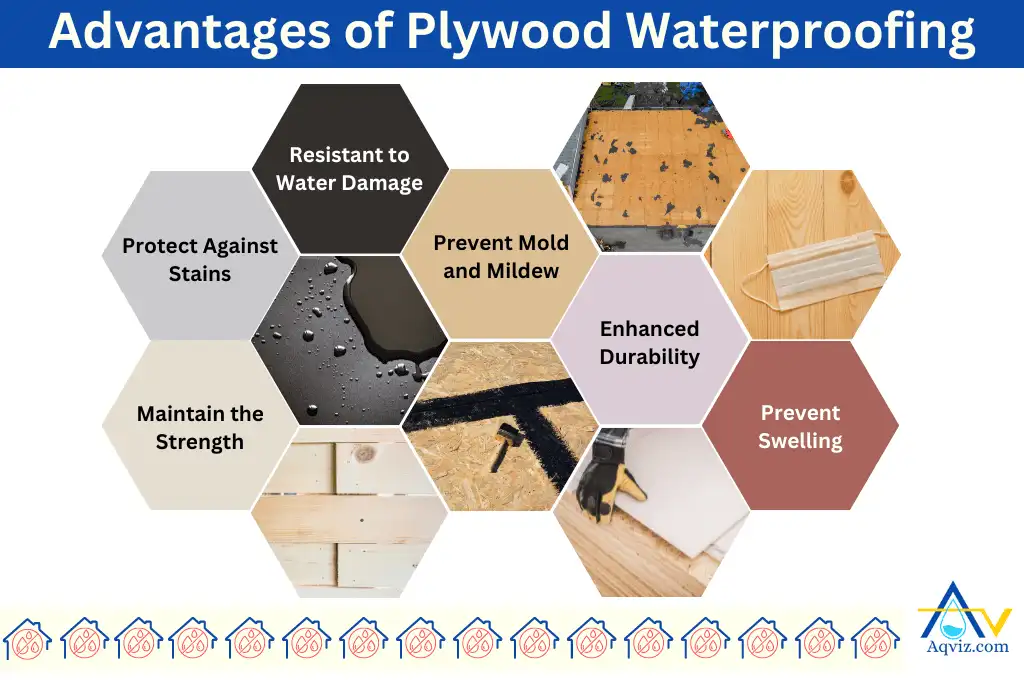
The 6 advantages of plywood waterproofing are resisting water damage, preventing mold and mildew, improving durability, protecting against stains, maintaining strength, and preventing swelling even it is exposed to water.
- Resistant to water damage: Once plywood is waterproofed, it becomes resistant to water damage. As a result of this, it won’t warp, delaminate, or rot even when exposed to water.
- Prevent mold and mildew: Plywood waterproofing can prevent the growth of mold and mildew in the plywood. It not only damages the plywood but can also cause health problems to the users.
- Enhanced durability: Plywood waterproofing enhances the durability of plywood, making it last longer, even when used in damp or wet conditions.
- Protect against stains: Waterproofed plywood is resistant to staining. This means that it can maintain its appearance even when exposed to water.
- Maintain the strength: Plywood waterproofing helps to maintain the strength of plywood. This makes it suitable for a wider range of applications.
- Prevent swelling: Plywood waterproofing prevents swelling when it is exposed to water. It helps to maintain its size and shape.
How Long Does a Waterproof Plywood Last?
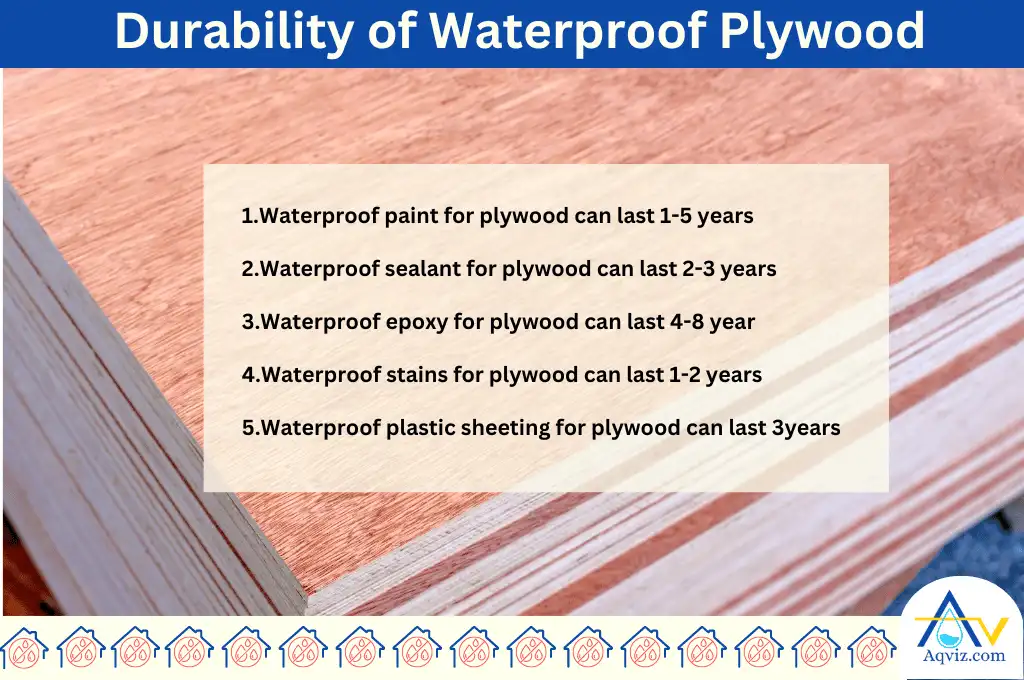
The durability of the waterproof plywood depends on the waterproofing method used and the conditions under which the plywood is exposed. Plywood can be waterproofed by using paint, sealant, epoxy, waterproofing stains, and plastic sheeting. Each of these plywood waterproofing methods can last long, as shown below.
- Waterproof paint for plywood can last 1-5 years
- Waterproof sealant for plywood can last 2-3 years
- Waterproof epoxy for plywood can last 4-8 years
- Waterproof stains for plywood can last 1-2 years
- Waterproof plastic sheeting for plywood can last 3-5 years
Can Plywood Strength Increase After Waterproofing?
Plywood waterproofing does not directly affect its strength. But it protects it from elements without deteriorating from moisture, humidity, higher temperatures, and UV rays. This will reduce the weakening of the plywood over time. Hence, plywood waterproofing helps to maintain the plywood’s strength indirectly.
Can Plywood Waterproofing Reduce Its Flexibility?
No, plywood waterproofing does not reduce its flexibility. Waterproofing treatments are designed to penetrate and coat the material, protecting it from moisture regardless of its flexibility. There is a limitation in the waterproofing layer. If the plywood is elongated, then its limited waterproofing layer can be damaged, and waterproofness can be destroyed.
What Resistance Improvements after Plywood Waterproofing?
After plywood is waterproofed, it withstands strongly against moisture, rot and decay, insects, mild chemicals, and fire.
- Moisture resistant: Plywood waterproofing increases its resistance to moisture. This makes the plywood less likely to warp, swell, or rot when exposed to water or high humidity conditions.
- Rot and decay resistance: Plywood waterproofing helps to prevent the growth of fungi, mold, and other organisms that can cause the wood to rot and decay.
- Insect resistance: Plywood waterproofing helps to repel insects such as termites and beetles, which can harm wood in any environmental condition.
- Chemical resistant: Plywood waterproofing increases the resistance to certain mild chemicals.
- Fire resistance: Plywood waterproofing treatments can make the plywood more fire-resistant.
What is Weatherproof Plywood?
Weatherproof plywood is considered exterior plywood. These are designed to withstand outdoor weather conditions such as higher humidity and moisture. In order to withstand higher humidity, these plywood are bonded together using phenolic resin.
These are the 6 most weatherproof plywood types
- Marine-grade plywood
- Pressure-treated plywood
- Structural plywood
- Baltic birch plywood
- Medium-Density Overlay (MDO) plywood
- High-Density Overlay (HDO) plywood
How to Protect Waterproof Plywood?
Plywood and its waterproofing layer should be protected in order to prevent water damage to the plywood. A plywood waterproofing layer can be damaged in these ways, such as
- Prevent overbending: The plywood waterproofing layer can be damaged when it is overbent. Overbending can crack the waterproofing layer on the plywood, and it tends to leak water inside.
- Prevent exposure to chemicals: Harsh chemicals like acids can damage the waterproof layer on the plywood. It damages the waterproofing layer on the plywood and tends to leak water inside.
- Prevent higher temperature fluctuations: Higher temperature fluctuations can deteriorate and crack the waterproofing layer on the plywood. That causes water to leak inside the plywood.
- Do not drill or cut on the surface: Waterproofed plywood can be damaged by cutting and drilling. This causes the plywood to engage with water, which causes many water-related problems such as warping, rotting, mold and mildew growth, and swelling.
Can Brick Sealing Prevent Water Damage?
Yes, brick sealing can prevent water damage by creating a protective barrier on the surface. Sealed bricks repel the water and reduce the risk of structural issues and mold growth on the regularly wetted surfaces. The effectiveness of the brick sealing depends on factors like sealant quality, application, and maintenance of the sealant coating.