
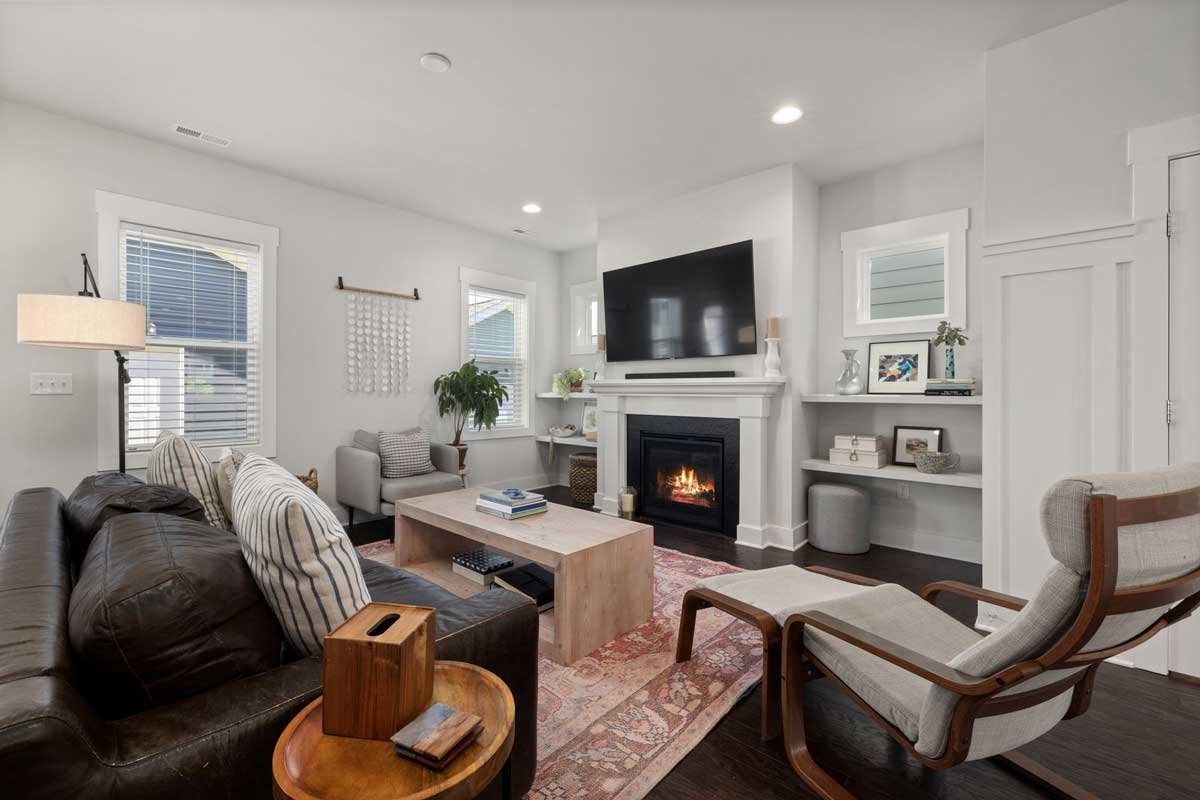

Walk through almost any newly listed home and you will notice a pattern: the living room is staged around a focal point. In older homes it is a fireplace. In many newer ones, it is the TV wall. Media walls, which combine a mounted TV, often an electric fireplace, lighting and storage into one built feature, have gone from a niche luxury to a common request in remodels.
If you are considering one, a fair question is whether it will help or hurt when it is time to sell. The honest answer is that it depends on how it is designed and built. Here is what tends to matter to buyers.
Why feature walls can appeal to buyers
Listing photos are the first showing for most homes, and rooms with a clear focal point photograph better. A well-designed media wall gives the living room an anchor, makes furniture placement obvious and signals that the space has been thoughtfully updated.
A fireplace is a long-standing favorite feature for many buyers. An electric fireplace built into a media wall delivers much of that appeal without a chimney, gas line or venting, which also makes it possible in homes and rooms where a traditional fireplace never could go.
Finally, hidden wiring and built-in storage solve a problem every buyer recognizes: the messy tangle of cables, consoles and routers. A clean wall suggests a well-maintained home.
What can work against you
Not every media wall is an asset. The ones that can turn buyers off tend to share a few traits:
- Highly personal finishes, such as bold colors, themed designs or very trend-specific materials
- A TV mounted far too high, which buyers notice as soon as they sit down
- Visible cables, surface-mounted cords or a fireplace that obviously looks like a plug-in heater
- Poor workmanship: uneven seams, gaps around the TV niche or cracks at the corners
- Built-ins sized for one specific TV or gaming setup that will not fit future screens
A buyer who sees any of these may mentally budget for tearing the wall out, which is the opposite of what you want.
Design for broad appeal
If resale is on your radar, lean toward finishes with staying power. Stacked stone, painted drywall, shiplap in a soft neutral, light oak slats and white or warm-gray built-ins suit a wide range of tastes. Save the more daring choices, like dark fluted walnut or veined marble, for homes where you plan to stay long enough to enjoy them.
Keep the scale proportional. A floor-to-ceiling wall looks spectacular in a great room with high ceilings, but it can overwhelm a compact living room. In smaller spaces, a partial-height wall with open shelving often feels more balanced.
Build it like part of the house
The biggest difference between a media wall that adds appeal and one that looks like a DIY project is construction quality. Buyers and their inspectors will look for:
- Solid mounting into studs and blocking, not drywall anchors
- Recessed outlets behind the TV and properly rated in-wall cabling
- A fireplace installed according to the manufacturer’s clearances
- Permits and inspections where your jurisdiction requires them for electrical work
- Clean, square finish carpentry around every opening
Keep your paperwork: the fireplace manual, warranty documents, any permits and the contractor’s invoice. Handing those over during a sale answers questions before they come up.
Lighting sells the room
Lighting is one of the easiest ways to make a media wall feel high-end in person and in photos. Warm, dimmable LED strips in a ceiling cove or under floating shelves give the wall a soft glow at showings in the evening, and they make the room look finished in twilight listing shots. Choose a warm white color temperature that matches the rest of the home rather than cool blue accent lighting, which can feel dated quickly.
Future-proof the technology
TVs keep getting bigger and thinner, and cable standards change. A TV niche with some extra width, an articulating or universal mount and a spare conduit running to the media cabinet all make it easy for the next owner to upgrade without opening the wall. That flexibility is a quiet selling point.
Is it worth it before you sell?
If you are listing within a few months, a full custom media wall is usually not the most cost-effective pre-sale project; fresh paint, lighting and repairs typically come first. If you are staying for a few years, a well-built media wall is an upgrade you get to enjoy every day, and one that can make your living room more memorable in listing photos later.
Installers who specialize in this work, such as Grand Media Walls, can help you choose finishes that suit your home’s style and show you design options before anything is built, which makes it easier to strike the right balance between personal taste and broad appeal.
The bottom line
A media wall is not an automatic value booster, but a neutral, well-proportioned and professionally built one can be a genuine highlight of a home. Design it for the way you live, keep resale in the back of your mind and build it like it was always meant to be there.