
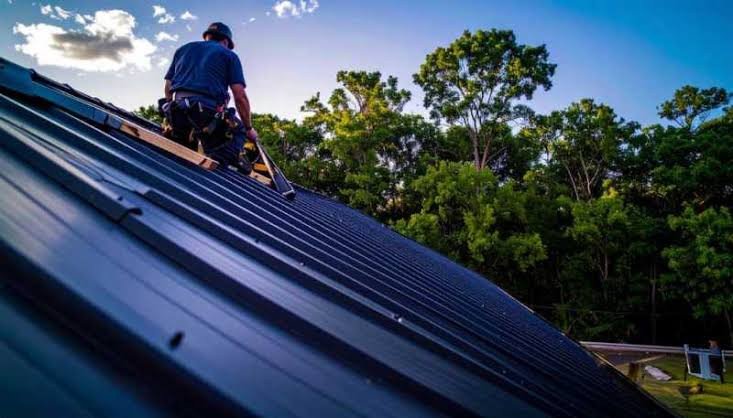

A metal roof that is rusting at the seams and leaking at the fasteners does not necessarily need to be replaced. A metal roof that is structurally intact but looks weathered may need nothing more than a coating system that adds 10 to 15 years of service life for 20% to 40% of the cost of a full replacement. The difference between a $5,000 coating job and a $25,000 tear-off comes down to the difference between surface deterioration and structural deterioration. One is cosmetic and weather-related. The other is terminal.
Metal roofing is the longest-lived residential and commercial roofing material available. Standing-seam panels installed correctly last 40 to 60 years. The metal itself — steel, aluminum, or copper — will outlast the building, notes UTZ Property Management Hunt Valley. What fails is not the metal but the coatings, the fasteners, and the sealants at the seams and penetrations. These are repairable and renewable. The decision framework below distinguishes between conditions that warrant a coating restoration, conditions that warrant targeted repairs, and conditions where replacement is the only responsible option. The framework is organized around one question: is the metal still structurally sound?
“Metal roof. Inspector says sand and repaint, roofer says full replacement. The inspector works for the insurance company. The roofer works for himself. I don’t know who to believe.”
— r/Roofing, May 2026 (32 upvotes, 82 comments), source
This conflict is structural. The insurance inspector’s incentive is to minimize the claim — if the metal can be restored, the insurance payout is limited to restoration cost. The roofer’s incentive is to sell a full replacement. The homeowner is caught between two parties whose financial interests do not align with the facts of the roof. The only way to resolve the conflict is a third-party assessment from an independent metal roofing inspector who has no financial stake in the outcome — someone who is paid for the inspection, not for the work that follows. That inspection answers the threshold question: is the metal substrate intact or not?
Cost Comparison — Coating vs. Repair vs. Replacement
The financial decision between coating, repairing, and replacing a metal roof is dominated by one number: the remaining structural life of the metal panels. If the panels are intact, a coating system costs $2 to $5 per square foot installed and adds 10 to 15 years. A full replacement of the same roof with new standing-seam metal costs $8 to $14 per square foot and lasts 40 to 60 years. The coating costs 20% to 40% as much and delivers 20% to 25% of the lifespan. The math favors coating when the building will be owned for less than 15 more years and replacement when it will be owned for more than 20.
| Option | Cost/sq ft | Lifespan Added | Best When |
| Silicone/Polyurethane Coating | $2–$5 | 10–15 years | Panels intact, rust <20% |
| Targeted Repair (fasteners, seams) | $500–$2,000 (total) | 5–10 years | Localized leaks, minor rust |
| Full Tear-Off + New Metal | $8–$14 | 40–60 years | Structural damage, >30% rust |
| Retrofit Over Existing Metal | $5–$8 | 20–30 years | Commercial, panels sound |
According to EPA data, reflective metal roofing can reduce peak cooling demand by 11% to 27% compared to dark asphalt shingles, which means a metal replacement that includes a reflective coating or uses cool-roof-rated metal panels generates ongoing utility savings that partially offset the higher upfront cost over the roof’s life. An asphalt shingle roof replaced every 20 years costs roughly the same over a 60-year period as a metal roof installed once and never replaced. The metal premium is a one-time expense. The asphalt savings are paid back in replacement costs every two decades.
When a Metal Roof Coating Makes Financial Sense
A coating restoration, sometimes called a roof recovery, applies a liquid-applied silicone, acrylic, or polyurethane coating directly over the existing metal roof surface. The coating fills pinholes, seals minor seam separations, and provides a new waterproof membrane on top of the metal. The coating also restores reflectivity, a weathered metal roof that has oxidized to a dull gray absorbs more heat than a freshly coated white or reflective surface, and the cooling energy savings from the restored reflectivity can be significant in warm climates.
A metal roof is a candidate for coating when the metal panels are structurally intact with no perforations larger than a pinhole, rust covers less than 20% of the total surface area, the fasteners are still holding, even if some need replacement, and the roof deck underneath is not water-damaged or rotted. Surface rust must be wire-brushed and treated with a rust-inhibiting primer before the coating is applied. Rust that has penetrated through the metal, visible from the underside in the attic or through the roof deck, is not a coating candidate. That panel must be replaced.
The coating system should be professionally applied with an airless sprayer to achieve the manufacturer’s specified dry-film thickness, typically 20 to 30 mils for silicone and 15 to 20 mils for acrylic. A roller-applied coating is thinner and less durable. The coating warranty, typically 10 to 15 years for materials, is contingent on proper surface preparation and application thickness. A coating applied over a dirty or poorly prepared surface will delaminate within 2 to 3 years regardless of the warranty on the can.
When Full Replacement Is the Only Option
Metal roof replacement is necessary when the metal panels have rusted through in multiple locations, the fasteners have corroded to the point where the panels are loose and cannot be re-secured, the roof deck underneath is water-damaged and must be replaced, or the roof has reached the end of its engineered service life and a coating would be a temporary bandage on a terminal condition.
The threshold for replacement versus coating is roughly 30% rust coverage or more than 5 perforations in a single roof plane. At that level of deterioration, the labor cost of preparing the surface for coating, wire-brushing, treating, and priming rust on 30% of the roof, approaches the labor cost of tearing off and replacing the same panels. The coating materials cost less, but the labor cost of preparation narrows the gap to the point where replacement becomes the better long-term value.
Full replacement also makes sense when the existing metal roof is a corrugated or exposed-fastener system that has reached the end of its fastener life. Exposed-fastener metal roofs rely on rubber gaskets under each screw head to seal the penetration. Those gaskets degrade from UV exposure and thermal cycling over 15 to 25 years. Once the gaskets fail, water enters through every screw hole. Replacing every fastener and gasket on a large roof costs roughly the same as a coating system and provides less reliable waterproofing. At that point, replacement with a concealed-fastener standing-seam system eliminates the fastener penetration problem entirely.
Decision Framework, 4 Questions That Point to the Right Answer
1. Is the metal structurally intact? Get on a ladder or send up a drone. Look for perforations, rust-through, and loose panels. Tap the panels with a screwdriver handle, a sharp metallic ring means the metal is sound. A dull thud means the metal is thin and may be rusting from the underside. If the metal is intact, coating or repair is possible. If the metal is perforated or thinned, replacement is necessary.
2. How long will you own the building? If the answer is less than 10 years, a coating that adds 10 to 15 years of service life covers the entire remaining ownership period at a fraction of replacement cost. If the answer is more than 20 years, replacement with new metal that will last 40 to 60 years is the better long-term value. If the answer is 10 to 20 years, the decision depends on the roof’s current condition, a roof in good condition gets a coating, a roof in poor condition gets a replacement.
3. What is the fastener condition? Exposed-fastener roofs with failing gaskets are the most common metal roof failure mode. If the gaskets are cracked, missing, or visibly deteriorated on more than 10% of the fasteners, the entire fastener population will fail within 5 years. Replacing all fasteners and gaskets costs $1 to $3 per square foot in labor and materials. Adding a coating over the new fasteners seals them and extends the roof life. If the fasteners are intact and the only problem is surface rust or oxidation, a coating alone is sufficient.
4. Is there decking damage underneath? Water that has penetrated the metal panels and saturated the roof deck or insulation requires replacement of the affected area. A coating applied over a water-damaged deck traps moisture and accelerates rot. The only way to confirm decking condition is to lift a few panels at the eaves or in areas where leaks were reported and inspect the substrate. If the decking is wet, soft, or moldy, those panels must come off and the decking must be replaced before any new roofing material is installed.
Frequently Asked Questions
How long does a metal roof coating last?
A professionally applied silicone or polyurethane coating system lasts 10 to 15 years on a properly prepared metal roof surface. Acrylic coatings last 8 to 12 years. The coating lifespan depends primarily on surface preparation, a coating applied over rust, dirt, or loose oxidation will fail at the bond line within 2 to 3 years regardless of the coating’s rated durability. The second factor is film thickness. A coating applied at 10 mils dry when the specification calls for 20 mils will perform for roughly half the rated lifespan. Insist on a wet-film gauge measurement during application to verify thickness.
Can I install metal roofing over existing asphalt shingles?
Yes, metal roofing can be installed over a single layer of asphalt shingles in most jurisdictions. The shingles provide a flat substrate, and the metal panels are screwed through the shingles into the roof deck. The installation requires furring strips, 1-by-4-inch boards screwed horizontally every 2 feet, to create an air gap between the shingles and the metal panels. The air gap allows the metal to shed heat and prevents condensation on the underside of the panels from saturating the shingles. Installing metal directly on shingles without an air gap is not recommended by any metal roofing manufacturer and will void the warranty. The weight of the metal plus the existing shingles must be within the roof structure’s load capacity, roughly 1.5 to 3 pounds per square foot for metal plus 2 to 3 pounds per square foot for shingles, and most residential roof structures can support the combined load without reinforcement.
Will my insurance premium change if I switch to a metal roof?
Yes, most insurance carriers offer a premium discount for metal roofing, typically 5% to 20%, because metal roofs are Class A fire-rated and Class 4 impact-rated when tested to UL 2218 standards. The discount is largest in hail-prone regions where impact resistance directly reduces the insurer’s claim exposure. The discount is smallest in regions where wind is the primary risk and the roof material matters less than the installation method. Ask your agent for a quote on the new roof before installation. The discount will not cover the cost difference between metal and asphalt, but it reduces the net premium difference over the life of the roof.