


A reverse mortgage is a specialized financial product designed primarily for older homeowners, allowing them to convert a portion of their home equity into usable cash, highlights Emerald Creek Management solutions. Unlike a traditional mortgage, where the homeowner makes regular payments to the lender, a reverse mortgage eliminates the need for monthly mortgage payments. Instead, the loan balance grows over time as interest and fees accrue, becoming due when the last borrower permanently leaves the home.
Understanding the Mechanics of a Reverse Mortgage
A reverse mortgage allows homeowners, typically aged 62 and older, to convert a portion of their home equity into cash. Unlike a traditional mortgage, no monthly payments are required, but interest and fees accrue, increasing the loan balance over time. The loan becomes due when the last borrower leaves the home.
At its core, a reverse mortgage is a loan secured by your home. The title to the property remains in your name, which is a common misconception many people have. This means you retain ownership of your home, just as you would with a traditional mortgage. The significant difference lies in the payment structure. With a traditional mortgage, you make payments to the lender; with a reverse mortgage, the lender makes payments to you, or you draw from a line of credit. The loan is not repaid until a specific event occurs, most commonly when the borrower sells the home, moves out permanently, or passes away.
Interest and fees are added to the loan balance each month, causing the amount owed to grow over time. This can be a bit counterintuitive for those accustomed to a decreasing mortgage balance. For example, a loan initiated with a principal limit of $200,000 might see its balance increase to $210,000 within the first year due to interest and service fees. Despite not making monthly payments, borrowers still have crucial obligations. These include paying property taxes and homeowners insurance, maintaining the home in good condition, and using the property as their primary residence. Failure to meet these responsibilities can lead to default, even if you’re not making monthly mortgage payments. According to the **Consumer Financial Protection Bureau (CFPB)**, neglecting these obligations is a primary reason reverse mortgages can go into default [1].
While several types of reverse mortgages exist, the Home Equity Conversion Mortgage (HECM) is by far the most common, accounting for over 95% of all reverse mortgages. HECMs are federally insured by the Federal Housing Administration (FHA), offering a layer of protection for both borrowers and lenders. There are also proprietary reverse mortgages, which are non-HECM loans offered by private lenders. These may have different eligibility criteria, such as a lower minimum age (sometimes as young as 55), but they are not federally insured and their terms can vary significantly.
Key Eligibility Requirements for a Reverse Mortgage
To qualify for a reverse mortgage, applicants must generally be at least 62 years old, possess substantial home equity—often 50% or more—and occupy the property as their primary residence. Lenders also assess financial capacity to ensure ongoing property charges like taxes and insurance can be met.
Age is a fundamental requirement for a HECM reverse mortgage; the youngest borrower on the loan must be at least 62 years old. If you are married and both spouses are on the loan, the age of the younger spouse can influence the amount you are eligible to borrow. If one spouse is under 62, they can be designated as an eligible non-borrowing spouse, which protects their right to remain in the home if the borrowing spouse passes away first. However, this designation typically reduces the amount that can be borrowed. For proprietary reverse mortgages, some lenders may accept borrowers as young as 55, but these loans lack federal insurance and may carry different terms.
Home equity is another critical factor. You must either own your home outright or have substantial equity, generally 50% or more. If you still have an existing mortgage, the proceeds from the reverse mortgage are first used to pay off that loan at closing. Any remaining funds are then available to you. The more equity you have, the greater the amount you may be able to access. An FHA appraisal will determine your home’s value and confirm it meets property standards, which directly impacts the available loan amount.
Occupancy rules dictate that the home must be your primary residence. This means you must live in the home for the majority of the year. If you move to a nursing home, assisted living facility, or another residence for an extended period, typically 12 months or more, the reverse mortgage loan may become due and payable. This can be a source of authentic uncertainty for many, as life circumstances can change unexpectedly. It’s frustrating to think that after all the effort to get a reverse mortgage, a prolonged hospital stay or moving in with family for care could trigger the loan to become due, potentially forcing a sale when you’re most vulnerable.
Property type also plays a role in eligibility. Single-family homes and FHA-approved condominiums are generally the most straightforward. For condos, the project must be on the FHA-approved list or receive single-unit approval. Manufactured homes may qualify but are subject to stricter FHA standards, requiring them to be built after June 15, 1976, and on a permanent foundation. Two-to-four-unit properties can also qualify if you occupy one unit as your primary residence, with rental income from other units potentially assisting with the financial assessment.
Finally, a financial assessment is conducted, though there is no minimum credit score requirement for HECM loans. Lenders evaluate your ability to meet ongoing property charges, such as property taxes, homeowners insurance, and any homeowners association (HOA) fees. They review income sources like Social Security, pensions, and investments, as well as your credit history to assess payment patterns. Delinquent federal debt, such as unpaid taxes or defaulted federal student loans, will disqualify an applicant. If there are concerns about your ability to pay future property charges, a Life Expectancy Set-Aside (LESA) may be required. This involves setting aside a portion of your loan proceeds to cover these expenses on your behalf.
The Mandatory HUD Counseling Process
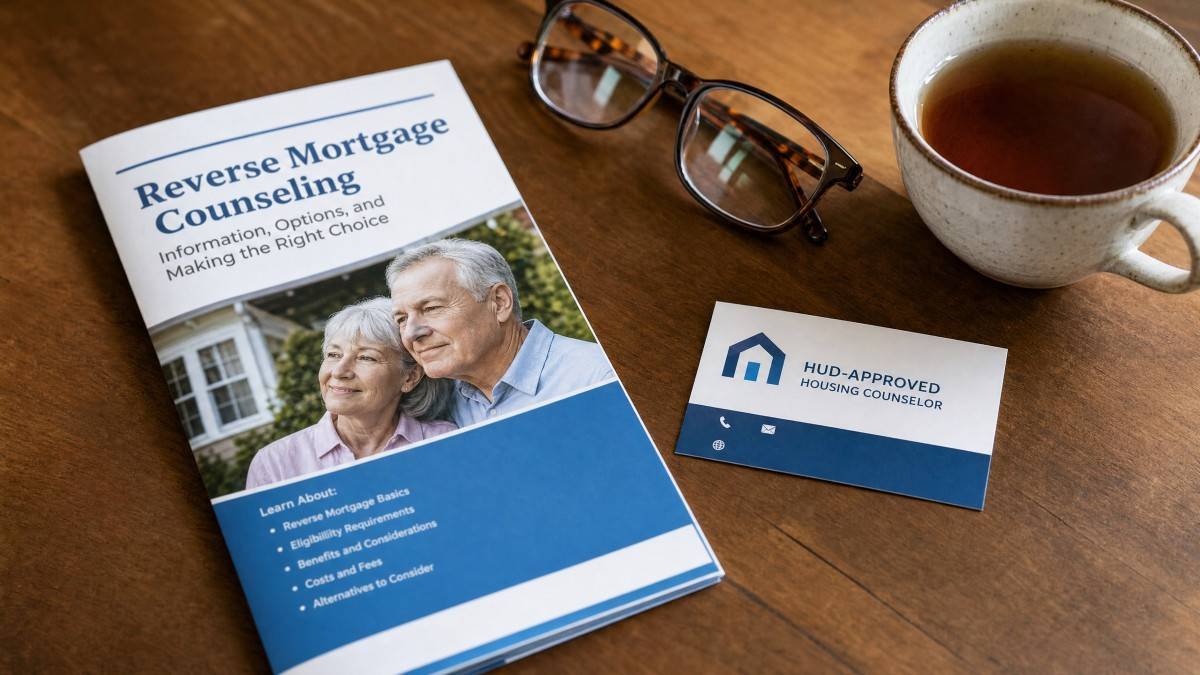
Before applying for a Home Equity Conversion Mortgage (HECM), prospective borrowers must complete a mandatory counseling session with a HUD-approved counselor. This session educates applicants on reverse mortgage mechanics, costs, obligations, and alternatives, ensuring an informed decision before proceeding with the loan application.
This counseling session is a crucial, non-negotiable step for anyone considering a HECM. Its primary purpose is to ensure that borrowers fully understand the intricacies of a reverse mortgage. During the session, a HUD-approved counselor will explain how reverse mortgages work, detailing the various payment options, reviewing all associated costs and fees, and discussing potential alternatives that might better suit your financial situation. They will also clearly outline your ongoing obligations as a borrower, such as the requirement to pay property taxes and homeowners insurance. These sessions can be conducted by phone or in person and typically cost around $125, though fees can vary. Many borrowers find this session incredibly helpful, clarifying aspects they might not have fully grasped from initial research. After completing the session, you will receive a counseling certificate, which is a mandatory document to submit with your loan application.
Ongoing Obligations and Potential Pitfalls
Maintaining a reverse mortgage requires continuous adherence to specific obligations, including timely payment of property taxes and homeowners insurance, and keeping the home in good repair. Failure to meet these responsibilities can lead to loan default, a significant pitfall that can jeopardize homeownership despite the absence of monthly mortgage payments.
Approval for a reverse mortgage is just the beginning; maintaining the loan in good standing requires ongoing vigilance. The most critical obligations include the timely payment of property taxes and homeowners insurance. It’s a common misconception that once you have a reverse mortgage, all housing-related payments cease. However, this is not the case. The idea that you still have to pay taxes and insurance, even without a mortgage payment, can be a real surprise for some, leading to unexpected financial strain if not planned for carefully. Failure to keep these payments current is a leading cause of reverse mortgage defaults. For instance, if property taxes go unpaid for several years, the lender has the right to foreclose on the home.
Another obligation is to maintain the home in reasonable condition. The FHA requires that the property remains safe and livable. This means that necessary repairs must be addressed promptly. Neglecting significant maintenance issues, such as a leaking roof or structural damage, can trigger a loan review and potentially lead to default if not rectified. The lender wants to ensure the collateral for the loan—your home—retains its value.
Finally, you must continue to occupy the home as your primary residence. This means that if you move out permanently, or even for an extended period (typically 12 consecutive months, for example, to live with family or in a long-term care facility), the loan will become due and payable. This can be a particularly challenging aspect for older adults whose health or family situations might necessitate a move. It’s frustrating to think that after all the effort to get a reverse mortgage, a prolonged hospital stay or moving in with family for care could trigger the loan to become due, potentially forcing a sale when you’re most vulnerable. It is crucial to communicate with your loan servicer if you anticipate any prolonged absences to understand your options and avoid default.
Frequently Asked Questions About Reverse Mortgages
What credit score do you need to qualify for a reverse mortgage?
There is no minimum credit score for HECM reverse mortgages. Lenders conduct a financial assessment focusing on payment history and overall financial responsibility, rather than a specific score, to ensure you can meet ongoing property obligations.
Can you get a reverse mortgage if you still owe money on your home?
Yes, an existing mortgage can be paid off using the proceeds from the reverse mortgage at closing. Qualification depends on having sufficient home equity remaining after your current loan is satisfied.
What is the 95% rule on a reverse mortgage?
The 95% rule allows heirs to purchase the home for 95% of its appraised value to settle the reverse mortgage loan after the borrower passes away or moves out, particularly if the loan balance exceeds the home’s market value.
How long does the reverse mortgage approval process take?
The reverse mortgage approval process typically takes 30 to 45 days from application to closing. This timeline can vary based on the speed of counseling completion, appraisal scheduling, and document verification.
Can a spouse under 62 remain in the home after the borrowing spouse dies?
Yes, if the younger spouse was designated as an eligible non-borrowing spouse on the original loan documents, they generally have protections allowing them to remain in the home, though they cannot access additional loan funds.
Navigating Your Options with Confidence
A reverse mortgage can be a valuable financial tool for eligible older homeowners seeking to access home equity without monthly mortgage payments. However, it requires careful consideration of eligibility, ongoing obligations, and potential long-term implications. Understanding these aspects is crucial for making an informed decision that aligns with your retirement goals.
Reverse mortgages offer a unique way for homeowners aged 62 and older to convert their home equity into accessible funds, providing financial flexibility without the burden of monthly mortgage payments. However, this flexibility comes with strict requirements and responsibilities, including the continuous payment of property taxes, homeowners insurance, and maintaining the property. It is not a solution for everyone, and careful evaluation of personal circumstances and alternatives is always recommended. Making an informed decision about a reverse mortgage can significantly impact your financial well-being in retirement, so take your time, ask questions, and consult with trusted advisors.