
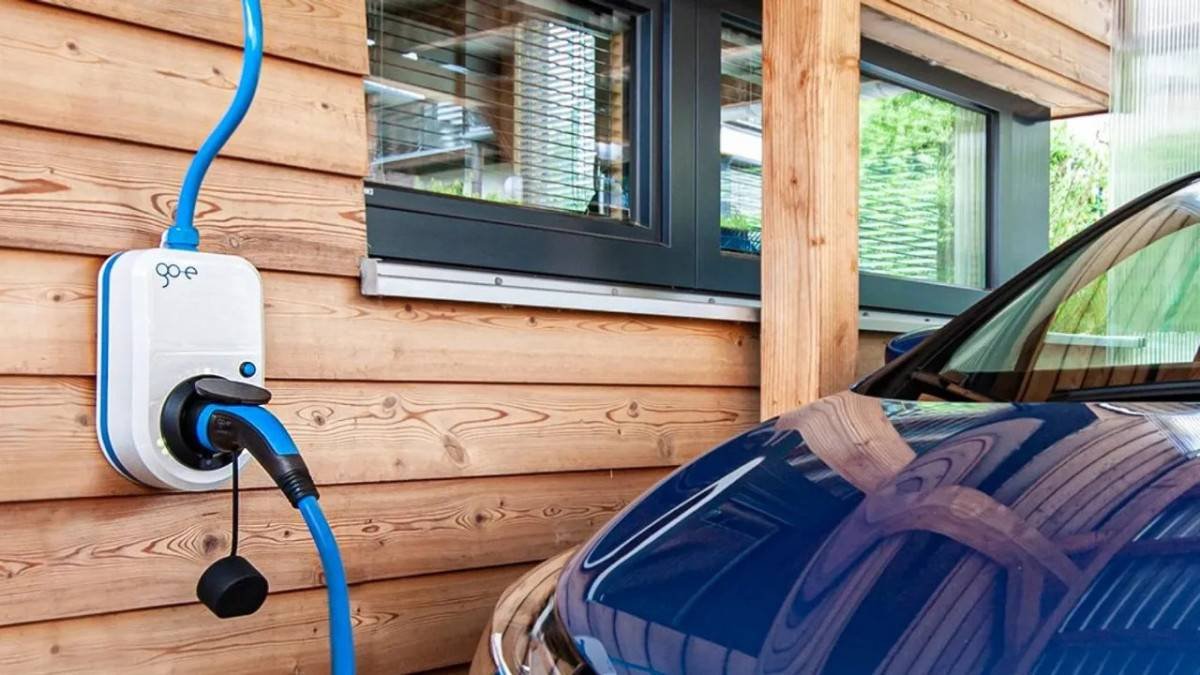

Installing a Level 2 EV charger at home requires an electrical permit in nearly every U.S. jurisdiction. The permit costs $50 to $350 depending on your city and the scope of the installation. Skipping the permit saves that amount today and risks an insurance claim denial, a failed home sale inspection, or a $500 to $2,000 corrective electrical job if a code violation is discovered later, adds Keyrenter Newport Beach solutions. The permit process itself is straightforward — an application, a plan review in some cases, an inspection after the work is complete — but the rules vary by jurisdiction in ways that can catch even licensed electricians off guard.
The permit requirement is not a bureaucratic hurdle. It is the mechanism that ensures the new 240-volt circuit drawing 30 to 60 amps continuously for 4 to 10 hours every night was installed to National Electrical Code standards by someone who understands load calculations, wire gauge requirements, and the specific overcurrent protection that EV chargers demand. A standard wall outlet delivers 1,800 watts intermittently. An EV charger delivers 7,200 to 11,500 watts continuously for hours. The thermal stress on connections is an order of magnitude higher, and the consequences of a loose connection — melted wire insulation, a fire inside the wall — are proportional.
“Paid electrician to install an EV charger and pull a permit. Months go by without contact, now electrician says we should do the permitting ourselves. The work is done, the charger works, but no inspection ever happened.”
— r/HomeImprovement, April 2026 (72 upvotes, 39 comments), source
This scenario — electrician installs the charger, says they will handle the permit, and then disappears, is common enough to warrant a specific precaution. The permit must be pulled before the work begins, not after. If the electrician starts work without a posted permit, they are either unlicensed, working outside their license scope, or hoping the job is small enough that nobody notices. In all three cases, the homeowner is the one who bears the consequences. A licensed electrical contractor is required in most jurisdictions to pull the permit in their name. A homeowner pulling their own permit and hiring an unlicensed worker to do the installation is a liability transfer that leaves the homeowner holding the bag if the work fails inspection or causes damage.
When an EV Charger Permit Is Required, and the One Exception
An electrical permit is required whenever the installation involves running a new circuit from the electrical panel to the charging location. This covers hardwired chargers, which are directly connected to the circuit with no plug or outlet, and plug-in chargers that require a new NEMA 14-50 or 6-50 receptacle on a dedicated circuit. Both scenarios add a new branch circuit to the home’s electrical system, and the National Electrical Code requires a permit for any new branch circuit installation.
The one common exception is installing a plug-in charger into an existing, properly permitted 240-volt outlet that was originally installed for another purpose, an electric dryer outlet in the garage, a welder outlet in a workshop. The exception applies only if the outlet was permitted at the time of original installation, is on a dedicated circuit of adequate amperage for the charger’s continuous load rating, and uses an industrial-grade receptacle rated for EV charging. Standard residential-grade NEMA 14-50 outlets are not rated for the continuous 4-to-10-hour load of EV charging and can melt at the contacts. If the existing outlet is a standard residential receptacle, it must be replaced with an industrial-grade one, and the replacement itself may require a permit depending on local rules.
A Level 1 charger that plugs into a standard 120-volt household outlet does not require a permit in any jurisdiction because it uses an existing circuit with no modification to the electrical system. Level 1 charging delivers 3 to 5 miles of range per hour, which is adequate for drivers who travel less than 40 miles per day and have 10 or more hours to charge overnight. Anyone driving more than that needs Level 2, and Level 2 means a permit.
The Permit Process, Step by Step
The EV charger permit process follows the same six-step sequence in virtually every U.S. jurisdiction, determine authority, prepare application, submit and pay, receive approval, complete installation, pass inspection, though forms, fees, and timelines vary by city and county. Most states now offer streamlined online permitting that reduces review times from weeks to days.
1. Determine jurisdiction. The permitting authority is usually your city or county building department. Some jurisdictions contract building services to a third party. Search “[your city] electrical permit” or call the building department and ask whether they handle electrical permits for EV charger installation or whether a separate agency does. According to the U.S. Department of Energy’s Alternative Fuels Data Center, many states have adopted streamlined EV charger permitting processes that reduce review times to as little as 5 business days for complete applications, a significant improvement over the 2-to-4-week timelines that standard electrical permits often require.
2. Prepare the application. Most jurisdictions require a basic site plan showing the charger location, the electrical panel location, and the proposed wire routing between them. Some require a load calculation, a simple form that adds up the existing electrical loads in the house and confirms that the panel has enough spare capacity for the charger circuit. A 200-amp service panel typically has room for a 50-amp EV charger circuit. A 100-amp panel may not, and a load calculation will determine whether a service upgrade is required before the charger can be installed.
3. Submit application and pay fees. Many jurisdictions now accept online permit applications through platforms like Accela, OpenGov, or their own portals. The permit fee for a residential EV charger installation ranges from $50 to $350. Some jurisdictions charge a flat fee. Others charge a base permit fee plus a plan check fee if a plan review is required. San Diego, for example, charges $264.25 for the inspection plus $353.13 for plan check if required. Smaller jurisdictions tend toward the lower end of the range.
4. Receive permit approval. Approval timelines range from same-day for simple over-the-counter permits to 2 to 4 weeks if plan review is required. The permit must be posted at the job site before work begins.
5. Complete the installation. The actual installation of a Level 2 charger takes 2 to 4 hours for a standard installation where the electrical panel is in or near the garage and the charger mounts on the adjacent wall. Installations where the panel is on the opposite side of the house from the garage, requiring a 50- to 100-foot wire run through walls, attic, or crawlspace, can take a full day.
6. Schedule and pass inspection. After the installation is complete, the permitting office sends an inspector to verify that the work matches the permit application and meets code. The inspection typically takes 15 to 30 minutes. The inspector checks the wire gauge, the breaker size, the conduit or cable type, the receptacle rating if applicable, and the torque on the terminal connections. If the installation passes, the permit is closed. If it fails, the electrician corrects the deficiencies and schedules a re-inspection. A failed first inspection is not unusual and does not necessarily indicate poor work. It often reflects a documentation issue, the inspector wants to see a torque specification label or a specific manufacturer’s installation instruction, and the electrician provides it at the re-inspection.
Cost Breakdown, Permit, Installation, and Panel Upgrades
The permit is one line item in a larger installation cost. The hardware, the charger itself, costs $400 to $700 for a quality Level 2 unit from ChargePoint, Grizzl-E, Emporia, or Tesla’s Universal Wall Connector. The installation labor costs $500 to $1,500 for a standard install where the panel has capacity and the charger location is within 25 feet of the panel. The permit costs $50 to $350. The total for a standard installation with permit is $1,000 to $2,500. The permit is 3% to 14% of the total, the smallest line item on the invoice.
If the existing electrical panel lacks capacity for a new 50-amp circuit, common in older homes with 100-amp service, a panel upgrade adds $1,500 to $3,500 to the project. A service upgrade from 100 to 200 amps adds $2,500 to $5,000 because it involves the utility disconnecting and reconnecting the service drop in addition to the panel replacement. The panel upgrade requires its own permit, separate from the EV charger permit.
The federal Alternative Fuel Vehicle Refueling Property Credit provides a tax credit of 30% of the installation cost up to $1,000 for residential installations in eligible census tracts. The credit covers the charger hardware, the installation labor, the permit fees, and any panel upgrades necessary to support the charger. The credit is claimed on IRS Form 8911. Not every address qualifies, the credit is limited to low-income and rural census tracts as defined by the IRS guidance updated in 2024.
| Cost Item | Typical Range | Notes |
| Level 2 Charger Hardware | $400–$700 | UL-listed, 32–48 amp |
| Installation Labor | $500–$1,500 | Standard ≤25 ft wire run |
| Electrical Permit | $50–$350 | Varies by jurisdiction |
| Panel Upgrade (if needed) | $1,500–$3,500 | New subpanel or larger main |
| Service Upgrade 100→200A | $2,500–$5,000 | Includes utility disconnect |
| Federal Tax Credit | Up to $1,000 | 30% of total, eligible tracts |
What Happens If You Skip the Permit
Skipping the electrical permit for an EV charger installation saves $50 to $350 upfront and exposes the homeowner to three escalating consequences: insurance claim denial for fire damage, a blocked or discounted home sale when the unpermitted work is discovered during inspection, and code enforcement fines ranging from $100 to $1,000 per violation.
Insurance denial. If an electrical fire originates from an unpermitted EV charger circuit, the insurance adjuster will determine whether the installation had a permit and passed inspection. A denied claim on a total-loss house fire is a six-figure consequence from a $150 permit skipped. Most homeowner’s policies contain exclusions for damage caused by unpermitted work, and an EV charger circuit drawing continuous high amperage is exactly the kind of installation that adjusters look for when investigating the cause of an electrical fire.
Home sale complication. When you sell the home, the buyer’s home inspector may flag the EV charger circuit as an unpermitted addition. The buyer’s lender may require the work to be permitted and inspected retroactively before closing, or the buyer may demand a credit for the cost of bringing the installation to code. Getting a retroactive permit for work that was installed without one is more expensive and more difficult than pulling the permit upfront because the inspector needs to verify things that are now hidden behind drywall.
Code enforcement penalties. Most jurisdictions can impose fines for unpermitted electrical work if it is discovered during a code enforcement inspection, which can be triggered by a neighbor complaint or a utility worker noticing unpermitted wiring during a service call. Fines range from $100 to $1,000 per violation depending on the jurisdiction. The penalty for unpermitted work is typically less than the cost of pulling the permit retroactively, but the combination of the fine plus the retroactive permit plus the opening of walls for inspection exceeds the cost of doing it correctly the first time by a factor of three or more.
Frequently Asked Questions
Do I need a permit for a Level 1 charger that plugs into a regular outlet?
No. A Level 1 charger plugs into a standard 120-volt household outlet and draws 12 to 16 amps on an existing circuit. No new wiring, no new circuit, no electrical modification of any kind means no permit is required in any U.S. jurisdiction. Level 1 charging delivers 3 to 5 miles of range per hour, or roughly 30 to 50 miles overnight. If that meets your daily driving needs, you can plug in and charge with zero permitting interaction.
Who pulls the permit, the homeowner or the electrician?
In most jurisdictions, the licensed electrical contractor performing the work pulls the permit in their name. The permit identifies the contractor as the responsible party for code compliance. A homeowner can pull an owner-builder electrical permit in many jurisdictions, but this shifts liability to the homeowner and usually requires the homeowner to certify that they personally performed the work or directly supervised it. If a homeowner pulls the permit and an unlicensed worker performs the installation, the homeowner is legally responsible for any code violations and any resulting damage. The correct arrangement is for the licensed electrician to pull the permit as part of the installation contract. If the electrician is unwilling or unable to pull a permit, they are likely unlicensed. Verify the electrician’s license online through your state’s licensing board before signing a contract.
Can I use an existing 240V outlet for an EV charger without a permit?
Yes, if the outlet was originally installed with a permit, is on a dedicated circuit of adequate amperage, and uses an industrial-grade receptacle rated for continuous EV charging loads. The critical variable is the receptacle quality. Standard residential NEMA 14-50 outlets installed for electric ranges or dryers are rated for intermittent use, an hour or two at a time. EV charging runs continuously for 4 to 10 hours, and standard receptacles can overheat and melt under that sustained load. An industrial-grade receptacle like the Hubbell HBL9450A or Bryant 9450FR costs $50 to $80 versus $10 for a standard receptacle and is built to handle continuous high-current loads. If the existing outlet is a standard residential grade, replacing it with an industrial-grade receptacle is strongly recommended and may require a permit depending on local rules. If the outlet was installed without a permit originally, the entire circuit is unpermitted and connecting an EV charger to it does not make it compliant.
Can my HOA block me from installing an EV charger?
In many states, no. California, Colorado, Florida, Hawaii, Oregon, and several other states have right-to-charge laws that prohibit HOAs from unreasonably restricting EV charger installations. The HOA can require a reasonable approval process, location review, aesthetic standards, insurance requirements, but cannot deny the installation outright. The specifics vary by state. Check your state’s right-to-charge law or consult the Alternative Fuels Data Center’s laws and incentives database for your state’s specific provisions. Even in states without explicit right-to-charge laws, many HOAs have adopted EV charger policies that facilitate installation because they recognize that blocking EV adoption is a losing battle with residents.
