
Ceiling Mold: Types, Problems, and Removal

Ceiling mold is a fungal growth that appears on interior ceiling surfaces due to consistent moisture, inadequate ventilation, and organic material accumulation. Ceiling molds are different in types according to the colors. To identify the mold on the ceiling, you can use visual signs, smell, and DIY testing methods.
Mold is thriving on the ceiling surface due to roof leaks, poor attic ventilation, bathroom moisture, pipe or plumbing leaks, faulty insulation, blocked or damaged gutters, and higher humidity and moisture environments. To remove the mold on the ceiling, you can use white vinegar, hydrogen peroxide, baking soda and water, commercial removers, cut and replace infested drywall, and apply antimicrobial sealants.
Ceiling mold affects negatively to the ceiling and homeowners negatively by increasing health issues, structural deterioration, paint and surface damages, musty odor, or poor indoor air quality, and reduces the property value. In order to eliminate ceiling mold, you should follow expert guidance because mold is harmful and a bit difficult to remove.
Our expert’s best advice is to eliminate all the possible factors for mold growth because controlling ceiling mold is easier than killing it.
What Is Mold on the Ceiling?
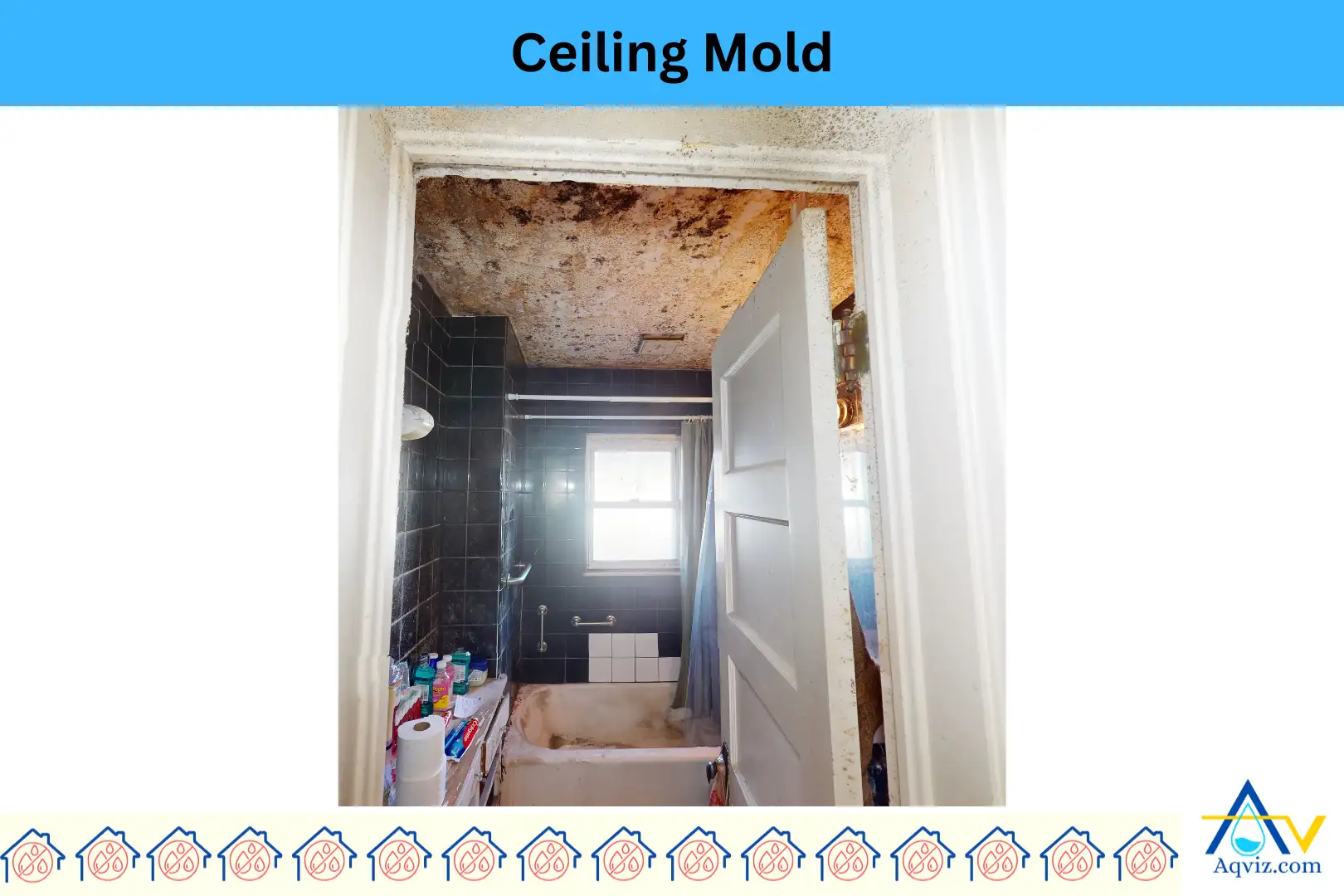
Ceiling mold is a fungal growth that appears on interior ceiling surfaces due to consistent moisture, inadequate ventilation, and organic material accumulation. Molds commonly affect gypsum board, acoustic tiles, plaster, wood ceilings, and even popcorn ceilings. The most affected zones are bathrooms, kitchens, basements, and under-roof spaces due to high humidity and vapor accumulation. Ceiling mold colors include black, green, yellow, brown, and white, each often indicating a different species and potential toxicity.
At Aqviz, we’ve often seen ceiling mold forming in areas with poor waterproofing or improper insulation, especially after roof leaks or plumbing issues.
What Are the Types of Ceiling Mold?
Ceiling mold types are classified mainly by color and species, each indicating different health risks and material compatibility. The most dangerous and recognizable ceiling mold is black mold (Stachybotrys chartarum), often found on porous materials like drywall and fiberboard in constantly damp areas. It’s slimy, dark green to black, and produces mycotoxins harmful to respiratory health.
White mold, commonly seen on painted plaster ceilings, can be either Cladosporium or Penicillium, and is often powdery in texture. Green mold, such as Aspergillus or Trichoderma, appears on wood-paneled or poorly sealed ceilings. Yellow and brown molds, typically Serpula or Epicoccum, thrive in poorly ventilated attic ceilings with cellulose-based materials.
How to Identify Mold on the Ceiling?
You can identify the mold on the ceiling by following the 5 ways.
- Discoloration or blotchy stains: Black, green, yellow, or brown patches forming irregular shapes on the ceiling surface.
- Musty or earthy odor: A persistent damp smell, especially after rain or in rooms like bathrooms or basements, can be a sign of ceiling mold.
- Peeling or bubbling paint: Indicates moisture behind the ceiling paint, where mold may grow.
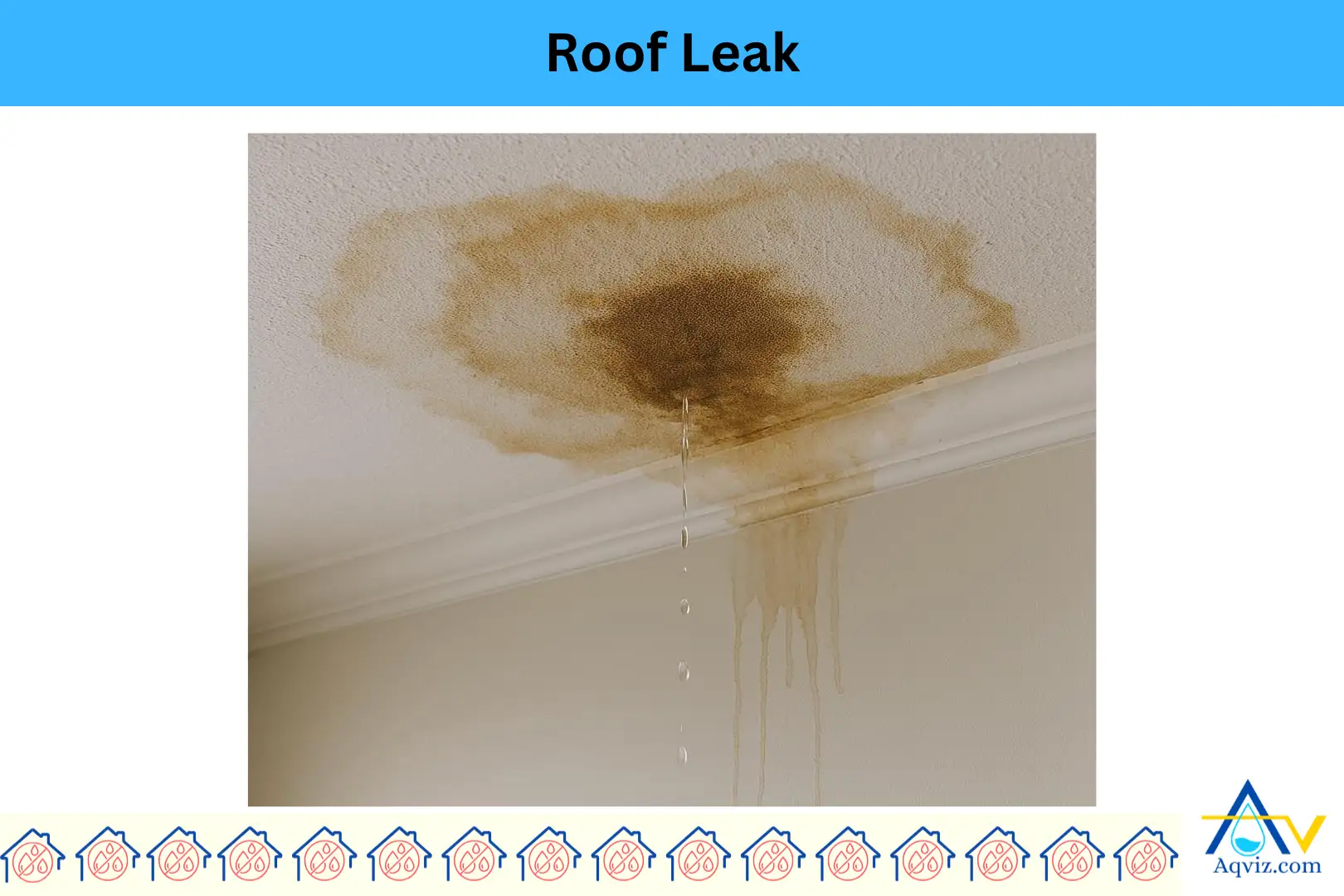
- Water stains on the ceiling or circular rings: Especially brown or rusty watermarks around ceiling fixtures or corners.
- Wood or drywall rot: Crumbling, soft spots, or sagging ceiling sections are strong indicators of mold beneath the surface.
What Are the 7 Reasons for Mold on the Ceiling?
Here are the 7 most common causes of mold on the ceiling.
- Roof leaks: Cracks, broken shingles, or aged flashing allow water to seep into the attic and ceiling cavities.
- Poor attic ventilation: Trapped humidity and heat in unventilated attics promote condensation and mold growth on the ceiling.
- Bathroom moisture buildup: Steam and vapor from showers rise and cling to ceilings without exhaust fans or vents.
- Pipe or plumbing leaks: Hidden leaks above the ceiling from supply or drainage lines create damp zones ideal for mold.
- Faulty insulation: Improper or compressed insulation fails to regulate temperature, causing condensation and mold.
- Blocked or damaged gutters: Overflowing gutters push water into fascia and under the roof, eventually soaking the ceiling.
- Humidity and climate conditions: Homes in high-humidity regions without dehumidifiers or vapor barriers are more mold-prone.
How to Remove Mold on the Ceiling?
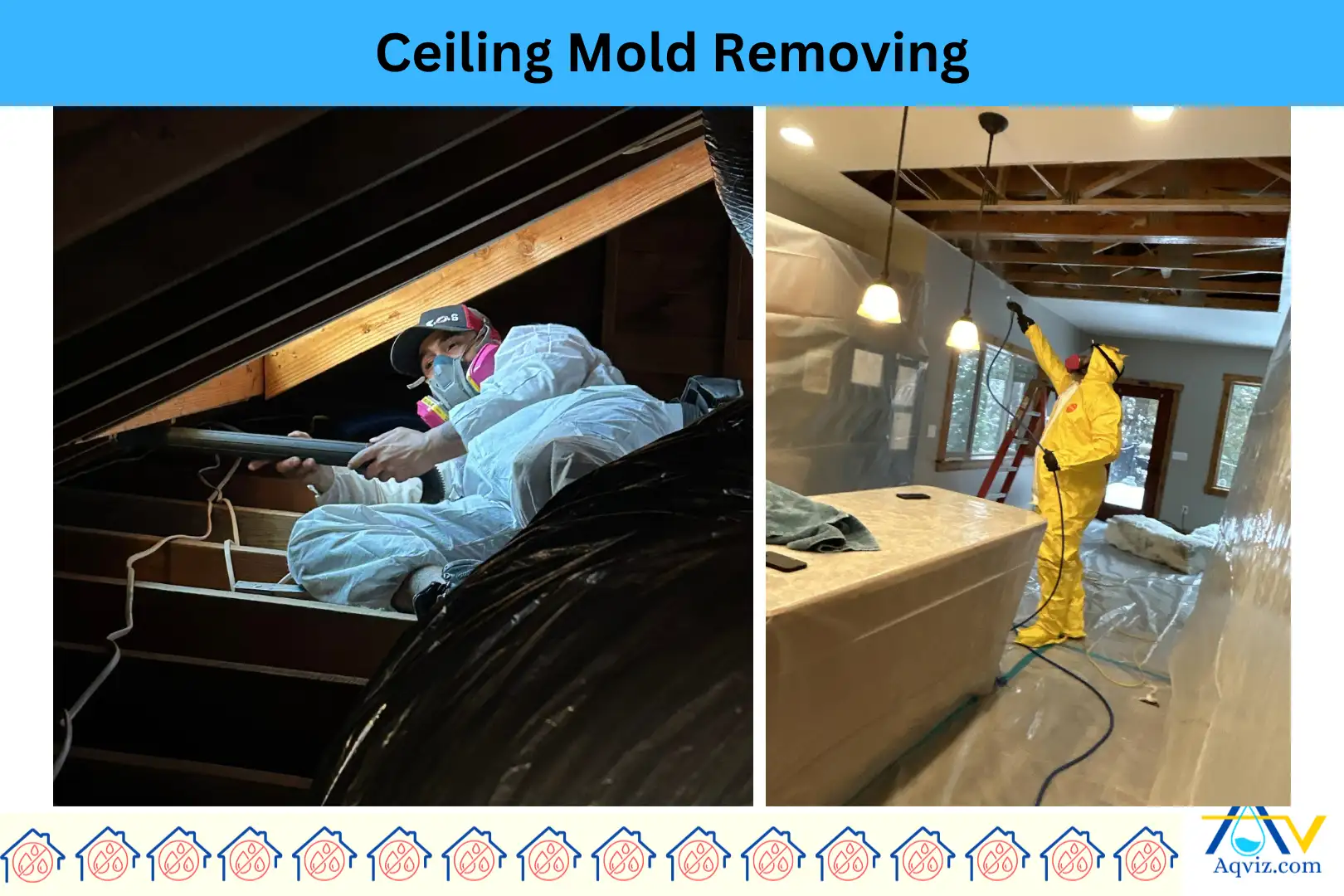
Ceiling mold remediation is a step-by-step process that must address both surface contamination and underlying moisture issues. We highly recommend that you always assess the ceiling material type before selecting the right removal approach. So here are our 6 expert guides to removing ceiling mold.
Here are 6 effective ways to remove ceiling mold.
- Scrub with white vinegar: Apply undiluted white vinegar on non-porous surfaces like painted drywall and scrub with a stiff brush.
- Use hydrogen peroxide (3%): Spray directly on visible mold spots, wait 15 minutes, and wipe off. Ideal for light-colored ceilings.
- Apply baking soda and water paste: Scrub into textured or popcorn ceilings to remove mold stains safely.
- Use commercial mold removers: EPA-registered cleaners can kill deep-rooted mold colonies. Choose based on ceiling material.
- Cut and replace infested drywall: For severe mold on gypsum board or fiberboard on the ceiling, replacement is the safest and most effective solution.
- Apply anti-microbial sealants: After the ceiling is cleaned, we recommend that you seal the surface with a mold-resistant primer to prevent regrowth.
What Are the Ceiling Mold Killers?
Ceiling mold killers are products that not only kill active mold but also disinfect the surface for long-term protection. Here are the most effective 6 ceiling mold killers.
- White vinegar: Natural acid that kills 82% of mold species, suitable for painted ceilings.
- Hydrogen peroxide (3% to 6%): Oxidizing agent that works well on porous and non-porous ceiling surfaces.
- Baking soda: Mild alkaline powder that neutralizes odors and scrubs away stains.
- Commercial mold removers: Brands like Concrobium, RMR-86, and Mold Armor are designed for deep remediation.
- Tea tree oil: Natural fungicide, effective in small doses for minor outbreaks.
- Bleach solution (1:10 ratio): Kills mold on non-porous ceilings, but we use it cautiously as it doesn’t penetrate porous materials.
What Are the Impacts of Ceiling Mold?
Here are 5 negative impacts of ceiling mold.
- Respiratory health issues: Mold spores cause coughing, sneezing, allergies, and asthma, especially in kids and elderly occupants.
- Structural deterioration: Mold weakens drywall, plaster, and wood, leading to sagging or crumbling ceilings over time.
- Paint and surface damage: Mold breaks down paint layers, causing bubbling, peeling, and permanent stain marks.
- Musty odor and poor indoor air quality: Spores circulate through HVAC systems, making the entire house smell stale and unpleasant.
- Reduced property value: Mold presence can scare buyers, lower appraisal values, and make insurance claims more difficult.
How to Eliminate Mold on the Ceiling?
To get rid of ceiling mold effectively, you must eliminate both the visible mold colonies and the source of moisture by following these 7 steps.
- Locate and fix the moisture source: Repair roof leaks, improve attic ventilation, or fix plumbing above the ceiling.
- Wear PPE equipment: Wear gloves, goggles, and an N95 respirator to avoid inhaling spores.
- Contain the area: Use plastic sheeting and tape to prevent spores from spreading during cleaning.
- Clean with mold-killing agents: Apply white vinegar, hydrogen peroxide, or commercial mold removers directly on the mold.
- Scrub or replace materials: Scrub mold from hard surfaces and cut out mold-infested drywall if necessary.
- Apply mold-resistant sealant: After drying, apply an anti-microbial primer or sealer to prevent future growth.
- Maintain dry conditions: Use a dehumidifier and ensure proper roof insulation and ceiling ventilation for long-term protection.
In order to eliminate ceiling mold successfully, you should waterproof the roof. Roof waterproofing helps to stop all the possible leaks from the roof. Roof waterproofing is the most successful way to eliminate the ceiling mold rather than killing it periodically.
Which Mold Is Prolonged in the Ceiling?
The most prolonged and persistent mold in ceilings is Stachybotrys chartarum, commonly known as black mold. This toxic species in ceilings affected by long-term water exposure, especially from hidden roof leaks, burst pipes, or unventilated bathrooms. Black mold thrives in high-cellulose materials like drywall, plasterboard, and wooden ceiling panels, and they from a deep-rooted colonies that aren’t easily removed with surface cleaning.
What Are the Reasons for Mold in the Bathroom?
These are the 5 reasons for mold growth in bathrooms :
- Poor ventilation: Lack of exhaust fans or open windows traps steam and humidity after showers.
- Leaky plumbing: Slow drips from pipes, faucets, or under the sink create continuous moisture.
- Improper waterproofing: Gaps in tile grout, cracked caulking, or failed shower membranes let water into walls and ceilings.
- Standing water: Water pooling near bathtubs, behind toilets, or on floors is a mold breeding ground.
- Porous surfaces: Materials like drywall, wood vanities, or MDF cabinets absorb moisture and allow mold to root deep inside.
Read more about: How to Waterproof a Concrete Roof?