
How to Waterproof a Swimming Pool?

To waterproof a swimming pool, you should follow these 5 steps.
- Clean the swimming pool surface using a pressure washer
- Install the vapour barrier on the pool surface
- Apply the primer in the pool surface
- Install the waterproofing membrane on the pool surface
- Install the top coat on the swimming pool surface
Before following these 5 steps, you should have the recommended tools and materials for swimming pool waterproofing. As a waterproofing membrane, you can use cementitious, Polyurethane, Acrylic, EPOXY, PVC, and EPDM. This will take 4-5 days, and it will protect the pool from water damage and increase the water quality in the pool.

1. Clean the Swimming Pool Surface Using a Pressure Washer
The newly constructed swimming pool should be swept first to remove the dust and debris on the surface. Then, you should wash the pool surface using a pressure washer to remove the stuck dirt and dust. In this step, you can see if there are any small cracks, holes, or damage on the pool surface (probably there is no damage on the newly constructed pool surfaces)
2. Install the Vapour Barrier on the Pool Surface
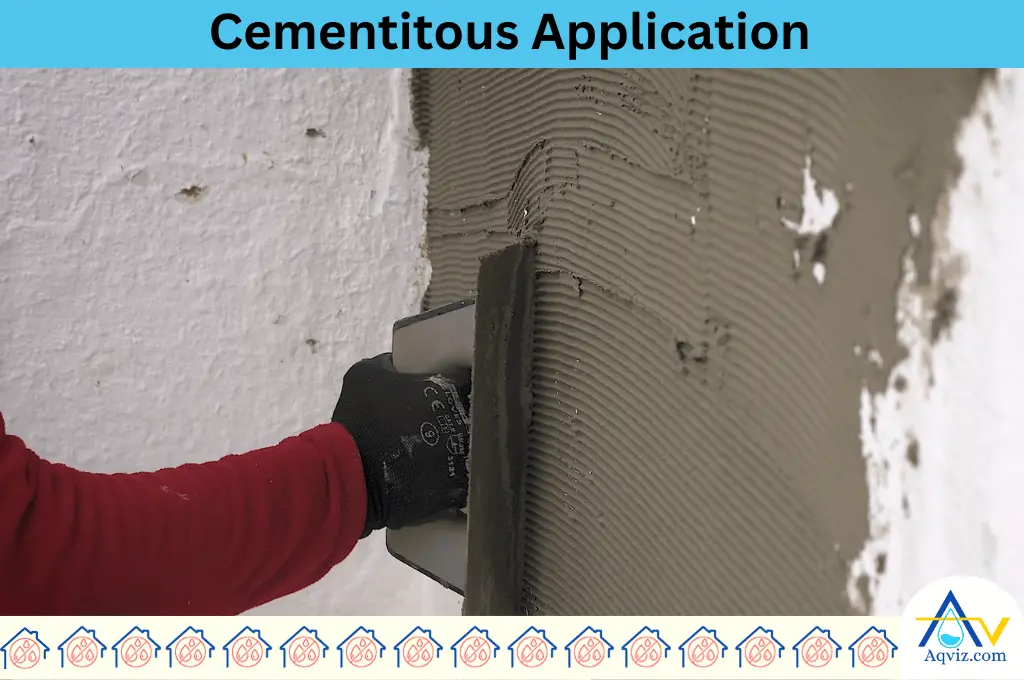
You should apply the vapour barrier layer on the swimming poll walls, floor, joints and seams to reduce the negative water pressure. You can use a cementitious waterproofing membrane as the vapour barrier on the swimming pool surface. You can use a trowel to apply the waterproofing membrane on the surface. You should apply the vapor barrier between 15-30 Celcius degree temperature. When you apply the vapour barrier, make sure to maintain the layer thickness and smoothness all over the surface.
While you are applying the vapor barrier, you should fill the swimming pool wall and floor joints using waterproof cement and mortar. You should fillet the swimming pool’s inner edges and seams using a trowel. The fillet should be constant along the seams and joints and have a smooth surface.
3. Apply the Primer in the Pool Surface
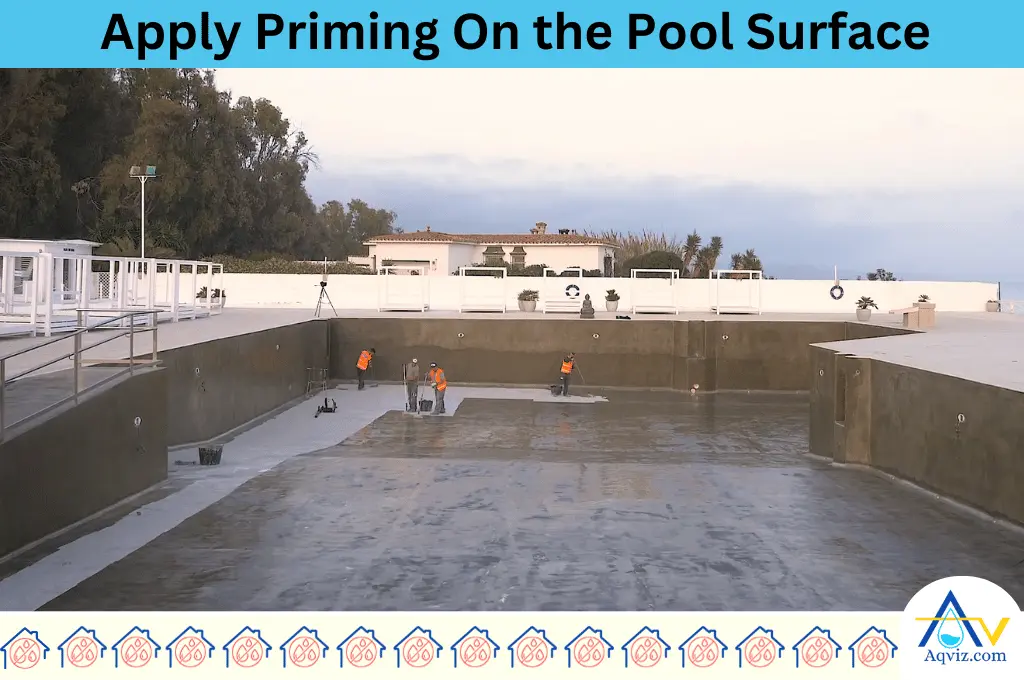
You should apply primer on the pool surface in order to improve the adhesion between the waterproofing membrane and structure. You can use 100% solid polyurethane as the primer for the pool waterproofing. You should not apply only polyurethane or epoxy on the concrete surface in the pool without installing a vapor barrier.
You can use a brush, spray, or roller to apply the waterproofing primer to the swimming pool surface. When you apply the primer on the pool surface, it should be consistent all over the surface, and you should apply the recommended coatings according to the manufacturer’s guidelines.
4. Install the Waterproofing Membrane on the Pool Surface
Once you finish applying the primer on the pool surface, you should apply the waterproofing membrane. You can use only the liquid waterproofing on the swimming pool surface that requires an unseamed layer. Hence, you can use polyurethane, epoxy, and epoxy-based waterproofing membranes on the pool surface.
You can use a brush, roller, and spray for the DIY pool waterproofing projects. But You can use 245 bar 12 kg /min sprayer to apply the high resistance pure polyurethane membrane application for large pool waterproofing projects.

5. Install the Top Coat on the Swimming Pool Surface
After installing the waterproofing membrane, you should install the top coats on the pool surface to protect the waterproofing layer from the UV rays and colonic water. You can use a roller or brush to apply the top coating on the pool surface.
Tools and Materials for Swimming Pool Waterproofing
Waterproofing tools for newly constructed pool
- Safety tools: Safety gloves, safety glasses, safety helmets, work boots, and safety harnesses.
- Cleaning tools: Power washers, scrub brushes, deck brushes, brooms, and dust pans
- Vapour barrier installing tools: Vapour barrier, trowel, measuring tape
- Priming tools: Paint rollers, paint brushes, paint trays,
- Waterproof laying tools: Trowels, paintbrush, and roller
- Top coat installing tools: Sprayer, paintbrush, and roller
How to Waterproof an Old Swimming Pool?
You should re-waterproof a new swimming pool after 4-5 years of usage. The re-waterproofing of the swimming pool should be done when you see cracks and damage on the pool surface, mud and stain marks on the pool, discoloration, and odor in the pool water. You should know how to waterproof an old swimming pool. You can conduct your used pool waterproofing DIY project using these 8 steps.
- Observe for a swimming pool leaking
- Drain the pool water
- Clean the swimming pool
- Wash the surface using a heavy-duty cleaner
- Fill the cracks using epoxy filler
- Sanding the pool surface
- Wash the pool surface using acidic water
- Apply a waterproofing layer
Is It True That New Swimming Pools Have Built-in Waterproofing?
Yes, new swimming pools indeed have a built-in waterproofing capability for a certain period, such as 1- 2 weeks. The duration depends on the quality and the strength of the concrete. After that, water can seep through the pores of the concrete layer and leak through the seams, joints and connections. But you should not use this water because it contains a lot of harmful contaminants that can harm your skin. Therefore do not use new swimpools that are not waterproofed, although it has built-in waterproofing.