5 Cementitious Waterproofing Coatings: Uses, Pros and Cons

Cementitious waterproofing is one of the most used waterproofing membranes for buildings and constructions. Cementitious waterproofing is mixed with additives to enhance the flexibility, UV resistance, and breathability of the cementitious waterproofing layer. By considering all factors, we can categorize cementitious waterproofing into 5 main types.
- Polymer-modified cement waterproofing
- Elastomeric cementitious waterproofing coating
- Acrylic cementitious waterproofing coating
- Crystalline cementitious waterproofing
- Slurry cementitious waterproofing
This cementitious waterproofing has slightly different properties. So we highly recommend that you use a compatible cementitious waterproofing membrane for your building waterproofing project. Contact Aqviz experts. We will help you to choose the best one.
1. Polymer Modified Cement Waterproofing
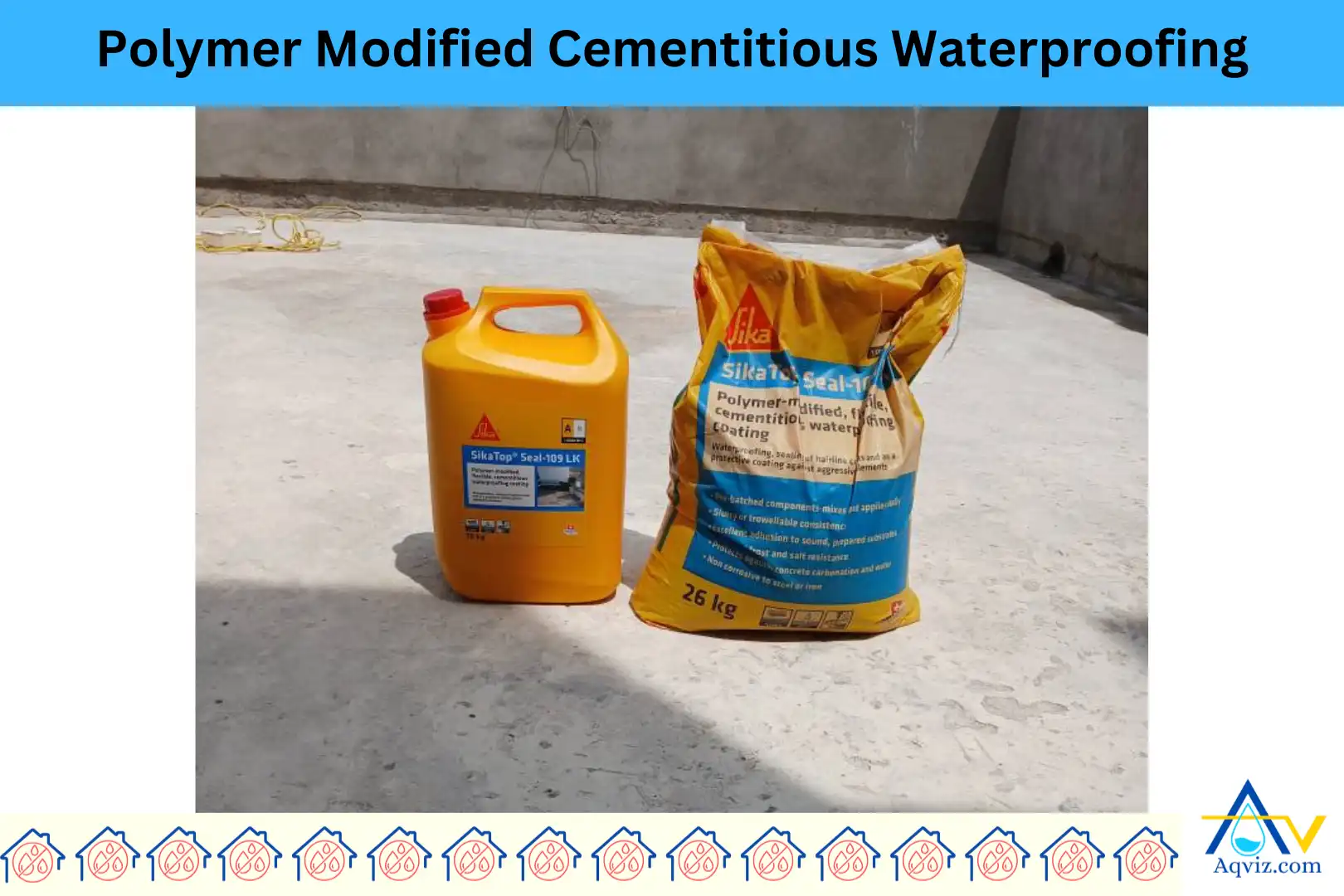
Polymer-modified cement waterproofing is a cement-based waterproofing system enhanced with polymer additives, such as acrylic, SBR (styrene-butadiene rubber), or latex. The polymer additives on the cementitious waterproofing help to enhance the flexibility, adhesion, and water resistance of the layer.
Hence, polymer-modified cementitious waterproofing can be used on basements, water tanks, balconies, bathrooms, and planters. It effectively resists both positive and negative water pressure, making it a reliable choice for moisture-prone structures. Polymer-modified cementitious waterproofing lasts 10 to 15 years. It withstands higher moisture, cracks, and minor structural movements.
Pros of polymer-modified cementitious waterproofing
- Polymer additives prevent cracking and enhance adaptability over time
- Polymer-modified cementitious bonds strongly to concrete, masonry, and metal surfaces
- Polymer-modified cementitious material has good UV resistance
- Polymer-modified cementitious material is breathable
- Polymer-modified cementitious materials can be reinforced
Cons of polymer-modified cementitious waterproofing
- Limited elasticity compared to liquid membranes
- Requires a clean, well-primed surface for optimal bonding
- Application thickness needs to be controlled
2. Elastomeric Cementitious Waterproofing Coating
Elastomeric cementitious waterproofing coating is a hybrid waterproofing system that combines cement-based waterproofing with elastomeric polymers, enhancing its flexibility and durability. Elastomeric cementitious waterproofing consists of cement-based powder, elastomeric polymer additives, sand or fine aggregates, and water. Due to the elastomeric properties, the waterproofing layer can stretch and accommodate minor structural movements without cracking.
Hence, elastomeric cementitious waterproofing can be used on rooftops, balconies, terraces, basements, and swimming pools. It is ideal for areas exposed to high water pressure and structural movement, ensuring a long-lasting waterproof barrier. Elastomeric cementitious waterproofing lasts 12 to 20 years. It withstands thermal expansion, moisture exposure, and dynamic structural stress.
Read More: 7 Methods of Cementitious Waterproofing with Pros and Cons
Pros of elastomeric cementitious waterproofing
- Elastomeric cementitious waterproofing has high flexibility, preventing cracks caused by structural movement
- Elastomeric cementitious waterproofing bonds strongly to concrete, masonry, and brick surfaces
- Elastomeric cementitious waterproofing resists high water pressure, making it ideal for wet areas and submerged structures
- Elastomeric cementitious waterproofing has good UV resistance, allowing exterior exposure without degradation
Cons of elastomeric cementitious waterproofing
- Higher cost compared to standard cementitious waterproofing
- Requires precise mixing and multiple coats for maximum effectiveness
- Surface preparation is crucial to ensure proper adhesion and durability
3. Acrylic Cementitious Waterproofing Coating
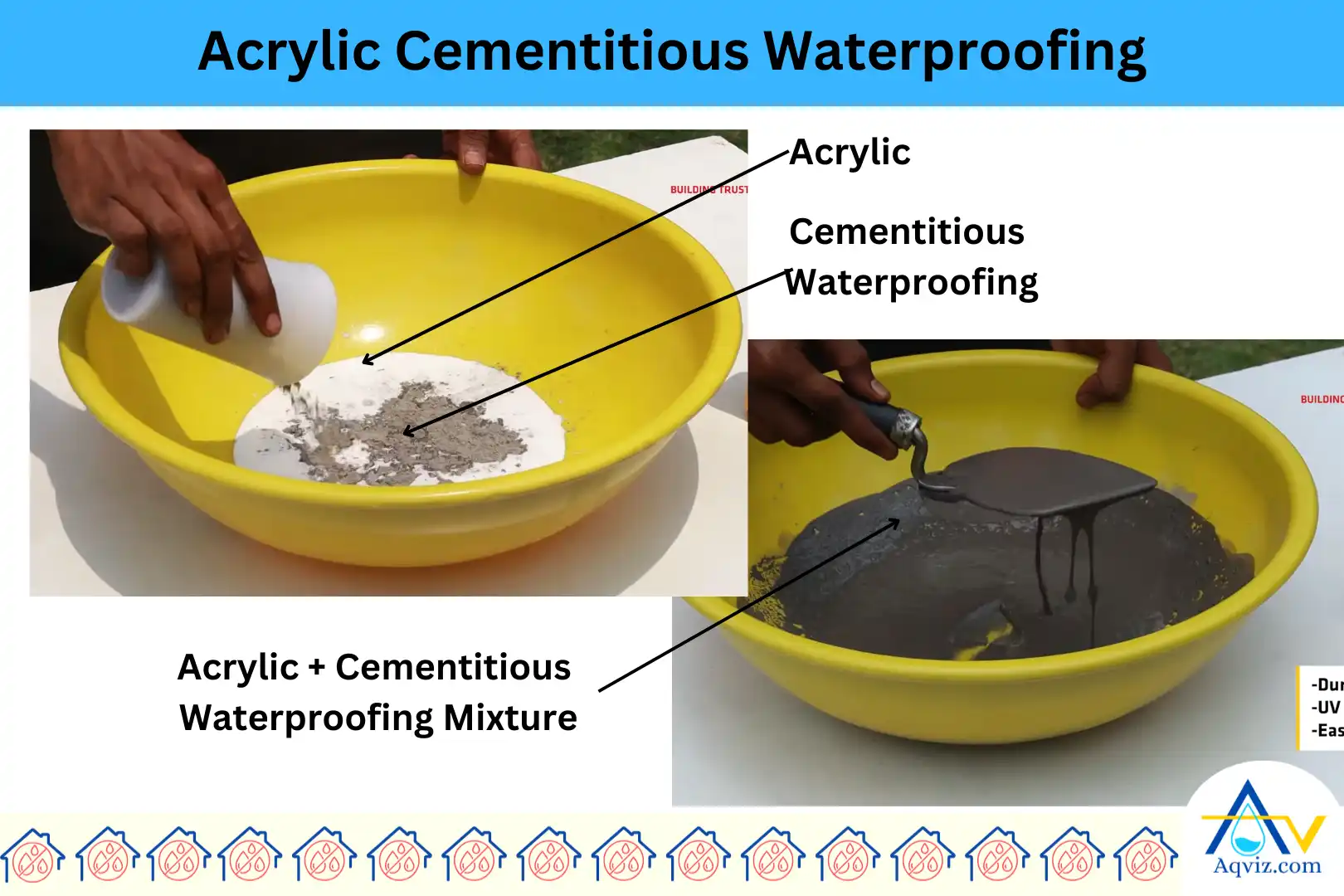
Acrylic cementitious waterproofing is a flexible waterproofing system that combines cement-based materials with acrylic polymers, enhancing adhesion, elasticity, and water resistance. Due to the acrylic polymer additives, the waterproofing layer provides enhanced elasticity, UV resistance, and durability on the concrete surface.
Acrylic cementitious waterproofing can be used on rooftops, facades, swimming pools, bathrooms, and balconies. It offers superior UV resistance and flexibility compared to standard cementitious coatings, making it suitable for exterior and exposed surfaces. Acrylic cementitious waterproofing lasts 12 to 20 years. It withstands moisture exposure, temperature variations, and minor structural movements.
Pros of acrylic cementitious waterproofing
- Acrylic polymer additives enhance flexibility and prevent cracking on the cementitious layer.
- Acrylic cementitious waterproofing has excellent UV resistance, making it ideal for exposed areas
- Acrylic cementitious bonds strongly to concrete, masonry, and metal surfaces
- Acrylic cementitious waterproofing is breathable, allowing moisture to escape without compromising performance
Cons of acrylic cementitious waterproofing
- Higher cost compared to standard cementitious waterproofing
- Requires multiple coats for optimal protection over the concrete surface
Read More: 10 Types of Waterproofing Membranes: Properties, Applications, Pros, and Cons
4. Crystalline Cementitious Waterproofing Coating
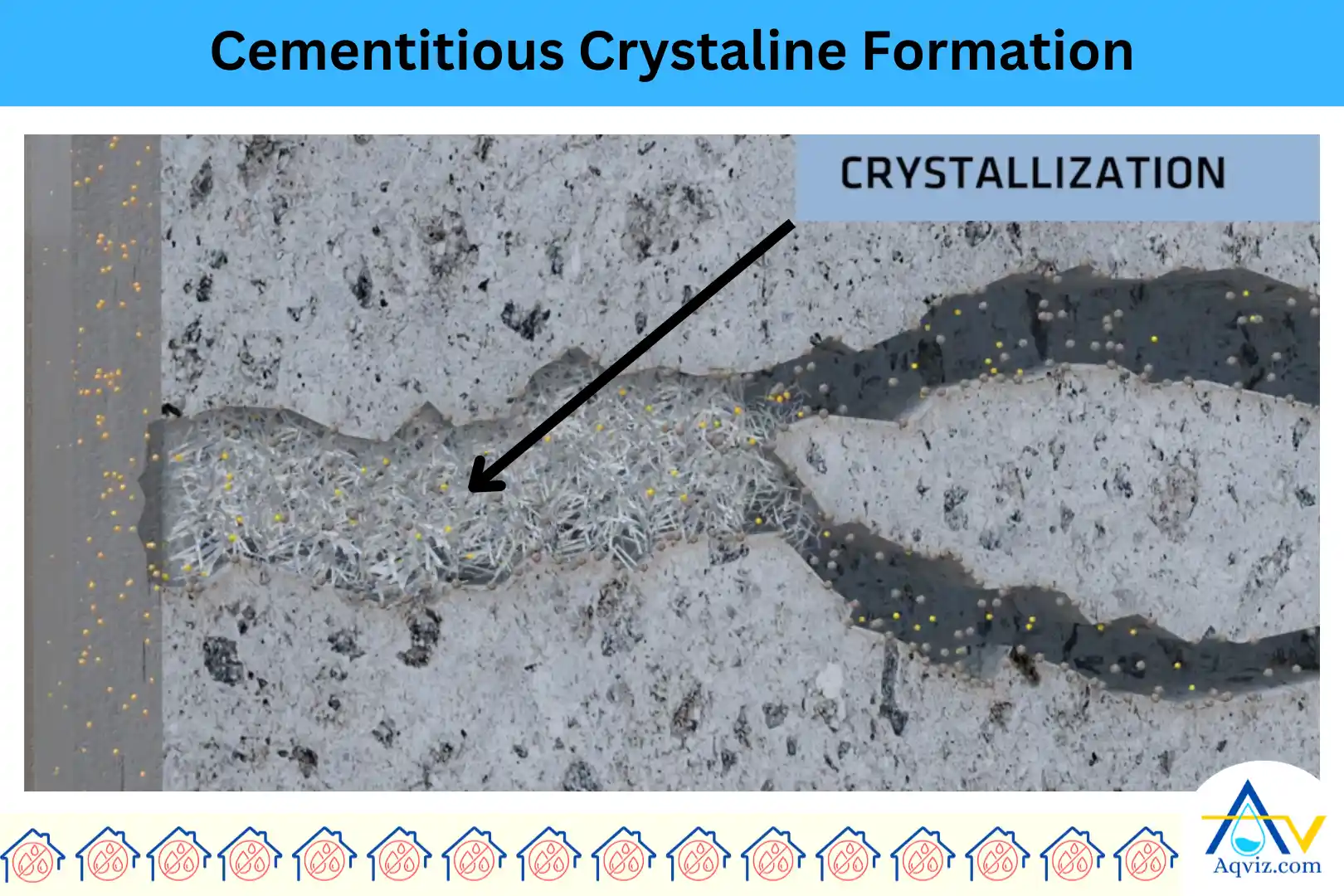
Crystalline cementitious waterproofing coating is a permeation-based waterproofing system that utilizes active crystalline chemicals to penetrate concrete and react with water and unhydrated cement particles. Crystalline cementitious waterproofing consists of cement-based powder, active proprietary chemicals, and fine silica sand.
Due to the crystalline reaction, the waterproofing layer penetrates deep into the concrete, sealing cracks and preventing water infiltration for a long time. Hence, it can be used on basements, water tanks, tunnels, foundations, and swimming pools. It provides permanent waterproofing protection as the crystalline growth continues to self-heal minor cracks over time. Crystalline cementitious waterproofing lasts the lifetime of the concrete structure. It withstands high water pressure, aggressive chemicals, and continuous moisture exposure.
Pros of crystalline cementitious waterproofing
- Crystalline waterproofing penetrates deep into the concrete structure, offering permanent waterproofing
- Crystalline cementitious waterproofing has self-healing properties, sealing minor cracks over time
- Crystalline cementitious waterproofing resists high hydrostatic pressure, making it suitable for underground structures
- Crystalline cementitious waterproofing can be applied to both new and existing concrete
- Crystalline cementitious waterproofing is highly durable, lasting the entire lifespan of the structure
Cons of crystalline cementitious waterproofing
- Not suitable for flexible or moving structures, as it does not provide surface elasticity
- Requires moisture activation, meaning dry conditions may limit its effectiveness. The application requires skilled labor to ensure proper mixing and coverage
5. Slurry Cementitious Waterproofing coating
Slurry cementitious waterproofing coating is a rigid, cement-based waterproofing system. Slurry cementitious waterproofing consists of cement-based powder, fine aggregates (fillers), chemical binders, and water. Due to its easy application and strong adhesion, the waterproofing layer forms a dense, durable coating that prevents water penetration to the surface.
Therefore, slurry cementitious waterproofing can be used on basements, water tanks, swimming pools, tunnels, and retaining walls. It is highly resistant to positive water pressure and is often applied in areas exposed to constant water contact. Slurry cementitious waterproofing lasts 8 to 15 years. It withstands moisture exposure, mild chemical attacks, and direct water pressure.
Pros of slurry cementitious waterproofing
- Slurry cementitious waterproofing is easy to apply with a brush or spray
- Slurry cementitious waterproofing bonds strongly to concrete, brick, and masonry surfaces
- Slurry cementitious waterproofing resists hydrostatic pressure, making it effective for below-grade applications
- Slurry cementitious waterproofing is cost-effective compared to polymer-modified or crystalline waterproofing
Cons of slurry cementitious waterproofing
- Limited flexibility, making it unsuitable for structures with movement or expansion
- Requires multiple coats to achieve proper waterproofing performance
- Not UV-resistant, requiring a protective layer if used in exposed areas
How to Apply Cementitious Waterproofing?
You should follow these 7 steps when applying cementitious waterproofing.
7 Steps to Apply Cementitious Waterproofing Layer
- Prepare the concrete surface for cementitious waterproofing
- Mix the cementitious waterproofing compound
- Apply the first cementitious waterproofing coating
- Wait for the curing of the cementitious waterproofing
- Apply a second cementitious waterproofing layer
- Apply additional cementitious waterproofing layers if needed
- Protect the cementitious waterproofing layer
Aqviz experts have prepared this guide How to Apply Cementitious Waterproofing? with including all the detailed steps of cementitious waterproofing on the concrete. So we highly recommend that you read this comprehensive guide before starting your waterproofing project.