
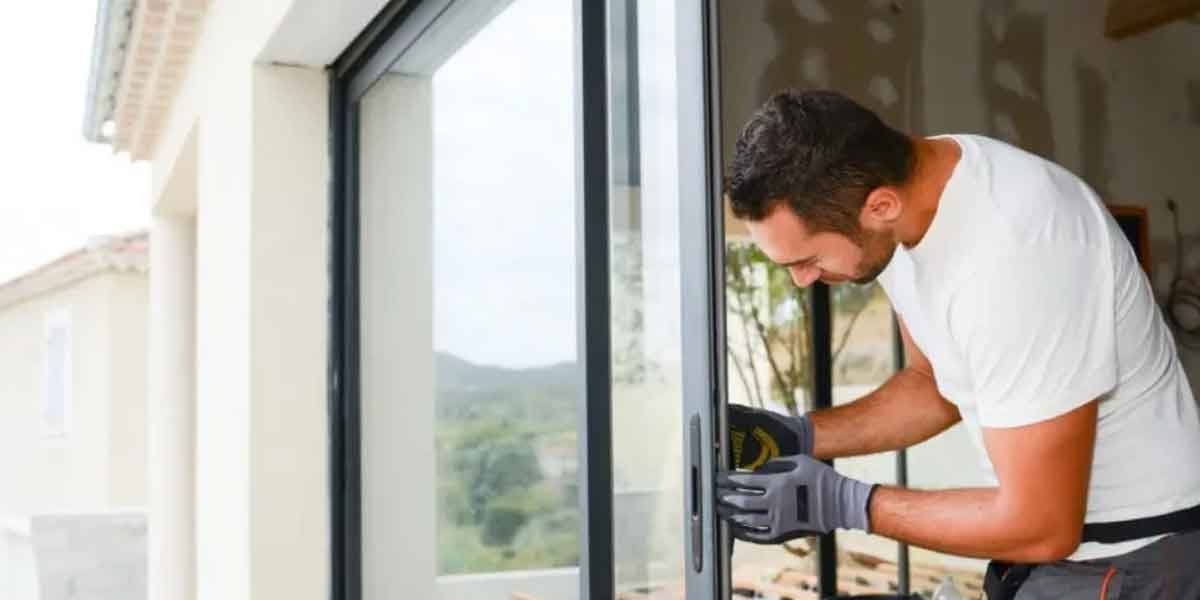

Patio doors are one of those things you stop noticing until they start failing you. You get used to giving the handle an extra tug, or bracing your hip against the frame to get it to slide. It becomes routine, right up until you catch a draft creeping in around the edges in January and realize this “quirk” has actually been costing you money for years.
Unlike a lot of home upgrades, patio doors rarely announce themselves as urgent. There’s no burst pipe moment. Instead, it’s a slow accumulation of small annoyances that, taken together, usually mean it’s time. Here’s how to tell the difference between a door that just needs a little maintenance and one that’s actually due for replacement.
You can feel drafts, even with the door closed
This is usually the first sign homeowners notice, especially heading into colder months. Hold your hand near the frame on a windy day — if you can feel air moving even with the door fully closed and locked, the weatherstripping has likely worn out, or the frame itself has shifted enough that it’s no longer sealing properly. A little draft might be fixable with new weatherstripping. A door that’s drafty along its entire perimeter, especially an older one, usually means the frame and seals have degraded beyond a simple fix.
Your energy bills have crept up without an obvious reason
Older patio doors, especially single-pane or early double-pane models, are notorious for heat loss. If your energy bills have been climbing and you can’t point to anything else that changed, it’s worth checking your patio door’s insulation. Doors with worn seals or outdated glass essentially turn your patio door into a permanently cracked window, forcing your HVAC system to work harder to compensate.
The door is getting harder to open and close
A sliding door that used to glide smoothly and now needs a shove, or a French door whose hinges groan and stick, is telling you something about its hardware and frame. Sometimes this is as simple as cleaning out the track or lubricating the hinges. But if you’ve already tried that and the sticking persists, it often points to a frame that’s warped or settled — which is much harder to fix than to replace.
You’re seeing condensation between the glass panes
If your patio door has double-pane (or triple-pane) glass and you notice foggy condensation trapped between the panes rather than on the surface, that’s a clear signal the seal has failed. Once moisture gets between the panes, the insulating gas that used to sit there has typically escaped too, meaning the door has lost much of its energy efficiency — and no amount of cleaning will fix it, since the fog is trapped where you can’t reach it.
The locks don’t feel secure anymore
Security hardware wears out just like everything else. If your patio door’s lock doesn’t catch firmly, if the door can be jiggled open with some force, or if you’ve noticed the frame flexing when the lock engages, that’s not just an inconvenience — it’s a real security gap. Multi-point locking systems on newer doors are worth considering here, since they distribute the locking force across multiple points on the frame rather than relying on a single latch.
Visible damage to the frame
Cracking, rotting, or warping in the frame itself is one of the clearer signs that repair isn’t going to cut it. Wood frames are especially prone to this if moisture has been getting in for a while, even in small amounts. Once a frame starts to deteriorate structurally, the door’s ability to seal properly and operate smoothly is compromised no matter how much hardware maintenance you do.
What to do once you’ve spotted the signs
If you’re noticing two or three of these signs together, it’s usually a stronger signal than any one on its own — a slightly sticky door might just need maintenance, but a sticky door that’s also drafty and has foggy glass is telling you it’s reached the end of its useful life. At that point, the most efficient next step is usually to get a French door quote so you have an actual number to weigh against ongoing energy losses and repair costs. Comparing that cost against what you’re likely losing every winter in heating bills often makes the decision clearer than it seemed at first.
The bottom line
Patio doors rarely fail all at once — they wear down gradually, which is exactly why so many homeowners live with the annoyance longer than they need to. Paying attention to drafts, energy bills, sticking hardware, and glass condensation gives you a real read on where your door actually stands, rather than guessing. Once the signs stack up, pricing out a replacement is a quick way to turn a vague sense that “something’s off” into a clear, practical decision.