
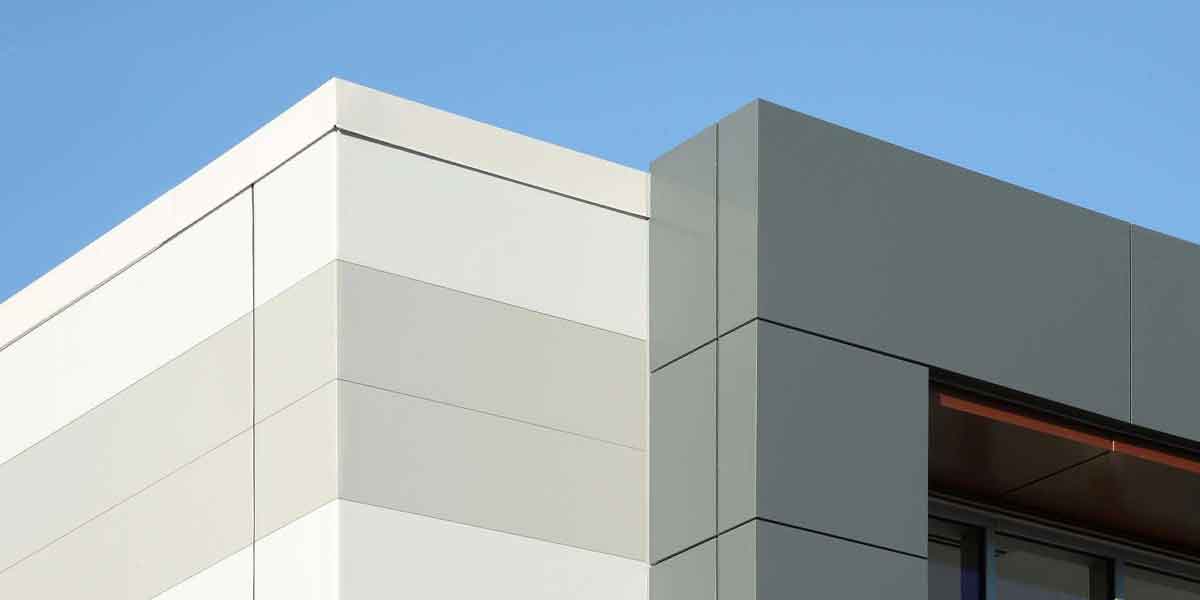

A facade material usually gets chosen in a meeting where each person cares about something different. The architect looks at appearance, the contractor at installation, the owner at upkeep, the engineer at weight, and the developer at the number on the budget line. A direct comparison helps show where architectural aluminum panels fit among the usual alternatives, and where they do not.
A Side-by-Side View
| Material | Weight | Installation | Upkeep | Moisture and pests |
| Wood | Moderate | Skilled carpentry, sealing | Refinishing often needed | May warp, swell or attract insects |
| PVC or composite | Light to moderate | Fairly simple, expansion gaps needed | Staining or fading possible | Generally moisture tolerant |
| Steel or iron | Heavy | Often welded, lifting support | Rust protection needs monitoring | Corrosion risk if coatings fail |
| Aluminum | Light | Mechanical fixing | Periodic washing | Does not rust or swell, unattractive to termites |
The table simplifies, since each category contains good and poor products. It is a starting point for the conversation, not a verdict.
Wood
Wood gives warmth that is hard to copy, and many clients still ask for it by name. The trade-off arrives later. Boards need sealing, repainting or oiling on a schedule, and they respond to humidity and insects in ways that are difficult to predict across a building’s life. Maintenance cost is often what turns an owner away on a second project.
Plastic-Based Products
PVC and composite boards avoid some of those chores and install without much fuss. Contractors do mention staining, fading and the need to allow for expansion at every joint. Some owners also hold reservations about plastics on environmental grounds, which can matter on projects with sustainability reporting requirements.
Steel and Iron
Heavy metals bring strength and a certain presence. They also bring weight, welding and a standing need to protect the coating, because a scratch that reaches bare metal invites rust. On a large elevation, the cost of handling and fabrication can climb faster than the material price suggests, and the supporting structure may have to be sized up to match.
Where Aluminum Fits
Aluminum sits in a different spot. Hollow extruded sections keep weight low, and mechanical fixing removes welding from the program. Powder-coated surfaces clean with water and mild soap, and the metal does not swell, rot or feed termites.
It has limits that specifiers should weigh honestly. Thin-walled profiles can dent under impact, so exposed lower courses near vehicle traffic may call for a different treatment. Finishes are factory applied and cannot be repainted on site as casually as wood, which makes sample approval more important. Thermal movement also needs to be handled through fixing details on long runs.
In practice, the weight of architectural aluminum panels is the easiest advantage to see on site. Installers move lengths by hand, deliveries need less handling equipment, and the structure behind the wall carries a lighter skin, which can simplify conversations with the engineer on retrofit projects.
Design Range
Panels can be specified in solid colors, metallic tones and wood-grain finishes, and the metal can be bent to follow curved walls or fitted around custom shapes. That flexibility lets a designer carry one material across a facade, a soffit, a ceiling and an interior feature wall, which can give a project a more unified character than a mix of products would.
Profile width plays a role in the final look. Narrow sections read as fine lines and suit residential scale, while wide sections create larger planes that work better on commercial frontages. Accessory pieces such as angles and edge channels let the detailing stay tidy at corners and terminations, which is where many cladding schemes succeed or fail visually.
Cost Over Time
The initial price is only one input. A comparison that includes installation labor, access equipment, freight and the repainting or refinishing cycle often shifts the ranking. Wood may look affordable at purchase and expensive by year ten, while a pricier panel with minimal upkeep can come out ahead over a longer horizon. Heavy metals can carry costs that never appear on the material invoice, such as welding crews and stronger supports.
Owners planning to sell or lease within a few years may weigh these factors differently from those who will hold the building for decades. Asking each supplier for a realistic maintenance schedule, in writing, gives the client a fairer basis for the decision than purchase price alone.
Making the Call
For programs with tight schedules, limited site access or crews without welding capacity, lighter mechanically fixed panels often make good sense. For heritage settings, very high-impact areas or briefs that demand a specific natural material, another choice may fit better.
Whichever way the decision goes, ask the supplier for physical finish samples and the full assembly details before final drawings are issued. Comparing real material in real light usually clarifies more than any data sheet, and it gives the client something concrete to approve.
