
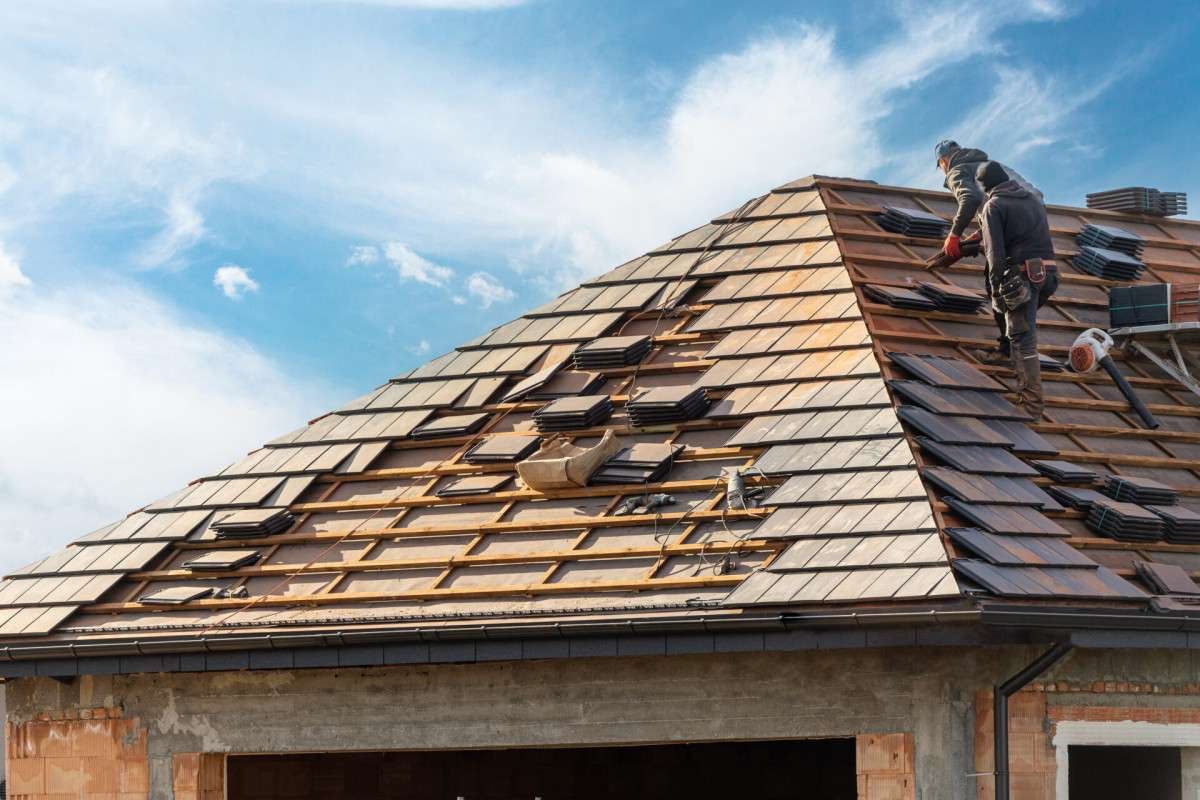

According to property management in Richland Hills, the average roof cost by material ranges from \$7,000 for a basic three-tab asphalt shingle roof to \$60,000 for a natural slate roof on a typical 2,000-square-foot home in 2026. Asphalt shingles — the material on roughly 80% of American homes — cost the least per square foot and last 15 to 30 years. Metal roofing costs two to three times more upfront and lasts two to three times longer. Tile and slate cost the most and can outlast the building itself. The material you choose determines not just the upfront cost but the cost per year over the life of the roof — and those two numbers often point in opposite directions.
Most homeowners compare upfront cost. The smarter comparison is cost per year. A $12,000 architectural asphalt roof that lasts 25 years costs $480 per year. A $22,000 steel metal roof that lasts 50 years costs $440 per year. The metal roof costs $10,000 more to install and $40 less per year to own. The right choice depends on how long you will own the house, not just how much the check is today.
Roof Cost by Material — Complete Comparison
| Material | Cost Per Square | 2,000 sq ft Total | Lifespan | Cost Per Year |
| Asphalt 3-Tab | $350 – $450 | $7,000 – $9,000 | 15–20 yrs | $350 – $600 |
| Architectural Asphalt | $450 – $750 | $9,000 – $15,000 | 25–30 yrs | $300 – $600 |
| Steel Standing-Seam | $800 – $1,500 | $16,000 – $30,000 | 40–60 yrs | $267 – $750 |
| Aluminum | $900 – $1,600 | $18,000 – $32,000 | 40–60 yrs | $300 – $800 |
| Copper | $1,500 – $2,500 | $30,000 – $50,000 | 70–100 yrs | $300 – $714 |
| Zinc | $1,200 – $2,000 | $24,000 – $40,000 | 60–90 yrs | $267 – $667 |
| Concrete Tile | $700 – $1,500 | $14,000 – $30,000 | 50+ yrs | $280 – $600 |
| Clay Tile | $1,000 – $2,000 | $20,000 – $40,000 | 50–100 yrs | $200 – $800 |
| Natural Slate | $1,500 – $3,000 | $30,000 – $60,000 | 75–200 yrs | $150 – $800 |
| Synthetic Composite | $600 – $1,100 | $12,000 – $22,000 | 30–50 yrs | $240 – $733 |
| Wood Shake/Shingle | $800 – $1,400 | $16,000 – $28,000 | 25–40 yrs | $400 – $1,120 |
The per-year cost column is the most important and most overlooked number in roofing. Notice that architectural asphalt, steel standing-seam, concrete tile, and copper all converge in the $300 to $600 per year range despite upfront costs that differ by $20,000 or more. The material that lasts longer spreads its cost over more years. The math is simple. The cash flow is the constraint.
Asphalt Shingles — the Most Roof for the Least Money
Asphalt shingles are the most common roofing material in America because they hit the intersection of affordability, availability, and acceptable lifespan better than any other material. Three-tab shingles cost $7,000 to $9,000 installed and last 15 to 20 years. Architectural shingles cost $9,000 to $15,000 and last 25 to 30 years. The $2,000 to $6,000 upgrade to architectural buys roughly ten extra years of service, better wind resistance, 110 to 130 mph versus 60 to 70 mph, and a dimensional appearance that adds curb appeal. For every dollar spent, architectural asphalt is the highest-return roofing decision available.
Asphalt’s limitation is lifespan. At 20 to 30 years, an asphalt roof will be replaced once or twice over a typical homeownership period. The replacement cost is predictable, roughly the same as the original cost, adjusted for inflation, and the installer pool is deep. Every roofing contractor in the country installs asphalt shingles. The same is not true for metal, tile, or slate.
Metal Roofing, the Long-Game Value Leader
Metal roofing costs $16,000 to $50,000 installed depending on the metal type and lasts 40 to 100 years. The upfront premium over asphalt is $8,000 to $35,000. The per-year cost is comparable to or lower than architectural asphalt for steel and copper, $267 to $750 per year for steel, $300 to $714 for copper. The value proposition depends entirely on how long you own the house. At 15 years of ownership, the metal roof’s per-year cost crosses below architectural asphalt. At less than 15 years, asphalt is cheaper in total cost. At more than 15 years, metal is cheaper per year and becomes cheaper in cumulative cost around year 22.
Metal roofing also reduces cooling costs by 10% to 25% in hot climates because the reflective surface rejects solar heat. Over 50 years, those savings can total $5,000 to $15,000, effectively reimbursing a significant portion of the upfront premium. The U.S. Department of Energy identifies reflective roofing materials, including metal, as one of the most cost-effective energy-efficiency upgrades for homes in cooling-dominated climates. The energy savings are real and measurable. They just arrive slowly, $300 to $500 per year on the utility bill.
Tile and Slate, Generational Roofs
Clay tile, concrete tile, and natural slate are the longest-lasting roofing materials and the most expensive to install. They weigh 600 to 1,500 pounds per square, three to five times as much as asphalt, and require a roof structure engineered to support that load. A structural evaluation before purchasing tile or slate is not optional. The existing roof framing may or may not be adequate. If it is not, structural reinforcement adds $3,000 to $8,000 before the first tile is installed.
Concrete tile is the value leader within the heavy-roof category at $14,000 to $30,000 installed with a 50-plus-year lifespan. Clay tile costs $20,000 to $40,000 and delivers the authentic Mediterranean or Spanish Colonial appearance. Natural slate costs $30,000 to $60,000 and can last 75 to 200 years, effectively a permanent roof. The quarry matters for slate: Pennsylvania slate, Vermont slate, and Spanish slate have different densities, weathering characteristics, and expected lifespans. A slate roof quoted without a quarry name is a slate roof quoted by someone who does not understand the material they are selling.
Synthetic and Wood, the Niche Options
Synthetic composite roofing, made from recycled rubber, plastic polymers, or engineered composites, costs $12,000 to $22,000 installed and lasts 30 to 50 years. It mimics the appearance of slate or wood shake at roughly half the cost and a fraction of the weight. No structural reinforcement is needed. The appearance from the street is convincing. Up close, a trained eye can tell the difference. Synthetic materials have been on the market for less than 30 years. The 50-year lifespan claims are based on accelerated weathering tests, not real-world data. Buy from a manufacturer with a warranty that covers labor, not just materials.
Wood shake and shingle roofing costs $16,000 to $28,000 installed and lasts 25 to 40 years in dry climates, less in wet or humid regions. It is the best-looking option on Craftsman, Cape Cod, and mountain architecture, and the highest-maintenance option in any climate. Wood roofs need cleaning, treatment, and inspection every three to five years. In wildfire-prone areas, wood roofing is restricted by code unless it is pressure-treated with fire retardant, which adds 30% to 50% to the material cost. Wood roofing is a regional choice, common in the Pacific Northwest and New England, rare and expensive elsewhere.
Frequently Asked Questions
What is the cheapest roofing material?
Three-tab asphalt shingles are the cheapest roofing material at $7,000 to $9,000 for a typical 2,000-square-foot home. They last 15 to 20 years. Architectural asphalt shingles cost $2,000 to $6,000 more but last 25 to 30 years, making them cheaper per year despite the higher upfront cost.
What is the most expensive roofing material?
Natural slate is the most expensive roofing material at $30,000 to $60,000 for a typical home. Copper roofing costs $30,000 to $50,000. Both can last 70 to 200 years, making their per-year cost competitive with asphalt despite the dramatically higher upfront price.
Which roofing material lasts the longest?
Natural slate lasts 75 to 200 years and is the longest-lasting roofing material available. Copper and zinc metal roofing last 70 to 100 years. Clay and concrete tile last 50 to 100 years. Steel and aluminum last 40 to 60 years. Architectural asphalt lasts 25 to 30 years.
Is a metal roof worth the extra cost over asphalt?
Yes, if you plan to stay in the home for more than 15 years. The per-year cost of steel standing-seam is $267 to $750, comparable to architectural asphalt at $300 to $600, but the upfront premium of $8,000 to $20,000 only makes sense if you own the house long enough to realize the lifespan advantage. Energy savings from solar reflectivity add $5,000 to $15,000 in utility savings over 50 years in hot climates.
Can I mix roofing materials on the same roof?
Yes, on different architectural sections, a metal porch roof, asphalt shingles on the main house, a tile accent on a dormer. Mixing materials on the same continuous roof surface creates seams where different expansion rates and installation methods meet and is not recommended. The transition between materials requires custom flashing that must be detailed correctly to prevent leaks.
What is the best value roofing material per year?
Architectural asphalt shingles offer the best value at $300 to $600 per year of service. Steel standing-seam metal is competitive at $267 to $750 per year. Concrete tile at $280 to $600 per year is surprisingly cost-effective on a per-year basis, the barrier is the upfront cost and the structural weight requirement, not the long-term value.
The Material That Makes the Most Sense
Architectural asphalt shingles are the right answer for most homeowners. $9,000 to $15,000. 25 to 30 years. $300 to $600 per year. Every roofing contractor in the country installs them. Every building department approves them. Every home supply store stocks them. They are not the most beautiful. They are not the longest-lasting. They are the material that balances cost, lifespan, availability, and resale value better than any other option on the market.
If you plan to stay in the house for more than 15 years and can afford the upfront premium, metal earns its price. If you are building a forever home with the architectural character to support it, tile and slate are generational investments. For everyone else, which is most people, architectural asphalt is the answer. It was the answer 30 years ago. It is the answer today. The shingles are better. The math is the same. Ever stood in the roofing aisle at a home improvement store staring at three-tab and architectural shingles, trying to remember which one the contractor recommended? The answer is architectural. It was architectural last time. It will be architectural next time. The question only feels complicated because someone told you to consider all your options. Your options are architectural asphalt, or something that costs more and lasts longer. The second category is for forever homes and specific climates. The first category is for everyone else. You know which one you are.