
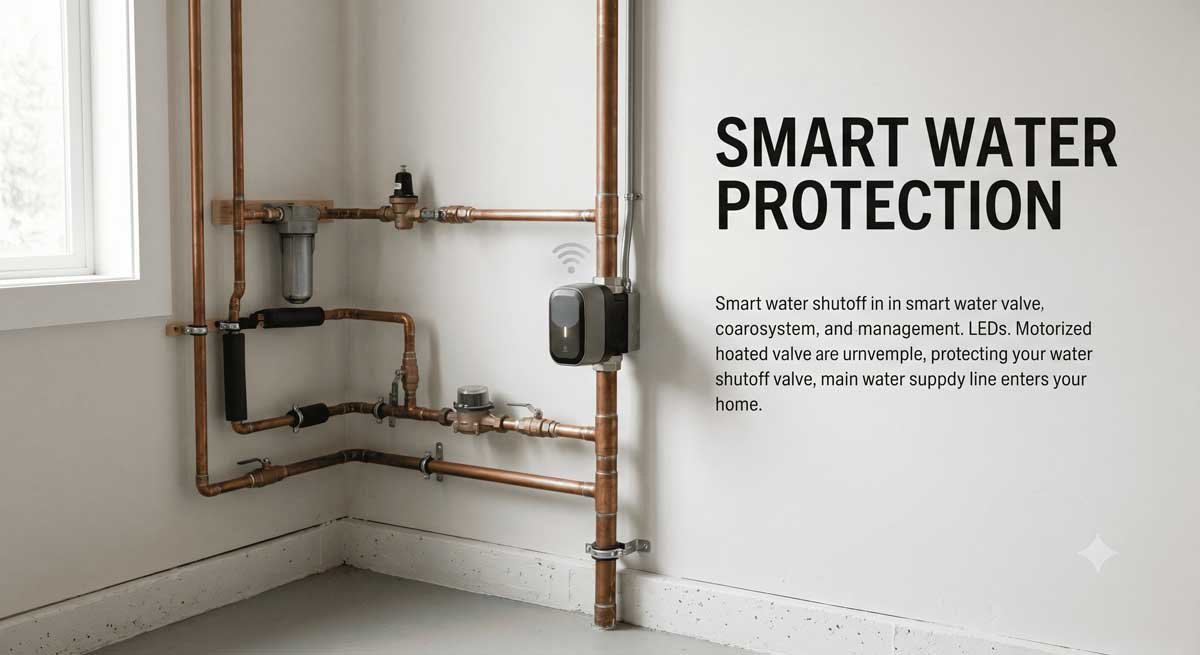

A smart shutoff valve is a device installed on your home’s main water line that monitors how water moves through your pipes and automatically closes the supply when it detects a burst pipe or an abnormal leak. Instead of returning to inches of standing water and ruined drywall, you get an alert on your phone and a system that has already stopped the flow. This article explains how these valves work, what they catch, how they compare to your manual shutoff, and what to consider before having one installed.
Why a Burst Pipe Turns Into a Flood So Fast
Water under household pressure moves quickly. A failed supply line, a cracked fitting, or a pipe that splits after a hard freeze can release several gallons a minute, reports Secure Door Property Management solutions. Cold weather makes this worse, because water expanding inside a frozen line can rupture it the moment it thaws. If a failure happens while you are at work, asleep, or away for the weekend, the water keeps running until someone notices.
By then it has often soaked subfloors, traveled into wall cavities, and reached the lower levels of the home. The damage rarely stops at the water itself. Trapped moisture in framing and insulation invites mold, warps wood, and breaks down finishes, which is why supply-side failures are among the most common and most expensive water claims a household can face.
What a Smart Shutoff Valve Actually Does
A smart shutoff valve combines three things: a sensor that measures water flow and pressure, a small processor that learns your home’s normal usage, and a motorized valve that can physically close the line. When the system sees a pattern that does not fit normal use, water running continuously for far longer than a shower or a load of laundry would, for example, it flags the event.
Depending on how it is set up, the valve either alerts you to confirm or shuts the water off on its own. Most models connect to an app, so you can watch usage, receive leak alerts, and open or close the valve remotely from anywhere.
The Leaks You Would Otherwise Miss
The dramatic burst is only part of the picture. A lot of water damage comes from small, quiet leaks: a pinhole in an aging copper line, a slow drip behind a wall, or a supply hose to a toilet or washing machine that fails little by little. These can run for days without an obvious sign until a stain or a musty smell appears.
Because a smart valve watches continuous flow rather than waiting for visible water, it can catch this kind of slow loss early, often before it reaches a finished surface. Many systems also track unusually small but steady flow that points to a leak you would never hear.
Why This Beats Relying on Your Main Shutoff
Every home already has a manual main shutoff. The trouble is that it only helps if a person is there to turn it, knows where it is, and reaches it in time. A pipe that bursts at two in the morning, or while the house sits empty during a trip, gives no one that chance.
A smart valve removes the human from the emergency. It reacts in seconds, at any hour, whether or not anyone is home, and it does not depend on someone remembering which way the old valve turns or fighting a stiff handle that has not moved in years.

Where It Fits in a Home’s Water Protection
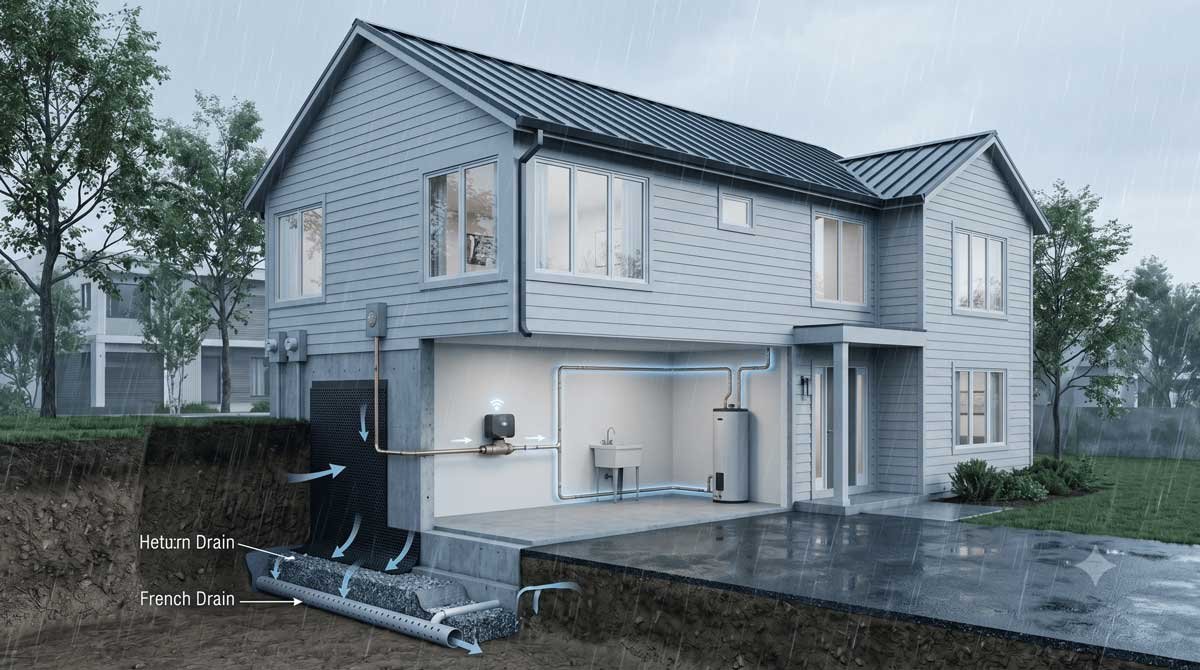
It helps to think of a smart shutoff valve as protection against water coming out of your own plumbing, the supply lines that feed your fixtures and appliances. That is a different threat from groundwater pushing in through a foundation or moisture rising through a crawl space, which is what exterior waterproofing and drainage are built to handle.
A complete approach covers both. Waterproofing keeps outside water from entering the building envelope, and a smart valve keeps an internal failure from filling the home from within. Neither one replaces the other, and a home that is well sealed against groundwater can still flood from a single failed supply line.
Types of Systems to Know
- Whole-home flow valves: installed on the main line, they monitor and can shut off all water to the house. This is the most complete option.
- Point-of-leak sensors with shutoff: small sensors placed near risky spots such as the water heater, washing machine, or under sinks, which trigger a connected valve the moment they detect water.
- Standalone automatic valves: simpler units that close on a sensor signal without the learning and reporting features of a full smart system.
Limitations Worth Understanding
A smart valve is a safeguard, not a cure. It stops the flood, but the failed pipe or fitting still has to be repaired. Most systems run on power and a wireless connection, so it is worth choosing one with battery backup and confirming how it behaves if the internet drops.
Sizing and placement matter just as much. The valve has to match your main line and your home’s water pressure, and it has to sit on the supply where it controls the whole house. A unit that is undersized or installed in the wrong spot will not protect the way it should.
Installation and Setup
Because a smart shutoff valve ties directly into the main water line, installation is plumbing work, not a plug-in gadget. The line usually has to be cut, the valve fitted and sealed, and the system tied into power and tested under real pressure. Local code can also dictate where and how it is installed. For these reasons most homeowners have it put in by a licensed plumber, who can size the unit, place it on the correct part of the supply, and verify that it closes fully under load. If you are weighing this upgrade, professional smart shutoff valve installation makes sure the system is matched to your home and actually shuts off when it counts.
Keeping It Working
Like any safety device, a smart valve should be checked from time to time. Run the test cycle the manufacturer provides, confirm the valve fully opens and closes, replace backup batteries on schedule, and make sure app alerts reach a phone that is actually monitored. A system you never test is one you cannot fully trust in an emergency.
The Bottom Line
For most homes, especially those with older supply lines, a leaking or burst pipe is less a question of if than when. A smart shutoff valve will not stop a pipe from failing, but it can keep that failure from becoming a flood that ruins floors, walls, and everything below. Paired with sound waterproofing and routine plumbing maintenance, it closes one of the most costly gaps in a home’s defense against water.