
Balcony Standing Water: Signs, Reasons, Impacts, How to Fix

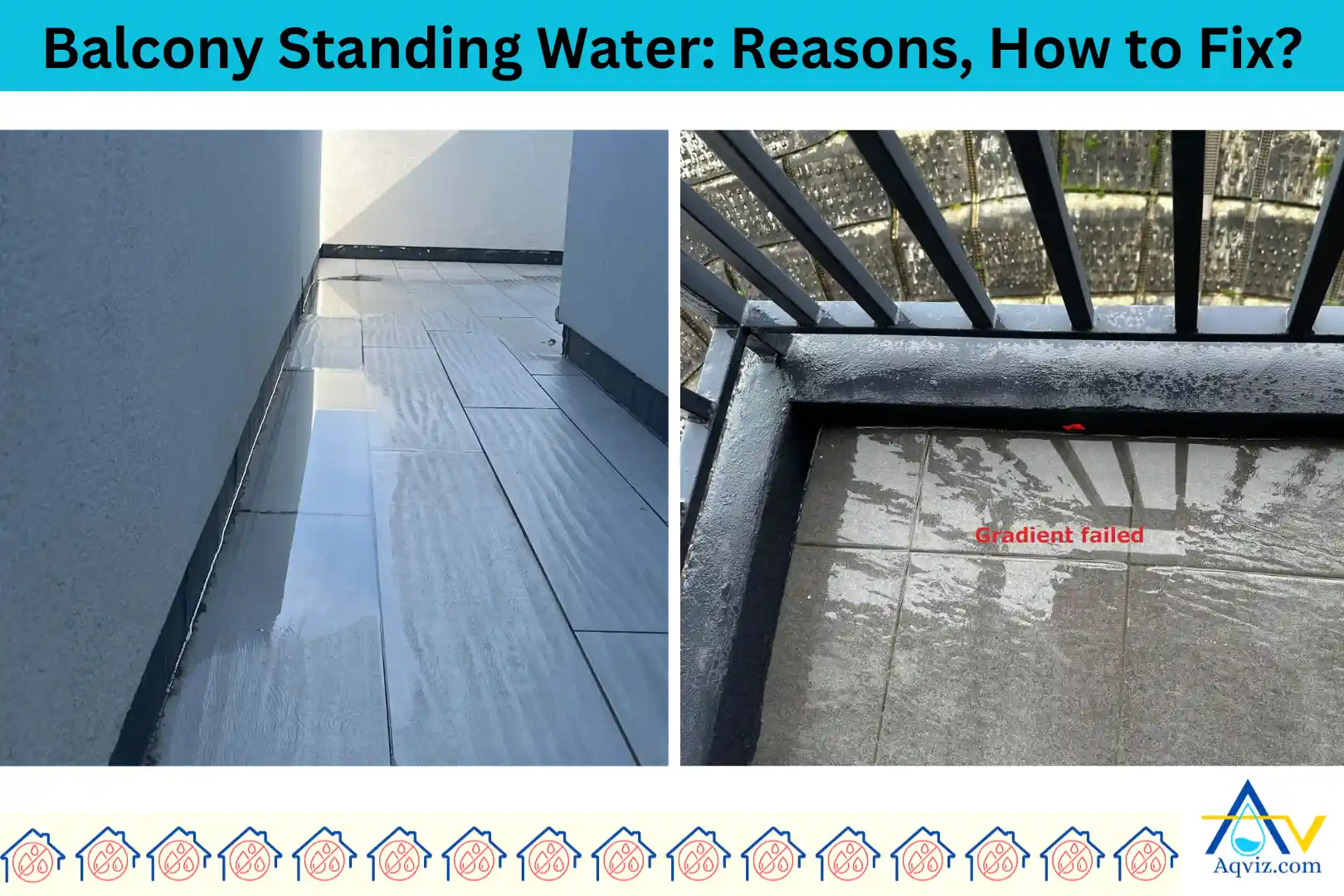
Balcony standing water, also known as balcony pooling, balcony ponding, occurs when water collects and remains on the balcony surface without proper drainage. When the balcony water level rises and remains on the balcony floor above 3-5 mm (0.12-0.20 inches), it is typically considered as standing water or balcony water pooling. Prolonged standing water in the balcony can lead to severe structural damage, waterproofing failure, and safety hazards to the structure if it is not treated properly.
Aqviz team noted that many water-related problems and damages occur due to prolonged balcony standing water. We have included all the reasons and how to fix this problem and its negative impact on the homeowner. So if you observe this problem at home, you should fix it asap to prevent further water damage.
What is Standing Water in the Balcony?
The standing water in the balcony is water remaining on the balcony floor without draining properly. According to waterproofing expert Terrence Duckett, the minimum height of pooling water in the balcony is 3-5 mm (0.12-0.20 inches), and the main 5 reasons are a poor drainage system, inadequate slope, clogged drainage pipes, poor waterproofing, or structural defects.
What are the 5 Signs of Pooling Water in the Balcony?
Here are the 5 signs of pooling water in a balcony, including both visible and invisible indicators we often diagnose at Aqviz during waterproofing inspections.
- Ponding or puddles after rain: Ponding water is a visible sign of standing water on the balcony. Ponding occurs due to water remaining on the balcony surface for hours or days after rain instead of draining off.
- Efflorescence or white salt deposits: Efflorescence is a visible sign of standing water on the balcony. Chalky white residue can appear on tile joints or concrete surfaces on the balcony.
- Moldy smell or damp odor: Mold and mildew are an invisible sign of standing water on the balcony. You can identify mold and mildew growth on the balcony by using a Persistent musty smell near the balcony or adjoining room.
- Paint peeling or blistering near balcony doors/walls: Paint peeling or blistering is a visible sign of standing water in the balcony. You can see paint bubbles, flakes, or discoloration on interior walls near the balcony.
- Increased humidity or softening of tile grout: Softening grout is an invisible sign of standing water in the balcony. You can observe that the tile grout stays soft or discolored, and humidity levels feel higher inside the adjacent rooms.
What are the 5 Reasons for Ponding Water in the Balcony?
The 5 reasons for ponding water in the balcony such as,
- Poor balcony drainage system: If balcony drains are clogged with debris or incorrectly positioned, water has nowhere to escape. It leads to standing water in the balcony.
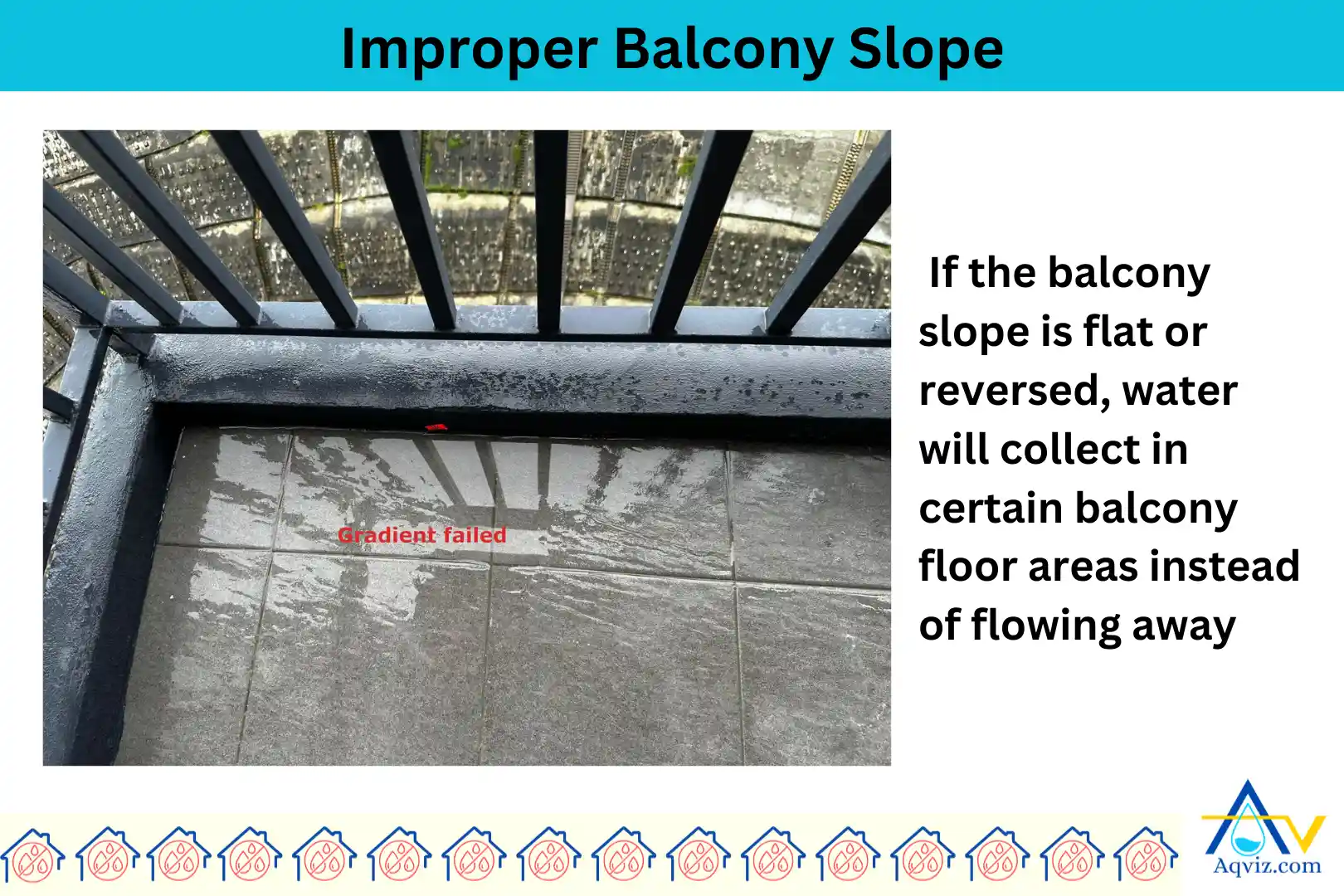
- Improper balcony slope: If the balcony slope is flat or reversed, water will collect in certain balcony floor areas instead of flowing away.
- Damaged or clogged balcony drainage pipes: Balcony drainage pipes can become clogged with leaves, dirt, or construction debris. Cracked or misaligned pipes can also restrict water flow, causing water to back up and pool on the balcony.
- Balcony waterproofing failure: If the balcony’s waterproofing membrane deteriorates, water can seep into cracks and crevices, making it harder for moisture to drain away. This issue often results from wear and tear, poor installation, or exposure to harsh weather conditions.
- Sunken or uneven balcony surface: Structural settling or wear over time can cause depressions in the balcony surface where water naturally collects. This issue is common in older buildings or balconies with heavy usage and insufficient structural support.
How to Fix Balcony Standing Water in 6 Steps?
You can fix balcony standing water using these 6 quick steps.
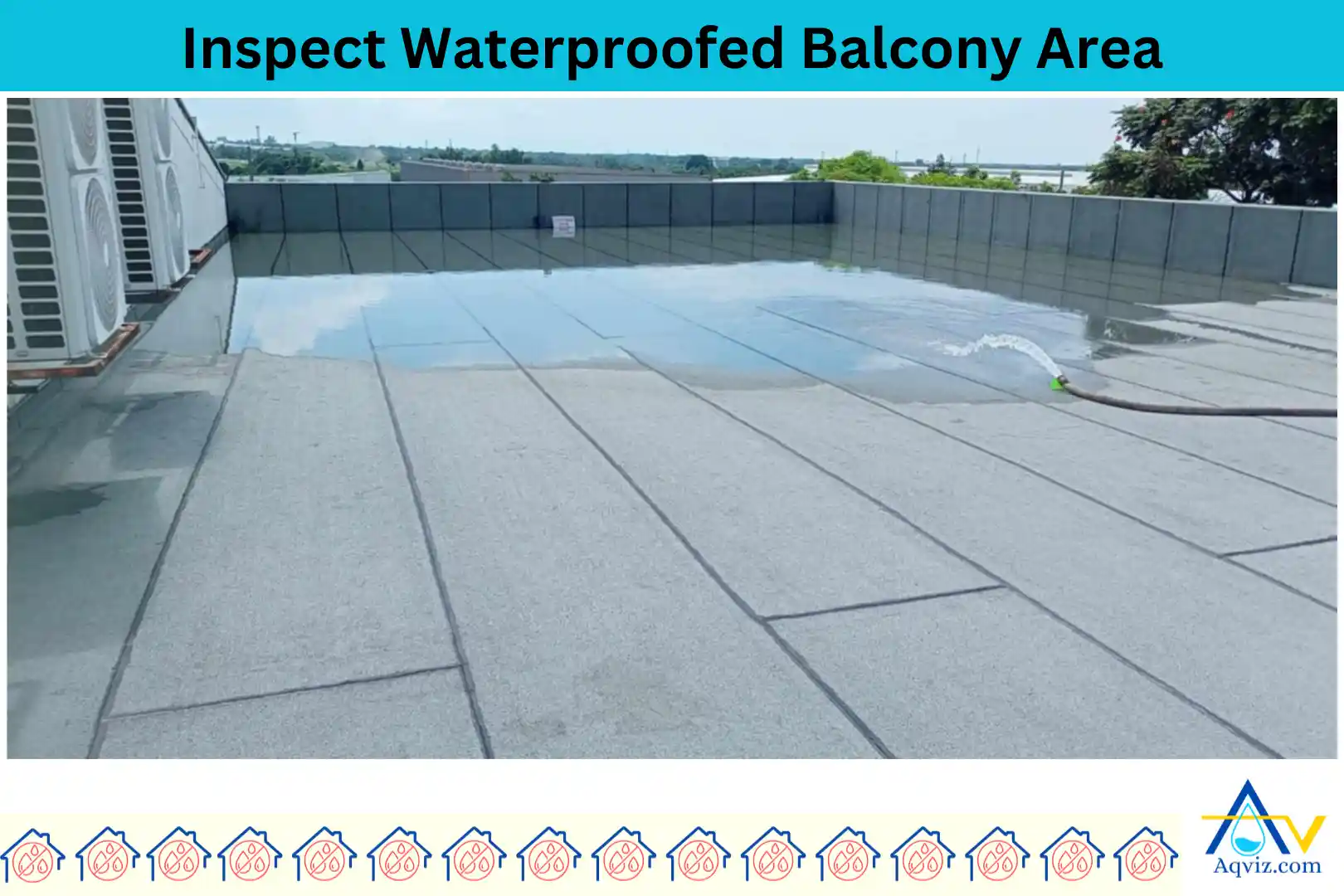
- Identify the problem: First, you should inspect the balcony drainage for any issues, surface leveling problems, and waterproofing failures.
- Clean the balcony surface: Then, remove dirt, leaves, and debris from the balcony. You should keep the balcony surface clean to prevent any blockages.
- Unclog drains: Unclog the clogged balcony drains by using a drain snake or pressure hose.
- Improve the balcony slope: Use a self-leveling compound or concrete patch to create a slight slope on the balcony floor.
- Apply a waterproofing coating: Aqviz recommends using a high-quality waterproofing membrane or sealant to protect against water damage. Apply it evenly across the surface and allow it to dry completely.
- Install or upgrade drainage systems: Consider adding additional drain outlets or installing a balcony drain extension to direct water away from the surface.
What are the Problems of Pooling Water on the Balcony?
When water is pooled on the balcony, it may cause to below 5 problems such as,
- Increase structural damage: Balcony water penetration weakens the concrete and can lead to cracks, chips, and deterioration. As well as reinforcements can be corroded and weakened over time.
- Increase mold and mildew growth: A wet balcony creates the perfect breeding ground for mold and mildew. This can lead to health issues, such as allergies and respiratory problems.
- Increase slip and fall hazards: Pooled water in the balcony makes surfaces slippery and increases accidental hazards.
- Damage to interior spaces: Prolonged balcony standing water can damage indoor flooring and walls. It leads to costly repairs and maintenance inside the home.
- Increase pest infestation: Balcony water standing attracts mosquitoes, pests, and other insects.