
6 Balcony Waterproofing Membranes: Know these Before Using

Balcony waterproofing membranes are protective layers installed on the balcony floor and wall to prevent water penetration through the balcony deck and walls.
These are the most used waterproofing membranes on the balconies, including
- Cementitious waterproofing
- HDPE waterproofing
- Bituminous waterproofing
- Polyurethane(PU) waterproofing
- EPDM waterproofing
- PVC waterproofing
These waterproofing membranes can be installed on concrete, wood, and metal balconies. When you install these waterproofing membranes on the balcony, you should consider the balcony’s construction material and its structure. Based on that waterproofing membrane should be selected by considering its properties. So we have listed them all below. Please contact aqviz expert if you have any problem on this.
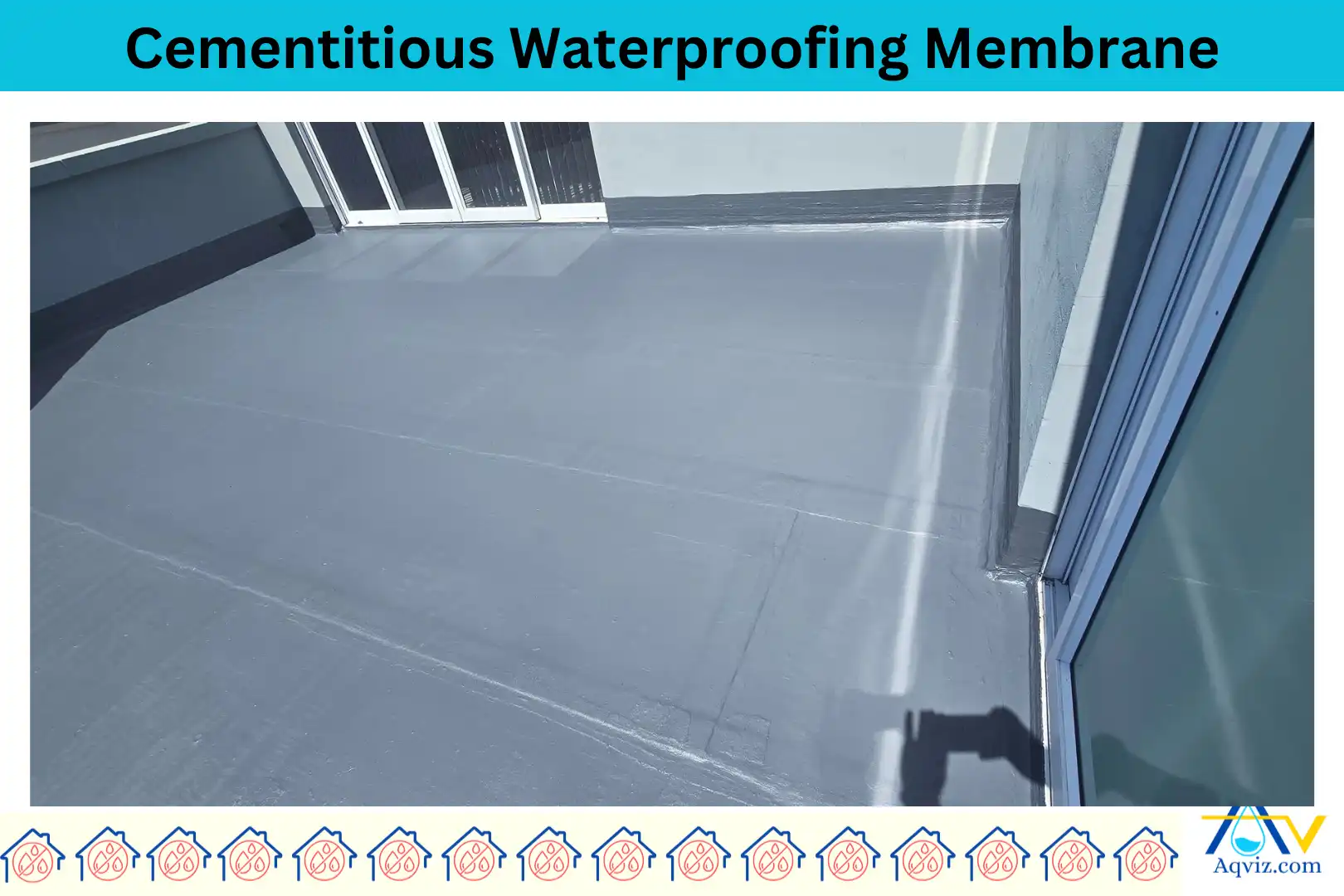
1. Cementitious Waterproofing Membrane
Cementitious waterproofing is a rigid, cement-based waterproofing system used to protect the balcony structure from water penetration. It consists of a blend of cement, sand, polymer additives, and waterproofing chemicals, which, when mixed with water or a liquid polymer, forms a durable, watertight coating.
Hence, we, Aqvi,z highly recommend you to use cementitious waterproofing in your concrete balcony to prevent all water damage.
Water resistance: Cementitious waterproofing membranes provide excellent water resistance to the balcony. Once it is cured, they form a seamless, watertight barrier that prevents moisture penetration to the balcony floor.
UV Resistance: One of the major drawbacks of cementitious membranes is their limited UV resistance. When it is exposed to direct sunlight in the balcony, it can cause cracking, chalking, and deterioration over time. So we recommend applying a UV-resistant topcoat or protective layer on the membrane.
Durability: Cementitious waterproofing can last 10 to 15 years when properly installed and maintained in the balcony. It is highly resistant to chemical exposure, mold growth, and general wear and tear.
Flexibility: Compared to polyurethane or bituminous membranes, cementitious coatings lack flexibility. Hence, they can cause damage in the balcony’s structural movements, such as expansion and contraction caused by temperature changes.
Adhesion: Cementitious waterproofing bonds exceptionally well to concrete, masonry, and cement-based surfaces. However, for maximum adhesion, the substrate must be clean, damp, and free from dust, oil, and loose particles before applying in the balcony.
Application method: Apply cementitious membrane using a brush, roller, or trowel in two to three coats on the prepared balcony surface and allow it to cure (typically 24 to 48 hours) before exposing the surface to moisture. Then apply a topcoat or sealer for UV resistance and enhanced durability.
Before you start your balcony waterproofing project, we highly recommend you to read this guide, Balcony Waterproofing: Know these Before Starting It helps to have an idea about everything about the waterproofing process.
2. HDPE (High-Density Polyethylene) Waterproofing Membrane
HDPE waterproofing is a high-performance, synthetic membrane system designed to protect structures from water penetration. It is made from high-density polyethylene polymer, which provides exceptional durability, flexibility, and chemical resistance. Once installed, it forms a seamless, watertight barrier that effectively prevents moisture infiltration.
Hence, we, Aqviz, highly recommend using HDPE waterproofing for your balconies to ensure long-term protection against water damage, UV exposure, and harsh weather conditions.
Water Resistance: HDPE membranes provide exceptional water resistance for balconies. They create an impermeable barrier that prevents moisture infiltration, ensuring long-term protection against water damage.
UV Resistance: HDPE membranes offer excellent UV resistance. They can withstand prolonged exposure to direct sunlight without degrading, making them ideal for balconies exposed to harsh weather conditions.
Durability: HDPE membranes are highly durable and can last over 20 years when properly installed. They resist chemical exposure, punctures, and biological growth, ensuring long-term waterproofing performance for balcony surfaces.
Flexibility: HDPE membranes have moderate flexibility, allowing them to accommodate slight structural movements. However, they are less elastic than polyurethane membranes, which can make installation on uneven balcony surfaces more challenging.
Adhesion: HDPE membranes do not bond directly to concrete like liquid-applied membranes. To ensure proper adhesion on a balcony, mechanical fastening, heat welding, or adhesive bonding techniques must be used.
Application Method: Install HDPE membranes on the balcony using heat welding or adhesive bonding. Overlap the seams properly and seal them using a hot-air gun to ensure a watertight finish. Proper surface preparation and edge detailing are essential for long-term performance.
We have prepared a how-to guide, “How to Waterproof Balcony” for DIY enthusiasts. Our experts will guide you from the start to finish balcony waterproofing process.
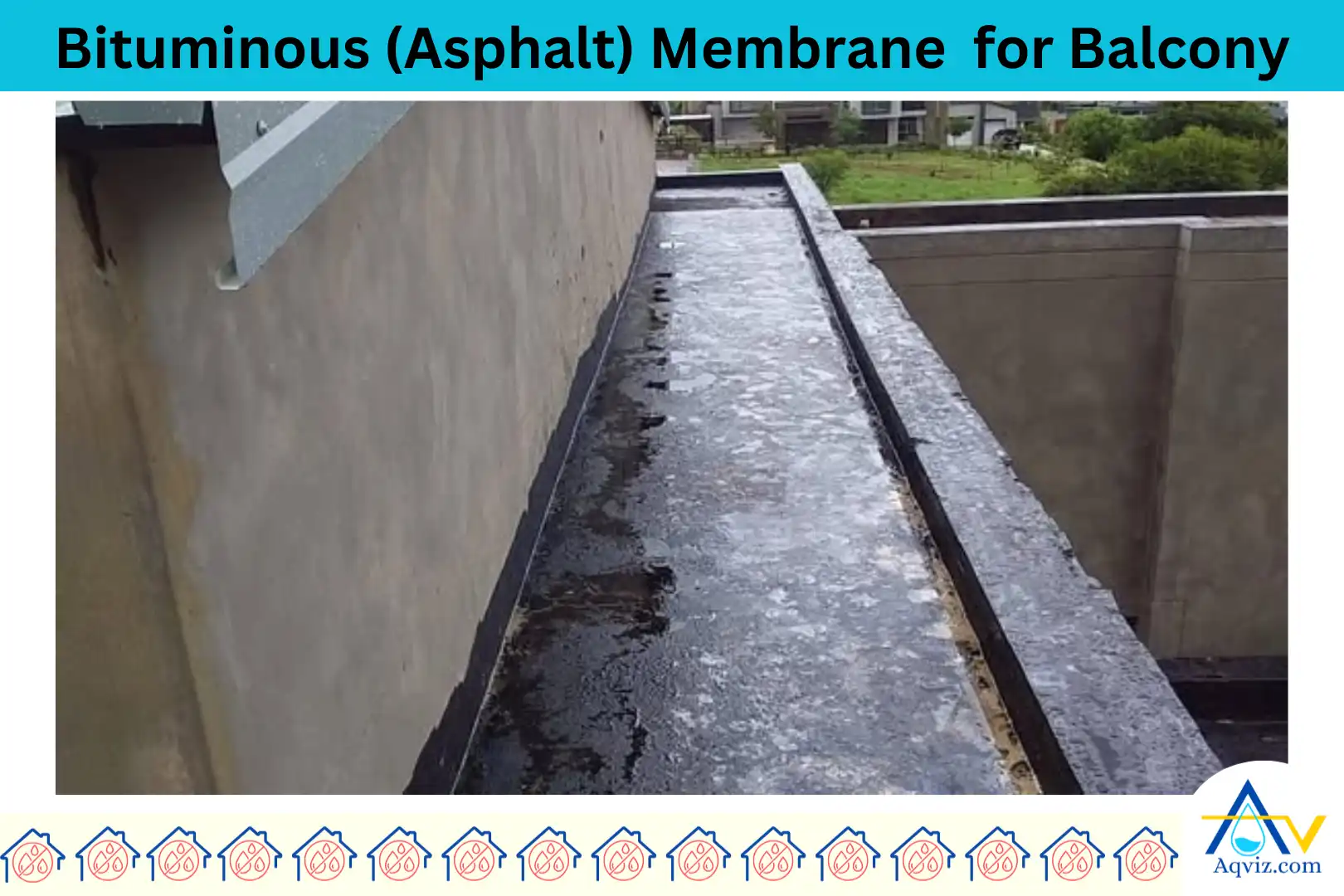
3. Bituminous (Asphalt) Waterproofing Membrane
Bituminous waterproofing is a versatile, asphalt-based membrane system designed to protect structures from water penetration. It is made from bitumen (asphalt) mixed with polymers and reinforced with fiberglass or polyester, creating a strong, flexible, and watertight barrier. Once applied, it effectively prevents moisture infiltration and protects surfaces from water damage.
Hence, we, Aqviz, highly recommend using bituminous waterproofing for your balconies to ensure long-lasting protection against water seepage, harsh weather conditions, and structural deterioration.
Water Resistance: Bituminous membranes provide excellent water resistance for balconies. They form a seamless, watertight layer that effectively prevents moisture penetration and protects the balcony from water damage.
UV Resistance: Standard bituminous membranes have limited UV resistance and can degrade when exposed to direct sunlight. We recommend applying a protective layer, such as mineral-finished bitumen or a reflective coating, to enhance UV stability.
Durability: Bituminous membranes can last 15 to 20 years when properly installed and maintained on a balcony. They are resistant to chemical exposure, weathering, and wear but may become brittle over time if not protected from UV rays.
Flexibility: Bituminous membranes offer moderate flexibility, allowing them to accommodate minor balcony structural movements. However, polymer-modified bituminous membranes (SBS or APP) provide better elasticity and crack-bridging ability.
Adhesion: Bituminous membranes adhere well to concrete surfaces when applied with a primer or adhesive. Proper surface preparation, including cleaning and priming, is necessary to ensure strong adhesion and long-lasting waterproofing.
Application Method: Install bituminous membranes on the balcony using torch-applied, self-adhesive, or hot-mopped methods. Overlap seams properly and ensure full adhesion to create a durable, watertight barrier. Apply a protective layer if exposed to direct sunlight for extended durability.
4. Polyurethane Waterproofing Membrane (Liquid)
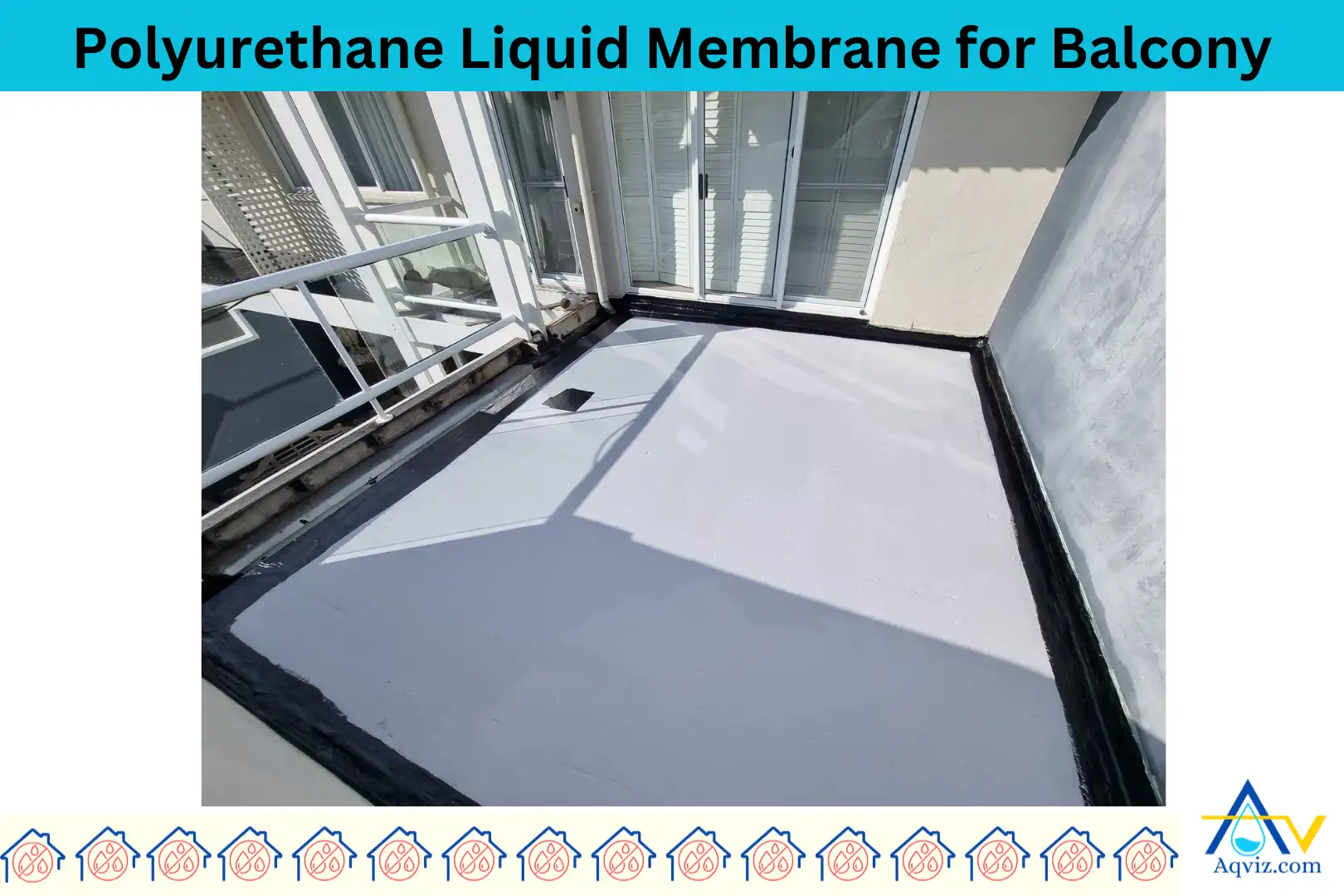
Polyurethane liquid waterproofing is a high-performance, liquid-applied membrane that creates a seamless, elastic, and durable barrier to prevent water penetration. Made from polyurethane polymers, it offers exceptional flexibility and superior adhesion to a variety of surfaces, forming a watertight coating once cured.
Hence, we, Aqviz, highly recommend using polyurethane liquid waterproofing for your balconies to provide reliable protection against water damage, structural movements, and temperature fluctuations while ensuring long-term performance.
Water Resistance: Polyurethane liquid membranes provide superior water resistance for balconies. They form a seamless, elastic, and watertight barrier that prevents moisture infiltration and ensures long-lasting protection against water damage.
UV Resistance: Polyurethane membranes have excellent UV resistance, making them ideal for balconies exposed to direct sunlight. They do not degrade or crack under prolonged UV exposure, eliminating the need for additional protective coatings.
Durability: Polyurethane waterproofing can last 15 to 25 years when properly applied and maintained on a balcony. It resists chemical exposure, temperature variations, and mechanical stress, making it a long-term waterproofing solution.
Flexibility: Polyurethane membranes are highly flexible and elastic, allowing them to accommodate balcony structural movements, thermal expansion, and minor cracks without compromising waterproofing performance.
Adhesion: Polyurethane membranes bond exceptionally well to concrete, metal, and tiled surfaces. For better adhesion, we recommend using a primer before application, especially on porous or non-absorbent balcony surfaces.
Application Method: Apply polyurethane liquid membrane on the balcony using a roller, brush, or spray in two or more coats. Ensure proper curing (24 to 72 hours) before exposing it to water or foot traffic for maximum durability.
5. EPDM (Ethylene Propylene Diene Monomer) Waterproofing Membrane
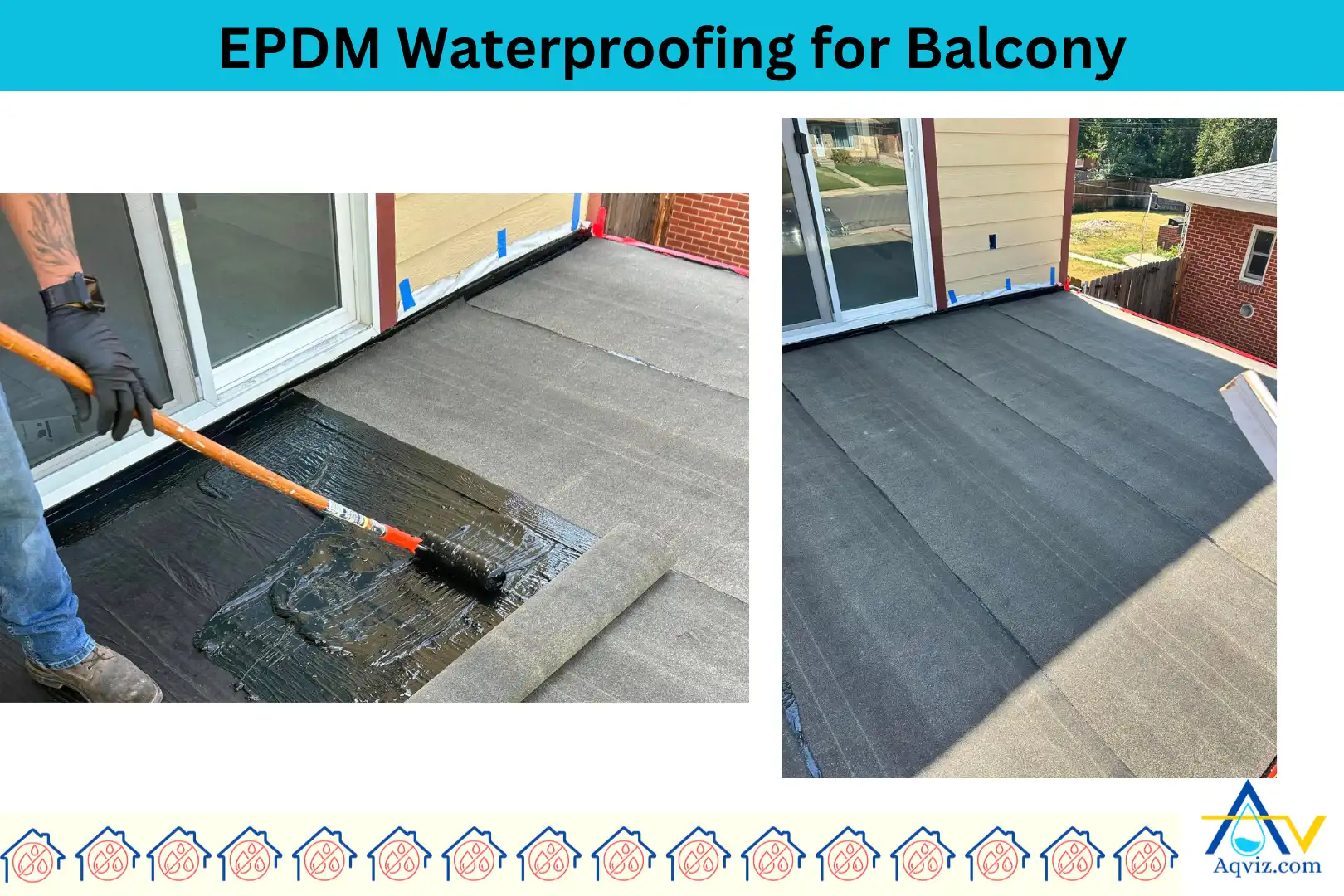
EPDM waterproofing is a high-quality, synthetic rubber membrane designed to offer superior protection against water penetration. Made from ethylene propylene diene monomer, it provides outstanding flexibility, durability, and resistance to extreme weather conditions, UV rays, and ozone. Once installed, it forms a seamless, watertight barrier that effectively prevents moisture infiltration.
Hence, we, Aqviz, highly recommend using EPDM waterproofing for your balconies to ensure exceptional durability, long-lasting protection, and resilience against water damage, UV exposure, and structural movement.
Water Resistance: EPDM membranes provide outstanding water resistance for balconies. They create a durable, seamless, and impermeable barrier that effectively prevents moisture penetration, ensuring long-term waterproofing.
UV Resistance: EPDM membranes have excellent UV resistance, making them highly suitable for balconies exposed to direct sunlight. They do not crack, degrade, or lose flexibility due to prolonged UV exposure.
Durability: EPDM waterproofing can last 30 to 50 years when properly installed and maintained. It is highly resistant to ozone, extreme temperatures, and weathering, making it one of the most durable waterproofing options for balconies.
Flexibility: EPDM membranes are extremely flexible and elastic, allowing them to accommodate structural movements, temperature fluctuations, and minor cracks without compromising their waterproofing performance.
Adhesion: EPDM membranes do not bond directly to concrete like liquid-applied systems. They require adhesive bonding, mechanical fastening, or ballasting to ensure proper adhesion and long-term stability on a balcony surface.
Application Method: Install EPDM membranes on the balcony by fully adhering with an EPDM adhesive, mechanically fastening, or using a ballast system. Proper seam sealing with EPDM-compatible tape or adhesive is essential to maintain a watertight finish.
6. PVC (Polyvinyl Chloride) Waterproofing Membrane
PVC waterproofing is a robust, synthetic membrane made from polyvinyl chloride, designed to provide superior water resistance. It forms a seamless, watertight barrier that effectively prevents moisture penetration while offering high flexibility, UV resistance, and durability. PVC membranes are known for their long-lasting performance in harsh weather conditions, making them an ideal solution for balconies.
Hence, we, Aqviz, highly recommend using PVC waterproofing for your balconies to ensure reliable protection against water damage, UV degradation, and structural movement, ensuring peace of mind for many years to come.
Water Resistance: PVC membranes provide excellent water resistance for balconies. They form a seamless, watertight barrier that effectively prevents moisture infiltration and protects the balcony from water damage.
UV Resistance: PVC membranes have high UV resistance, making them suitable for balconies exposed to direct sunlight. They do not degrade, become brittle, or lose flexibility over time due to UV exposure.
Durability: PVC waterproofing can last 20 to 30 years when properly installed and maintained. It is resistant to chemical exposure, weathering, and microbial growth, ensuring long-term performance in outdoor conditions.
Flexibility: PVC membranes are highly flexible, allowing them to accommodate balcony structural movements, thermal expansion, and minor cracks without compromising their waterproofing integrity.
Adhesion: PVC membranes do not bond directly to concrete surfaces like liquid-applied systems. They require heat welding, mechanical fastening, or adhesive bonding for proper installation and long-term stability.
Application Method: Install PVC membranes on the balcony using heat welding, mechanical fastening, or adhesive bonding. Overlap seams and heat-weld them to ensure a durable, watertight finish. Proper surface preparation and secure edge detailing are essential for long-term waterproofing performance.
Before you start installing these waterproofing membranes, we highly recommend that you read this how-to guide about balcony waterproofing. How to Waterproof the Balcony Floor? The guide includes all the details about the waterproofing process of concrete and wood balcony floors.
How Can a Balcony Waterproof Membrane Be Damaged?
We have found that a balcony waterproofing membrane can be damaged mainly by these 6 reasons, such as
- Poor installation of the waterproofing membrane: Poor installation of the balcony waterproofing membrane, including inadequate surface preparation, incorrect application, and improper overlaps.
- Balcony structure movement: When the balcony structure moves, the waterproofing membrane can be damaged if it is not flexible. A balcony structure can be moved due to building settlement, thermal expansion, and vibrations.
- Exposure to harsh weather conditions: When the balcony is exposed to harsh weather conditions like UV degradation, heavy rainfall, and freeze-thaw cycles, it can be damaged over time by tearing.
- Mechanical damage: Balcony waterproofing can be damaged by mechanical damage, such as punctures, foot traffic, and renovation works.
- Chemical and biological deterioration: The balcony waterproofing layer can be damaged by the chemicals when the floor is cleaned. So we recommend using suitable cleaners always.
- Aging and balcony material degradation: When the time comes, the material can degrade over time. This can be increased when you use low-quality material for the balcony waterproofing. When you use high-quality materials, you can observe long-lasting balcony waterproofing.
As experts, Aqviz helps you to conduct your building waterproofing project from start to finish. Our team is always waiting for your response. So contact us for your waterproofing needs. We will help you 24/7.