
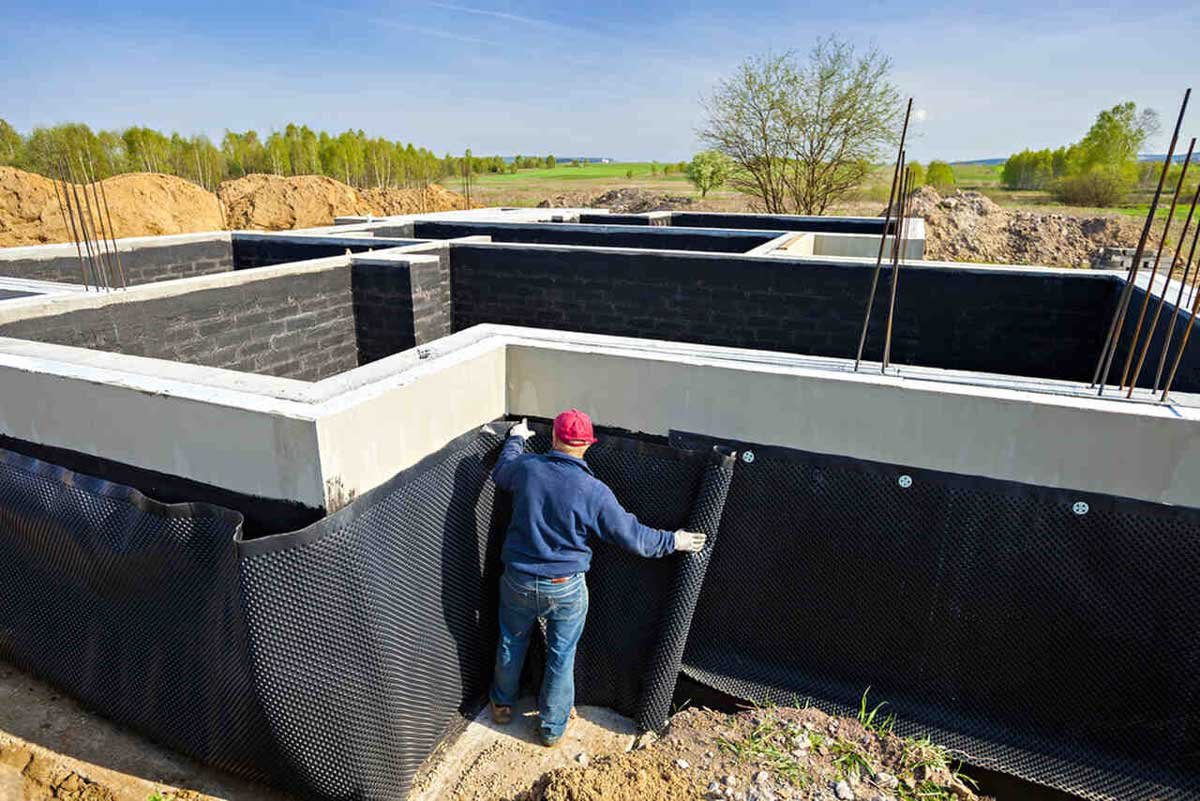

A basement waterproofing membrane is the barrier layer that helps stop groundwater, seepage, and moisture from moving through below-grade walls and floors. The right system depends on where the water is entering, how much hydrostatic pressure the foundation sees, whether the substrate moves, and whether you are fixing an existing leak or protecting new construction.
If you want the short answer, the best long-term exterior basement waterproofing membrane solution is usually a properly installed sheet or liquid-applied membrane paired with drainage. For interior repairs, coatings and drainage management can help, but they do not usually solve exterior water pressure at the source. If you need a broader primer first, see our guide to basement waterproofing and our breakdown of foundation waterproofing membranes.
What is this system?
This below-grade membrane is a liquid or sheet-applied barrier installed on basement walls, floors, or both to resist water entry. Its job is either to block water before it reaches the foundation, manage seepage after it reaches the wall, or work with drainage so the pressure around the structure stays under control.
In practical terms, homeowners usually hear this phrase used for five system families: cementitious coatings, bituminous products, polyurethane or liquid rubber membranes, HDPE or similar sheet membranes, and bentonite-based systems. Each one works best under a specific set of site conditions, so choosing by material name alone is where many projects go wrong.
Best basement waterproofing membrane types
The best option is the one that matches water pressure, wall condition, access, and installation quality. For most retrofit projects, the decision comes down to whether you need an exterior membrane that stops water before it reaches the wall or an interior system that manages moisture after it arrives.
| Membrane type | Best use | Main strengths | Main limits |
|---|---|---|---|
| Cementitious | Interior walls, masonry, stable concrete | Affordable, easy to apply, bonds well to mineral surfaces | Rigid; can crack if the substrate moves |
| Bituminous coating or sheet | Exterior foundation walls | Good water resistance, proven below grade, cost-effective | Application quality matters; some systems need torches or careful seam work |
| Polyurethane or liquid rubber | Detailed areas, irregular surfaces, seamless exterior work | Flexible, seamless, strong adhesion around penetrations | Surface prep and thickness control are critical |
| HDPE sheet membrane | Exterior walls, high-moisture foundations, long-life systems | Durable, puncture resistant, strong chemical resistance | Seams, laps, and detailing decide performance |
| Bentonite composite | Below-grade walls, blindside or new-construction style work | Self-sealing behavior when confined, useful around minor penetrations | Not ideal for every retrofit; confinement and installation details matter |
At Aqviz, we generally separate membrane choice into two buckets. If the goal is to stop outside water pressure, you are usually comparing exterior sheet and liquid systems. If the goal is to reduce minor seepage and surface dampness inside an already-finished basement, cementitious and coating-style products may be part of the repair, but they should not be confused with a full exterior waterproofing solution.
Which membrane works best for exterior basement waterproofing?
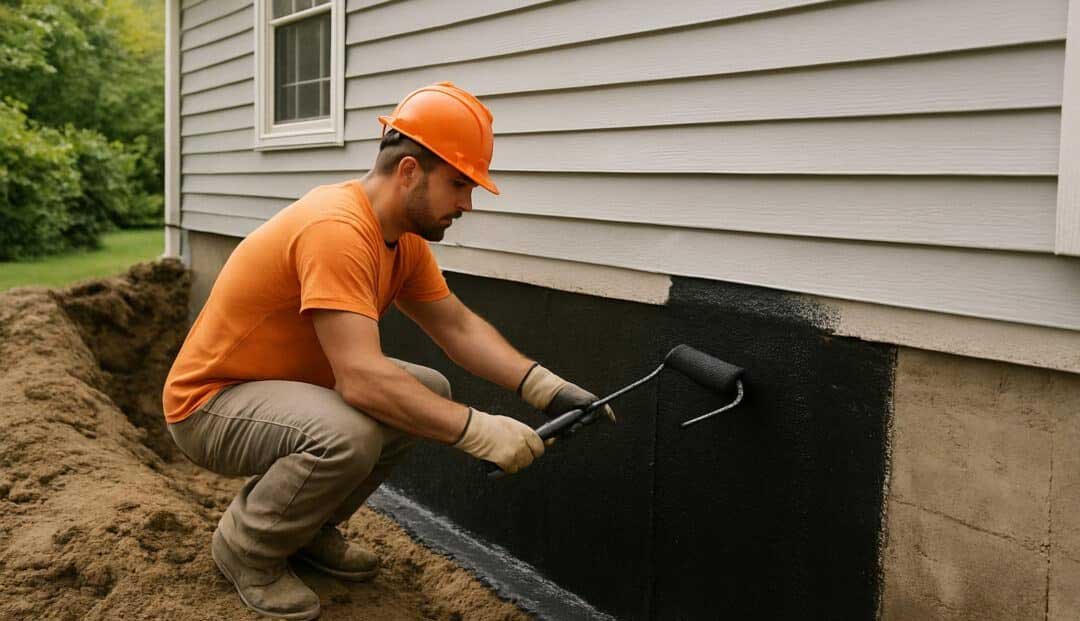
For exterior work, the most dependable basement waterproofing membrane option is usually a professionally detailed liquid-applied or sheet-applied system installed on the outside face of the wall and paired with drainage protection. That is the setup that addresses water before it pushes through concrete or block.
Bituminous systems remain common because they are proven, widely available, and budget-friendly. If you are comparing bitumen with other systems, our guide to bituminous waterproofing membranes explains where it fits best. HDPE sheet systems are attractive when durability, puncture resistance, and long service life matter. Bentonite composites can also work well in below-grade conditions, especially where self-sealing behavior around minor punctures is a real advantage.
A good exterior assembly is not just the membrane. It also includes wall preparation, crack repair, proper overlaps or continuity, drainage board where specified, and a functioning perimeter drain or outlet path. A membrane without drainage is one reason homeowners pay twice for the same problem.
Interior vs. exterior systems
An exterior membrane prevents water from reaching the foundation wall in the first place. An interior coating or drainage-side solution usually manages moisture after water has already reached the structure. That difference matters more than the product label.
Exterior systems are stronger when you are dealing with hydrostatic pressure, recurring seepage through wall cracks, wall-floor joint leakage, or chronic wet soil conditions. Interior systems can still be useful for condensation, light dampness, or as one part of a broader interior drainage setup, especially when excavation is impractical.
Homeowners often buy a coating or roll product expecting it to fix an active exterior water problem from the inside. Sometimes it improves the surface appearance for a while. It does not always remove the pressure outside the wall. That is why interior coatings should be matched to the actual failure mechanism, not just the visible stain pattern.
How to choose the right system
The right system is the one that matches how water is entering, what the wall is made of, how much movement the substrate has, and whether exterior access is realistic. Start with the failure mode, then choose the material.
- Choose an exterior membrane when water enters through the wall body, through recurring cracks, or after heavy rain with obvious outside saturation.
- Choose a more flexible liquid system when the wall has complex geometry, penetrations, corners, or irregular surfaces that are hard to detail with rigid sheets.
- Choose a sheet system when you want controlled thickness, strong puncture resistance, and a clearly defined installation layer.
- Choose cementitious coatings carefully for stable interior concrete or masonry where the goal is surface protection rather than solving major exterior pressure.
- Choose bentonite-based systems carefully where their swelling, self-sealing behavior is an advantage and the assembly can be properly confined.
Before final selection, check five practical items: crack activity, wall material, outside access, drainage condition, and finish level inside the basement. A membrane that works on poured concrete may be a poor fit for block walls if the real issue is hidden water inside the cores or a failed footing drain.
How this membrane system is installed
A below-grade membrane only performs as well as the prep beneath it. Most failures come from dirty surfaces, skipped crack repairs, thin spots, bad overlaps, or no drainage path.
- Inspect the basement and foundation to locate cracks, seepage lines, wall-floor leakage, efflorescence, and grading issues.
- Decide whether the repair is interior management, exterior waterproofing, or a combined system.
- Clean the substrate and repair honeycombs, voids, tie holes, and active cracks.
- Prime the surface if the membrane system requires it.
- Apply or install the membrane to the specified thickness, overlap, and cure sequence.
- Add protection board or drainage board where the system calls for it.
- Connect the work to drainage, sump discharge, footing drains, or safe runoff control so water is actually redirected away.
- Backfill carefully on exterior jobs to avoid damaging the membrane.
That is why it should be treated as a system, not a bucket or roll. Material quality matters, but continuity matters even more.
Basement waterproofing membrane costs and service life
Project costs vary widely because the membrane is only one part of the job. Material cost is usually not the biggest number. Labor, excavation, drainage upgrades, crack repair, access limitations, and cleanup often decide the final bill.
For full basement waterproofing projects, national estimates from Bob Vila and Forbes Home place many jobs in the low-thousands to low-five-figures, depending on scope. In real projects, a basic interior coating repair can be far cheaper than an exterior full-perimeter excavation and membrane job. Once excavation, drainage board, and footing-drain work are added, the number rises quickly.
Service life also depends on system type. Cementitious products can perform well on stable substrates but are less forgiving of movement. Bituminous and polyurethane systems can last for many years when the substrate is prepared properly and the membrane is protected. HDPE sheet systems are chosen partly because of long-term durability. Bentonite systems are valued for their ability to swell and help seal minor gaps when installed in the right assembly.
Common membrane mistakes
The most expensive mistake is using one product as if every leak has the same cause. Basement water problems rarely fail in a neat, one-product way.
- Using interior paint or coating to fight active exterior hydrostatic pressure.
- Skipping drainage improvements and expecting the membrane alone to do all the work.
- Applying membrane over dust, loose mortar, damp contamination, or unfilled cracks.
- Ignoring corners, penetrations, and cold joints where leaks often begin.
- Confusing dimple board or drainage board with the waterproofing layer itself.
- Choosing by brand popularity instead of wall type, movement, and water conditions.
If you are deciding between systems, it helps to compare the membrane with the entire repair path. In many basements, the winning solution is not just “best membrane,” but “best membrane plus drainage plus crack treatment plus grading correction.”
Our recommendation for homeowners
If your basement has occasional surface dampness and stable concrete, a coating-based basement waterproofing membrane may be enough for part of the repair. If the basement has recurring seepage, hydrostatic pressure, or outside wall leakage, an exterior membrane system with drainage is usually the more durable answer.
For homeowners who are still narrowing the options, start with these rules:
- Pick cementitious for stable, interior mineral surfaces when budget matters and movement is low.
- Pick bituminous when you want a proven exterior membrane with broad contractor familiarity.
- Pick polyurethane or liquid rubber when detail work and seamless coverage are more important than sheet handling.
- Pick HDPE sheet when long-term exterior durability and puncture resistance are priorities.
- Pick bentonite composite when the project conditions suit a confined, self-sealing below-grade assembly.
If you want help comparing the actual condition of your basement to the right system, Aqviz can help you evaluate the membrane type, drainage needs, and repair sequence before you buy materials that do not fit the problem.
Frequently Asked Questions
Is it better than waterproof paint?
Yes, in most serious leak scenarios, a true membrane system is better than waterproof paint because it is designed to create a dedicated barrier layer, not just a cosmetic surface coating. Paint may help with mild dampness, but it is usually not enough for recurring seepage or outside water pressure.
What is the best basement waterproofing membrane for exterior walls?
The best basement waterproofing membrane for exterior walls is usually a properly installed liquid-applied or sheet-applied system paired with drainage. The exact winner depends on wall condition, detailing complexity, access, and whether the project needs flexibility, puncture resistance, or self-sealing behavior.
Can you install one from the inside?
Yes, some interior products and coatings can be installed from the inside. They are useful for selected conditions, but they do not always remove the exterior water pressure causing the leak. That is why interior systems should be chosen after diagnosis, not as an automatic shortcut.
How long does it last?
A quality system can last for many years, and in some assemblies decades, when the substrate is prepared well and the membrane is protected from installation damage. Actual lifespan depends on the material type, site drainage, wall movement, and workmanship quality.
Is damp-proofing the same thing?
No. Damp-proofing mainly slows moisture movement, while a true waterproofing membrane is intended to resist or block water intrusion more aggressively. The difference matters most when the basement faces hydrostatic pressure or repeat leakage after storms.
Need help choosing the right system for your project? Start with Aqviz resources on building waterproofing, compare membrane options, and then match the product to the water problem instead of guessing from shelf labels.