
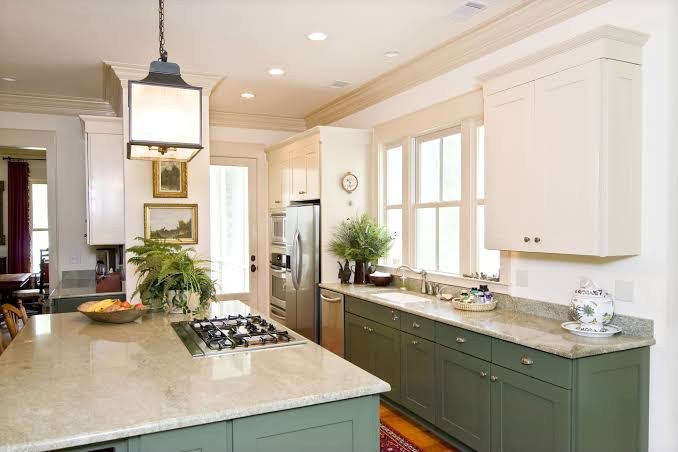

This guide covers the best cabinet painting ideas for modern homes — from two-tone schemes to professional spray finishes, a home improvement as rewarding as investing in real estate. The best cabinet painting idea for a modern home is a two-tone scheme: a darker color on the base cabinets and a lighter color or natural wood on the upper cabinets. The dark bases ground the kitchen visually. The light uppers float above them, reflecting light and making the room feel taller and more open.
Cabinet painting is the highest-impact, lowest-cost kitchen upgrade available. Replacing 25 linear feet of kitchen cabinets costs $8,000 to $18,000. Professionally painting the same cabinets costs $3,000 to $8,000. The painted cabinets will not look like new custom cabinetry. They will look like old cabinets that have been transformed by a skilled painter — and for most kitchens, that is enough. The kitchen looks clean. The kitchen looks updated. The kitchen looks like someone cared enough to invest in it. The cost is one-third to one-half of replacement. The result is roughly 80% of the visual impact. The math works for almost everyone. Here are the painting ideas that make the math look like a design decision.
Idea 1: Two-Tone Cabinets — Dark Bases, Light Uppers
Two-tone cabinets use one color on the base cabinets and a different color on the upper cabinets. The most successful combinations are: navy or charcoal bases with white or off-white uppers; deep green or forest green bases with cream or warm white uppers; natural wood bases — clear-coated rather than painted — with white or light gray uppers; and black or near-black bases with white uppers for the highest-contrast, most dramatic look. The dark color anchors the kitchen. The light color opens it. The contrast creates visual interest. The kitchen reads as a composition, not a single painted surface.
Two-tone cabinet painting costs $500 to $1,500 more than a single-color paint job because the painter must mask, prepare, and spray two separate color batches. The labor is increased by the masking time and the paint changeover. The material cost increases by the second gallon of paint. The total premium over a single-color paint job is 15% to 25%. The visual return is disproportionate to the cost. The two-tone kitchen looks significantly more designed than a single-color kitchen. The $1,000 premium buys a kitchen that looks like a custom design decision, not a paint job. The two-tone scheme is the single most impactful cabinet painting decision. The cost is incremental. The impact is transformational.
The National Association of Home Builders (NAHB) identifies kitchen updates as one of the highest-return cosmetic home improvements. Cabinet painting is specifically noted as a cost-effective alternative to replacement. A two-tone paint scheme signals to buyers that the kitchen was updated with intention, not just repainted. The intention is visible in the color choice. The intention is what the buyer values.
Idea 2: Matte or Satin Finish, the Modern Sheen
High-gloss cabinet finishes reflect light and show every fingerprint, every scratch, and every imperfection in the underlying surface. High-gloss was the standard for modern kitchens a decade ago. The current modern standard is a matte or satin finish, a low-sheen surface that absorbs light rather than reflecting it. The matte finish is softer, warmer, and more forgiving. It hides fingerprints. It hides minor surface imperfections. It reads as a solid, calm plane of color rather than a glossy, reflective surface. The matte finish is the modern choice because it prioritizes texture over shine. The texture is subtle. The shine is absent. The absence is the point.
A matte or satin finish costs the same as a gloss or semi-gloss finish. The paint chemistry is different, a flattening agent is added to the clear coat to reduce the sheen, but the application process is identical. The flatting agent increases the paint cost by $10 to $20 per gallon. The labor is the same. The matte finish is a design choice, not a budget choice. The design choice makes the kitchen feel current. The gloss finish makes the kitchen feel like it was painted in 2015. The difference is the sheen. The sheen is the finish. The finish is the era. The matte finish belongs to the current era.
Idea 3: Natural Wood or Clear-Coated Bases with Painted Uppers
Natural wood bases, clear-coated rather than painted, paired with white or light-colored painted uppers combine the warmth of wood with the lightness of paint. The wood bases are typically white oak, walnut, or maple, sanded and finished with a clear matte lacquer. The wood grain is visible. The wood texture is present. The painted uppers are smooth, uniform, and reflective. The contrast is between the organic warmth of the wood and the clean simplicity of the paint. The kitchen is modern but not cold. The wood adds warmth. The paint adds light. The combination is balanced.
Natural wood bases require cabinets that are made of solid wood or wood veneer, not thermofoil, not laminate, not MDF with a printed wood grain. The cabinets must be strippable to bare wood. The stripping and clear-coating costs $1,000 to $2,000 more than painting because the old finish must be completely removed before the clear coat can be applied. The wood must be sanded to a uniform surface. The clear coat must be applied in a dust-free environment. The wood finish is less forgiving than paint because the wood grain is visible. Every sanding scratch, every drip, every dust nib is visible in the clear coat. The clear coat is the most demanding finish for a cabinet painter. The result, the warmth of natural wood, the visible grain, the organic texture, is the reward. The reward is worth the premium for a kitchen where the cabinets are the focal point.
Idea 4: A Single Bold Color on the Island, Contrast as an Accent
A kitchen island painted in a bold, contrasting color, deep navy, emerald green, charcoal, or even black, while the perimeter cabinets remain white or neutral, makes the island the focal point of the kitchen. The island is the anchor. The color is the anchor’s weight. The bold island color costs nothing extra, the painter is already painting the cabinets. The paint is a different color. The material cost increases by a gallon of the accent color, $40 to $80. The labor increases by the masking and changeover time, $100 to $200. The total premium for a contrasting island is $150 to $300. The visual return is the island as a standalone architectural element. The kitchen has a focal point. The focal point cost $300. The focal point is the first thing you see when you enter the kitchen. The first thing is worth the investment.
The bold island color works best with a neutral perimeter. White, off-white, or light gray perimeter cabinets let the island be the star. If the perimeter is also bold, the kitchen is loud. The loud kitchen competes with itself. The island and the perimeter fight for attention. The bold island with a neutral perimeter creates a hierarchy. The island is the lead. The perimeter is the support. The hierarchy is the design. The bold color is the statement. The neutral background is the silence that makes the statement audible.
Idea 5: Professional Spray Finish, the Difference You Can Feel
A professionally spray-finished cabinet door is smooth to the touch. No brush marks. No roller stipple. No dust nibs embedded in the finish. The paint is atomized into a fine mist and applied in a controlled environment, a spray booth, a garage with plastic sheeting, or a dedicated finishing area. The finish is uniform. The surface is glassy but matte. The door feels like it was manufactured, not painted. The difference between a sprayed finish and a brushed finish is visible to the eye and to the fingertip. The sprayed finish is what separates a professional paint job from a careful DIY job. The brush marks are what separate the DIY job from the professional one. The brush marks are not a flaw. They are the signature of the method. The spray finish is the signature of the pro.
A professional spray finish costs $5,000 to $8,000, the high end of the cabinet painting range. The cost is the labor to remove the doors, transport them to the finishing area, spray multiple coats with sanding between each, cure the finish, and reinstall the doors. The process takes one to two weeks. The kitchen is without cabinet doors for the duration. The temporary kitchen, a microwave, a folding table, paper plates, is the inconvenience. The sprayed finish is the result. The result is worth the inconvenience for a kitchen where the cabinets are the dominant visual element. The cabinets are the largest surface in the kitchen. The finish on the surface is what you see and what you touch. The sprayed finish is the premium version of seeing and touching. The premium is the cost. The premium is also the experience of opening a cabinet door that feels like it came from a factory, not a garage.
Frequently Asked Questions
What is the best color to paint kitchen cabinets for a modern look?
White, off-white, and light gray are the most common modern cabinet colors for upper cabinets because they reflect light and make the room feel larger. Navy, charcoal, deep green, and black are the most common for base cabinets in a two-tone scheme. Natural wood with a clear matte finish is the premium modern option for base cabinets. The combination of dark bases and light uppers is the most successful modern color strategy.
How much does professional cabinet painting cost?
Professional cabinet painting costs $3,000 to $8,000 for a typical kitchen. A single-color paint job costs $3,000 to $6,000. A two-tone paint job costs $4,000 to $7,500. A sprayed finish costs $5,000 to $8,000. DIY painting costs $200 to $600 in materials plus 40 to 80 hours of labor.
Can wood cabinets be painted to look modern?
Yes. Oak, maple, cherry, and birch cabinets can all be painted. The wood must be cleaned, degreased, sanded, and primed with a high-bond primer before painting. The wood grain may show through the paint unless a grain filler is applied before priming. The grain filler adds $500 to $1,000 to the cost. The paint covers the wood color. The grain filler covers the wood texture. The result is a smooth, painted surface that no longer reads as wood.
What paint finish is best for kitchen cabinets, matte, satin, or gloss?
A satin or matte finish is the modern standard. Satin has a slight sheen that is easy to clean. Matte is flatter and softer, hiding fingerprints and surface imperfections. High-gloss was the standard a decade ago and now reads as dated. The satin or matte finish is the current choice for a modern kitchen.
Should I paint my cabinets or replace them?
Paint the cabinets if the boxes are structurally sound, plywood boxes with no water damage, and the layout works. Painting costs $3,000 to $8,000. Replace the cabinets if the boxes are particleboard and showing water damage, delamination, or structural sagging, or if the layout needs to change. Replacement costs $8,000 to $18,000 for semi-custom cabinets. Painting is the right choice for most kitchens where the layout is functional and the cabinets are in good structural condition.
How long do painted kitchen cabinets last?
Professionally spray-finished cabinets last 12 to 15 years before showing significant wear, chipping at the edges, scratches around hardware. DIY-painted cabinets last 5 to 8 years. The wear pattern is predictable: the edges of doors chip first, followed by the areas around knobs and pulls. The cabinet boxes, which receive less wear, last several years longer than the doors.
The Cabinets That Define the Kitchen
Two-tone cabinets, dark bases, light uppers, professionally spray-finished in a matte or satin sheen, with a bold contrasting color on the island. The cost is $5,000 to $8,000. The result is a kitchen that looks updated, intentional, and modern. The cabinets are the same cabinets that were there before. The paint is the only thing that changed. The paint changed everything.
The cabinets are the largest visual element in the kitchen. The paint is the surface of the largest visual element. The color, the sheen, and the quality of the application determine whether the kitchen reads as updated or dated. The two-tone scheme signals intention. The matte finish signals currency. The spray finish signals quality. The bold island signals confidence. The combination signals a kitchen that was designed, not just maintained. The cost is one-third of replacement. The impact is 80% of replacement. The math is in the paint. The paint is in the kitchen. The kitchen is the room where the day starts. The painted cabinets are the first thing you see. Ever walked into a kitchen and immediately thought “this kitchen has been updated” — not because of the countertops or the appliances, but because the cabinets were a color you had never seen in a kitchen before? The color was not white. The color was not wood. The color was a choice. The choice was visible from the doorway. The choice signaled that someone had made a decision about this kitchen. The decision was paint. The paint was $5,000. The decision looked like a $25,000 remodel. The paint fooled the eye. The eye is the only judge that matters in a kitchen. The eye saw updated cabinets. The cabinets were the same cabinets that had been there for 20 years. The paint made them new. The paint can make yours new too.