
According to CJ Real Estate Management, a metal roof installed correctly lasts 40 to 60 years. A metal roof installed with any of the seven mistakes below lasts 10 to 15 before it leaks, rusts, or tears off in a windstorm. The difference is not the material. The difference is the fasteners, the underlayment, the panel choice for the roof pitch, and the understanding that metal moves — it expands and contracts with temperature — and every connection in the roof system must accommodate that movement. A metal roof is an engineered assembly, not a covering. Treating it like a covering is the first mistake, and it leads to all the others.
The most common metal roofing failures are not mysterious. They are well-documented, entirely preventable, and caused by shortcuts that save an hour of labor or $200 in materials on a $20,000 roof. The seven mistakes below are ordered by how frequently they occur and how expensive they are to fix. Fixing mistake 1 — the wrong panel for the roof pitch — requires replacing the entire roof. Fixing mistake 7 — skipping the underlayment, requires removing the metal panels to install the underlayment underneath them and reinstalling the panels. Every mistake on this list is cheaper to avoid than to correct.
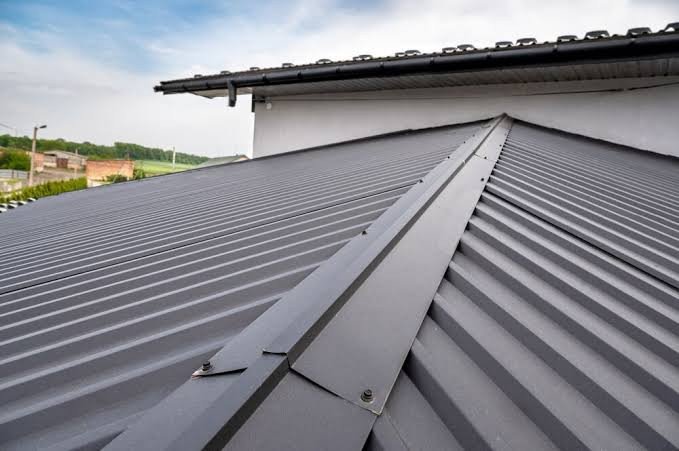
“Had a metal roof installed, how bad is it? I’m seeing waviness in the panels, the ridge cap doesn’t sit flat, and there are screws that look like they were put in with an impact driver set to destroy.”
— r/Roofing, October 2025 (1,172 upvotes, 403 comments), source
The waviness is oil canning, visible distortion in the flat areas of the metal panels. The ridge cap that does not sit flat is a thermal movement problem, the panels expanded after installation and pushed against the ridge, or the ridge was fastened through the panels in a way that prevented the panels from moving independently. The overdriven screws have destroyed the rubber gaskets that seal the fastener holes. Every one of those screws is a leak path. This roof will leak within 5 years. The homeowner paid for a 50-year roof and got a 10-year roof because the installer skipped three of the seven rules below.
Mistake 1: Choosing the Wrong Panel for the Roof Pitch
Metal roofing panels are not interchangeable across roof pitches. Exposed-fastener panels, corrugated, R-panel, PBR, 5V crimp, require a minimum roof pitch of 3:12. Below that pitch, water driven by wind can travel upward under the panel overlap and enter through the fastener holes. Standing-seam panels with mechanically seamed joints can be installed on roofs as low as 1/2:12 because the seam is watertight with no exposed fasteners. A standing-seam snap-lock panel falls between the two, most manufacturers rate snap-lock panels for a minimum pitch of 2:12 to 3:12 depending on the specific panel profile and the presence of sealant in the seam.
Installing exposed-fastener panels on a 2:12 porch roof guarantees leaks. The panels will shed water in a light rain. In a wind-driven rain, water blows up the roof slope, under the side lap, and through the fastener holes. The leak is not a defect in the panels. It is the wrong panel for the application. The fix is removing the panels and replacing them with a standing-seam system rated for the pitch, or installing a fully adhered waterproof underlayment that serves as the primary water barrier with the metal panels as a cosmetic and impact layer on top. The underlayment approach works but costs nearly as much as replacing the panels because the underlayment must cover the entire roof deck and all penetrations must be flashed through it.
Mistake 2: Fastener Errors, Over-Driven, Under-Driven, and Wrong Placement
Every exposed fastener on a metal roof is a potential leak. The fastener creates a hole in the panel. The rubber gasket under the washer is the only thing sealing that hole. Overtightening the screw crushes the gasket, which splits within 2 to 3 years from UV exposure and thermal cycling. Undertightening leaves the gasket uncompressed, and water seeps under the washer. The correct torque compresses the gasket enough to create a watertight seal without distorting it, the gasket should bulge slightly around the washer edge but not squeeze out from under it.
Fastener placement matters as much as torque. A screw driven through the flat area of the panel, the pan, collects water because the pan is the lowest point. The correct placement is through the crown, the highest rib, where water drains away from the screw head. On corrugated and PBR panels, fasteners go in the ribs, not the flats. The screw must be driven perpendicular to the panel surface. A screw driven at an angle does not seat the gasket evenly, creating a gap on one side that water follows directly into the hole.
For concealed-fastener standing-seam panels, the fastener error is different: the clip is fastened too tightly to the deck, preventing the panel from sliding as it expands and contracts. The panel buckles at the clip location instead of moving freely. The clip screw should be snug but not overdriven, the panel must be able to slide through the clip with light resistance. Per EPA energy efficiency guidelines, reflective metal roofing materials properly installed with adequate thermal movement accommodation can reduce peak cooling demand by 11% to 27%, but only if the panel integrity and fastener seal are maintained over the roof’s service life.
Mistake 3: Ignoring Thermal Movement, The Roof Moves More Than You Think
Steel expands and contracts approximately 1/64 inch per 10 feet per degree Fahrenheit of temperature change. A 20-foot panel on a roof that swings from 20 degrees on a winter night to 140 degrees on a summer afternoon, a 120-degree range, moves roughly 3/8 inch over its length. Multiply that across dozens of panels, and the cumulative movement at the ridge and eaves is measured in inches. A metal roof that does not accommodate this movement buckles, tears fasteners loose, and opens gaps at the ridge and end laps.
Standing-seam panels accommodate thermal movement through floating clips, the panel is attached to the deck through a clip that allows the panel to slide longitudinally while holding it down against wind uplift. Exposed-fastener panels do not have this feature, the fasteners pin the panel to the deck at every screw location. The only way to accommodate thermal movement on an exposed-fastener roof is to slot the fastener holes at one end of each panel so the panel can move relative to the fixed screws. Most installers do not do this, and the panels buckle at the fixed end within the first year of seasonal cycling.
The ridge cap and flashing are especially vulnerable to thermal movement damage. If the ridge cap is screwed through the panel into the deck, the panel cannot move. The screws tear out of the panel or the deck, opening a gap at the ridge that wind-driven rain enters. The correct detail uses a floating ridge attachment, the ridge cap fastens to a Z-closure or cleat that is attached to the deck, and the panels slide under the ridge cap independently.
Mistake 4: Oil Canning, The Waviness That Cannot Be Fixed After Installation
Oil canning is the visible waviness or rippling in the flat areas of metal roof panels. It is caused by residual stress in the metal from the manufacturing process being released unevenly when the panel is installed. It is primarily a cosmetic issue, an oil-canned panel is not structurally compromised, but it is the most common homeowner complaint about new metal roofs, and it cannot be corrected after installation without replacing the affected panels.
Oil canning is minimized by using a thicker gauge of metal, 24-gauge panels oil-can less than 26-gauge or 29-gauge, by selecting a panel profile with striations or minor ribs in the flat areas that break up the visual plane and hide minor waviness, and by ensuring the substrate is perfectly flat before the panels are installed. A wavy substrate telegraphs through the metal and amplifies oil canning. The color of the panel also affects the perception, light colors and matte finishes hide oil canning better than dark, glossy colors. Oil canning is not a manufacturing defect and is excluded from most metal roofing warranties. The only way to manage it is to prevent it during material selection and substrate preparation.
Mistake 5: Skipping or Using the Wrong Underlayment
Metal roofing requires an underlayment that serves two functions: a secondary water barrier that protects the deck if water penetrates the panel system, and a slip sheet that allows the metal panels to move independently of the deck. Standard asphalt-saturated felt, 15-pound or 30-pound, is not recommended for metal roofing. The metal panels heat up in direct sunlight and can reach surface temperatures of 160 to 180 degrees Fahrenheit, which is hot enough to melt the asphalt in the felt, causing it to stick to the back of the panels and tear when the panels move.
The correct underlayment for metal roofing is a high-temperature synthetic underlayment rated for at least 240 degrees Fahrenheit, or a self-adhering ice-and-water shield in cold climates where ice damming is a concern. The synthetic underlayment provides the slip surface the panels need and the high-temperature resistance the metal panels demand. In areas with significant snow and ice, a self-adhering membrane at the eaves, extending 24 inches inside the heated wall line, prevents ice dam water from reaching the deck. The underlayment is not optional. It is the last line of defense between the roof deck and the weather. If the metal panels leak, the underlayment is what keeps the water out of the house.
Mistake 6: Mixing Dissimilar Metals, Galvanic Corrosion
When two different metals are in contact with each other in the presence of an electrolyte, rainwater qualifies, the less noble metal corrodes. This is galvanic corrosion, and it destroys metal roofs at the fastener line and at flashing transitions. The rule is simple: fasteners and flashing must be made of the same metal as the panels, or a metal that is compatible with the panels on the galvanic series chart.
Steel panels require steel fasteners with a coating that matches or exceeds the panel coating, typically zinc-aluminum coated or stainless steel. Aluminum panels require aluminum or stainless steel fasteners. Copper panels require copper or stainless steel fasteners. The mistake that causes the most damage is using standard galvanized steel fasteners on aluminum panels. The aluminum corrodes around the fastener hole within 5 to 10 years, the hole enlarges, and the panel tears loose in the next windstorm. The fasteners cost $20 to $50 more in total for a full roof when the correct material is used. The cost of replacing every panel on the roof because the fastener holes corroded out is $15,000 to $30,000.
Flashing at transitions, where the metal roof meets a chimney, a wall, or a different roofing material, must also be compatible. Lead flashing in contact with aluminum panels corrodes the aluminum. Copper flashing in contact with steel panels corrodes the steel. The flashing material must be compatible with the panel material. When in doubt, use the same metal for flashing as for the panels.
Mistake 7: Using the Wrong Sealant, or Using It as a Substitute for Proper Flashing
Sealant is not a substitute for proper metal flashing. A bead of silicone along a panel end lap will fail within 2 to 5 years as the panels expand and contract and the sealant loses adhesion. The correct detail is a metal end lap with a factory-applied sealant strip, mechanically fastened with the correct overlap, typically 6 inches for low-slope roofs and 4 inches for steep-slope, and never relying on field-applied sealant as the primary water barrier.
When sealant is required, at flashing transitions, pipe penetrations, and ridge closures, the correct product is a neutral-cure silicone or urethane sealant specifically rated for metal roofing. Acrylic and latex caulks harden and crack within 2 years on a metal roof. Butyl sealant tape, applied between overlapping metal surfaces before they are fastened together, is the preferred method for sealing panel laps and flashing joints because it remains flexible and self-healing. A tube of silicone caulk costs $8. A tube of butyl sealant tape costs $15. The caulk fails in 3 years. The butyl tape lasts 20. The $7 difference is the cheapest insurance on a metal roof.
Frequently Asked Questions
How do I know if a metal roofing installer knows what they’re doing?
Ask three questions. First, what is the minimum roof pitch for the panel you are recommending? The answer should be a specific ratio, 3:12, 2:12, or 1/2:12, with the panel name. If they say “any pitch is fine,” find a different installer. Second, how do you accommodate thermal movement? The answer should mention floating clips for standing-seam or slotted holes for exposed-fastener. If they say “the panels don’t move enough to matter,” find a different installer. Third, what underlayment do you use under metal? The answer should be a high-temperature synthetic underlayment rated for at least 240 degrees. If they say “15-pound felt,” find a different installer. Three questions, three disqualifying wrong answers, two minutes on the phone. The installer who answers all three correctly is not guaranteed to do good work, but the installer who answers any of them wrong is guaranteed to do bad work.
Is oil canning covered under warranty?
No. Oil canning is excluded from virtually every metal roofing manufacturer’s warranty because it is considered an aesthetic characteristic of the material, not a manufacturing defect. The only way to address oil canning after installation is to replace the affected panels, and the cost is borne by the homeowner unless the installer provided a workmanship warranty that specifically covers oil canning, which most do not. The time to address oil canning is before the panels are ordered, by selecting a thicker gauge, a striated profile, and a light or matte color.