
Crawl Space French Drains: Know these Before Installation

A crawl space French drain is an interior perimeter drainage system installed along the crawl space foundation walls to collect and redirect groundwater away from the foundation. Installing a crawl space drain is highly beneficial to control indoor humidity.
Crawl space French drain is 6 to 12 inches deep and 6 to 8 inches wide. Crawl space French drain has a 1% to 2% slope (1/8 to 1/4 inch per foot) to guide water flow to the sump basin. A crawl space French drain prevents structural damage, mold growth, and moisture buildup by properly removing the seeped and leaked water in the crawl space.
A crawl space drain collects groundwater, surface runoff, or plumbing leaks that accumulate beneath a home. Then it redirects this water through a network of perforated pipes along the interior or exterior perimeter of the crawl space. The accumulated water is sent to the sump basin for pumping out from the crawl space. This crawl space drain setup helps to maintain a dry subfloor area, which protects the foundation and building materials.
In order to install a French drain in the crawl space, you should follow the Aqviz experts’ guide mentioned below. Aqviz experts always recommend that you follow the correct steps and methods to have a highly efficient drain in the crawl space.
What is a Crawl Space French Drain?
A crawl space French drain is an interior perimeter drainage system installed along the crawl space foundation walls to collect and redirect groundwater away from the foundation, sloped toward a discharge point such as a sump pump basin or gravity drain before water rises through the soil or penetrates the foundation walls. A crawl space French drain is installed below the floor level. , wrapped with a geotextile fabric to prevent soil fines from clogging the system.
The main purpose of a crawl space French drain is to control subsurface water pressure, relieve hydrostatic pressure under the foundation, and prevent standing water, damp soil, and moisture vapor from accumulating in the crawl space. Crawlspace French drain can directly reduce mold growth, wood rot in joists, corrosion on metal supports, and moisture levels above 60% RH.
What are the 6 Benefits of a Crawl Space French Drain?
There are 6 main benefits of a crawl space French drain, such as control ground water accumulation, preventing foundation wall damage, reducing crawl space flooding, preventing mold growth in the crawl space, preventing wood decay, improving vapor barrier performance, protect the long-term property value.
- Control groundwater accumulation: A crawlspace French drain helps collect groundwater and surface runoff before it rises through soil or foundation joints. This control reduces hydrostatic pressure and helps keep the crawl space dry during rainfall of 50–100 mm (2–4 in).
- Prevent foundation wall damage: The drainage system helps relieve constant water pressure against foundation walls. This prevention reduces cracking, bowing, and mortar joint deterioration, which helps extend foundation service life by 20–30 years.
- Reduce crawl space flooding risk: A French drain helps redirect water to a sump pit or exterior discharge point. This redirection prevents standing water accumulation of 25–75 mm (1–3 in) during heavy storms.
- Prevent mold and wood decay: Proper drainage helps remove persistent moisture from soil and footing areas. This removal prevents mold growth and wood rot on floor joists, beams, and subfloor panels.
- Improve vapor barrier performance: A crawlspace French drain helps keep soil and foundation surfaces dry. This condition increases vapor barrier effectiveness by reducing moisture vapor pressure below the membrane.
- Protect long-term property value: Installing a crawlspace French drain helps maintain a dry and stable foundation environment. This protection increases property value, improves inspection results, and reduces future structural repair costs.
Where to Locate a Crawl Space French Drain?
Crawl space French drain should be located along the interior perimeter of the foundation walls or directly beneath plumbing lines where leaks are most likely to occur.
Install crawl space drain along the entire inside edge of the crawl space wall if water seepage is coming through the foundation. If the water is entering from outside due to poor landscape grading, locate the drain on the exterior side of the footing. For homes with uneven ground or sloped crawl spaces, always identify and mark the lowest grade point before trenching. Placing the drain incorrectly in a higher elevation area reduces its effectiveness and may lead to water pooling in unprotected zones.
What is the Slope of Crawl Space French Drain?
The standard grading for crawl space French drain pipe is 1% to 2% slope, which equals 1/8 to 1/4 inch per linear foot. Grading of crawl space French drain refers to the slope or angle at which the perforated drain pipe is laid to ensure proper water flow. This slight downward angle allows gravity to move the collected water efficiently toward the sump basin or discharge point.
Maintain consistent grading throughout the entire length of the drain pipe inside the crawl space. If the slope is too flat, water will stagnate inside the pipe, causing backflow and sediment buildup. If the slope is too steep, water may bypass sections of the pipe, reducing drainage efficiency. Use a laser level or line level during installation to confirm the correct pitch from the start to the end point of the crawl space drainage path.
How Deep Should a French Drain in a Crawl Space?
French drain in the crawl space should be installed at a depth of 6 to 12 inches below the crawl space floor level. The trench depth depends on the crawl space height, groundwater level, and location of the sump basin. This depth allows the drain to capture both surface water and subsurface moisture that seeps through the foundation or soil.
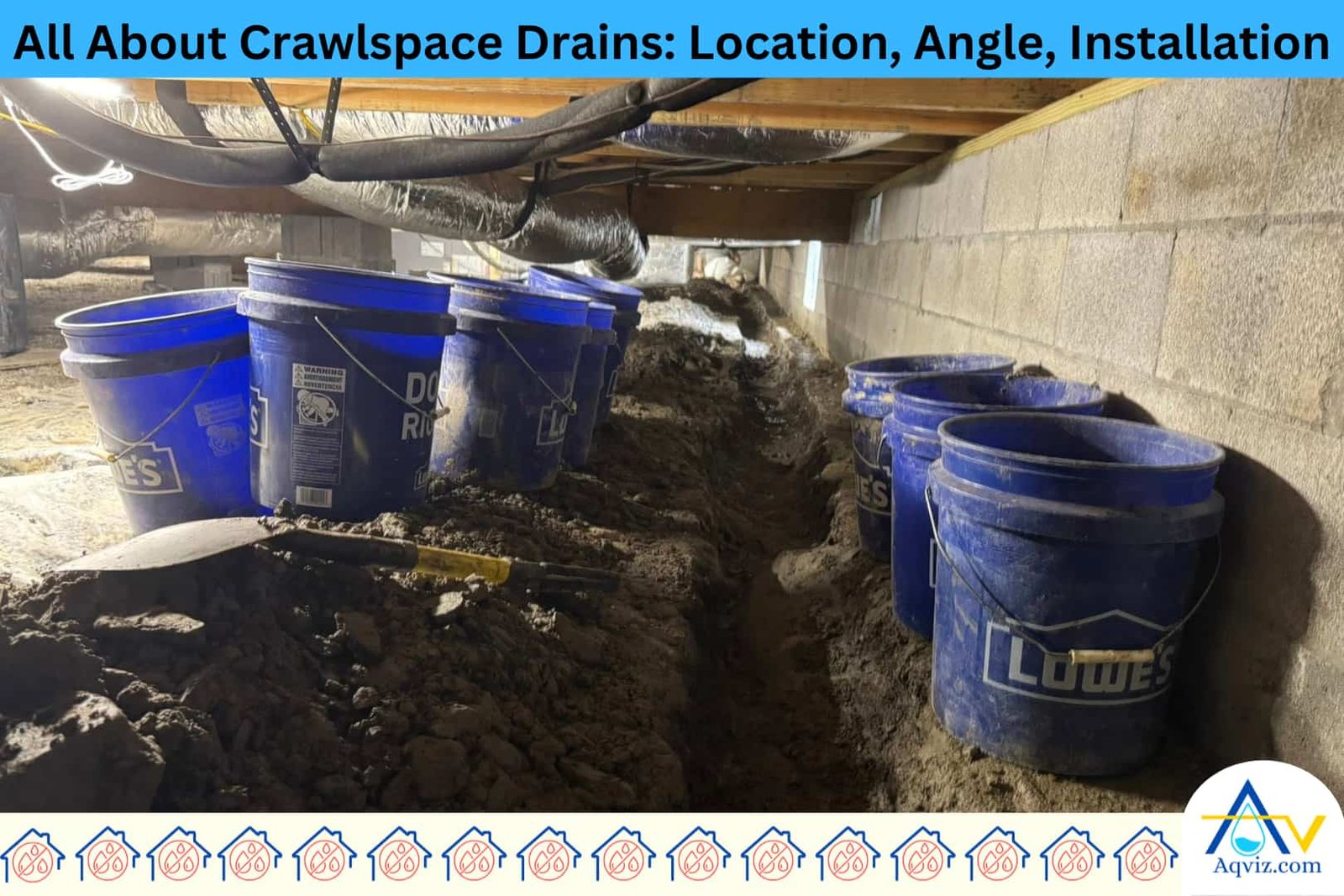
Dig the crawl space trench deep enough to allow at least 2 to 4 inches of gravel bedding below the perforated pipe and another 2 to 3 inches of gravel above it before covering with filter fabric.
If the crawl space is shallow, maintain a minimum of 6 inches of trench depth without compromising the pipe’s slope. Deeper crawl space trenches may be required in high-water table areas to prevent hydrostatic pressure under the subfloor. Proper crawl space trench depth ensures the French drain remains below the water intrusion level, improving its efficiency in collecting and redirecting water.
How to Install a French Drain in the Crawl Space?
Follow these 6 step-by-step instructions to install a French drain in a crawl space effectively. Each step is critical for proper drainage and long-term performance.
- Identify the lowest point: Locate the lowest elevation inside the crawl space where water naturally pools. Mark the interior perimeter or specific trench path toward the sump basin or outlet.
- Excavate the trench: Dig a trench along the marked path with a depth of 6 to 12 inches and a width of 6 to 8 inches along the perimeter of crawl space (foundation). Ensure the trench maintains a 1% to 2% slope (1/8 to 1/4 inch per foot) to guide water flow.
- Add gravel bedding: Place 2 to 4 inches of washed drainage gravel or crushed stone at the bottom of the trench in crawl space. This forms a stable and permeable base for the crawl space drain pipe.
- Lay the perforated pipe: Use a perforated PVC or corrugated HDPE pipe with the holes facing down. Lay the pipe along the sloped crawl space trench path, ensuring it connects to a sump basin or discharge system.
- Backfill with gravel: Cover the pipe in the crawl space with an additional 2 to 3 inches of gravel to promote filtration and prevent trench clogging. Leave space above for the filter fabric.
- Cover and restore: Wrap the top of the crawl space trench with a non-woven filter fabric to prevent soil intrusion. Backfill with native soil or install a vapor barrier over the crawl space floor to complete the system.
Read More About: Crawl Space Waterproofing: Everything You Should Know
What are the Problems of Crawl Space French Drain?
Installing a crawl space drain can solve water intrusion issues, but several problems may arise if the system is poorly designed or incorrectly installed. Here are five common problems of installing a crawl space drain.
- Improper slope: A crawl space drain without the correct 1% to 2% grading fails to channel water effectively.
- Shallow trench depth: If the French drain is installed too shallow, it won’t capture deeper groundwater or hydrostatic pressure.
- Poor drainage outlet: Connecting the drain to an inadequate sump basin or failing to direct water to a safe discharge point results in recurring flooding and crawl space saturation.
- Clogged perforations: Without proper gravel bedding and filter fabric, soil and debris can enter the drain pipe, blocking perforations and reducing flow capacity over time.
- Limited access for maintenance: Tight or obstructed crawl spaces make it difficult to inspect, clean, or repair the drain system.
What if there is no Crawl Space Drain?
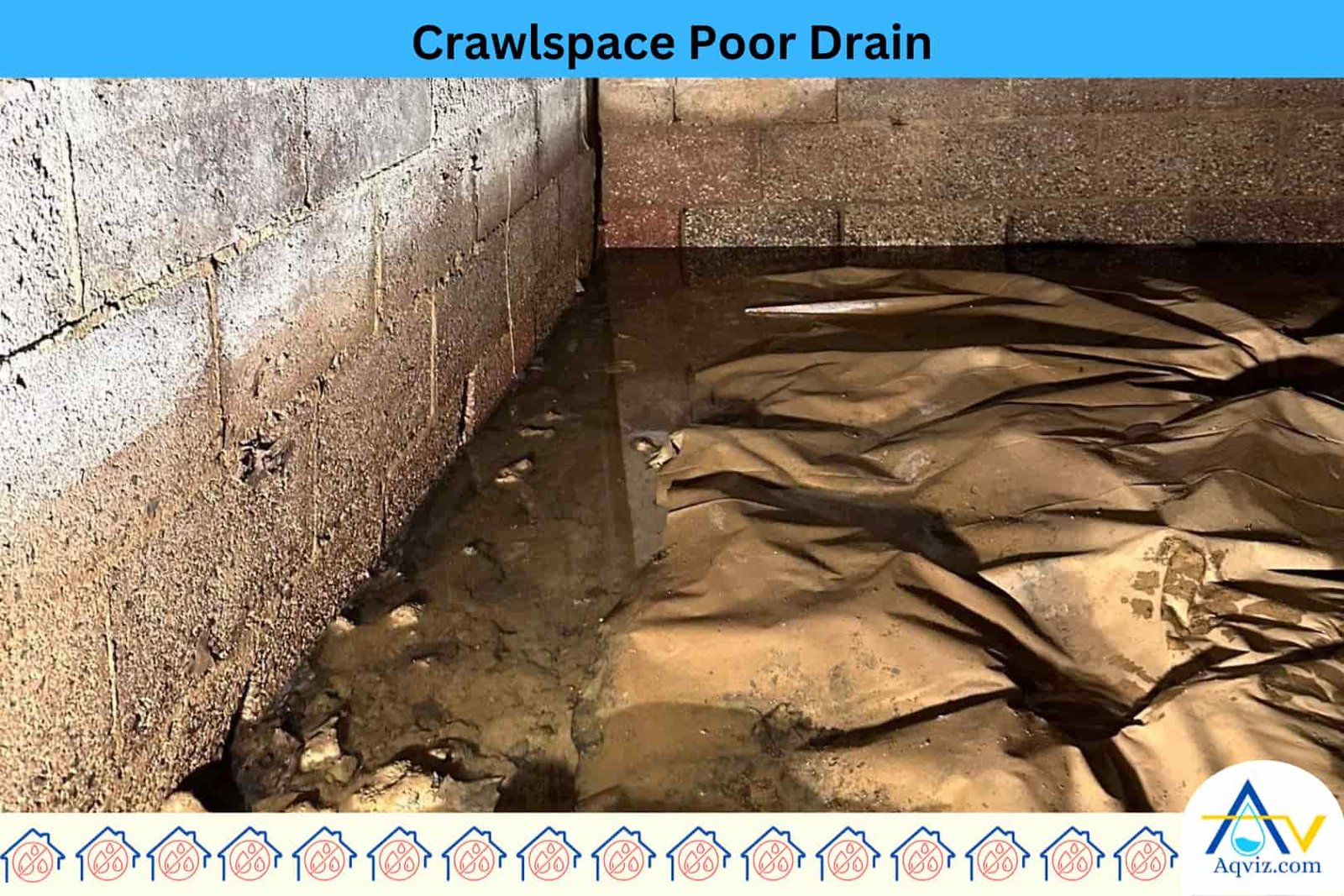
If there is no crawl space drain, water accumulates in the underfloor cavity space, leading to a range of moisture-related problems that compromise both structural integrity and indoor air quality.
Without a drainage system, groundwater, roof runoff, or plumbing leaks seep into the crawl space and remain trapped. Over time, this standing water saturates the soil, increases humidity levels, and encourages mold, mildew, and rot over time.
What are the Reasons for Crawl Space Flooding?
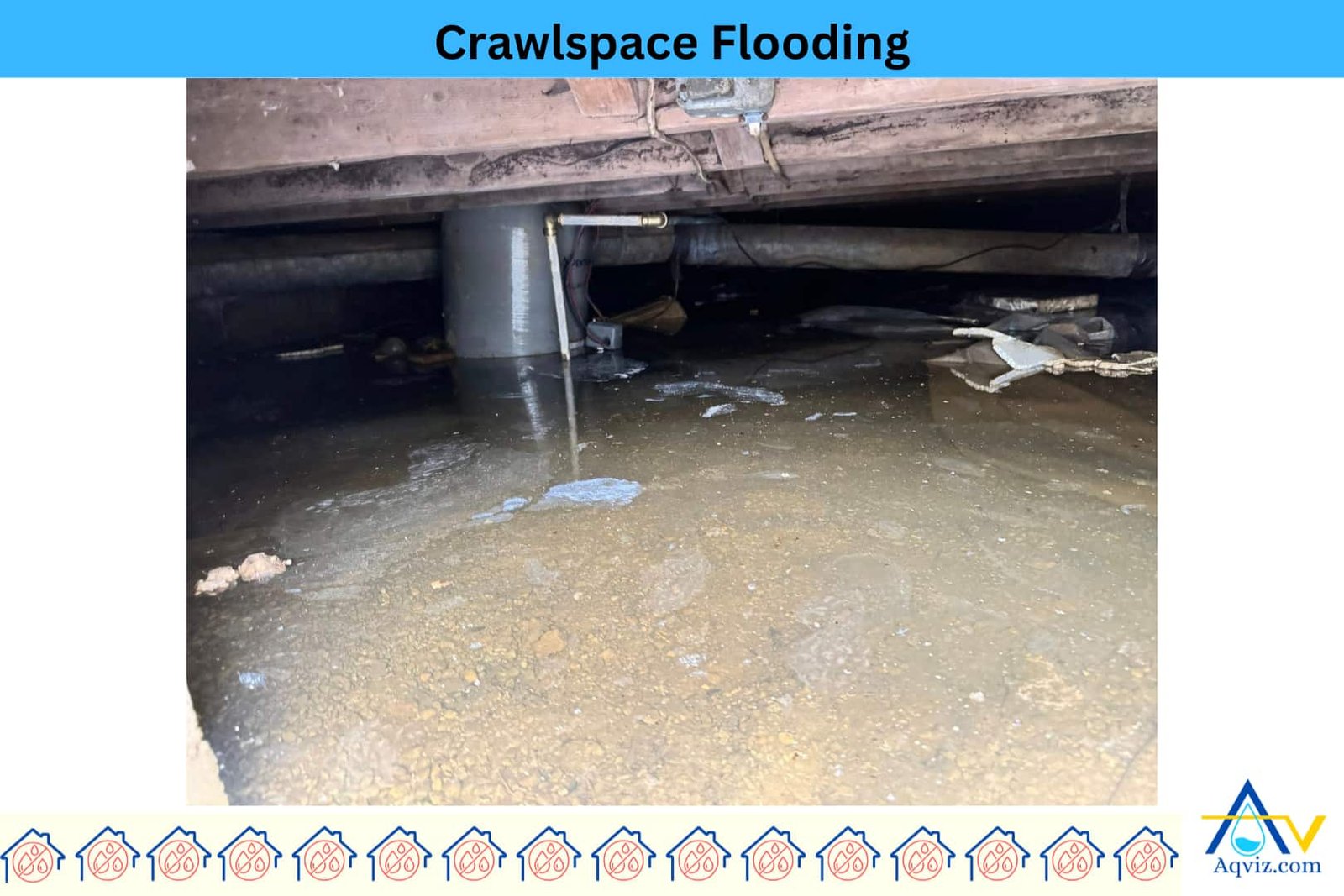
Crawl space flooding occurs due to these 7 reasons
- Poor ground grading
- Broken or leaking plumbing lines
- Clogged or missing gutters and downspouts
- Rising groundwater table
- HVAC condensation line failure
- Ineffective crawl space vents
- Cracks in fthe oundation walls or footing