
Crawl Space Vents: Needs, Positions, Sizes, and Types

A vented crawl space is a subfloor cavity beneath a building that uses exterior air circulation to manage moisture, temperature, and soil gases instead of a full enclosure. Crawl space vents are openings that are installed in the foundation walls of homes with raised floors or pier-and-beam structures to allow outdoor air to circulate under the building.
According to the IRC, 1 sqft of vent needs 150 sqft of crawl space floor area for the non vapor barriered crawl space. If there is a vapor barrier in the crawl space, it can vary by 1 square foot per 1,500 square feet. The requirement of crawl space vents depends on the square feet of crawl space floor area and the vapor barrier installation.
The minimum number of crawl space vents starts from 2 to 4, but it depends on the layout and total square footage. Crawl space vents should be placed in the foundation walls, as close to the corners as possible, and distributed evenly along opposing sides to promote cross-ventilation. Also crawl space vent size determines the requirement of vent area based on the total square footage of the crawl space.
Crawl space vents are different in types, including wall-mounted vents, window-mounted vents, manual foundation vents, automatic vents, fan vents, louvered vents, and smart vents. These crawl space vents are designed to fit specific foundation conditions, climate zones, and moisture control needs.
In order to have proper crawl space ventilation, vents should be sealed properly. Crawl space vents should be open or closed based on the seasonal climate conditions to maintain proper moisture control and energy efficiency. You should replace the crawl space vents when you observe malfunctions and damage to the vents.
If a crawlspace has no vents, it becomes a sealed environment with limited natural airflow. It increases the water damage in the crawlspace. As waterproofing experts, Aqviz highly recommends you to use a proper size, sufficient amount of crawlspace vents to maintain proper ventilation in the crawl space.
What is a Vented Crawl Space?
A vented crawl space is a subfloor cavity beneath a building that uses exterior air circulation to manage moisture, temperature, and soil gases instead of a full enclosure.
The standard vent requirement is one vent per 150 ft² (14 m²) of crawl space floor area unless a ground vapor barrier reduces the ratio to 1:1,500. Position the vents in the crawl space 150-300 mm (6-12 in) above exterior grade to avoid splashback.
What are Crawl Space Vents?
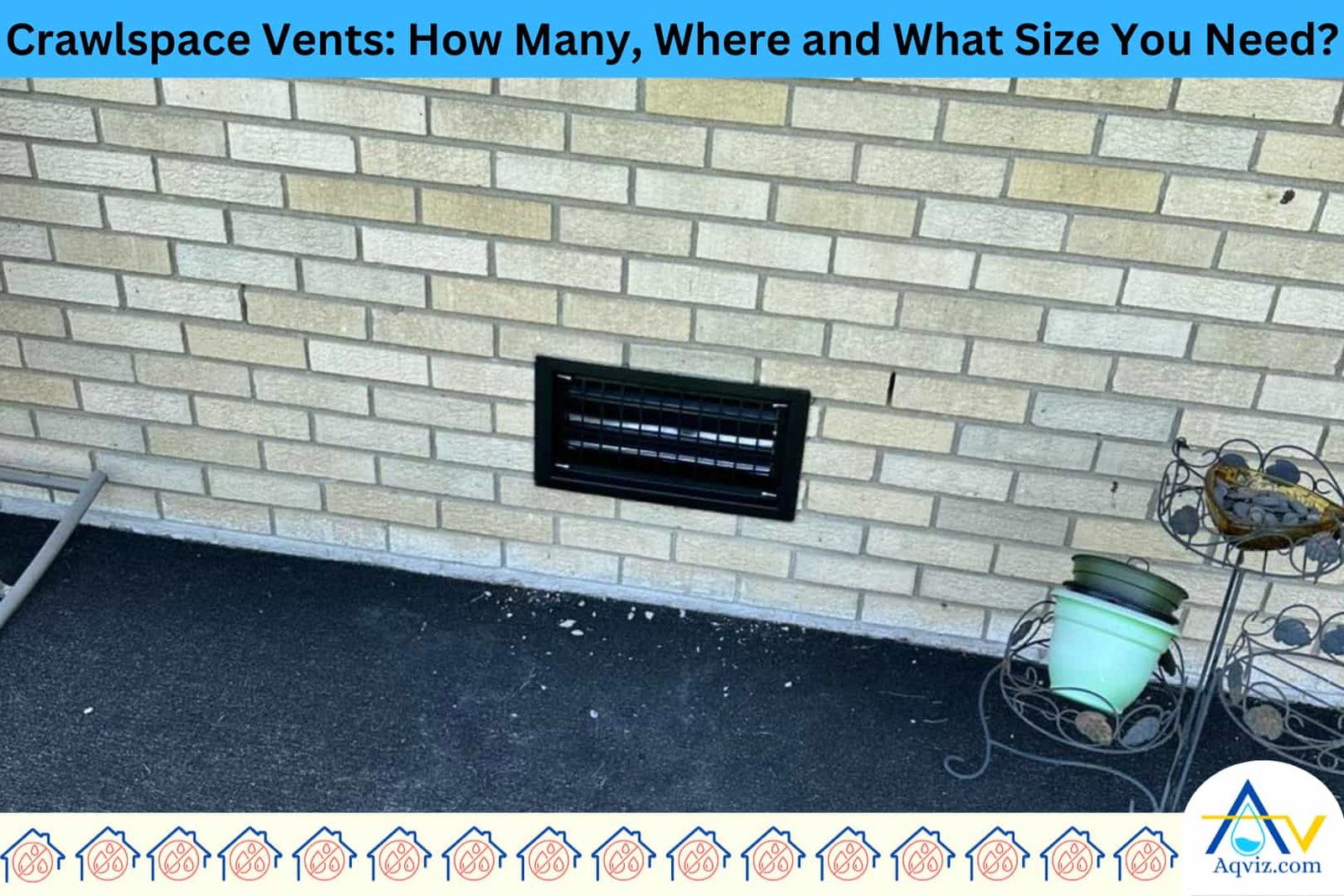
Crawl space vents are openings that are installed in the foundation walls of homes with raised floors or pier-and-beam structures to allow outdoor air to circulate under the building. Crawl space vents are typically made of metal or durable plastic. Crawl space vents consist of louvered or screened components to prevent pest intrusion while supporting passive airflow and natural ventilation.
The main purpose of crawl space vents is to balance moisture and temperature by promoting cross-ventilation. Installing crawl space vents reduces vapor accumulation, keeps the environment dry, prevents crawl space odors, stops pest infestation, and protects the foundation and crawl space structure from excess dampness damage. Crawl space vents play a vital role in preserving indoor air quality and maintaining a healthy subfloor environment.
How many Vents Should a Crawl Space Have?
For most residential properties, the minimum number of crawl space vents starts from 2 to 4, but it depends on the layout and total square footage. Larger crawl space structures may require 6 or more vents, especially if there are isolated sections or partial barriers within the crawl space.
The requirement of the crawl space vents is generally determined by building codes and the total square footage of the crawl space area. According to the International Residential Code (IRC R408.1), the standard recommendation is 1 square foot of venting for every 150 square feet of crawl space floor area when no vapor barrier is present.
Installing fewer vents in crawl space than the minimum results in stagnant air, high moisture levels, and increased risk of mold, mildew, and wood rot. On the other hand, exceeding the maximum without proper controls can lead to over-ventilation, making the crawl space too cold or introducing unwanted humidity during certain seasons.
If a Class I vapor retarder (like 6-mil polyethylene sheeting) is installed, the requirement drops to 1 square foot per 1,500 square feet. Vents should be placed to provide cross-ventilation in the crawl space, typically distributed across at least two opposing walls.
Where to Locate Vents in the Crawl Space?
Crawl space vents should be placed in the foundation walls, as close to the corners as possible, and distributed evenly along opposing sides to promote cross-ventilation. For rectangular or elongated crawl spaces, it’s important to install vents on both the long and short sides of the perimeter walls.
Crawl space vents should also be positioned within 3 feet of each corner, especially in homes with partitioned or segmented crawl spaces, to avoid stagnant zones. Placing crawl space vents too close together or on a single side reduces airflow efficiency and leaves parts of the crawl space damp.
Crawl spaces that require vents include homes with open soil floors, high ground moisture, or those built with pier-and-beam or raised slab construction. And also homes in humid or flood-prone regions also benefit from vented crawl spaces to prevent moisture buildup.
As well as crawl spaces with wooden subfloor systems, no mechanical dehumidification, or inadequate drainage, need ventilation the most to reduce the risks of dampness, condensation, and structural deterioration over time. Hence, proper vent placement not only improves airflow but also supports long-term crawl space cleanliness and moisture management.
What are the Sizes of the Crawl Space Vents?
These are the common crawl space vent sizes you can use in the crawl space.
- 11 × 14 inches
- 22 inches
- 24 inches
- 6 × 11 inches
- 8 × 16 inches
Smaller size vents, such as 6 × 11 inches, may not provide enough free vent area for large crawl spaces. It leads to insufficient ventilation, stagnant air pockets, and moisture accumulation. Larger size vents like 22 or 24 inches can over-ventilate, especially in winter, resulting in cold subfloors, frozen pipes, or excess humidity intrusion during wet seasons. Always calculate the total vent area based on the crawl space dimensions and ensure balanced airflow using proper vent sizing and distribution.
Crawl space vent size determines the requirement of vent area based on the total square footage of the crawl space. It helps to circulate and regulate the airflow through the crawl space. If the vent size is too small, even multiple units may fail to provide adequate ventilation. If oversized, they can introduce uncontrolled humidity or cold drafts, affecting the crawl space temperature balance and indoor comfort.
What are the types of Crawl Space Vents?
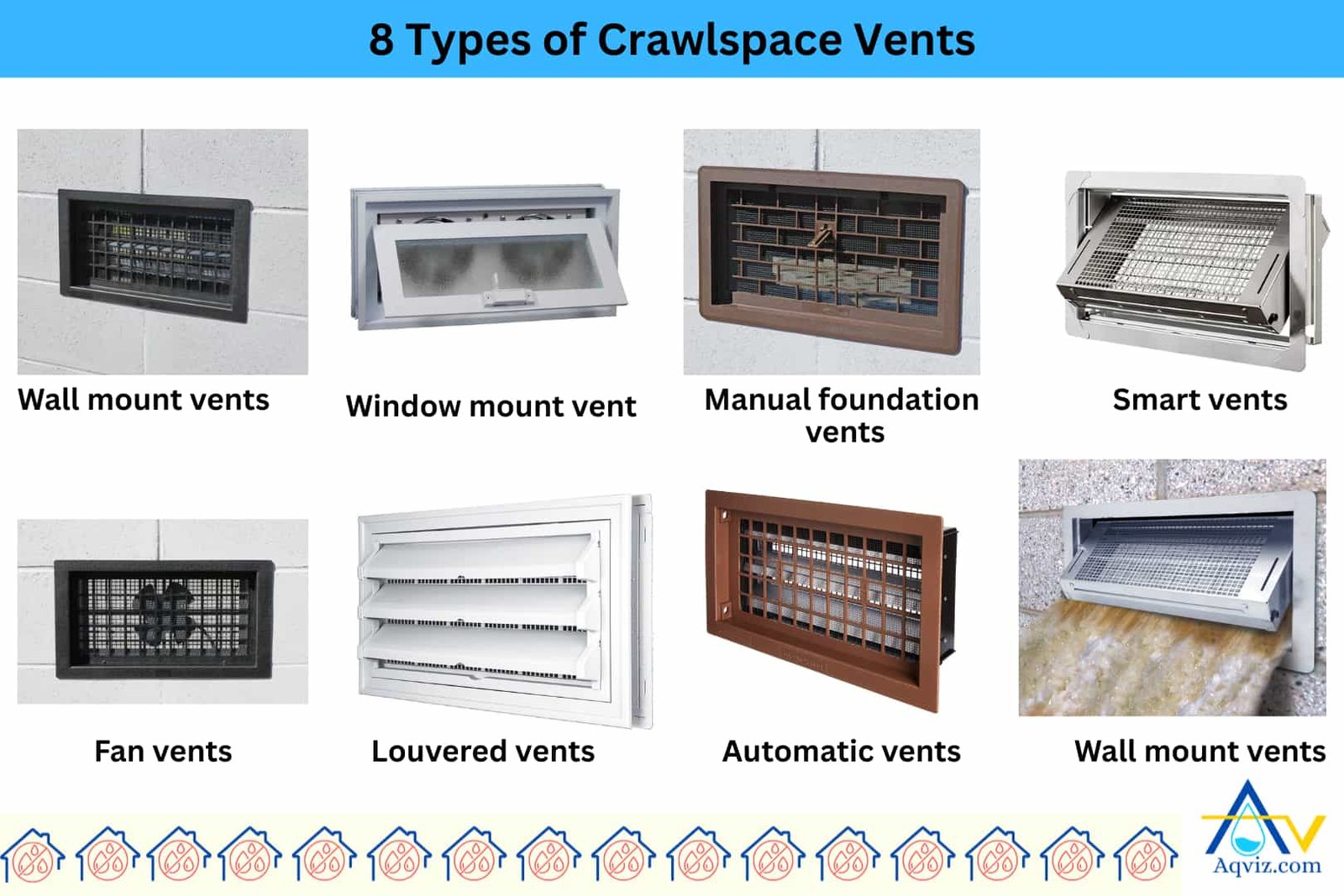
Crawl space vents come in several types. Each crawl space vent is designed to fit specific foundation conditions, climate zones, and moisture control needs. These are the most commonly used 7 types of crawl space vents.
- Wall mount vents: Wall mount vents are installed directly into the foundation wall. They are ideal for standard ventilation and common in residential crawl spaces.
- Window mount vents: Window mount vents are fitted into existing crawl space window openings. They are typically used when modifying older homes or adding passive airflow to limited crawl spaces.
- Manual foundation vents: Manual foundation vents are operated by hand, these vents open and close seasonally. They’re low-cost but require regular monitoring.
- Automatic vents: Automatic vents thermally activated to open at around 70°F and close at 40°F. These reduce the need for manual adjustment and help regulate seasonal airflow.
- Fan vents: Fan vents are electrically powered vents that actively pull air through the crawl space. Fan vents are useful in high-humidity regions or areas with poor natural ventilation.
- Louvered vents: Louvered vents are feature angled slats to block rain and debris while allowing crawl space airflow. They are combined with screens for pest control.
- Smart vents: Smart vents are equipped with sensors and controllers to monitor humidity and temperature in the crawl space. These vents adjust airflow automatically and can connect to home automation systems.
How to Seal Crawl Space Vents?
To seal crawl space vents effectively, first inspect and clean the vent openings to remove dirt, debris, and any insect nests. Then, measure each vent to cut insulation board or foam panel to fit snugly into the opening. Use rigid foam board (e.g. XPS or polyiso) with at least 1.5-2 inches of thickness for proper thermal and moisture resistance.
Secure the panel in place with construction adhesive or spray foam to create an airtight seal. For added protection, cover the sealed vent from the outside with masonry, siding, or a waterproof panel to prevent wind-driven rain or pest intrusion.
Crawl spaces with sealed vents should also include a vapor barrier on the floor and walls, and install a dehumidifier to regulate moisture levels. Improper sealing without moisture control can lead to trapped humidity and worsen crawl space conditions. Always seal vents only if the crawl space is being properly encapsulated and managed.
Should Crawl Space Vents be Open or Closed?
Crawl space vents should be adjusted based on seasonal climate conditions to maintain proper moisture control and energy efficiency. In general, vents should be open in warmer months and closed during colder months, unless the crawl space is encapsulated or mechanically ventilated year-round.
During summer and spring, open vents help expel humid air and reduce moisture buildup in crawl space caused by rising temperatures and groundwater evaporation.
In winter and fall, vents should be closed to prevent cold air from entering the crawl space, which can lead to frozen pipes, cold floors, and higher heating costs.
If the crawl space is sealed or encapsulated, vents should remain permanently closed and replaced with a controlled moisture management system such as a vapor barrier and dehumidifier.
When to Replace a Crawl Space Vent?
Crawl space vents should be replaced when they no longer provide effective airflow, show signs of physical damage, or contribute to moisture and pest problems. You should replace crawl space vents when you observe below behaviors.
- Corroded or rusted metal vents in the crawl space
- Broken or warped plastic vents due to UV exposure in the crawl space
- Clogged screens filled with debris, insect nests, or dirt, restricting airflow in the crawl space
- Non-functional automatic vents that no longer open or close with temperature changes in the crawl space
- Cracks or gaps around the vent frame allow water leaks or rodent entry in the crawl space
Read More About: Crawl space Waterproofing: Everything You Should Know
What if Crawl Space has no Vents?
If a crawl space has no vents, it becomes a sealed environment with limited natural airflow. Without proper ventilation or a controlled moisture management system, the crawl space is prone to excess humidity, stale air, and condensation buildup.
This creates ideal conditions for mold growth, wood rot, and musty odors that can migrate into the living space above. The lack of air exchange also traps ground moisture, leading to higher moisture content in floor joists and insulation.
What is Crawl Space Ventilation?
Crawl space ventilation is the process of allowing air to flow through the crawl space to control moisture, temperature, and air quality beneath a building. There are two types of crawl space ventilation: natural ventilation, which uses passive airflow through foundation or wall vents, and mechanical ventilation, which uses powered fans or dehumidifiers to regulate moisture.
Crawl space ventilation can be done using vents, fans, or mechanical systems that move outdoor air in and push humid, stale air out. Proper ventilation reduces the risk of condensation, mold growth, wood rot, and structural damage caused by trapped humidity and poor airflow in the crawl space.