
How to Improve Crawl Space Ventilation?

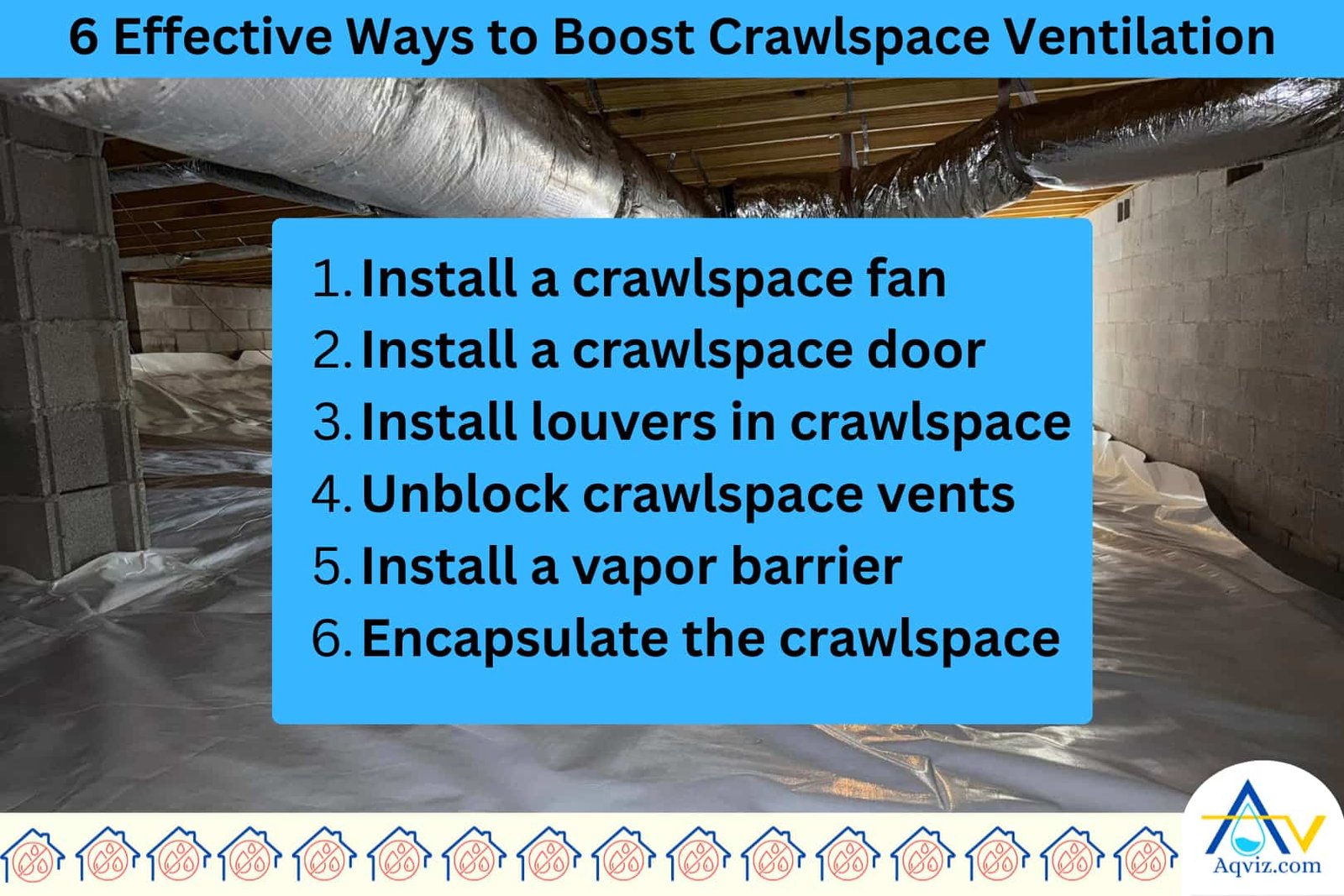
To improve the crawl space ventilation you should follow these 6 steps. These 6 steps improve the crawl space ventilation for a damage-free and healthy crawl space.
- Install a crawl space fan
- Install a crawl space door
- Install louvers in the crawl space
- Unblock crawl space vents
- Install a vapor barrier
- Encapsulate the crawl space
Crawl space ventilation is an intentional process of allowing fresh air to circulate through a crawl space to control moisture, temperature, and air quality in the building area.
According to the IRC, the recommended is 1 square foot of vent space for every 150 square feet of crawl space when no vapor barrier is present. But with a vapor barrier, it can be reduced to 1:1,500.
The requirements of crawl space ventilation are based on the International Residential Code (IRC R408). If the crawl space is not ventilated properly, it may cause wood rotting, mold and mildew growth, musty and stale odor, pest infestation, and increased energy bills in the home.
1. Install a Crawl Space Fan
Crawl space fan is a mechanical ventilation device designed to improve air circulation, remove excess moisture, and regulate temperature in a confined crawl space environment.
Crawl space fan, also known as a crawl space ventilator, is one of the most effectivepieces of equipment to actively control the airflow under your home. These fans draw in fresh air from the outside and exhaust stale, humid air, helping to reduce the risk of mold growth, musty odors, and structural deterioration in the crawl space. We’ve seen that properly placed crawl space fans create a consistent air exchange rate that maintains healthy moisture levels and prevents the buildup of condensation, especially during humid summer months.
The recommended fan capacity depends on the crawl space size. For example, for a 1,000 sq. ft. crawl space with standard 3 ft. height, a fan rated at 1 to 1.5 CFM per sq. ft. is ideal, totaling around 1,000 to 1,500 CFM. Crawl space fans should be placed at opposite ends of the crawl space to facilitate cross-ventilation: one as an intake, the other as an exhaust. In larger or irregularly shaped spaces, installing two or more fans ensures even airflow distribution.
Aqviz experts always advise activating crawl space fans based on humidity levels using a hygrostat or a humidistat when relative humidity exceeds 60%. You can use crawl space ventilation fan brands like Tjernlund, Panasonic, and AC Infinity, which offer durable, energy-efficient models built specifically for crawl space environments.
2. Install a Crawl Space Door
A crawl space door is an access panel or entry point installed at the perimeter wall of a crawl space, designed to provide access, security, and ventilation control.
Installing a properly sized and strategically located crawl space door can significantly enhance airflow and cross-ventilation in a crawl space. A well-ventilated crawl space relies on air exchange, and the door acts as a key point for fresh air intake or exhaust, depending on wind direction and fan placement. In our projects, we’ve seen improved circulation and moisture reduction simply by replacing old, sealed doors with ventilated doors or louvered panels. Doors with slotted or screened designs allow outside air to flow through the crawl space while keeping out pests and debris over time.
So we recommend installing at least one crawl space door per access wall, especially on opposing sides to support cross-draft ventilation. The minimum crawl space door opening should be 16 in x 24 in (0.26 m²) to meet access and ventilation needs. For optimal airflow, place the door on the windward side of the foundation, where natural wind flow can aid air intake through the crawl space. Regarding materials, plastic doors (such as high-density polyethylene or PVC) are the most durable and moisture-resistant for the crawl space.
Unlike wood, which can warp or rot, or steel, which may rust over time due to moisture in the crawl space. Plastic doors hold up well in crawl space damp environments and require minimal maintenance.
3. Install Louvers in the Crawl Space
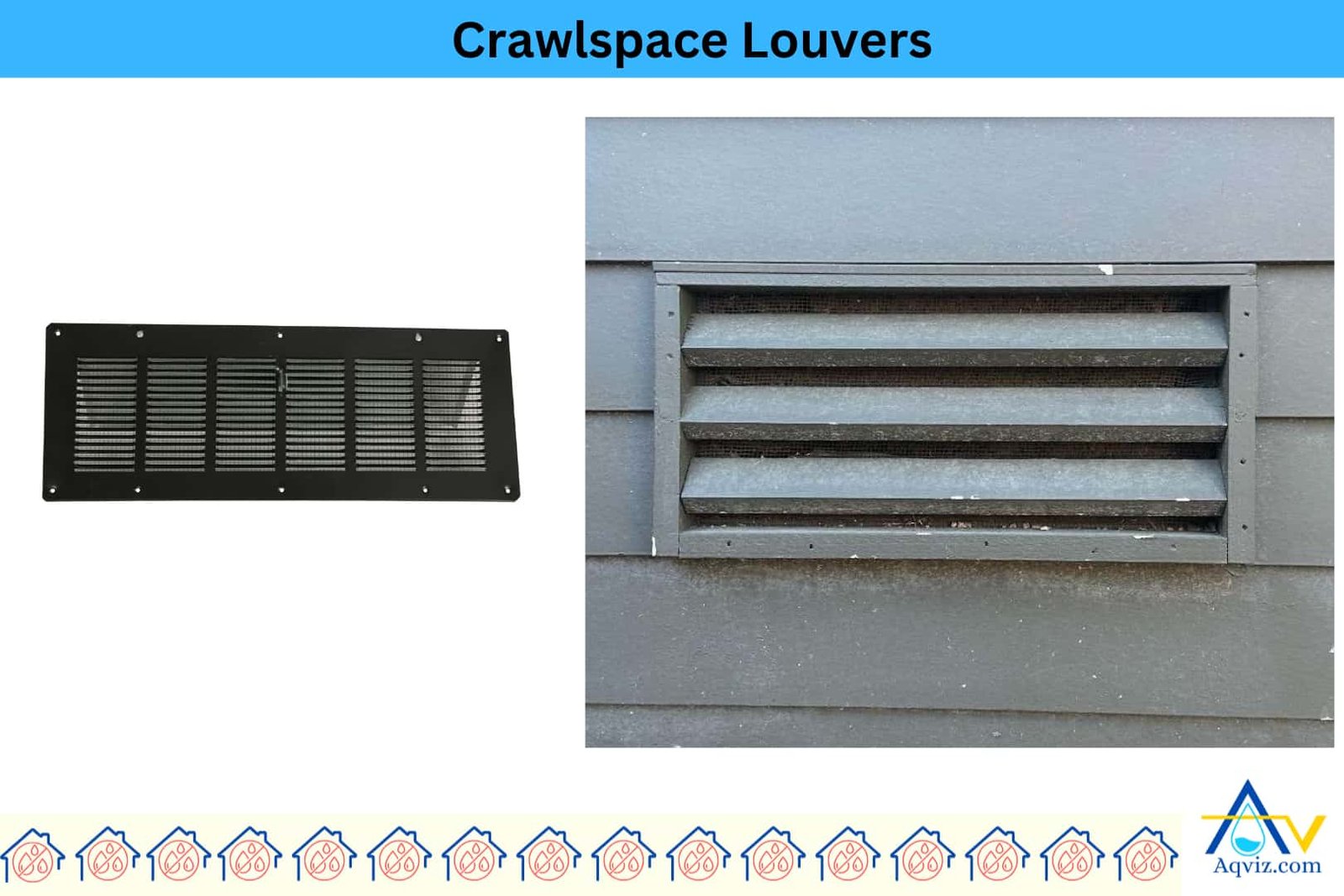
Crawl space louvers are slatted or angled vent covers installed on crawl space walls, designed to permit airflow while blocking debris, insects, and water intrusion.
Installing louvers in crawl space walls is a passive yet highly effective method for enhancing air circulation and fresh air exchange. The angled slats of louvers allow outside air to flow into the crawl space while shielding it from rain, rodents, and leaves. At Aqviz, we’ve used metal and plastic louvers to increase natural ventilation in tight crawl spaces, especially where fans alone aren’t practical. These crawl space vents enable continuous airflow, which helps regulate temperature and humidity without mechanical intervention.
For ideal performance, we recommend crawl space louvers with an opening of at least 1 ft² per 150 ft² of crawlspace area, in line with IRC ventilation codes. That means a 1,200 ft² crawl space should have around 8 ft² of total louver venting area.
Position louvers on opposite walls to encourage cross-ventilation, and install them no more than 18 inches (457 mm) above the crawl space floor to help release heavier, moisture-laden air that settles at the bottom. In multi-level crawl spaces, staggered louver heights can support vertical air movement. For long-term durability, we prefer aluminum or powder-coated steel louvers, which resist rust and maintain structural integrity over time.
4. Unblock Crawl Space Vents
Unblocking crawl space vents is a critical step to restoring natural air exchange and maintaining a healthy subfloor environment. Over time, we’ve encountered numerous homes where blocked crawl space vents led to trapped humidity, stale air, and eventual wood rot or mold growth. These crawl space vents must remain clear to allow consistent aeration and air exchange with the outside environment. When airflow is obstructed, the crawl space becomes a breeding ground for moisture problems and structural damage.
Crawlspace vents are blocked due to soil buildup, vegetation overgrowth, insulation sagging, pest nests, and debris like leaves or construction materials. We’ve also found crawlspace vents intentionally sealed off with foam boards or bricks during winter, then forgotten.
To prevent crawl space airflow disruption, we recommend inspecting all perimeter vents seasonally, especially after storms or landscaping projects. Keep at least 2 inches (50 mm) of ground clearance below each vent and trim any shrubs or grass within 12 inches (300 mm) of vent openings. Use hardware mesh screens to prevent rodents without blocking air. Restoring free airflow through these vents helps maintain optimal humidity levels under 60%, which is essential for crawl space ventilation efficiency.
5. Install a vapor barrier
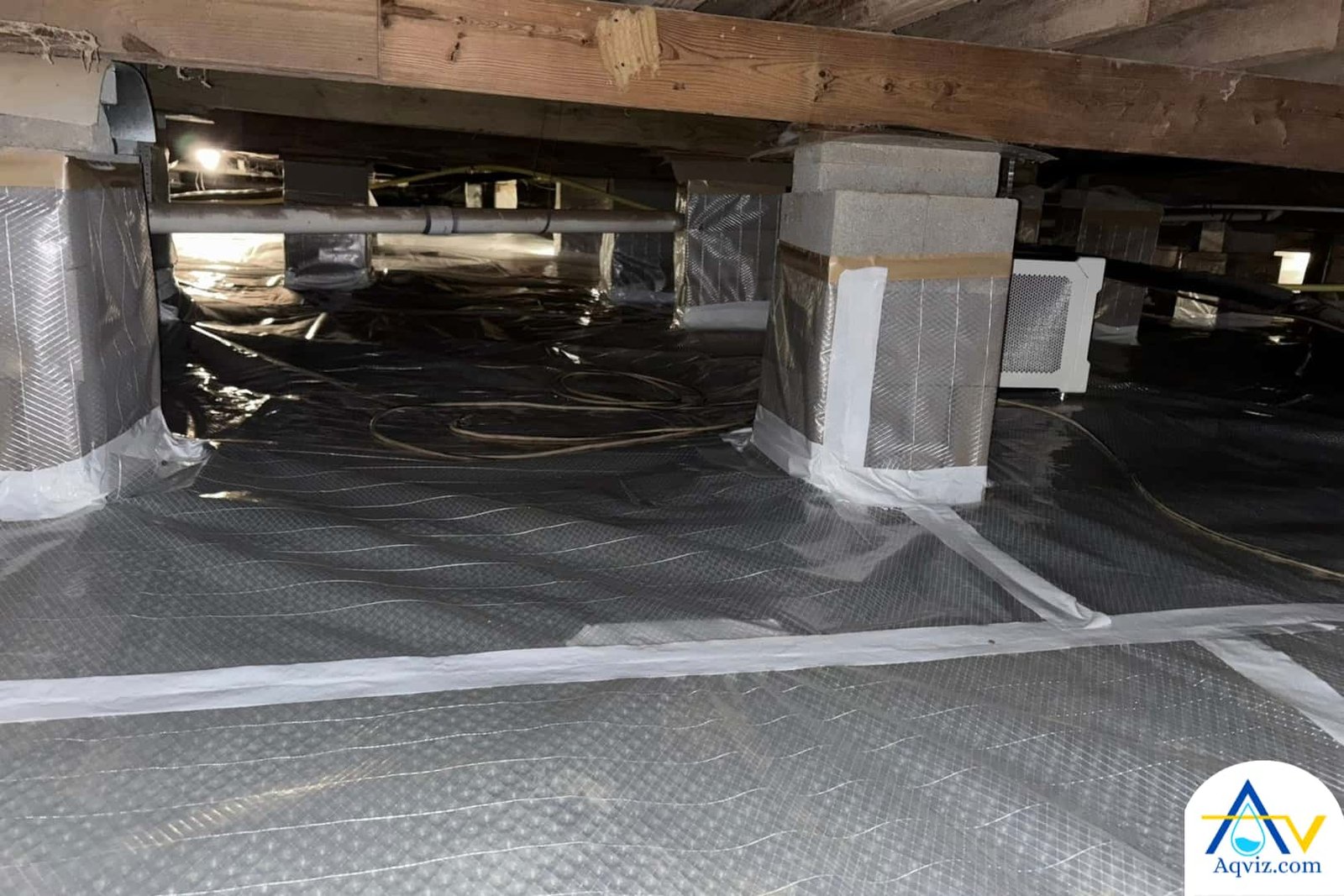
Crawl space vapor barrier is a moisture-resistant sheet, typically made of polyethylene or reinforced plastic. A vapor barrier is installed over the crawl space soil to prevent ground moisture from evaporating into the air.
Installing a vapor barrier may not directly increase crawl space ventilation through airflow, but it plays a crucial role in improving the effectiveness of crawl space air circulation. At Aqviz, we’ve used vapor barriers in almost every encapsulation or moisture control project to stop water vapor from rising out of the crawl space. And also when you reduce the moisture load in the crawl space air, ventilation systems work more efficiently and don’t have to fight excessive humidity.
By covering 100% of the crawl space floor, a properly sealed vapor barrier drastically lowers the dew point of the space, reducing condensation on framing and ductwork. This cleaner, drier air improves air handling, reduces the load on dehumidifiers, and maintains humidity levels in a more manageable range below 60% relative humidity. For best performance, we recommend using a 10 to 20 mil thick barrier, overlapping seams by at least 12 inches (300 mm), and sealing with tape or spray adhesive.
6. Encapsulate the Crawl Space
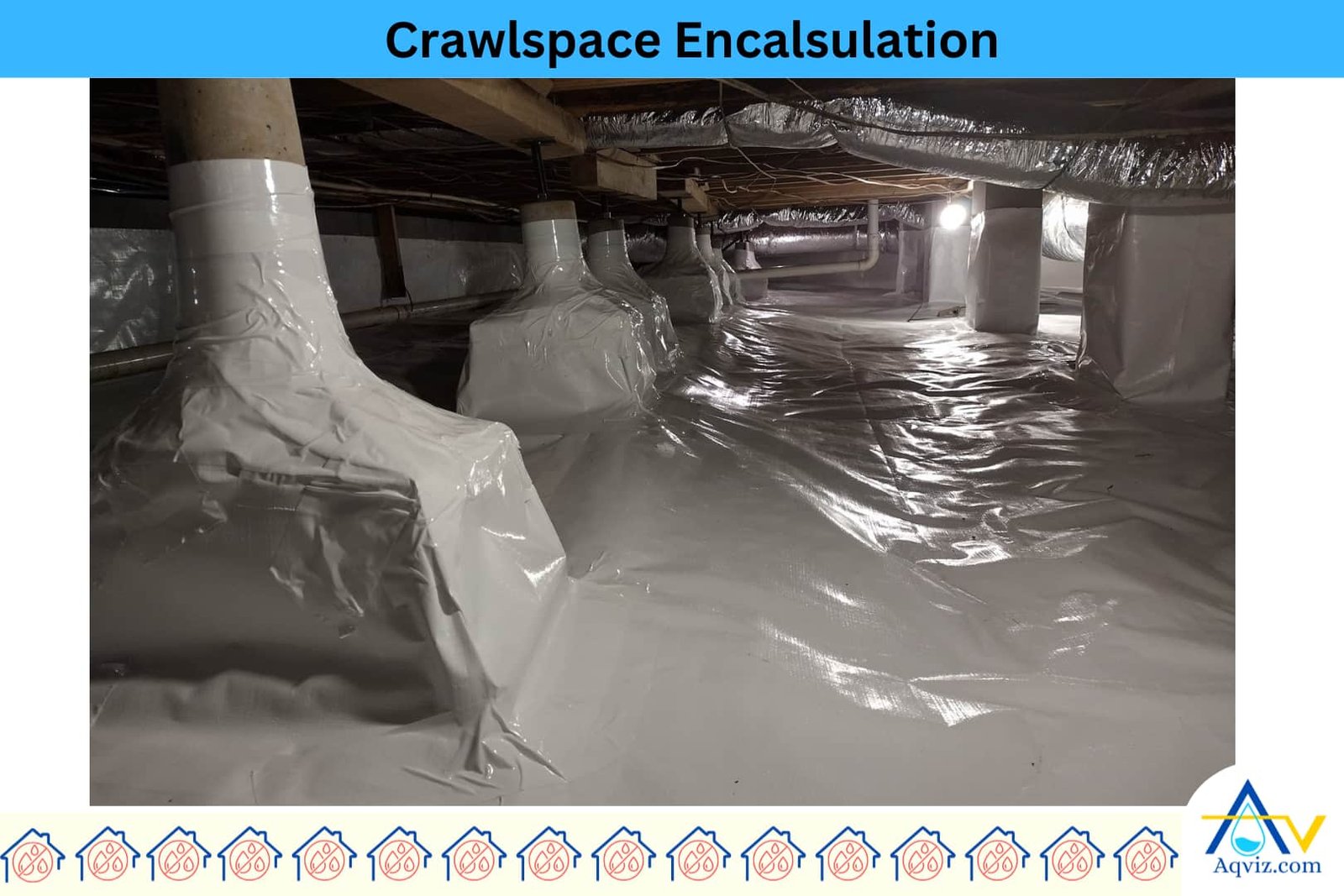
Crawlspace encapsulation is a comprehensive moisture and air sealing method that involves isolating the crawlspace from the ground and outside air using vapor barriers, drainage systems, insulation, and humidity control equipment.
Encapsulating the crawl space is the most complete solution we use at Aqviz to eliminate moisture, improve indoor air quality, and support long-term ventilation performance. The crawl space encapsulation process includes several key components: a heavy-duty vapor barrier (10 to 20 mil thick) sealed over the entire ground and up foundation walls, a dehumidifier to maintain air dryness, French drains to divert groundwater, a sump pump to remove collected water, and sealing of all crawl space vents, cracks, and penetrations. Crawl space encapsulation process turns the crawl space into a conditioned breathing space, where temperature and moisture levels are consistently controlled.
Once the crawl space is sealed and equipped with proper airflow management, including a mechanical ventilation system or supply air from HVAC, the encapsulated space supports a healthier building structure. The recommended relative humidity level in an encapsulated crawl space is between 45% and 55%.
This range prevents crawl space mold, wood rot, and pest attraction over time. We always monitor the crawl space with digital hygrometers and install condensate pumps when necessary to discharge excess moisture from dehumidifiers.
What is Crawl Space Ventilation?
Crawl space ventilation is the process of allowing air to flow through the crawl space to control moisture, temperature, and air quality beneath a building. There are two types of crawl space ventilation: natural ventilation, which uses passive airflow through foundation or wall vents, and mechanical ventilation, which uses powered fans or dehumidifiers to regulate moisture.
The airflow management can improve the crawl space ventilation through passive vents, mechanical fans, louvers, or conditioned air systems to promote air exchange and remove humid, stagnant air. According to IRC (International Residential Code), the recommended ventilation area is 1 square foot of vent space for every 150 square feet of crawl space when no vapor barrier is present. If a vapor barrier is installed, the ratio can be reduced to 1:1,500, as less moisture enters the air from the ground.
Proper crawl space ventilation offers these 5 advantages.
- Reduces humidity level in the crawl space and prevents condensation, mold growth, and wood decay over time.
- Improves indoor air quality by minimizing musty odors and allergen transfer into living spaces.
- Increases energy efficiency by reducing the strain on HVAC systems in the crawl space by stabilizing temperature.
- Prevents structural damage by protecting joists, beams, and subfloor in the crawl space from moisture deterioration.
- Discourages pest infestation by eliminating damp conditions in the crawl space that attract termites, rodents, and insects.
Read More About: Crawl space Vents: How Many, Where and What Size You Need?
What are the Requirements of Crawl Space Ventilation?
The requirements of crawl space ventilation are based on the International Residential Code (IRC R408).
- If no vapor barrier is installed, the requirement is 1 square foot of vent area per 150 square feet of crawl space floor area.
- If a class I vapor barrier (such as 6-mil polyethylene) covers the ground with overlapped and sealed seams, the ventilation ratio can be reduced to 1 square foot per 1,500 square feet.
- Vents must be positioned to allow cross-ventilation (they should be placed on opposite walls)
- Vents must be within 3 feet (0.91 meters) of each corner to eliminate dead air zones.
- 1 CFM of mechanical ventilation per 50 square feet of crawl space area is required.
What if the Crawl Space is not Ventilated Properly?
If a crawl space is not ventilated properly, it leads to an increase the moisture buildup in the crawl space and causes these 5 problems in the crawl space.
- Increase the wood rotting
- Increase the mold and mildew growth
- Spread a musty and stale odor in the home
- Increase the pest infestation
- Increase the energy bills due to HVAC and dehumidifier systems.
What is Crawl Space Waterproofing?
Crawl space waterproofing is a construction method that involves sealing, draining, and protecting the crawl space to prevent water intrusion, control moisture levels, and protect the structural integrity of the building.
Can Crawl Space Waterproofing Improve Ventilation?
Yes, crawl space waterproofing can improve ventilation by reducing the overall moisture load in the air, allowing ventilation systems to perform more effectively. While waterproofing itself doesn’t directly create airflow, it creates the right conditions for ventilation to succeed.