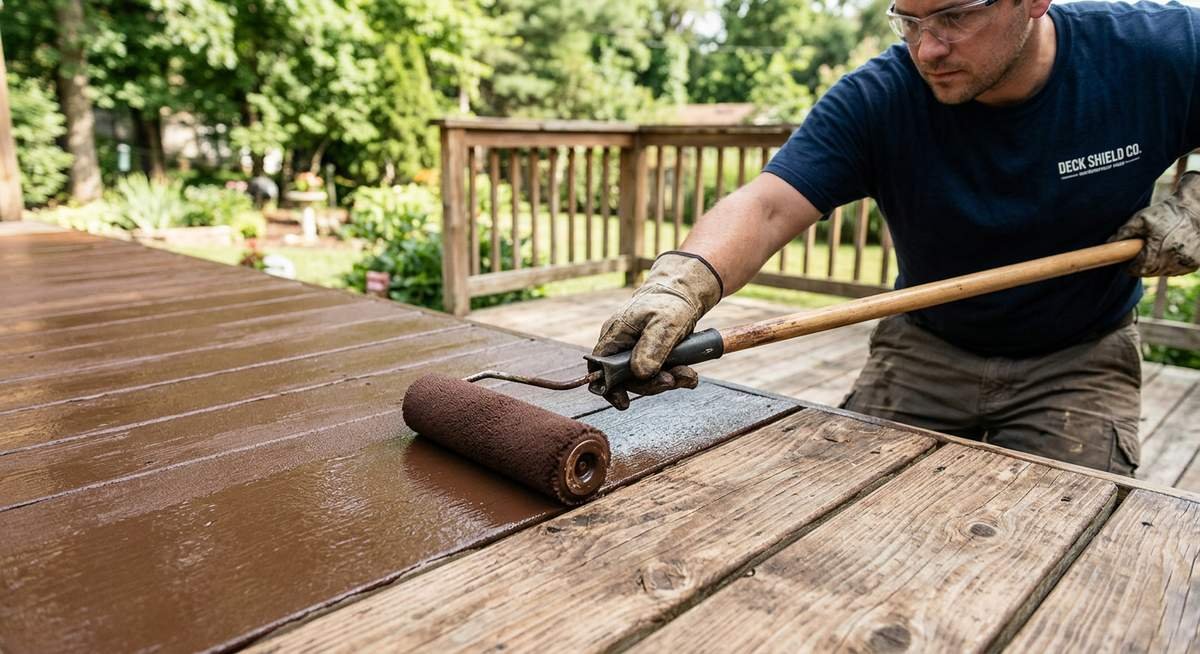

A quality waterproof deck coating bonds directly to the surface, forms a continuous membrane, and blocks water intrusion before it reaches the substrate. Polyurethane coatings provide the highest durability and chemical resistance, acrylic coatings offer easier cleanup and UV stability, and elastomeric options handle cracked surfaces that other products cannot bridge. Choosing the wrong type — or skipping proper surface prep — is the most common reason deck waterproofing fails within the first few years.
The stakes are real. Wood rot beneath a deck can cost $3,000 to $15,000 to repair according to home improvement cost surveys, and often more when structural framing is involved. A good waterproof coating, properly applied, protects that investment for five to ten years before a recoat is needed.
What Waterproof Deck Coatings Actually Do — and Why Most Fail Early
A waterproof deck coating forms a continuous membrane over the surface, preventing water from penetrating into the substrate below. When a deck coating waterproof system fails, it is almost never because of the product itself — it is surface preparation that gets skipped, coats applied too thick, or recoating left too long.
The membrane works by filling surface pores, bonding chemically to the substrate, and curing into a flexible film that expands and contracts with temperature fluctuations. That flexibility matters. Wood and concrete move constantly, as much as 1/8 inch per 10 feet of surface in response to seasonal humidity changes. A brittle coating cracks at those stress points, and once cracked, water finds its way in immediately.
Three factors cause premature failure across all coating types: applying to a damp surface, skipping the primer on porous or weathered substrates, and applying a single thick coat instead of two thin coats. Each of these problems is avoidable, and each accounts for a disproportionate share of failed waterproofing jobs.
Contractors who work on deck restoration regularly report that peeling coatings almost always trace back to inadequate surface prep rather than product defects, a detail that rarely appears on packaging but defines whether the job holds up.
Types of Waterproof Deck Coatings Compared
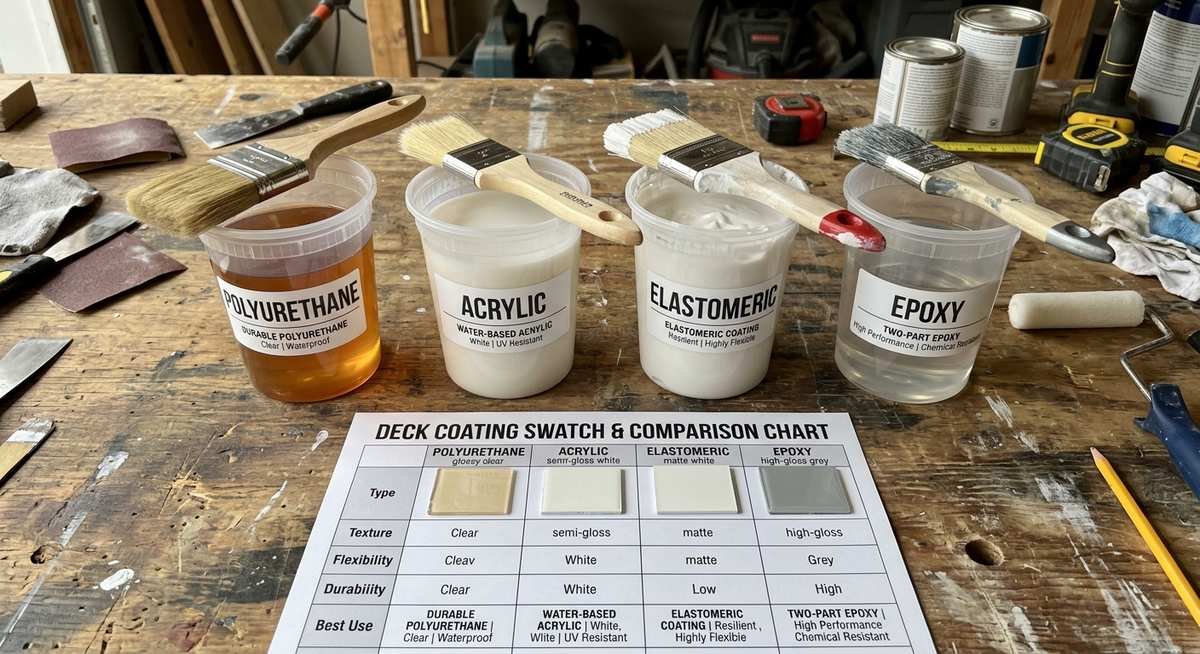
The four main types of waterproof deck coating, polyurethane, acrylic, elastomeric, and epoxy, use different chemistry to repel water and each performs best in specific conditions. Polyurethane lasts longest but costs the most; acrylic is the most homeowner-friendly; elastomeric bridges existing cracks; epoxy works only on rigid concrete. The table below shows where each one excels and falls short.
Polyurethane, acrylic, elastomeric, and epoxy coatings each use different chemistry to repel water, and each performs best in different conditions. The table below summarizes what each type delivers and where it falls short.
| Coating Type | Best For | Durability | Flexibility | VOC Level | Typical Lifespan |
|---|---|---|---|---|---|
| Polyurethane | High-traffic wood and concrete decks | Excellent | High | Medium-High (solvent-based) / Low (water-based) | 7–10 years |
| Acrylic | Residential decks, UV-exposed surfaces | Good | Medium | Low (water-based) | 4–7 years |
| Elastomeric | Cracked concrete, aged surfaces | Good | Very High (bridges cracks up to 1/16 in) | Low-Medium | 5–8 years |
| Epoxy | Concrete pool decks, garages | Very High | Low | Medium | 5–10 years |
Polyurethane is the workhorse of the category. Its molecular structure creates a tightly crosslinked film that resists abrasion, fuel spills, and UV degradation better than any other option. The tradeoff is cost, polyurethane coatings typically run $60 to $120 per gallon, roughly double what a basic acrylic costs. For high-traffic decks or rooftop applications, that premium is usually justified.
Acrylic coatings dominate the residential market because they balance performance, price, and ease of application. Water cleanup, low odor, and fast recoat times (as short as two hours) make acrylics practical for homeowners without specialized equipment. UV stability is genuinely impressive in modern formulations, 100% acrylic coatings from manufacturers like Ames Research resist color fade and chalking far better than older rubber-based products.
Elastomeric coatings are specifically engineered for surfaces with hairline cracks or slight surface irregularities. A high-build elastomeric formula can bridge gaps up to 1/16 inch, creating a seamless waterproof surface where other coatings would simply crack at the same stress point. On a concrete deck with normal settling cracks, elastomeric is often the most sensible choice.
Epoxy holds up to chemical exposure and mechanical abrasion better than any other type, which is why pool decks and commercial garage floors use it almost exclusively. The downside: epoxy is rigid. On a wood deck or any surface with significant thermal movement, it will crack. Epoxy belongs on concrete only, and that rule is not negotiable.
For deeper research on waterproofing products and their chemical compositions, the Sunanda Waterproofing guide covers product-level specifications and application parameters across a broad range of systems.
How to Choose the Right Waterproof Deck Coating by Surface Type
Surface material determines which coating chemistry bonds correctly and lasts. Applying a product designed for concrete to a wood deck, or vice versa, produces adhesion failures within one to two seasons, regardless of brand or price.
Wood and Plywood Decks
Wood expands and contracts significantly with moisture changes, so flexibility is non-negotiable. Polyurethane and acrylic are the standard choices here, with polyurethane preferred on pressure-treated lumber and acrylic common on cedar or redwood where UV protection matters as much as waterproofing. Any wood deck must be fully dry before coating, moisture content above 15% will prevent proper adhesion.
Plywood subdecks under tile or pavers require a different approach. A dedicated waterproofing membrane applied directly to the plywood, followed by a topcoat, provides the redundancy needed when the surface above cannot be easily removed for recoating. Life Specialty Coatings and similar manufacturers offer under-tile systems specifically for this application.
Concrete and Masonry Decks
Concrete is porous and alkaline, which limits product compatibility. Not every coating bonds reliably to concrete without a dedicated primer; skipping the primer step on bare concrete is the single most common reason for delamination on these surfaces. A penetrating concrete primer applied 24 hours before the waterproof coating dramatically improves bond strength.
Elastomeric and epoxy coatings both perform well on concrete. Elastomeric is the better choice on residential patios and balconies with existing cracks. Epoxy suits pool surrounds, commercial garage decks, and any surface that sees regular chemical or mechanical stress. On vehicular traffic applications, a coating rated for dynamic load, typically a two-component polyurethane or epoxy, is required.
Composite and Manufactured Decks
Most composite decking is designed to be left uncoated, the manufacturer’s warranty will often void if a topcoat is applied. Before coating any composite surface, verify that the product is specifically listed as compatible. On older composite boards where factory sealing has worn down, a clear penetrating sealer rather than a film-forming waterproof coating is usually the correct choice, preserving the original texture while restoring moisture resistance.
Step-by-Step Application Guide for Waterproof Deck Coatings
Proper application requires surface prep, priming where specified, and two thin coats rather than one heavy coat. Each step below is sequenced to match the actual curing requirements of the coating, not convenience.
- Clean the surface thoroughly. Power wash at 1,500 to 2,500 PSI to remove dirt, mildew, and loose material. For concrete, a diluted muriatic acid wash removes efflorescence and opens pores. Allow 24 to 48 hours of drying time, longer in humid climates.
- Repair cracks and damaged areas. Fill cracks wider than 1/16 inch with a compatible caulk or patching compound. Allow complete cure before proceeding.
- Apply primer if required. Check the product datasheet. On porous concrete, weathered wood, or previously coated surfaces, primer is not optional. A primer cut in at edges before rolling the field ensures no gaps.
- Apply the first coat at the specified coverage rate. Most products specify 50 to 100 square feet per gallon for the first coat on porous surfaces. Working in 4-foot sections with a 3/8-inch nap roller ensures uniform film thickness.
- Allow full recoat window before second coat. Rushing the second coat traps solvents in the first coat and creates delamination. The 24-hour wait between coats has eliminated more failed waterproofing jobs than any other single variable.
- Apply second coat in perpendicular direction. Rolling the second coat 90 degrees to the first ensures complete coverage of any thin spots or roller holidays in the first coat.
- Allow full cure before traffic. Light foot traffic is typically safe at 24 to 48 hours, but furniture placement and normal use should wait 72 hours minimum. Full chemical cure on polyurethane systems takes 7 days.
The OSHA Sealant, Waterproofing, and Restoration Industry standards outline ventilation and personal protection requirements when working with solvent-based coatings in enclosed or semi-enclosed deck spaces.
Waterproof Deck Coating Cost and Coverage Guide
Coverage varies significantly by surface porosity and condition. A smooth, sealed concrete surface might yield 150 square feet per gallon on the second coat, while a rough, weathered wood deck may absorb a gallon for every 40 to 50 square feet on the first coat. Planning around an average of 75 square feet per gallon per coat on first application keeps most projects within budget.
| Surface Condition | Coverage (sq ft/gallon, 1st coat) | Coats Needed | Product Cost Estimate |
|---|---|---|---|
| Smooth concrete, good condition | 100–150 | 2 | $0.80–$1.50/sq ft |
| Wood deck, light weathering | 75–100 | 2 | $1.20–$2.00/sq ft |
| Rough or porous concrete | 50–75 | 2–3 | $1.50–$2.80/sq ft |
| Heavily weathered wood | 40–60 | 3 | $2.00–$3.50/sq ft |
Material costs for a 200-square-foot residential deck typically run $80 to $250 for the coating alone, depending on product type and surface condition. Adding primer ($25 to $50 for a gallon), a roller set ($15 to $25), and surface cleaning supplies puts the DIY total for most projects between $130 and $350.
Professional installation adds labor costs ranging from $1.50 to $4.00 per square foot on top of materials. For a 200-square-foot deck, expect total installed costs of $400 to $1,100 through a professional contractor, varying by product selection and local labor rates.
Low-VOC and water-based formulations typically cost 10 to 20 percent more than solvent-based equivalents. The EPA’s guidelines on volatile organic compounds and indoor air quality explain why low-VOC products have become the standard choice for residential applications near living areas.
How Long Waterproof Deck Coatings Last, and When to Recoat
Polyurethane coatings on a well-prepared surface in a moderate climate last 7 to 10 years before recoating. Acrylic coatings in the same conditions typically reach 4 to 7 years. Climate matters substantially: surfaces in coastal environments with salt spray, or regions with extreme UV exposure, will require recoating 30 to 40 percent sooner than the manufacturer’s stated lifespan under standard conditions.
Recoating at the right time extends the life of the substrate. Waiting until the coating fails completely allows water infiltration during the unprotected window and requires more aggressive surface preparation before the next application. The better approach is to recoat on schedule, or at the first sign of performance loss.
Signs that a waterproof deck coating needs attention:
- Water no longer beads on the surface, it absorbs or spreads flat
- Visible cracking, flaking, or peeling at edges or stress points
- Discoloration or chalking that cannot be cleaned away
- Any area where the coating has separated from the substrate (identified by a hollow sound when tapped)
- Standing water that persists in the same location, suggesting the coating has failed and the water is finding a low point
When recoating over an existing waterproof coating, compatibility testing is important. Solvent-based polyurethane applied over a water-based acrylic, for example, can lift the original coating through solvent action. Most manufacturers publish compatibility charts; following them avoids a full strip-and-recoat job.
For indoor waterproofing applications like showers and wet areas, where the substrate protection principles are similar but the product requirements differ substantially, the complete guide to waterproofing a shower covers the specific membrane systems and tiled surface requirements.
Frequently Asked Questions About Waterproof Deck Coatings
What is the best waterproof coating for a wood deck?
Polyurethane provides the longest-lasting waterproof protection on wood, typically lasting 7 to 10 years with proper surface prep. For homeowners who prefer a DIY-friendly option, a 100% acrylic elastomeric coating balances performance with easier application and cleanup, lasting 4 to 7 years on most residential wood decks.
Can waterproof deck coating be applied over existing paint or sealer?
Yes, but compatibility depends on what is already on the surface. Water-based acrylics bond over most existing water-based paints and sealers in sound condition. Solvent-based polyurethane requires an adhesion test first, apply a small patch, let it cure, and check for lifting or delamination after 48 hours before coating the full surface.
How many coats of waterproof deck coating are needed?
Two coats are the minimum for proper waterproof performance. Three coats are recommended on porous or heavily weathered surfaces where the first coat partially absorbs into the substrate. Single-coat application rarely achieves the film thickness needed for continuous waterproofing, regardless of product claims.
How long does waterproof deck coating take to dry?
Most water-based acrylic coatings allow recoating in 2 to 4 hours under normal conditions (70°F, 50% humidity). Polyurethane systems typically require 4 to 8 hours between coats. Full cure, meaning the coating reaches its final hardness and chemical resistance, takes 5 to 7 days regardless of dry-to-touch time.
Does waterproof deck coating work on concrete?
Waterproof deck coatings bond well to concrete when a compatible primer is applied first. On porous or previously unsealed concrete, primer fills surface voids and establishes a consistent bonding surface. Without primer, even high-quality coatings can delaminate from concrete within one to two seasons.
How long does waterproof deck coating last?
Properly applied polyurethane coatings last 7 to 10 years on a prepared surface. Acrylic coatings deliver 4 to 7 years. Both figures assume a dry surface at application, correct film thickness (typically 12 to 20 mils dry film), and no pooling water on the surface during the service life. Coastal and high-UV environments reduce lifespan by 30 to 40 percent.
What temperature is best for applying waterproof deck coating?
Most coatings specify application between 50°F and 90°F (10°C to 32°C) with surface temperature above the dew point by at least 5°F. Applying below 50°F slows cure significantly and can prevent proper film formation. Applying in direct sun on surfaces above 100°F causes the coating to skin over before it levels, leaving roller marks and reducing adhesion.
Are waterproof deck coatings slip-resistant?
Standard coatings provide a textured surface that offers moderate slip resistance when dry, but become slippery when wet unless an anti-slip aggregate is added. Silica sand, aluminum oxide, or polymer additives are commonly mixed into the topcoat or broadcast onto the wet surface before it cures, increasing the surface coefficient of friction to meet safety standards for outdoor wet areas.
Getting Waterproofing Right the First Time
The right waterproof deck coating for any project comes down to three decisions: surface type, performance requirement, and application skill level. Polyurethane for maximum durability on high-traffic wood or concrete. Acrylic for residential projects where ease of application matters. Elastomeric when cracking is already present. Epoxy only on concrete that will never flex.
Surface preparation is not a step that can be rushed or condensed. Every failed deck coating waterproof job in the data and in contractor field experience traces back to one of three skipped steps: insufficient drying time, missing primer, or a single thick coat instead of two thin ones. The product is almost never the problem.
Budget for two coats, allow the full recoat window, and test adhesion before committing to a product on an unfamiliar substrate. A waterproof deck coating system that costs twice as much and lasts three times longer is the better value in almost every scenario.