
Wood Decking: Know these Before Installing

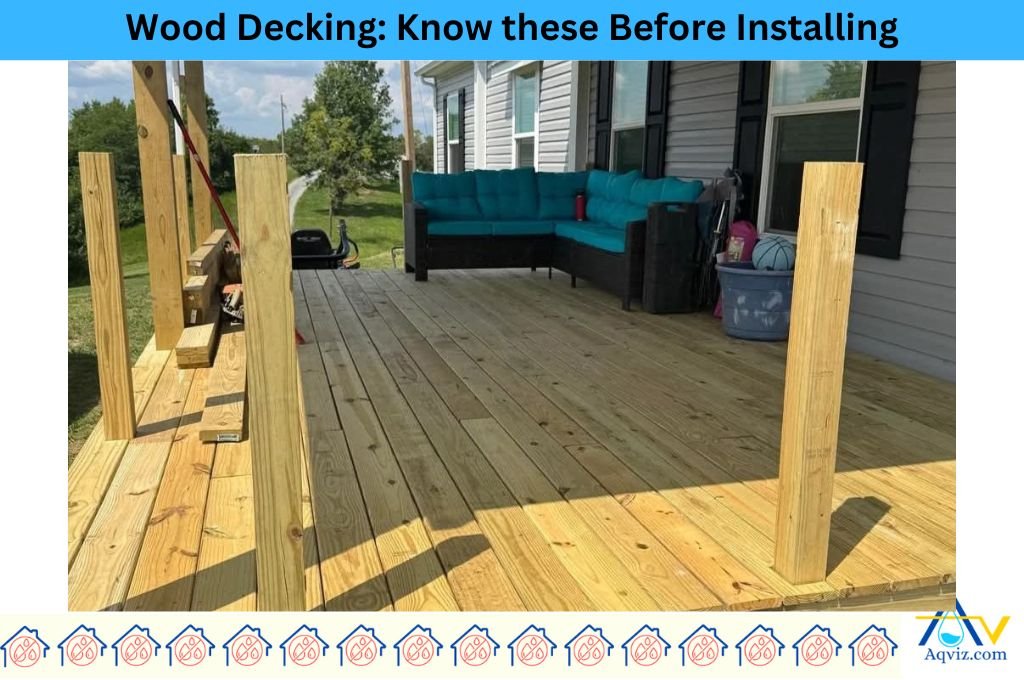
Wood decking is a natural lumber-based decking system used to build exterior deck surfaces that support foot traffic, furniture loads, and long-term outdoor exposure. Using wood decking is always worth it because it can increase the visual and material quality, improve structural surface strength, reduce surface heat buildup, lower maintenance and repair costs, increase cost effciency and improve the design and finishing flexibility.
There are 4 main types of wood decking is availabel: composite wood decking, pressure-treated wood decking, PT wood decking, and Ipe wood decking. The average thickness of wood decking for home decks is between 19mm-32mm and for commercial decks, it can be 32mm-38mm. The standard wood deck board (pressure‑treated wood) typically ranges typically ranges $3-$8 per ft², while premium hardwoods such as cedar or redwood can range $5-$20 per ft².
Wood decking can be stained on the surface. It can last 15-30 years on the deck when it is maintained properly on time. You should clean the wood deck for better perfomance and you can follow the steps from scratch. So contact Aqviz experts if you have any problems related to wood decking. We are available for helping 24/7.
What is Wood Decking?
Wood decking is a natural lumber-based decking system used to build exterior deck surfaces that support foot traffic, furniture loads, and long-term outdoor exposure. Wood decking consists of solid wood boards installed over joists at 12 in-16 in (305-406 mm) spacing, fastened with stainless steel or hot-dipped galvanized screws to maintain structural stability and drainage gaps of 1/8 in-3/16 in (3-5 mm).
Natural Wood decking is not resistant to UV radiation, heat, and water. To improve these properties waterproofing membrane is applied on the decking surface. Using wood decking for the deck helps improve structural integrity, visual warmth, surface comfort, and long-term property value through strength, adaptability, and repairability.
What is the Difference Between Wood Decking and a Wood Deck?
Wood decking is the surface layer of a deck made from individual wood boards that create the finished walking platform, while a wood deck is the complete outdoor structure that includes the frame, footings, posts, beams, joists, fasteners, railings, stairs, and the wood decking installed on top.
Wood decking is focused on surface performance, such as slip resistance, UV stability, water shedding, thermal comfort, and appearance, while a wood deck is focused on structural load transfer, code compliance, elevation, and long-term stability under live loads of 40 psf (195 kg/m²) and point loads of 300 lb (136 kg).
What are the 6 Benefits of Wood Decking?
Using wood decking is always worth it because it can increase the visual and material quality, improve structural surface strength, reduce surface heat buildup, lower maintenance and repair costs, increase cost effciency and improve the design and finishing flexibility.
- Increase visual and material quality: Wood decking improves outdoor aesthetics by providing authentic grain patterns, warm color tones, and stain adaptability, which increase curb appeal and make the deck look premium and worth the investment.
- Improve structural surface strength: Wood decking increases the load-bearing performance by delivering bending strength above 7,000 psi (48 MPa), allowing the deck to safely support 40 psf (195 kg/m²) live loads and heavy outdoor furniture.
- Reduce surface heat buildup: Wood decking reduces the heat absorption by 10°F-25°F (6°C-14°C) compared to dark composite boards, improving barefoot comfort and overall deck usability in hot climates.
- Lower maintenance and repair cost: Wood decking keeps maintenance cheap because damaged boards can be sanded, sealed, or replaced individually without disturbing the deck frame.
- Increase cost efficiency: Wood decking reduces upfront construction cost, with average material pricing of $3–$8 per ft² ($32–$86 per m²), making it a worth choice for residential decks.
- Improve design and finishing flexibility: Wood decking increases design options by allowing custom board sizes, edge profiles, and stain colors, improving compatibility with different deck layouts and architectural styles.
Read More About: Deck Construction: 7 Experts’ Advice Before It Begins
What is the Thickness of Wood Decking?
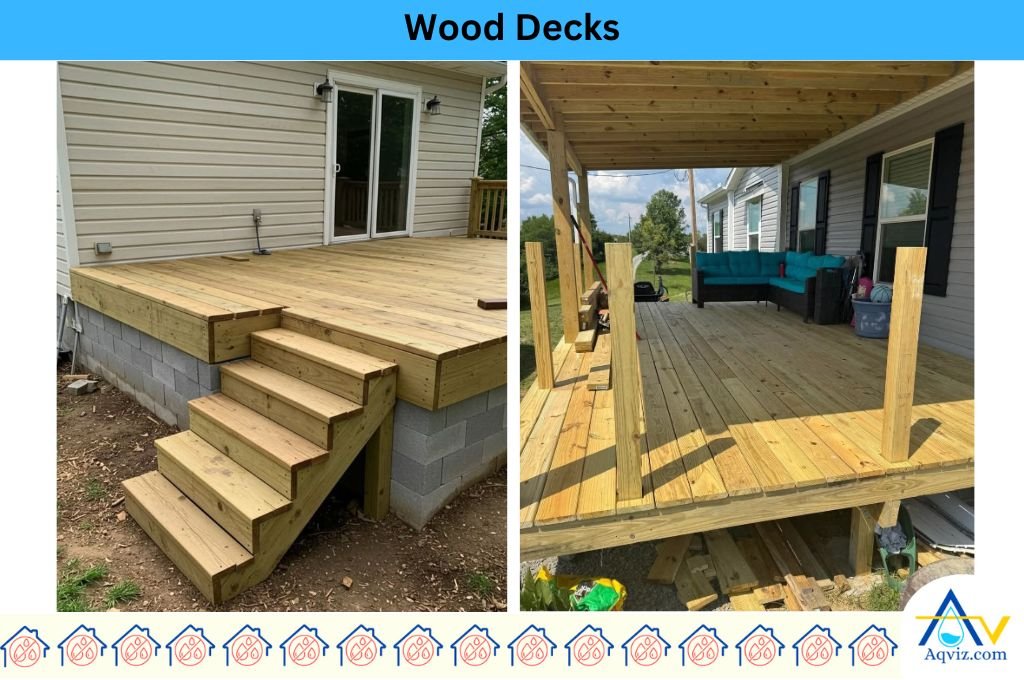
The thickness of wood deck boards is the vertical measurement of a decking board that determines its load capacity, stiffness, span capability, and long-term durability under foot traffic and environmental exposure.
Wood decking thickness is available in 2 main categories according to their usage: home deck wood decking and commercial deck wood decking.
Home deck wood decking thickness
- 19 mm (3/4 in): Suitable for light residential decks, porch floors, and patio decks with joist spacing of 12 in (305 mm).
- 25 mm (1 in): Common for standard home decks, supporting furniture and foot traffic with joist spacing of 16 in (406 mm).
- 32 mm (1-1/4 in): Used for premium residential decks and elevated decks requiring improved stiffness and reduced deflection.
Commercial deck wood decking thickness
- 32 mm (1-1/4 in): Suitable for cafes, restaurants, and shared terraces with moderate foot traffic.
- 38 mm (1-1/2 in): Used for heavy-traffic commercial decks, boardwalks, and public platforms with higher live loads and longer service life.
A higher thickness of wood decking always helps to increase load capacity, improve span performance, reduce board movement, improve impact resistance, and increase the service life.
What are the 4 Types of Wood Decking?
There are 4 main types of wood decking: composite wood decking, pressure-treated wood decking, PT wood decking, and Ipe wood decking. These 4 main types of wood decking are classified based on material composition, treatment method, and performance characteristics that affect durability, maintenance, and long-term value.
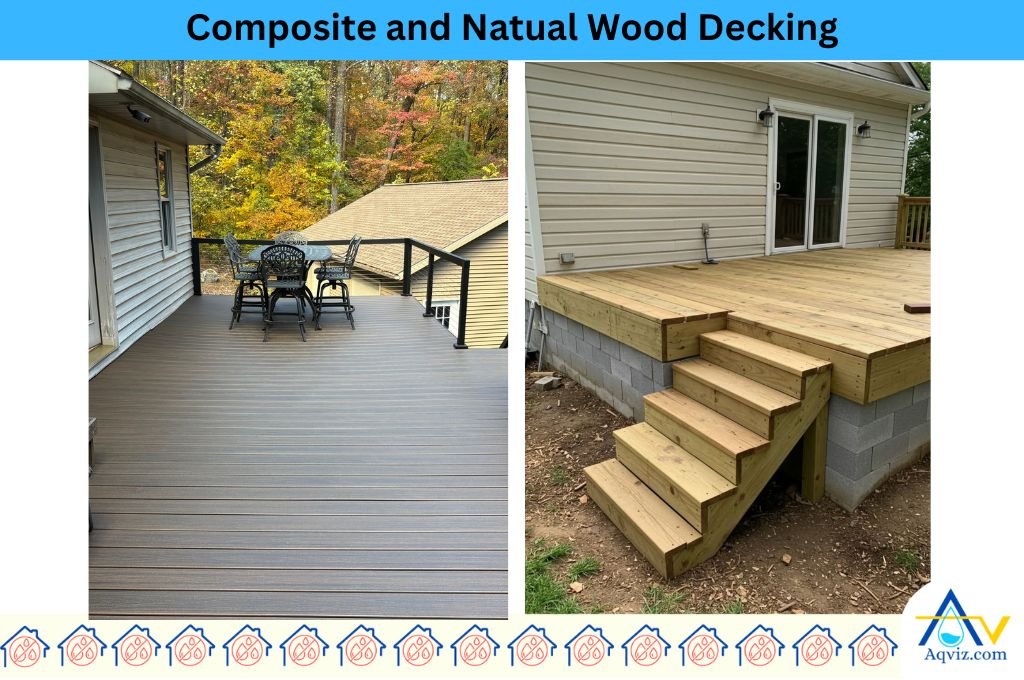
- Composite wood decking: Composite wood decking is an engineered decking material designed to replicate the look of wood while delivering higher durability and lower maintenance. Composite wood decking consists of wood fibers at 50%-60%, recycled plastics such as HDPE or PVC at 40%-50%, bonding resins, and UV stabilizers.
Composite wood decking is highly resistant to moisture absorption, UV fading, mold growth, and insect attack, making it more dimensionally stable, longer-lasting, and maintenance-friendly than regular wood decking. - Pressure-treated wood decking: Pressure-treated wood decking is natural softwood lumber chemically treated to resist rot, decay, and termite damage in outdoor conditions. Pressure treated wood decking consists of southern yellow pine infused with alkaline copper quaternary (ACQ) or copper azole preservatives at a retention level of 0.40 pcf (6.4 kg/m³).
Hence these are more durable, rot-resistant, and cheaper than regular untreated wood decking, making it suitable for ground-contact and high-moisture environments. - PT wood decking: PT wood decking is a commonly used abbreviated form of pressure-treated lumber decking in residential construction. PT wood decking consists of kiln-dried after treatment (KDAT) pine boards treated with copper-based preservatives to enhance dimensional stability. Due to this processing of PT wood decking it is faster to install, easier to stain, and more stable than regular green wood decking, reducing shrinkage, warping, and surface checking.
- Ipe wood decking: Ipe wood decking is a premium tropical hardwood decking system known for extreme density and long service life. Ipe wood decking consists of dense Brazilian walnut hardwood with a density of 69-75 lb/ft³ (1,100-1,200 kg/m³) and natural oil content. Hence Ipe wood decking it is exceptionally resistant to rot, insects, fire, and abrasion, offering a service life of 40–50 years and superior performance compared to regular softwood decking.
Can You Stain on the Wood Decking?
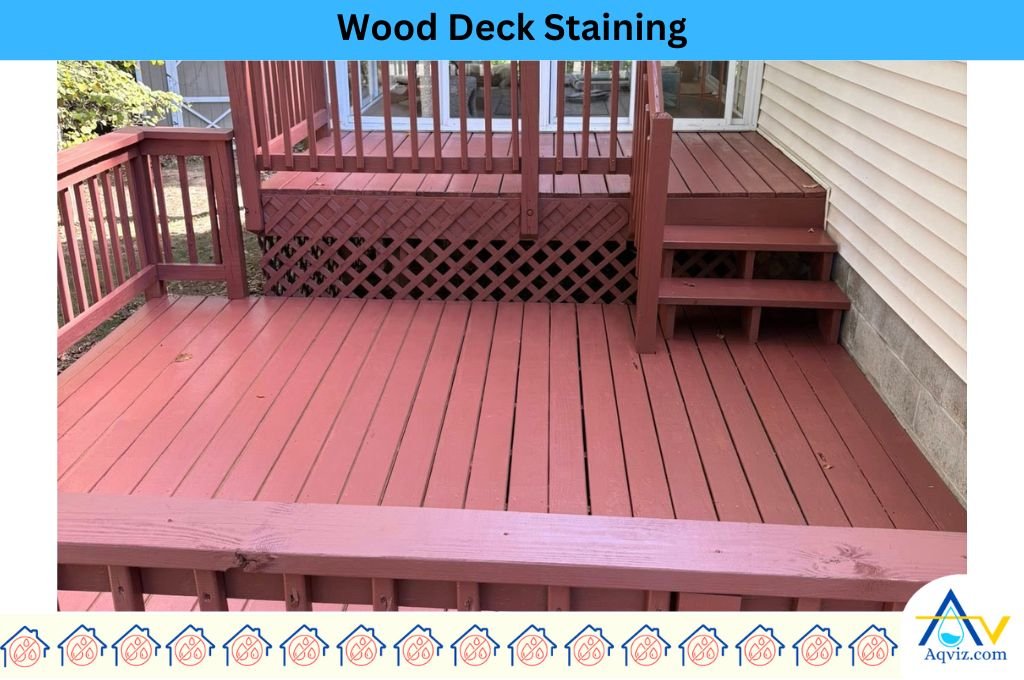
Yes, you can stain wood decking because the wood surface is porous and fibrous. It helps to absorb the stains and remain protected from UV rays, water penetration, and surface wear. Staining wood decking improves color stability by 70%-85%, reduces moisture uptake below 15% by weight, minimizes cracking and cupping, and increases the deck’s service life from 10-12 years to 15-30 years when reapplied every 24-36 months, making the deck more durable, visually appealing, and worth maintaining.
How Long Does a Wood Deck Last?
A wood deck can last 15-30 years on the deck when it is maintained properly on time. According to our experts, you can improve the lifespan of the wood decking by following 5 tips.
- Apply regular sealing and staining: You should apply regular sealing and staining on the surface because it protects against UV damage, moisture absorption, and surface wear, increasing durability.
- Use high-quality, durable species: You should select hardwoods like Ipe or treated southern yellow pine because they resist rot, insects, and warping, improving longevity.
- Ensure proper board spacing and ventilation: You should maintain correct gaps and airflow between boards because it allows water drainage and reduces mold, cupping, and decay.
- Clean the deck regularly: You should remove dirt, debris, and mildew frequently because it prevents surface deterioration and maintains appearance.
- Inspect and repair damaged boards promptly: You should replace cracked or rotted boards as soon as possible because it prevents structural weakening and extends deck life.
How much Does it Cost for Wood Decking?
The standard wood deck board (pressure‑treated wood) typically ranges typically ranges $3-$8 per ft², while premium hardwoods such as cedar or redwood can range $5-$20 per ft².
When the wood decking is applied on the surface cost can vary due to labor, design complexity, and site location. So here is the cost for wood decking for 1 ft², 100 ft², and 1,000 ft², including all the important factors.
- Cost per 1 ft²: about $15-$50 per ft², including materials and professional installation.
- Cost for 100 ft²: about $1,500-$5,000 for a basic to mid‑range wood deck.
- Cost for 1,000 ft²: about $15,000-$50,000 for a large wood deck with standard materials and labor.
How to Clean a Wood Decking?
To clean a wood decking, you should follow the below 7 steps guide.
- Remove loose debris on the deck: First, you should sweep the deck surface using a broom or leaf blower. You can use a stiff-bristle broom or a leaf blower to remove leaves, dirt, and dust. Doing this weekly prevents dirt accumulation and reduces mold growth.
- Wash with mild soap: Second, you should clean the deck surface using a gentle detergent and water. You can mix mild soap or wood deck cleaner in a bucket, apply it with a soft-bristle brush or sponge, scrub the boards, and rinse with a garden hose. This removes surface grime without damaging the wood fibers.
- Scrub stubborn stains on deck: Third, you should treat stains and mildew with targeted cleaning. You can use a mixture of water and oxygen-based bleach or a commercial wood deck cleaner, scrub with a medium-bristle brush on affected areas, and rinse thoroughly to restore the surface appearance.
- Use a pressure washer (optional) for deep cleaning: Fourth, you should deep-clean textured surfaces using a pressure washer. You can set the pressure at 500–800 psi with a fan tip nozzle and keep it 12–18 in (305–457 mm) from the surface to avoid damaging the wood. This removes embedded dirt, algae, and old stain residues.
- Clean between the deck boards: Fifth, you should remove debris trapped in gaps between decking boards. You can use a putty knife, a thin brush, or compressed air. This prevents water retention, mold formation, and insect infestation.
- Rinse thoroughly: In the sixth step, you should rinse the deck with clean water after scrubbing or pressure washing. You can use a garden hose to remove soap, bleach, or cleaner residues. This prevents discoloration and ensures proper drying.
- Allow proper drying: Finally, you should let the deck air dry completely for 24-48 hours in dry weather. You can avoid walking on the wet surface and prepare it for staining or sealing. Proper drying ensures the wood absorbs protective coatings evenly and improves long-term performance.
What is Fake Decking?
Fake decking is a decking surface made from synthetic or engineered materials designed to imitate the appearance of natural wood while offering enhanced durability, low maintenance, and resistance to outdoor elements.
Fake decking consists of composite boards made from a mix of recycled plastics, wood fibers, resins, or PVC, or fully synthetic materials like PVC or HDPE that do not require regular sealing or staining.
Due to this composition, fake decking is more resistant to rot, insects, fading, and moisture damage than natural wood decking. It helps reduce long-term maintenance costs, improves lifespan, and keeps the deck looking new with minimal upkeep, making it a convenient and cost-effective alternative to traditional wood decking
Difference Between Composite and Wood Decking
Composite decking and wood decking are two different types of decking materials that we can use. So these are the cleat difference between them.
| Feature | Composite Decking | Wood Decking |
|---|---|---|
| Material | Wood fibers + recycled plastics | Solid natural wood |
| Durability | High (rot, insects, UV resistant) | Moderate (needs maintenance) |
| Maintenance | Low | High (stain & seal regularly) |
| Lifespan | 25-30 years | 15-30 years |
| Cost | Higher | Lower |
| Aesthetics | Wood-like, consistent | Natural, warm, authentic |
