
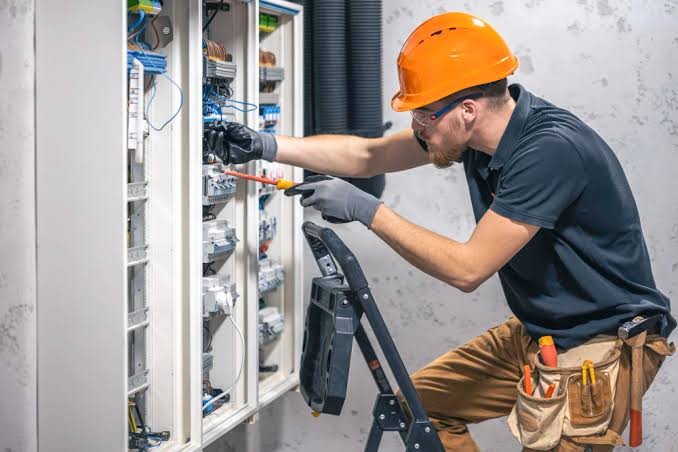

This electrical safety cost guide for homeowners covers what you will pay in 2026 to bring your home’s electrical system up to modern safety standards. Most electrical safety upgrades cost between $100 and $4,000 per project, with a full-home safety modernization — panel upgrade, GFCI and AFCI protection, whole-house surge suppression, and hardwired smoke and carbon monoxide detectors — running $3,000 to $8,000 total.
Electrical safety is not visible. A house with dangerous wiring looks exactly like a house with safe wiring until something fails. The cost of upgrading is real. The cost of not upgrading — fire, shock, electrocution — is immeasurable until it is not. This guide covers what each upgrade costs, what it prevents, and whether it is optional or required in your home.
Electrical Safety Upgrades and Their Costs
Electrical safety upgrades range from a $15 tamper-resistant outlet to a $3,500 panel replacement, with most individual upgrades costing $100 to $600 per device or circuit. Here is how the nine most important safety upgrades compare on cost, what they prevent, and whether they are required by code or strongly recommended.
| Upgrade | Cost Range | What It Prevents | Required or Recommended |
| GFCI outlet installation (per outlet) | $120 – $250 | Electrocution near water | Required by code in kitchens, baths, laundry, outdoors, garages |
| AFCI breaker installation (per circuit) | $200 – $400 | Electrical fires from arc faults | Required by code in living areas, bedrooms |
| Whole-house surge protector | $300 – $600 | Electronics damage from voltage spikes | Required by 2020 NEC for new/replacement panels |
| GFCI breaker (per circuit) | $250 – $450 | Same as GFCI outlet but at the panel | Alternative to GFCI outlets; preferred for hardwired appliances |
| Smoke detector (hardwired, per unit) | $100 – $250 | Fire fatality — cuts risk by ~55% | Required; hardwired with battery backup in newer codes |
| Carbon monoxide detector (hardwired, per floor) | $150 – $300 | CO poisoning from gas appliances | Required in homes with gas appliances or attached garage |
| Electrical panel replacement (unsafe brand) | $1,500 – $3,500 | Fire from breaker failure to trip | Strongly recommended for FPE, Zinsco, Sylvania panels |
| Grounding system upgrade | $500 – $1,500 | Shock, electronics damage | Required; older homes may have inadequate grounding |
| Tamper-resistant outlet upgrade (per outlet) | $15 – $50 | Child shock from objects inserted into outlets | Required by code in all new and replacement outlets |
GFCI Protection, the Cheapest Life Insurance You Can Buy
A ground-fault circuit interrupter (GFCI) monitors the current flowing through a circuit and shuts it off within 1/40 of a second if it detects a ground fault, current leaking to ground through a person or water. A GFCI outlet costs $15 to $30 for the device and $100 to $200 for installation, $120 to $250 total per outlet. Replacing an existing standard outlet with a GFCI in the same electrical box is a straightforward job that takes an electrician 20 to 30 minutes.
GFCI protection is required by the National Electrical Code in kitchens, bathrooms, laundry rooms, garages, crawl spaces, unfinished basements, outdoor outlets, and any outlet within 6 feet of a sink. Homes built before the GFCI requirement, roughly 1975 for bathrooms, 1987 for kitchens, and progressively later for other locations, may have no GFCI protection at all. Adding GFCI outlets to the required locations costs $500 to $1,500 for a typical home with 5 to 10 outlets needing replacement.
The U.S. Consumer Product Safety Commission (CPSC) estimates that GFCIs have reduced electrocutions from consumer products by roughly 70% since their introduction. The cost of protecting every required outlet in a typical home, $500 to $1,500, is less than the deductible on most homeowners insurance policies. The device that trips when you drop a hair dryer in the sink costs less than the emergency room visit that follows if the device is not there.
AFCI Protection, Stopping Fires Before They Start
An arc-fault circuit interrupter (AFCI) detects the electrical signature of an arc fault, a spark that jumps between loose or damaged wires, and shuts off the circuit before the arc generates enough heat to ignite surrounding materials. AFCI protection is provided by a special breaker in the electrical panel, not by an outlet. An AFCI breaker costs $40 to $60 for the device and $150 to $300 for installation, $200 to $400 per circuit.
AFCI protection is required by the NEC for circuits serving living areas, bedrooms, living rooms, dining rooms, family rooms, hallways, and similar spaces. The requirement has been phased in over multiple code cycles, and homes built before 2002 may have no AFCI protection at all. Adding AFCI breakers to the required circuits costs $1,000 to $3,000 for a typical home with 8 to 12 circuits needing protection. This is not optional new-construction only. It is retroactively required when the panel is replaced or when circuits are extended or modified.
Arc faults are one of the leading causes of residential electrical fires. They occur when a wire is damaged, by a nail through a wall, by insulation breakdown in an aging cable, by a loose connection at an outlet that has been plugged and unplugged thousands of times. The arc is small. The fire it starts is not. An AFCI breaker detects the arc and stops it in milliseconds. A standard breaker sees the arc as a normal current fluctuation and does nothing.
Whole-House Surge Protection
A whole-house surge protector, a Type 1 or Type 2 surge protection device (SPD) installed at the electrical panel, costs $200 to $400 for the device and $100 to $200 for installation, $300 to $600 total. It protects every circuit in the house from voltage spikes caused by lightning strikes on the utility grid, switching surges from the power company, and large motors cycling on and off in the home or nearby.
The 2020 NEC requires whole-house surge protection on all new dwelling units and on existing homes when the electrical panel is replaced. If your panel was upgraded after 2020 and the electrician did not install a surge protector, the installation was not code-compliant. Ask them to return and install one. The cost of the SPD is trivial compared to the cost of replacing a furnace control board, a refrigerator compressor, or a home theater system after a voltage spike.
Plug-in surge protectors, the power-strip type, protect only the devices plugged into them. They do not protect hardwired appliances like furnaces, air conditioners, well pumps, and dishwashers. A whole-house SPD protects everything connected to the electrical panel. The two are complementary, not redundant. A whole-house SPD handles large surges from outside the home. Plug-in protectors handle smaller surges generated inside the home by appliance motors cycling on and off.
Smoke and Carbon Monoxide Detectors
Hardwired smoke detectors with battery backup cost $20 to $60 per unit and $100 to $250 installed, roughly $100 to $250 per detector. A typical home needs one detector in each bedroom, one outside each sleeping area, and at least one on every level of the home, 5 to 8 detectors total for a 2,000-square-foot two-story home. Total cost: $500 to $2,000.
Hardwired carbon monoxide detectors cost $30 to $80 per unit and $150 to $300 installed. The NEC and building codes require CO detectors in homes with fuel-burning appliances, gas furnaces, water heaters, ranges, fireplaces, and in homes with attached garages. A typical home needs one CO detector per floor. Total cost: $300 to $900.
Battery-only detectors are cheaper to buy, $15 to $40 per unit, but they are only as reliable as the battery inside them. A hardwired detector with battery backup works during a power outage because of the battery and the rest of the time because of the house wiring. A battery-only detector that is chirping at 3 a.m. because someone removed the battery six months ago and forgot to replace it provides exactly zero protection. The hardwired upgrade is worth the cost for the same reason seatbelts are worth buckling: the moment you need it, the moment you will regret not having it, is unpredictable by definition.
Frequently Asked Questions
How much does it cost to make a home electrically safe?
A full electrical safety modernization, GFCI outlets in required locations, AFCI breakers on required circuits, whole-house surge protection, hardwired smoke and CO detectors, and panel replacement if needed, costs $3,000 to $8,000 for a typical home. Individual upgrades cost $120 to $600 each. The total depends on the home’s age, the number of circuits and outlets, and whether the panel needs replacement.
What is the difference between GFCI and AFCI protection?
A GFCI protects people from electric shock by detecting current leaking to ground, through a person or water. An AFCI protects the house from fire by detecting arc faults, sparks between loose or damaged wires. GFCI is required near water. AFCI is required in living areas and bedrooms. They protect against different dangers, and both are required by the National Electrical Code in their respective locations.
Do I need to upgrade old outlets to GFCI?
GFCI protection is required in kitchens, bathrooms, laundry rooms, garages, crawl spaces, basements, and outdoor outlets by the current National Electrical Code. If your home was built before these requirements, the existing outlets are grandfathered, not required to be upgraded until the circuit is modified. However, the safety risk is unchanged by the grandfather clause. A non-GFCI outlet next to a bathroom sink is just as dangerous today as it was in 1975.
How often should smoke detectors be replaced?
Smoke detectors should be replaced every 10 years from the date of manufacture, which is printed on the back of the unit. The sensor degrades over time and becomes less sensitive. A smoke detector older than 10 years may not alarm in a fire. Batteries should be replaced annually. The detector itself should be replaced every decade regardless of whether it still appears to work during a test.
Are whole-house surge protectors worth the cost?
Yes. A $400 whole-house surge protector protects every hardwired appliance and electronic device in the home from voltage spikes. Replacing a single furnace control board after a surge costs $500 to $1,500. Replacing a refrigerator compressor costs $400 to $800. The SPD pays for itself if it prevents one surge event, and the 2020 NEC requires one on all new panel installations anyway.
Can I install electrical safety devices myself?
Replacing a standard outlet with a GFCI in the same electrical box is within the capability of a careful DIYer who understands line and load connections. Installing an AFCI breaker in the panel requires working inside a live electrical panel, which carries a shock hazard even with the main breaker off because the service entrance cables remain energized. Whole-house surge protectors, hardwired smoke detectors, and panel replacements should be installed by a licensed electrician. The cost of professional installation is less than the cost of an electrical injury.
What Electrical Safety Costs
A home with GFCI outlets near every water source, AFCI breakers on every living-area circuit, a whole-house surge protector at the panel, and hardwired smoke and carbon monoxide detectors on every floor costs $3,000 to $8,000 to achieve from a starting point of no safety upgrades. That number sounds large in isolation. Broken down over the 30-year lifespan of the devices, it is $100 to $267 per year, less than most homeowners spend on streaming services.
Electrical safety upgrades are invisible. Guests do not notice them. Appraisers do not value them. The only time anyone notices is when they work, when the GFCI trips and the person holding the hair dryer does not die, when the AFCI shuts off the arc before the insulation catches fire, when the surge protector absorbs the lightning strike and the furnace keeps running. Electrical safety is the most unappreciated home improvement until the moment it is the only one that matters. Ever had a breaker trip and thought “that is annoying” instead of “that just saved my house”? The breaker was not annoying. It was doing its job. The annoyance is a reminder that the system works. The silence the rest of the time is the system working so quietly you forget it is there.