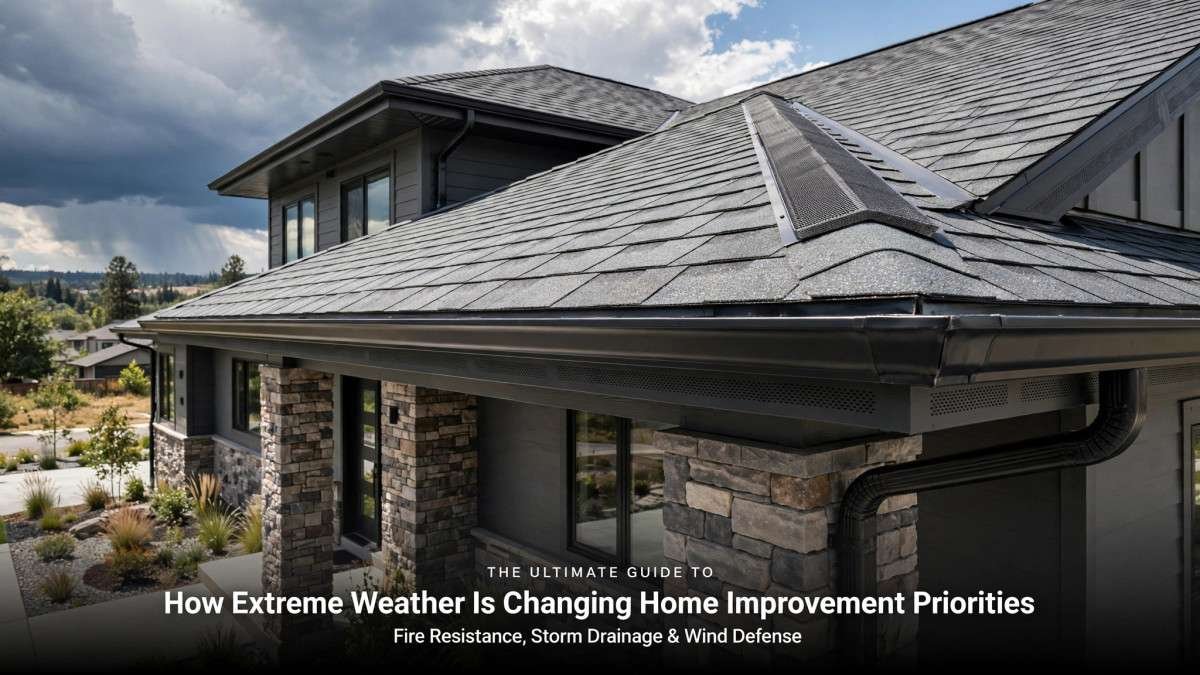

Home improvement used to be mostly about comfort and curb appeal: a new kitchen, a fresh coat of paint, or a redesigned outdoor deck. That focus is shifting dramatically. More frequent wildfires, heavier atmospheric river storms, longer summer heat waves, and intense wind events are pushing homeowners to rethink their houses from the outside in, starting with the roof. What used to be a purely cosmetic decision (replacing a roof only when it looks worn) is increasingly a critical resilience decision (upgrading before the next severe weather event exposes a hidden vulnerability).
Bottom Line Up Front: Homeowners across the country are prioritizing fire-resistant Class A materials, high-capacity drainage, advanced attic ventilation, and impact-rated roofing over purely cosmetic interior renovations. Insurance carriers are accelerating this shift directly, increasingly factoring roof material ratings, age, and storm defenses into both policy renewal eligibility and annual premium costs.
1. From Curb Appeal to Climate Resilience
According to climate and severe weather tracking from the NOAA National Centers for Environmental Information, the United States has experienced a continuous rise in billion-dollar weather and climate disasters over the past decade, including destructive wildfires, severe convective storms, and localized flooding. This macro trend shows up directly in contractor inquiries. Homeowners are no longer asking only about color options; they are asking about wind ratings, waterproof underlayment thickness, and fire barrier performance.
Insurance carriers, particularly across wildfire-prone and storm-impacted regions, have grown far more selective about which properties they cover and at what rate. Many carriers now require verified Class A fire ratings, high-wind shingle certifications, or professional roof condition certifications before issuing or renewing a policy. A roofing assembly that passed standard inspection a decade ago can now be the primary reason a homeowner’s premium surges or a policy is non-renewed.
2. Key Weather Risks and Priority Upgrades
Different climate risks require distinct structural upgrades, aligned with standards from the Insurance Institute for Business & Home Safety (IBHS) FORTIFIED Home Standards:
- Wildfire and Flying Embers: High priority for Class A fire-rated asphalt shingles, non-combustible metal or tile coverings, and specialized fine-mesh ember-resistant ridge and soffit vents.
- Heavy Rain and Atmospheric River Storms: High priority for expanded 6-inch seamless gutters, oversized downspouts, and self-adhering synthetic waterproof underlayment across eaves and valleys.
- Extreme Summer Heat: High priority for solar-reflective cool roof granules, high-emittance TPO membranes, and continuous ridge ventilation paired with solar-powered attic fans.
- High Wind and Storm Uplift: High priority for Class H wind-rated architectural shingles, reinforced ring-shank mechanical nailing, and sealed roof deck seams.
Most homes do not face all risks equally. A property situated in a dry foothill wildfire zone and a coastal property exposed to wind-driven winter storms require different upgrade roadmaps, even though both involve exterior roofing improvements.
3. What This Looks Like in Practice
As Salomon Urizar-Jimenez, owner of Astro Roofing, a licensed roofing contractor in Oakland, CA, explains, homeowner priorities have shifted noticeably toward weather defense:
“Five years ago, almost nobody asked about Class A fire ratings or extreme atmospheric river drainage unless they lived right up against open hillsides. Today, it is one of the first questions homeowners bring up, along with whether their underlayment and gutters can actually handle back-to-back seasonal storms. Most property owners cannot upgrade every single component at once, so we advise prioritizing by actual local risk first. If wildfire embers are the main threat in your area, start with Class A fire-rated shingles and ember-resistant vents. If it is heavy seasonal rain, prioritize high-capacity seamless gutters and synthetic waterproof underlayment. You do not have to do it all in one project, but knowing which weather risk applies to your home ensures your budget goes where it matters most.”
4. Long-Term Value and Insurance Benefits
Investing in structural resilience delivers tangible economic benefits. In addition to preventing catastrophic interior water and smoke damage, resilient upgrades help keep homes insurable in tightening underwriting markets.
Beyond insurance continuity, resilience upgrades hold their resale value better than temporary cosmetic improvements. Real estate buyers in storm-prone and high-heat regions increasingly ask for proof of recent roof certifications and material ratings as part of standard home purchase negotiations.
5. Frequently Asked Questions (Weather Resilience in Home Improvement)
Do I need to replace my entire roof to improve fire resistance?
Not necessarily. In many cases, upgrading the outer roof covering along with installing ember-resistant soffit and ridge vents (the primary entry points where airborne embers penetrate attics) provides substantial protection without requiring complete structural framing overhauls.
Will upgrading to weather-resilient roofing lower my home insurance premium?
In many states, insurers provide specific discounts for certified impact-resistant (UL 2218 Class 4) or wind-rated roofing systems. More importantly, it ensures your policy remains eligible for annual renewal in regions where carriers are restricting coverage.
Planning Checklist for Homeowners
- Identify Primary Local Risks: Determine whether wildfire, heavy rain, high wind, or extreme heat represents the greatest threat to your property location.
- Review Insurance Policy Guidelines: Contact your insurance agent to ask what specific roof material ratings or age limits affect your premium and coverage eligibility.
- Assess Components Separately: Have a licensed contractor inspect your roof covering, flashing seals, attic ventilation, and gutter drainage as distinct subsystems.
- Prioritize High-Risk Upgrades: Focus immediate investments on your primary environmental hazard before proceeding with secondary cosmetic projects.