
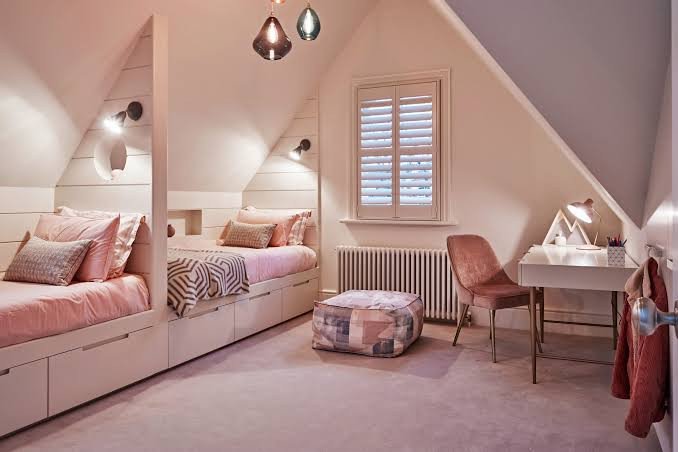

According to Los Angeles Management Group, finishing an attic costs \$50 to \$150 per square foot for professional work, or \$20 to \$50 per square foot for DIY with hired electrical and HVAC. A 500-square-foot attic costs \$25,000 to \$75,000 professionally, or \$10,000 to \$25,000 for a homeowner managing the project. The range is wider than a basement finish because attics have variables that basements do not: floor joists that may need structural reinforcement, roof insulation that must meet code, staircases that may need to be rebuilt, and dormers or skylights that may need to be cut into the roof. This guide breaks down the cost by scope, by phase, and by the decisions that move the total by tens of thousands of dollars.
According to wikiHow’s attic insulation guide, co-authored by home improvement specialist Kevin Schlosser with over 20 years of experience, proper insulation and a tight building envelope are the most critical investments in an attic finish. The insulation cost is a small fraction of the total project but determines whether the finished attic is comfortable year-round. This guide provides real numbers for a typical 500-square-foot attic at multiple scope levels.
Cost Per Square Foot by Scope
| Scope | DIY ($/sq ft) | Professional ($/sq ft) | 500 Sq Ft Total (Pro) |
| Basic finish (one room, no bathroom) | $20-35 | $50-75 | $25,000-37,500 |
| Mid-range (bedroom + bath + closet) | $30-50 | $75-110 | $37,500-55,000 |
| High-end (bedroom, bath, dormer, custom finishes) | $50-75 | $110-150 | $55,000-75,000 |
Cost Breakdown by Phase for a 500 Sq Ft Mid-Range Attic
| Phase | DIY Cost | Professional Cost |
| Structural assessment (engineer report) | $300-500 | $300-500 |
| Floor joist reinforcement (if required) | $1,000-2,500 | $3,000-6,000 |
| Staircase renovation (if required) | $1,500-3,000 | $4,000-10,000 |
| Insulation (spray foam, R-38) | $2,000-3,500 | $4,000-7,000 |
| Framing (knee walls, dormer, partitions) | $1,500-3,000 | $3,000-6,000 |
| Electrical (outlets, lights, new circuit) | Not DIY | $3,000-6,000 |
| HVAC (mini-split or duct extension) | Not DIY | $2,500-6,000 |
| Drywall (ceiling, walls, knee walls) | $2,000-3,500 | $5,000-9,000 |
| Flooring (500 sq ft) | $1,500-3,000 | $2,500-5,000 |
| Paint, trim, finishes | $1,000-2,000 | $2,500-5,000 |
| Permits | $500-1,500 | $500-1,500 |
| Total | $13,300-25,500 | $30,300-61,500 |
What Moves the Attic Finishing Cost
- Floor joist reinforcement. This is the attic-specific cost that has no equivalent in a basement finish. Ceiling joists designed to hold drywall are not designed to hold furniture and people. If the joists are undersized, sistering larger joists alongside them costs $3,000 to $6,000. The structural engineer’s report confirms whether this is needed. It is needed in roughly 40 percent of attic renovations.
- Staircase compliance. A pull-down ladder does not meet code for habitable space. If the existing stairs are too narrow, too steep, or lack headroom, the staircase must be rebuilt. This costs $4,000 to $10,000 and is the single most expensive line item in some attic renovations. An attic accessed by a compliant staircase is finished space. An attic accessed by a ladder is storage. The staircase determines which one the building department considers it.
- Dormers and skylights. A dormer projects outward from the roof and creates vertical wall space and additional floor area. It costs $8,000 to $15,000 per dormer, including framing, roofing, siding, windows, insulation, and interior finishing. A skylight costs $1,500 to $3,500 installed. Dormers add square footage. Skylights add light. Both add cost. Neither is required for a basic finish.
- Insulation type. Per wikiHow’s guide, spray foam provides the highest R-value per inch and acts as an air barrier. It costs $2 to $5 per square foot of roof area. Batt insulation costs $0.50 to $1.50 per square foot but requires a separate air barrier. For a 500-square-foot attic with 800 square feet of sloped ceiling, spray foam costs $1,600 to $4,000 for materials. Batt insulation with a vapor barrier costs $400 to $1,200. The price difference buys an air seal that batt insulation alone does not provide.
- Bathroom addition. Adding a bathroom to an attic requires running plumbing supply and drain lines up through the house. This is more expensive than basement plumbing because the lines must travel vertically through finished walls. An attic bathroom adds $15,000 to $30,000 to the project cost. The bathroom alone costs more per square foot than the rest of the attic finish combined.
DIY Savings on Attic Finishing
A homeowner can perform structural reinforcement, framing, insulation, drywall, painting, and flooring without a license. Electrical and HVAC must be hired. The DIY savings on a 500-square-foot attic are $10,000 to $20,000 compared to hiring a general contractor. The work takes 4 to 6 months of weekends for a solo homeowner. The calendar time is longer than a basement finish because working in an attic involves climbing stairs with materials, working around sloped ceilings that limit movement, and dealing with temperatures that are more extreme than a below-grade basement.
Hidden Costs That Surprise Attic Renovators
These costs are not included in the per-square-foot estimate and catch first-time attic renovators off guard:
- Insulation removal. If the attic floor has existing insulation between the joists, it must be removed or relocated before the floor can be reinforced. Removing old blown-in insulation costs $1 to $3 per square foot. For 500 square feet, that is $500 to $1,500 before any new work begins.
- Radon mitigation. Finishing an attic creates habitable space at the highest point of the house. If the house has radon, the attic may have higher concentrations than the lower floors because radon rises. A radon test costs $25 and is recommended before finishing. Mitigation costs $800 to $2,500 if needed.
- Asbestos abatement. Attics in homes built before 1980 may contain asbestos in vermiculite insulation, pipe wrap, or duct insulation. Testing costs $50 to $100. Abatement costs $1,500 to $3,000 for a typical attic. Disturbing asbestos during renovation without testing and abatement is a health hazard that contaminates the entire house.
- Upgrading the electrical panel. The attic finish adds circuits. If the existing electrical panel is full, a sub-panel or panel upgrade costs $1,500 to $3,500. This is discovered during the electrical rough-in when the electrician opens the panel and finds no open breaker slots.
Frequently Asked Questions
How does the cost of finishing an attic compare to building an addition?
Attic finishing costs $50 to $150 per square foot. A ground-floor addition costs $100 to $300 per square foot. The attic is roughly half the cost because the foundation, exterior walls, and roof are already built. The savings are the cost of the shell. A 500-square-foot addition costs $50,000 to $150,000. The same square footage finished in the attic costs $25,000 to $75,000.
Does finishing an attic pay back in home value?
A finished attic recoups 60 to 75 percent of its cost in increased home value. The return is higher when the attic includes a bedroom and bathroom, which add to the home’s listed bedroom and bathroom count. The return is lower when the attic is finished as a single open room without a closet or bathroom, which is classified as bonus space rather than living space. A legal bedroom with a closet and egress window adds more value than the same square footage finished as a loft.
The Attic That Costs What It Costs
Finishing an attic is the most cost-effective way to add living space to a house. The structure is already there. The roof is already paid for. The cost is for the interior: floors that support weight, walls that hold heat, air that is conditioned, and light that makes the sloped ceilings feel like architecture rather than a compromise. The staircase determines whether the space is a bedroom or a storage loft. The insulation determines whether it is comfortable in August and January. The bathroom determines whether it doubles the home value increase. The cost is $25,000 to $75,000. For $10,000 to $25,000 in materials and hired electrical and HVAC, a homeowner who does the framing, insulation, drywall, and flooring themselves gets the same square footage for roughly half the price. The structural engineer’s report tells you whether the joists need reinforcement. The staircase tells you whether the building department calls it a bedroom or a storage loft. The insulation tells you whether anyone wants to be up there in August. The square footage is already yours. Finishing it makes it usable.