
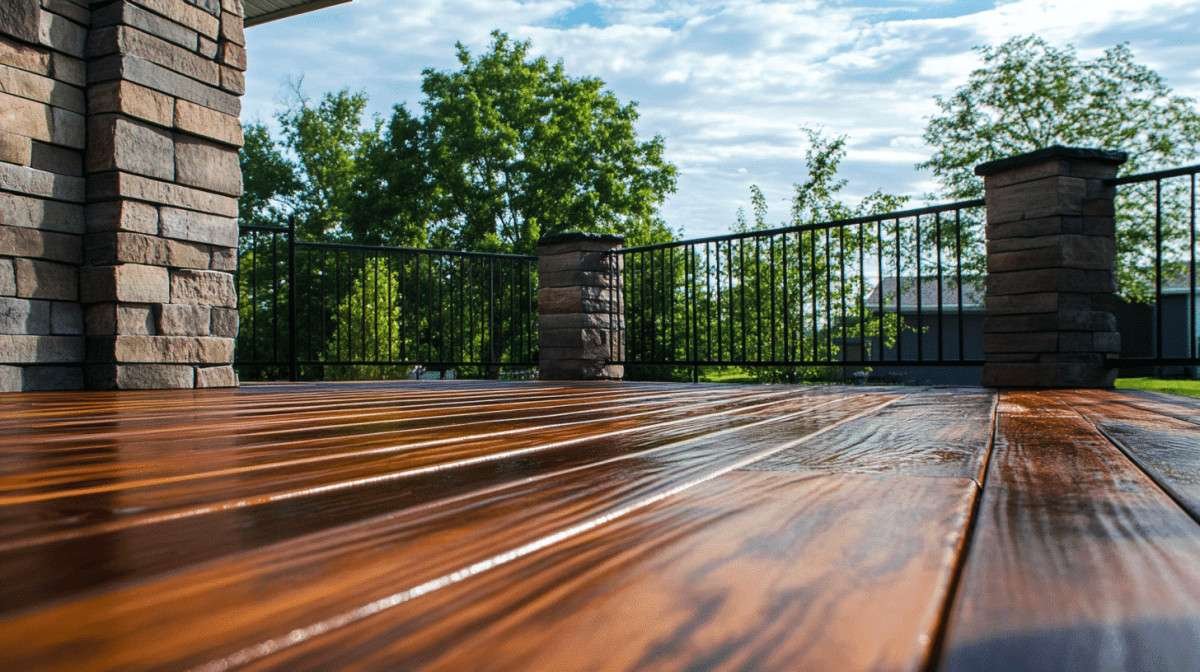

As pointed out by E & S Property Management professionals, a deck should be restrained when the existing stain no longer repels water, which happens every 1 to 2 years for clear and semi-transparent stains, every 2 to 3 years for semi-solid stains, and every 3 to 5 years for solid color stains. The calendar is a rough guide. The water droplet test is the real answer. Pour water on the deck. If it beads up, the stain is still protecting the wood. If it soaks in and darkens the wood within a few seconds, the stain has worn away and it is time to recoat.
Waiting too long between recoats means the wood grays and the stain must be stripped before a new coat can be applied, which adds a full weekend of labor. Recoating too often builds up a film on the surface that peels. The correct interval maintains the protective barrier without overbuilding it. Here is how often each type of stain needs to be reapplied and how to tell when it is time.
Recoat Frequency by Stain Type
| Stain Type | Recoat Interval | What Happens If You Wait Too Long |
| Clear or natural toner | Every 1–2 years | Wood grays; must be cleaned and brightened before recoating |
| Semi-transparent (oil-based) | Every 1–3 years | Fades unevenly; cleaned and recoated; stripping usually not needed |
| Semi-transparent (water-based) | Every 1–2 years | Fades faster than oil; cleaned and recoated |
| Semi-solid | Every 2–3 years | Wears in high-traffic areas first; spot-coating possible |
| Solid color stain | Every 3–5 years | Peels like paint; must be scraped and sanded before recoating |
Clear and semi-transparent stains contain less pigment and offer less UV protection. They wear away faster and require more frequent recoating. The trade-off is that they never peel because they penetrate the wood rather than forming a surface film. Recoating a penetrating stain is a cleaning and reapplication job. There is no scraping or sanding.
Solid color stains contain more pigment and more binder. They form a film on the surface that protects the wood longer but eventually peels like paint. Recoating a solid stain means scraping loose areas, sanding the edges, and applying fresh stain over the prepared surface. The recoating intervals are longer, but the recoating labor is heavier. The choice between a short-interval, low-labor penetrating stain and a long-interval, high-labor solid stain is the fundamental trade-off in deck maintenance.
The Water Droplet Test: When the Deck Tells You It Is Time
The deck tells you when it needs stain. You do not need a calendar. Pour a small amount of water, about a tablespoon, onto the deck surface in several locations. Test the high-traffic areas, the areas in full sun, and the areas under shade and furniture. If the water beads up and sits on the surface, the stain is still effective. No recoating is needed. If the water soaks into the wood within a few seconds and darkens the surface, the stain has worn away in that area. It is time to recoat. If the water soaks in instantly and the wood darkens immediately, the stain is gone and the wood is absorbing moisture. The recoating window has been open for some time.
The water test tells you that different areas of the deck wear at different rates. The horizontal deck boards in full sun wear fastest because UV radiation degrades the stain’s binders and pigments. The vertical railings and the areas under furniture wear slowest. The deck may need recoating on the floor boards while the railings are still protected. This is normal. You can spot-coat the worn areas if the stain is the same product and color as the original application, and if the worn areas are cleaned before recoating. The new stain will blend with the old stain over adjacent boards.
How Climate Affects Recoat Frequency
A deck in Phoenix with full sun exposure needs recoating every year regardless of the stain type. The UV radiation at high elevation and low latitude degrades the stain faster than any other environmental factor. A deck in Seattle under a tree canopy may go 2 to 3 years between recoats because UV exposure is lower, even though the deck is frequently wet. Water does not degrade stain the way UV does. Wood rot is caused by water. Stain degradation is caused by UV. A deck in full sun wears out its stain faster than a deck in full shade, even if the shaded deck is wetter.
Snow and ice are abrasive. A deck in Minnesota that is shoveled regularly wears the stain off the high spots of the wood grain faster than a deck in Georgia that never sees snow. The mechanical wear from snow shovels, ice melt, and freeze-thaw cycles accelerates stain loss in cold climates. Hot, dry climates degrade stain through UV. Cold, wet climates degrade stain through mechanical wear. Both require more frequent recoating than a mild climate with moderate sun.
Can You Stain a Deck Too Often
Yes, for film-forming stains. Solid color stains and deck resurfacers build up a layer on the surface with each coat. If you recoat every year without removing the previous coats, the film becomes thicker, more brittle, and more likely to peel. The peeling takes the underlying layers with it, and the entire coating must be stripped. For film-forming stains, recoat only when the water test indicates the coating has worn. The calendar does not override the water test.
For penetrating stains, overcoating is less of a problem because the stain absorbs into the wood. The wood can only absorb so much stain before it is saturated. Applying a maintenance coat over a deck that still passes the water test means the stain sits on the surface instead of absorbing. The excess must be wiped off. Applying a maintenance coat too early wastes stain and time but does not damage the deck the way overcoating a solid stain does.
Maintenance Coat vs. Full Strip and Restain
A maintenance coat is applied over a deck that is still protected by the previous stain. The deck is cleaned, dried, and a fresh coat of the same stain is applied. This is a half-day job. A full strip and restain is required when the previous stain has failed completely and the wood has grayed, or when you are changing stain types, such as switching from a solid stain to a semi-transparent, or switching from oil-based to water-based stain. The old stain must be chemically stripped, the wood brightened to restore its natural color, and the new stain applied to bare wood. This is a two-day job.
The maintenance coat is the reward for recoating on schedule. The strip and restain is the penalty for waiting too long. The difference in labor is a pressure washer and a pump sprayer of chemical stripper versus a garden hose and a brush. Staying on a recoat schedule costs a half day every 1 to 2 years. Letting the deck go and then stripping it costs a full weekend every 3 to 5 years. The total time invested is roughly equal. The maintenance coat approach spreads it out. The strip-and-restain approach concentrates it.
Frequently Asked Questions
Should I stain my deck before or after winter?
Before winter. The stain protects the wood from moisture absorption during the wet season. Apply the stain in late summer or early fall, when temperatures are moderate and the deck is dry. The stain cures before the first freeze and protects the wood through the winter. Spring staining is also acceptable but leaves the deck unprotected through the previous winter. The best staining seasons are spring and fall in most climates. The worst are summer, when heat causes the stain to dry too fast and not penetrate, and winter, when temperatures are below the minimum on the can.
How long does the first stain on a new deck last compared to a recoat?
The first stain on a new deck lasts 1 to 2 years, which is the same as a maintenance coat on an older deck. New wood absorbs stain deeply, but the UV exposure is the same. The stain degrades at the same rate on new wood as on old wood. The difference is that a new deck that has been properly cleaned and dried before its first stain does not need to be stripped before the first recoat. The first recoat is a maintenance coat. If the first stain is allowed to fail completely before recoating, the deck must be stripped, which is a preventable outcome.
Can I just power wash the deck instead of staining it?
No. Power washing cleans the wood but does not protect it. A freshly power-washed deck absorbs water faster than a dirty deck because the dirt and oxidized wood fibers that were slowing water absorption have been removed. Power washing without staining is worse for the wood than doing nothing because it opens the wood grain to moisture without applying any protection. Power washing is a preparation step for staining. It is not a substitute for staining.