
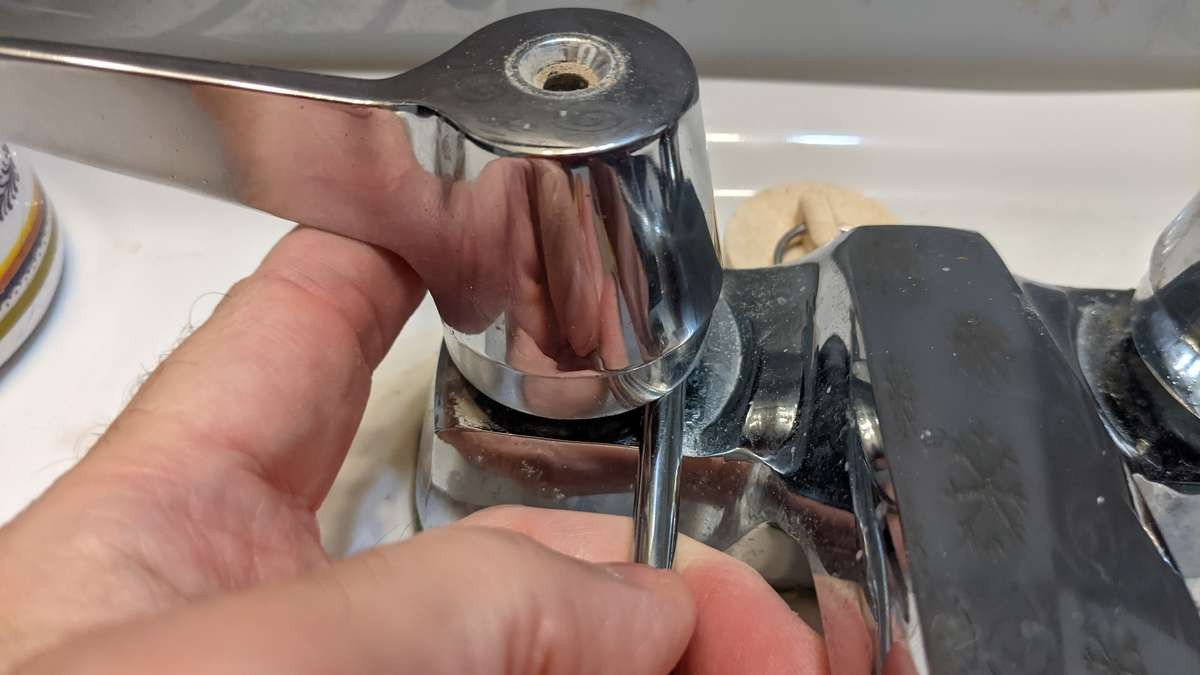

A bathroom faucet that drips from the spout, leaks from the base of the handle, or seeps water from under the base plate has a worn internal component, notes Draper Realty, a trusted property management Moore OK. The fix costs $2 to $25 in parts and takes 30 minutes. The challenge is not the repair. It is identifying what is inside your faucet so you buy the right part. The brand helps but is not required. The faucet type tells you what to replace.
Bathroom sink faucets use one of four internal mechanisms. The type determines the repair. Here is how to identify what you have, fix the leak, and put it back together without scratching the chrome.
First: Where Is the Leak
Water dripping from the spout when the handles are off means the washer, cartridge, or ceramic disc that stops the water flow is not sealing. The water is leaking past the closed valve. This is the most common bathroom faucet leak.
Water leaking from the base of the handle when the faucet is running means the O-ring or packing that seals the handle stem is worn. The leak is at the stem, not at the valve seat. The water escapes around the handle rather than through the spout.
Water seeping from under the base plate where the faucet meets the sink means the putty or gasket under the base plate has failed, or the faucet is loose. Tighten the mounting nuts under the sink and replace the putty or gasket under the base plate. This is the least common leak and the simplest fix.
Four Faucet Types and How to Identify Each
Remove the handle to see what is underneath. On most bathroom faucets, the handle is attached by a set screw on the underside or under a decorative cap on top. Pry off the cap with a flathead screwdriver to access the screw. Loosen the set screw or remove the handle screw and lift the handle off.
Compression faucet. You see a brass stem with a hex nut at the base. The stem threads into the faucet body. A packing nut sits under the handle. This is the oldest type, found in homes built before the 1990s and in budget faucets. Two-handle faucets are almost always compression type. The repair is a $2 rubber washer and possibly a new brass seat.
Cartridge faucet. You see a plastic or brass cylinder with a stem coming out of the top. The cartridge is held in place by a threaded retaining nut or a U-shaped clip. This is the most common type in homes built since the 1990s. Delta, Moen, Kohler, and Pfister all use cartridges. The cartridges are not interchangeable between brands. The repair is replacing the entire cartridge.
Ball faucet. You see a round metal or plastic ball with a stem, sitting in a socket. A slotted cap threads over the ball. This is exclusively a Delta design, found in older single-handle bathroom and kitchen faucets. The repair is replacing the rubber seats and springs, and possibly the ball itself.
Ceramic disc faucet. You see a flat cartridge with two ceramic discs visible inside. No stem protrudes above the cartridge. The cartridge is held by screws. This is the most durable type and the least likely to leak. When it does leak, the entire cartridge must be replaced. Ceramic disc cartridges are expensive, $30 to $80, because of the precision required for the ceramic surfaces to seal.
Compression Faucet: Replace the Washer and Seat
Shut off the water under the sink. Remove the handle. Unscrew the packing nut with an adjustable wrench. The stem unscrews from the faucet body by turning the handle or the stem counterclockwise. On the bottom of the stem is a black rubber washer held by a brass screw. Remove the screw and the washer. Take the stem and washer to the hardware store to match the replacement. Bring the old washer. Match it exactly. A flat washer, not a beveled washer. Bathroom faucets use flat washers.
Inspect the brass seat inside the faucet body with a flashlight. If the seat is smooth, it is fine. If it is rough, pitted, or grooved, it must be replaced. A new washer will not seal against a damaged seat. Remove the seat with a seat wrench. Insert the wrench into the seat, tap it lightly with a hammer to seat it, and turn counterclockwise. Take the old seat to the store. Seats are not universal. Install the new seat. Install the new washer. Reassemble.
Cartridge Faucet: Replace the Cartridge
Shut off the water. Remove the handle. Remove the retaining nut or clip that holds the cartridge. Grip the cartridge stem and pull it straight out. Do not twist or rock it, which can break the cartridge and leave plastic pieces inside the faucet body. If the cartridge is stuck, use a cartridge puller for that brand. The tool costs $15 to $20 and is worth buying because a broken cartridge inside the faucet body is a much bigger problem than a stuck cartridge.
Take the old cartridge to the store. Identify the brand if possible. The brand is often on the trim plate or on a label under the sink on the supply lines. If the brand is unknown, match the cartridge by sight at a plumbing supply store. Big-box stores carry common replacement cartridges. Plumbing supply stores carry a wider selection. Install the new cartridge in the same orientation. Coat the O-rings with silicone grease. Reinstall the retaining clip or nut.
For Delta cartridges specifically, there are two small rubber seats with springs behind them inside the faucet body. Replace these with a Delta RP4993 kit whenever you replace a Delta cartridge. The springs and seats are the parts that actually wear out. For other brands, the cartridge contains all the seals. No separate springs or seats need to be replaced.
Ball Faucet: Replace the Seats, Springs, and Ball
Shut off the water. Remove the handle. Unscrew the domed cap on top of the faucet body. Lift off the plastic adjustment ring, the cam, and the ball. Inside the faucet body are two rubber seats with springs behind them. Remove them with needle-nose pliers. Install new seats and springs from a Delta repair kit, part number RP3614. The wide end of each spring faces outward toward the ball. Install a new ball if the old one is scratched or pitted. Reassemble the cam, ring, and cap. Adjust the ring so the handle moves smoothly without leaking.
Ceramic Disc Faucet: Replace the Cartridge
Shut off the water. Remove the handle. The ceramic disc cartridge is held by two or three screws. Remove the screws and lift the cartridge out. Take it to a plumbing supply store to match. Install the new cartridge. Tighten the screws evenly. Do not overtighten. Ceramic does not flex to conform to an uneven mounting surface. Overtightening cracks the disc.
Leak From the Handle Base: O-Ring or Packing
If the leak is from the handle stem rather than the spout, the O-ring on the cartridge or the packing on a compression stem has failed. For a cartridge faucet, replace the cartridge. The new cartridge includes new O-rings. For a compression faucet, tighten the packing nut under the handle slightly. If tightening does not stop the leak, unscrew the packing nut and replace the packing washer or wrap the stem with graphite packing string before retightening.
Frequently Asked Questions
Water drips from the spout only after I turn the faucet off. Is that the same problem?
No. Water that drips for a few seconds after the faucet is turned off and then stops is water draining from the spout, not a leaking valve. The spout holds a small amount of water after the valve closes. The water drips out as the spout drains. This is normal and does not require repair. A leak that continues indefinitely after the faucet is off is a valve problem.
Both handles are leaking. Should I repair both at the same time?
Yes. The washers or cartridges on both sides are the same age. If one has failed, the other will fail soon. The time to repair both is now, while you have the tools out and the water is already shut off. Replacing both washers costs an extra $2 to $5 and takes an extra 10 minutes.
I cannot find the brand name on my faucet. How do I get the right part?
Remove the cartridge, stem, or ball and take it to a plumbing supply store. The staff can identify the part by sight. Take clear photos of the faucet, the handle, and the trim plate before disassembly. The handle shape is often distinctive enough to identify the brand. Moen handles look different from Delta handles, which look different from Kohler handles. A plumbing supply store is more likely to identify an unbranded part than a big-box hardware store.