
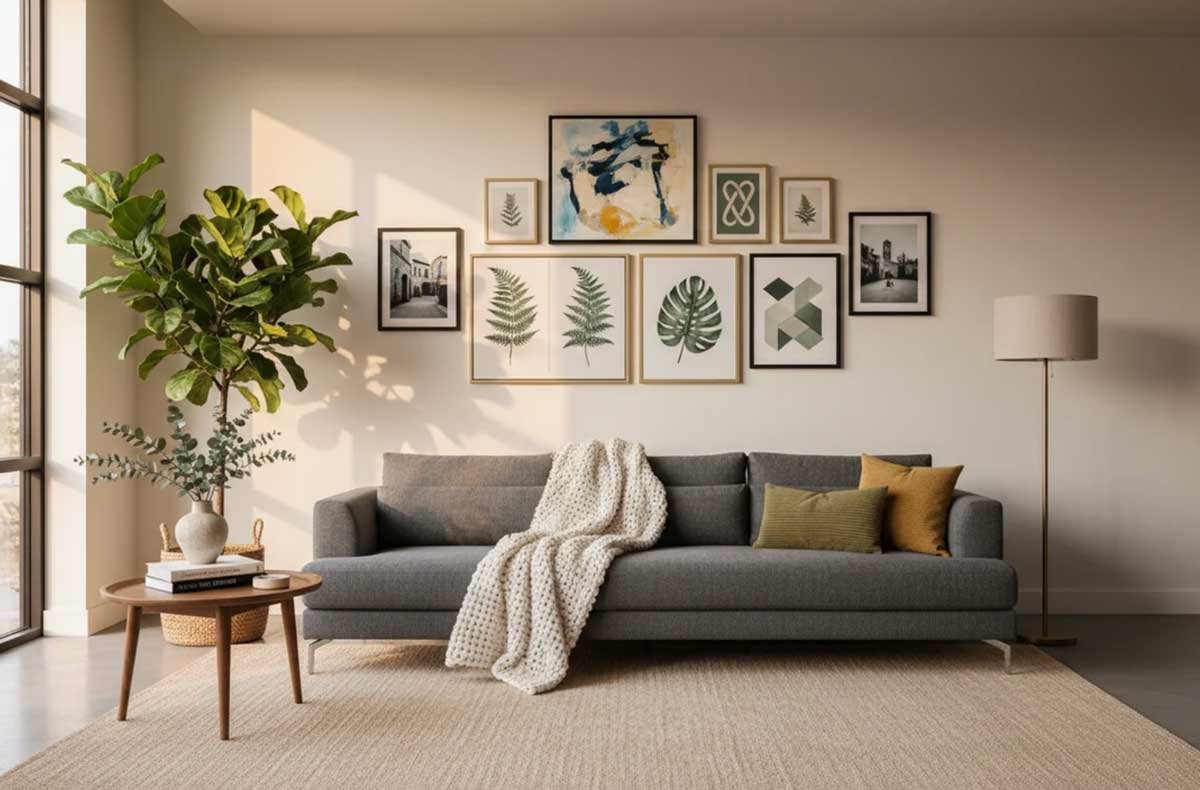

An empty wall can leave a room feeling unfinished. But choosing something to hang there often takes longer than expected. A painting might look beautiful online and still feel too small, too bright or out of place once it arrives.
You do not need to know much about art to make a good choice. Start with the wall, the furniture around it and the colours you already enjoy. Then think about what you would like to see every day. These simple checks can help you choose a piece that feels at home.
Start With the Room
Before browsing, spend a few minutes looking at the room. Where does your eye land when you walk in? That spot may be above the sofa, beside a dining table or at the end of a hallway.
Choose one wall to work on first. Trying to fill every empty space at once can lead to purchases that have little connection to each other.
Consider how you use the room, too. You might enjoy a lively painting where you entertain friends and something quieter near your bed. Your own response matters more than following a particular decorating trend.
Find the Right Size
Size is easier to judge when you compare the artwork with nearby furniture. A small frame above a wide sofa can look lost, even if the picture itself is lovely.
As a starting point, look for artwork about two thirds to three quarters of the furniture’s width. Above a six foot sofa, that means roughly four to four and a half feet across. For a group of pictures, measure the whole arrangement, including the gaps. Treat this as a guide and adjust for your room.
A tall, narrow wall may suit a vertical piece. A long wall above a sideboard often works well with a horizontal painting or a pair of frames.
Before ordering, mark the outer dimensions with paper templates. Step back and look from the doorway and your usual seat. Remember that the frame adds to the final size.
Choose Colours You Can Live With
Your artwork does not have to match the sofa exactly. It helps, though, if there is a colour connecting it to something already in the room.
Look at your rug, curtains, cushions and furniture. A small touch of green in a painting can sit comfortably beside indoor plants. Warm brown details might relate to wooden furniture.
In a room with pale walls and plain fabrics, a colourful piece can become the main feature. If you already have patterned curtains and a busy rug, try artwork with fewer colours or more open space.
Think about the mood you prefer. Do you enjoy gentle shades or stronger contrasts? There is no need to choose muted art simply because the room is small. Test a few options against a photograph of the space and see which feels right.
If possible, view the artwork in daylight before deciding. Screen settings can change how colours appear, so check whether the seller provides close photographs or a video. You could place a fabric sample beside the wall to test a similar shade before committing to a large piece that will draw attention whenever you enter the room.
Pick a Style That Interests You
You may be drawn to landscapes, portraits, abstract shapes or traditional paintings. Start there. An artwork is easier to enjoy when you like its subject, rather than buying it only because its colours match.
Traditional pieces can work with simple modern furniture. An abstract print can also sit comfortably in a room with older wooden pieces. Look for a shared colour, shape or finish to bring them together.
If you enjoy detailed figures and storytelling, kerala mural art offers a different direction from a simple landscape or geometric print. The tradition has roots in wall painting, while contemporary examples are also available on canvas.
Give detailed work enough space to be seen clearly. Placing several small decorations around it may make the wall feel crowded.
Think About Texture and Depth
Flat pictures are only one option. Raised artwork can add another layer to a room, particularly where the furniture and walls have fairly smooth surfaces.
A wall mural sculpture may suit a wall where you want texture as well as an image. Look at how far it projects, how heavy it is and whether people will walk close beside it.
Light also changes how raised details appear. Check the wall during the day and with your evening lights switched on. Shadows that look appealing from one angle may hide details from another.
Check the Frame and Finish
A frame becomes part of the display, so include it in your decision. A narrow frame may suit a detailed painting, while a wider one can give a small image more presence.
When comparing listings on Artociti, check whether the stated measurements include the frame and whether the piece arrives ready to hang. Apply the same checks wherever you shop.
Read the material description carefully. A canvas print, a hand painted canvas and a sculptural panel have different surfaces and care needs. Product photographs alone may not make those differences obvious.
Try the Placement Before Hanging
Use your paper template to test the height before making holes. Look at it while standing, then sit down and check again. Above furniture, the picture should feel connected to what sits below it.
For several frames, arrange them on the floor first. Try consistent gaps, then transfer the layout to the wall. One shared detail, such as a frame finish, can help different pictures feel connected.
Choose fixings suited to the artwork’s weight and your wall type. Keep care instructions handy, especially for pieces near windows or damp areas.
Take your time with the final choice. A wall does not need filling immediately. Measure carefully, compare a few options and choose something you will enjoy seeing on an ordinary day at home.