
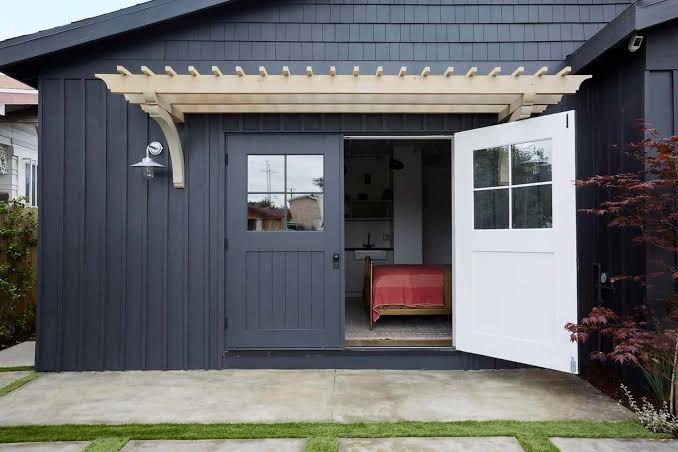

The garage has not held a car in three years. It holds boxes, a second refrigerator, a workbench that has never been used for work, and a collection of items that are waiting for a garage sale that has been postponed five times. The cars live in the driveway. The garage is 400 square feet of conditioned-adjacent space, sharing at least one wall with the house, sitting on a concrete slab, with a roof overhead and a garage door that provides more ventilation than insulation. Converting it into a room is not a weekend project. It is a full renovation that involves permits, floor elevation, insulation, electrical, HVAC, and replacing the garage door with a wall and windows. The cost is $15,000 to $50,000 depending on the scope. The result is a room that adds living space to the house without adding a foundation, explains Keyrenter Hampton Roads Team.
Permits: The Non-Negotiable First Step
A garage conversion requires a building permit in every jurisdiction that has a building code. The permit triggers inspections of the foundation, framing, electrical, insulation, and final occupancy. Converting a garage without a permit produces a room that is not legally habitable. At resale, the square footage is excluded from the home’s living area. The home inspector flags the unpermitted work. The buyer demands a price reduction. The permit costs $500 to $1,500. The cost of not having one is measured in lost home value.
Zoning regulations may also apply. Some municipalities restrict garage conversions if the conversion eliminates all covered parking on the property. Others require a replacement parking space to be added elsewhere on the lot. Check with the local zoning department before planning the conversion. A conversion that violates zoning can be ordered to be reversed, which means removing the finished room and reinstalling a garage door.
The Floor: Raising It to Match the House
Garage floors are lower than the rest of the house. They slope toward the garage door for drainage. They are concrete slabs with no vapor barrier underneath, which means moisture rises through the concrete. The floor must be raised to match the house floor level, leveled to eliminate the drainage slope, and isolated from ground moisture.
The floor is raised with sleepers, which are pressure-treated 2x4s laid flat or on edge, with rigid foam insulation between them and plywood subfloor on top. The sleepers are attached to the concrete with construction adhesive and Tapcon screws. The rigid foam provides a thermal break between the cold concrete and the finished floor. A 6-mil polyethylene vapor barrier goes between the concrete and the sleepers to block ground moisture. The total floor assembly adds 1-1/2 to 3-1/2 inches of height, depending on the sleeper orientation and insulation thickness. The finished floor height must match the adjoining room in the house. A step up or down between the converted garage and the house is a trip hazard and a code violation.
Replacing the Garage Door With a Wall
The garage door is the single largest opening in the house that is not a wall. Replacing it with a framed wall is the defining structural task of a garage conversion. The door opening is typically 8 to 16 feet wide and 7 to 8 feet tall. The new wall must match the exterior of the house and meet the insulation and structural requirements of an exterior wall.
The garage door tracks and opener are removed. The door itself is removed. The opening is framed with a bottom plate anchored to the concrete, a top plate attached to the header above the opening, and studs at 16 inches on center. The exterior is sheathed with plywood or OSB, wrapped with house wrap, and sided to match the existing house exterior. The interior is insulated with batt insulation or spray foam, and drywalled. A window is typically installed in the new wall to provide natural light. A door may also be installed for exterior access if the conversion creates a separate entrance.
Per wikiHow’s wall finishing guide, co-authored by home improvement specialist Ryaan Tuttle, the key to a successful wall installation is using the correct materials and techniques for the specific conditions. The garage door replacement wall is an exterior wall and must meet the same code requirements for insulation, vapor barrier, and weather resistance as any other exterior wall in the house.
Insulation: The Garage Was Not Built to Be Lived In
Garage walls may be uninsulated or minimally insulated. The ceiling above the garage may have no insulation or inadequate insulation. The conversion requires upgrading the entire thermal envelope. Exterior walls need R-13 to R-20 insulation, depending on the climate zone. The ceiling needs R-30 to R-49. The garage door replacement wall needs the same insulation as the other exterior walls. The concrete slab floor needs rigid foam insulation between the sleepers. A garage that was comfortable for a car is not comfortable for a person. The insulation is what makes the room habitable year-round.
HVAC: Extending the House System
The existing HVAC system was sized for the house without the garage. Adding 400 square feet of conditioned space may overload it. The options are extending the existing ductwork into the garage, which requires space in the ceiling or walls for ducts and may require upgrading the main HVAC unit, or installing a ductless mini-split heat pump for the garage space. The mini-split costs $2,000 to $5,000 installed and provides heating and cooling independently of the main system. It is the simpler solution for most garage conversions. The alternative, extending ductwork, costs $3,000 to $7,000 and may still require upgrading the main unit if it lacks the capacity for the additional square footage.
Electrical: More Than a Single Overhead Light
A garage typically has one or two outlets and a single overhead light on a single circuit. A habitable room requires outlets every 12 feet along the walls, a light switch at the room entrance, and enough circuits to handle the electrical load of the intended use. A bedroom requires an AFCI-protected circuit. A home office needs multiple outlets at desk height. The electrical upgrade requires an electrician, a permit, and may require a sub-panel if the existing panel is full. The cost is $2,000 to $5,000.
What a Garage Conversion Costs
| Phase | DIY Cost | Professional Cost |
| Permits and design | $500-1,500 | $500-1,500 |
| Floor (sleepers, insulation, subfloor, flooring) | $2,000-4,000 | $4,000-8,000 |
| Garage door replacement (wall, window, exterior finish) | $2,000-5,000 | $5,000-12,000 |
| Insulation (walls + ceiling) | $1,000-2,500 | $2,500-5,000 |
| Electrical | Not DIY | $2,000-5,000 |
| HVAC (mini-split or duct extension) | Not DIY | $2,500-7,000 |
| Drywall (walls + ceiling, tape, finish) | $1,500-3,000 | $3,500-7,000 |
| Paint, trim, finishes | $800-1,500 | $1,500-3,000 |
| Total (400 sq ft) | $9,800-17,500 | $21,500-48,500 |
Common Garage Conversion Mistakes
- Not pulling permits. The room cannot be listed as living space at resale. The unpermitted conversion is a liability, not an asset.
- Leaving the garage door in place and building a wall behind it. This is a common shortcut that creates a thermal hole, a moisture trap between the door and the wall, and an exterior appearance that announces the conversion was done without a permit. Remove the door. Build a proper exterior wall.
- Skipping the floor insulation. The concrete slab is cold. Without insulation, the finished floor is cold. The room is uncomfortable in winter regardless of the air temperature.
- Not extending HVAC. A space heater and a window air conditioner are not climate control. The room is unusable in extreme temperatures.
Frequently Asked Questions
Does a garage conversion add value to a home?
A permitted garage conversion that adds a bedroom and bathroom typically recoups 60 to 80 percent of its cost in home value. A conversion that eliminates covered parking without adding a bedroom or bathroom typically recoups less, 40 to 60 percent, because the loss of garage parking offsets the gain in living space in the appraisal. The highest-return conversion adds a bedroom and a bathroom while preserving a carport or exterior parking space.
How much of a garage conversion can I do myself?
A homeowner can perform the floor framing, insulation, drywall, painting, and trim. Electrical and HVAC require licensed trades. The garage door replacement wall requires framing and exterior finishing skills. If you are comfortable building an exterior wall, it is within the DIY scope. If you are not, hire a carpenter. The DIY savings on a garage conversion are $8,000 to $15,000 compared to hiring a general contractor.
The Room That Was a Garage
A garage conversion transforms the least-used space on the property into the most-used room in the house. The cars move to the driveway or a carport. The garage door comes out and a wall goes in. The concrete floor gets insulation, a subfloor, and flooring that matches the rest of the house. The walls get insulation and drywall. The ceiling gets insulation and a finished surface. The HVAC system extends into the new room. The electrical system supports the intended use. The room that once held a car now holds a family. The garage was always part of the house. Now it feels like it.