

Knowing how to negotiate commissions with a real estate agent starts with a simple fact: real estate commissions are negotiable. They always have been, legally speaking. But until recently, most sellers never tried.
A 2024 federal court ruling against the National Association of Realtors changed that — and suddenly, the conversation about negotiating commissions with a real estate agent shifted from something theoretical to something every seller should do. The average commission in the United States now runs between 4.5% and 6%, split between the listing agent and the buyer’s agent. On a $400,000 home, that 1.5% spread represents a $6,000 difference in your pocket. Most sellers leave at least that much on the table because they never ask.
The rules changed in August 2024. Buyer agent commissions are no longer automatically listed on the MLS. Sellers are no longer presumed to pay both sides. The old assumption that the seller pays 6% and the agents split it is gone. Knowing how to negotiate commissions with a real estate agent now means knowing what the new rules allow — and what they do not.
Why Agent Commissions Are Negotiable Now
Commissions have never been fixed by law. The Sherman Antitrust Act has prohibited price-fixing among real estate agents for decades. What made them feel fixed was convention: nearly every listing agreement in a given market listed the same percentage because agents followed local norms and the MLS displayed the buyer agent split.
The NAR settlement dismantled that second piece. The MLS no longer shows what the seller is offering the buyer’s agent. That means sellers can negotiate the total commission freely, including whether they pay the buyer’s agent at all.
The practical effect is that listing agents now compete on price in ways they rarely did before. In competitive markets like Phoenix, Austin, and Denver, agents are increasingly offering 4% to 4.5% total commissions to win listings. Some flat-fee brokerages charge $3,000 to $5,000 regardless of sale price. The bottom of the market is shifting. The middle will follow.
Know the Numbers Before You Start Talking
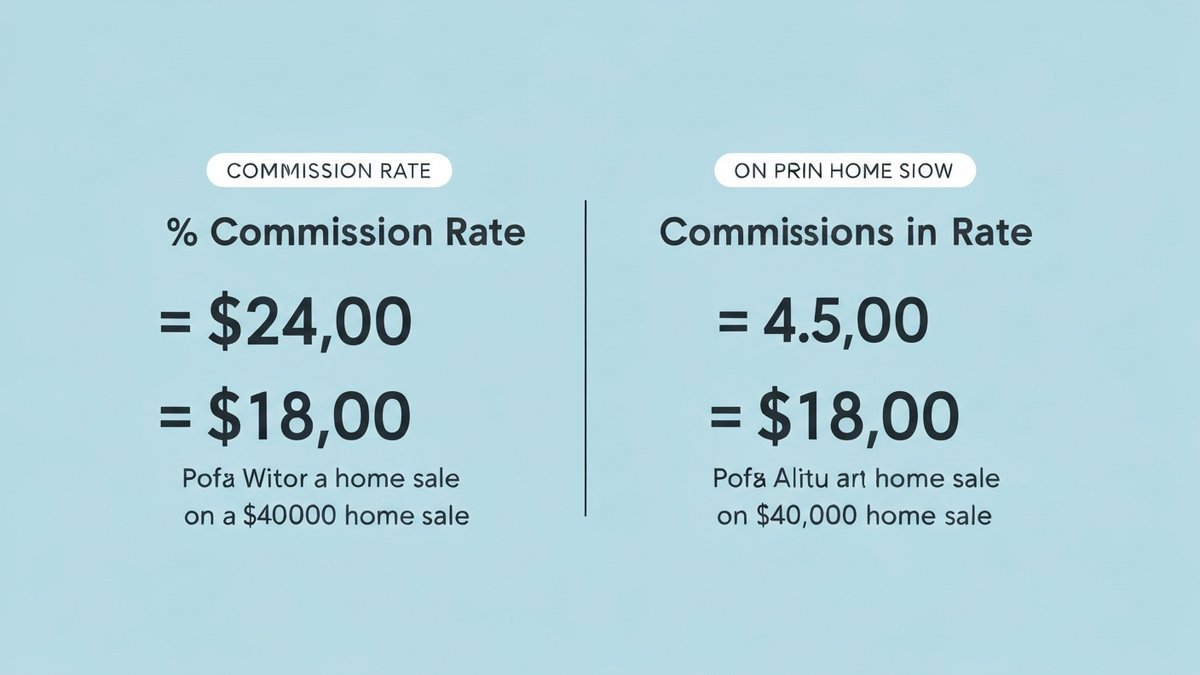
Walking into a commission negotiation without doing the math is like walking into a car dealership without knowing the invoice price. The listing agent’s cut of a 6% commission on a $400,000 sale is $12,000. At 5%, it is $10,000.
At 4.5%, it is $9,000. The spread between 6% and 4.5% on that same house is $6,000. That is real money — enough to cover moving costs, a repair credit for the buyer, or a weekend away after the closing.
| Sale Price | 6% Commission | 5% Commission | 4.5% Commission | Your Savings (6% → 4.5%) |
|---|---|---|---|---|
| $300,000 | $18,000 | $15,000 | $13,500 | $4,500 |
| $400,000 | $24,000 | $20,000 | $18,000 | $6,000 |
| $500,000 | $30,000 | $25,000 | $22,500 | $7,500 |
| $750,000 | $45,000 | $37,500 | $33,750 | $11,250 |
The commission is not the only variable. Ask the agent to show you what their marketing spend looks like. Some agents pay for professional photography, drone footage, floor plans, and premium listing placement out of their own pocket.
Others charge you separately for everything. If one agent charges 5% and spends $2,000 marketing your home, while another charges 4.5% and you pay $1,500 for photos, the cheaper agent is actually more expensive. Always compare the net cost after marketing expenses, not just the headline rate.
The NAR Settlement Changed Everything
Before August 2024, the standard practice in most markets was that the seller paid a total commission of 5% to 6%, which was then split between the listing agent and the buyer’s agent. The split was published on the MLS, so buyer agents knew exactly what they would earn before showing a property.
If a seller offered less than the local norm, buyer agents might steer clients away from the listing. The NAR settlement made that practice illegal.
Now, the MLS cannot display any commission offer to buyer agents. Sellers can still choose to cover the buyer’s agent fee , and most still do, because a buyer who has to pay their agent out of pocket has less cash for the down payment , but the amount is negotiated outside the MLS, directly between the parties. This structural change means every dollar of the total commission package is open to discussion.
No default. No convention. Just whatever you and the agent agree to in writing.
Five Specific Ways to Lower the Commission
Asking for a lower commission without a reason is a lot like asking for a discount at a restaurant because you feel like it. Agents hear it every week and almost always say no. Giving them a reason that makes business sense changes the dynamic entirely. Here are five approaches that work because they address what the agent actually cares about: their time, their risk, and their margins.
Offer a shorter listing period. A 60-day exclusive at 4.5% with a promise to re-list with the same agent at 5.5% if it does not sell gives the agent a shot at a quick deal and protects you from overpaying for a listing that drags on.
Agents value speed almost as much as the rate itself. A listing that closes in three weeks at 4.5% makes them more money per day than one that closes in three months at 5.5%.
Bundle the buy side. Tell the agent you will use them as your buyer’s agent for your next purchase if they reduce the listing commission by half a point.
A buyer-side commission on a new home purchase typically earns an agent 2.5% to 3%. That is a $10,000 payday on a $400,000 purchase , far more than the half-point they gave up on your sale. This works especially well in markets where you are both selling and buying.
Do the prep work yourself. A house that needs decluttering, minor repairs, and staging costs the agent time and money before it even hits the market.
If you present a move-in-ready home with fresh paint, a professional deep clean, and landscaping already done, the agent’s job is significantly easier. Less work for the agent means more room to negotiate the rate. Offer to handle the staging, the photography coordination, and the open house refreshments yourself, and ask for a 0.5% reduction in exchange.
Interview multiple agents and let them know you are doing it. Competition is the most powerful negotiation lever that exists. Tell every agent you sit down with that you are talking to two others.
Ask each one to put their commission structure and marketing plan in writing. When Agent A offers 5% with drone photography included and Agent B offers 4.5% with standard photos, show Agent A the competing proposal and ask if they can match the rate. Most will , not because they want to, but because losing a listing to a competitor costs more than giving up half a point.
Explore flat-fee and limited-service options. Flat-fee MLS services charge a one-time amount , typically $300 to $1,000 , to list your home on the MLS, and you handle everything else.
Discount brokers like Redfin charge 1.5% to 2% for the listing side. For sellers with experience and a home in a hot market, the full-service 3% listing fee is increasingly hard to justify. A flat-fee service plus a buyer’s agent commission of 2.5% puts you at a total cost of roughly 3% , half the traditional model.
What to Say in the Conversation
The conversation you have with an agent about their commission is not a confrontation. It is a business discussion between two people who might enter into a partnership. The right words get you to yes. The wrong ones get you a polite version of no.
Start with “I want to make this work with you, and I need to understand your commission structure so I can compare offers fairly.” That signals competition without being aggressive. Follow with a specific, reasonable ask: “Would you consider 4.5% total if I commit to a 45-day listing and handle the minor repairs and staging myself?” The specificity is what works.
A vague request for a discount gets a vague refusal. A specific proposal anchored to a shorter timeline, less work for the agent, or a bundled deal gives the agent something to say yes to.
What not to say: “My last agent did it for less.” Agents hate being compared to someone else’s deal because they do not know if that agent did a good job. “The market is hot, you do not have to do much” suggests you do not value their work, which is a terrible way to start a negotiation. “I read online that commissions are negotiable” sounds like you are quoting a blog post.
Instead of any of these, anchor your ask in the value you are bringing: a clean house, a realistic price, a quick close.
When Negotiating Is a Bad Idea
There are situations where pushing too hard on commission backfires. If you are selling a difficult property , a flood-zone home, a house with a foundation issue, a rural property with a tiny buyer pool , you want the best agent you can find, and the best agents do not discount.
A property that requires six months of marketing, twenty open houses, and creative deal structure to sell is not one you want a discount agent handling. You want the agent who charges full price and has a track record of moving hard-to-sell homes.
The same logic applies in a buyer’s market. When listings outnumber buyers and homes sit for 60 to 90 days, an agent working for a discounted commission has less incentive to spend money on marketing and less motivation to push for every showing.
Their time is better spent on listings that pay full freight. You risk becoming the client who gets the B-team treatment because the economics do not justify the A-team effort.
If the agent you want has sold 40 homes in your neighborhood in the last two years and consistently closes at 98% of list price within two weeks, paying them 6% is almost certainly a better financial decision than paying a discount agent 4.5% who takes three months and closes at 94% of list price. A 4% gap on a $400,000 home is $16,000.
The commission savings of $6,000 vanish next to a $16,000 loss on the sale price. Negotiate the commission. But do not lose the negotiation on the far bigger number , the sale price itself.
Frequently Asked Questions About Negotiating Commissions With a Real Estate Agent
Are real estate commissions negotiable by law?
Yes. Real estate commissions have always been negotiable under federal antitrust law. Nothing requires a seller to pay any specific percentage. The NAR settlement effective August 2024 reinforced this by removing commission offers from the MLS, making the negotiation more transparent and giving sellers more leverage than they had under the old system where buyer agent commissions were effectively preset.
What is a fair commission to pay a real estate agent in 2026?
A fair total commission in most U.S. markets now falls between 4.5% and 5.5%, split between the listing agent and the buyer’s agent.
Individual listing agent fees range from 1.5% for discount brokerages to 3% for full-service agents. The right number depends on your market, your home’s price point, and the level of service the agent provides , including whether marketing, photography, and staging are included.
How do I ask a real estate agent to lower their commission?
The most effective approach is to offer something in return: a shorter listing period, a commitment to use them as your buyer’s agent, a home already prepared for market, or a competing offer from another agent.
A specific ask paired with a specific concession works far better than asking for a discount without giving the agent a reason to agree. Interviewing multiple agents and letting each know you are comparing offers is the single strongest leverage point.
Can I negotiate the buyer’s agent commission separately?
Yes. Under the post-settlement rules, you can negotiate the buyer’s agent commission independently from the listing agent’s.
You might pay your listing agent 2.5% and offer the buyer’s agent 2%, for a total of 4.5%. Or you might decide not to cover the buyer’s agent commission at all , though doing so limits your buyer pool, since buyers who cannot afford to pay their agent out of pocket will skip your listing.
Is it worth paying a higher commission for a better agent?
In most cases, yes. A top-performing agent who charges 6% but sells your home for the full asking price in two weeks is almost always a better financial outcome than a discount agent who charges 4.5% but takes three months and closes below list.
The sale price and time on market matter far more than the commission rate. A good agent saves you money on the biggest number in the transaction , not just the fee you see on the settlement statement.