
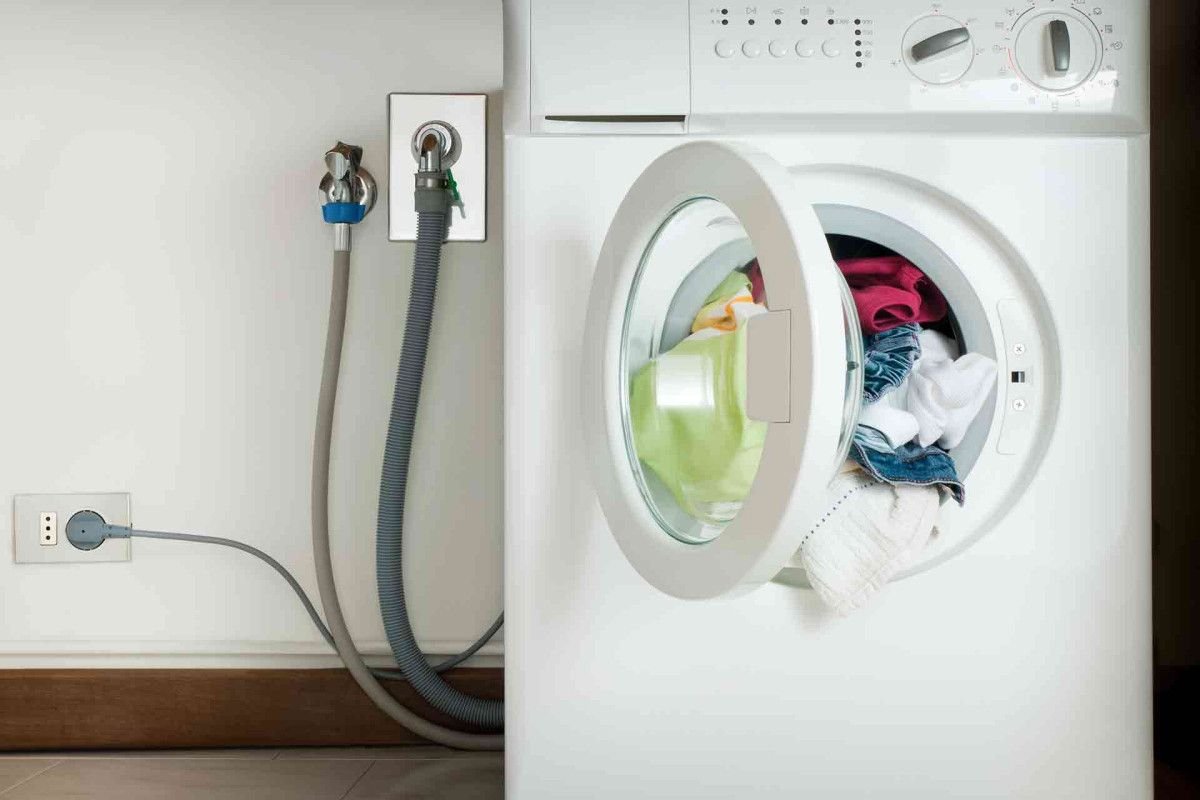

A washing machine that stops mid-cycle with water still in the drum, or that drains slowly and leaves the clothes soaking wet, has a clogged drain hose. The clog is usually lint, a sock, a coin, or a combination of detergent sludge and fabric fibers that have accumulated over years. The drain hose is the corrugated rubber or plastic hose that runs from the back of the washing machine to the standpipe in the wall or the laundry sink, says 33 Property Management.
Clearing the drain hose takes 20 to 45 minutes and costs nothing beyond a bucket and a pair of pliers. The most difficult part is pulling the washing machine away from the wall to access the hose. Here is how to clear the clog, check the standpipe, and prevent it from happening again.
First: Unplug the Machine and Prepare for Water
Unplug the washing machine. Water and electricity in close proximity are a serious hazard. Turn off the water supply valves behind the machine as a precaution, though draining does not involve the supply lines. Have a bucket, old towels, and a wet-dry vacuum ready. When you disconnect the drain hose, whatever water is still in the hose and the pump will drain onto the floor. The bucket catches most of it. The towels catch the rest.
Step One: Check Whether the Clog Is in the Standpipe, Not the Hose
The standpipe is the vertical pipe in the wall that the drain hose connects to. Pull the drain hose out of the standpipe. The hose is held in place by friction or by a plastic clamp. It pulls straight up and out. Look into the standpipe with a flashlight. If there is standing water or visible debris, the clog is in the house drain, not the washing machine hose. Pour a bucket of hot water down the standpipe. If it drains slowly or not at all, snake the standpipe with a drain snake or call a plumber. The washing machine hose is not the problem. If the standpipe drains freely, the clog is in the machine hose or the pump.
Leave the hose disconnected from the standpipe. Direct the end of the hose into a bucket on the floor. The bucket must be large enough to hold the water that will drain from the machine when the clog is cleared, typically 2 to 5 gallons. A 5-gallon bucket works. A mop bucket may overflow.
Step Two: Check the Drain Pump Filter
Many washing machines have a drain pump filter that traps debris before it reaches the hose. The filter is a common clog point and is easier to access than the hose itself. The filter location depends on the machine model. Front-load washers have a small access door on the lower front panel. Open the door and unscrew the filter cap. Water will drain from the filter opening. Have the bucket and towels ready. Remove any debris from the filter. A coin, a bobby pin, or a wad of lint is often the entire clog. Replace the filter cap and tighten it securely. Run a drain cycle to test. If the machine drains, the filter was the problem. The hose does not need to be removed.
Top-load washers may not have an accessible filter. The drain pump is inside the cabinet. If your top-load washer does not have an external filter access, proceed to cleaning the hose.
Step Three: Remove and Clean the Drain Hose
The drain hose connects to the drain pump at the bottom of the washing machine. Access the connection by tilting the machine backward or by removing the front or back panel depending on the model. Tilting the machine backward against a wall is usually sufficient and does not require disassembly. Enlist a helper. A washing machine weighs 150 to 200 pounds. Tip it back slowly and brace it so it cannot fall forward.
At the bottom of the machine, the drain hose is attached to the pump outlet with a spring clamp or a screw clamp. Squeeze the clamp with pliers and slide it up the hose. Twist the hose to break the seal and pull it off the pump outlet. Water will drain from the pump and the hose. Have the bucket underneath.
Inspect the hose for clogs. Look through the hose or hold it up to a light. A clog is visible as a dark mass or a foreign object lodged in the hose. Run a garden hose through the drain hose outdoors or into a utility sink. The water pressure from the garden hose pushes the clog out. If the clog is stubborn, use a drain snake or a flexible plumbing auger to break it up, then flush with water. A straightened wire coat hanger with a small hook on the end can retrieve a sock or a small garment that is lodged in the hose. Do not push the object further into the hose. Pull it back toward you.
If the hose is stiff, cracked, or coated with sludge that cannot be flushed out, replace it. A universal washing machine drain hose costs $10 to $20 at any hardware or appliance parts store. The hose connects to the pump outlet with a clamp. Replacement is simpler and more reliable than cleaning a heavily clogged hose. The new hose is clear and the old one goes in the trash.
Step Four: Reinstall and Test
Reattach the drain hose to the pump outlet. Slide the clamp over the hose, push the hose onto the outlet, and slide the clamp into position over the connection. Tighten the clamp securely. The clamp must prevent the hose from blowing off the pump under the pressure of the drain cycle. A hose that comes off mid-cycle floods the laundry room with 10 to 20 gallons of soapy water.
Return the machine to its upright position. Insert the drain hose back into the standpipe. The hose must extend at least 6 inches into the standpipe to prevent it from being pushed out by the drain water pressure. Do not push the hose so far into the standpipe that it reaches the water in the P-trap. The end of the hose must be above the water level in the trap to prevent siphoning. The hose should hang in a smooth curve, not a sharp bend or a kink. A kinked drain hose restricts flow and causes the same symptoms as a clog.
Plug the machine back in. Turn on the water supply valves. Run an empty cycle on the drain or spin setting to test. Watch the drain hose during the drain cycle. Water should flow freely into the standpipe. The machine should drain completely and not leave standing water in the drum.
Preventing Future Clogs
Empty pockets before loading clothes. Coins, bobby pins, screws, and small toys are the most common objects that clog washing machine drains. Check every pocket. A single quarter can jam the drain pump. Use the correct amount of detergent. Excess detergent does not rinse out completely and combines with fabric fibers to form a sludge that builds up in the drain hose over time. Use the amount specified on the detergent package for your load size and water hardness. More detergent is not cleaner clothes. It is more sludge in the drain. Run an empty hot water cycle with a cup of white vinegar every 1 to 2 months. The hot water and vinegar dissolve detergent buildup and keep the hose clear. This is the washing machine equivalent of preventive drain maintenance.
Frequently Asked Questions
Can I use a drain snake on the washing machine hose?
Yes, carefully. A small-diameter drain snake, 1/4 inch, can be fed through the drain hose to break up a clog. Feed the snake slowly. The corrugated interior of the hose can catch the snake tip. If you feel resistance that is not the clog, the snake is caught in the corrugations. Pull back slightly and advance again. Once the snake reaches the clog, rotate it to break up the blockage, then flush the hose with water.
Is accessing the drain hose different on a front-load vs. a top-load washer?
Yes. Front-load washers have the drain pump and hose connection accessible through the lower front panel or the rear panel. Tilting the machine is usually not necessary because the pump is near the front. Top-load washers have the pump at the bottom, accessible by tilting the machine backward or removing the cabinet panels. Top-load washer drain hoses are generally easier to access because the machine is lighter and easier to tip.
My washer drains, but slowly. Is that a partial clog?
Yes. A partial clog in the drain hose, the pump filter, or the standpipe restricts flow. The washer drains, but the water trickles out instead of surging through the hose. A partial clog will eventually become a complete clog as more debris accumulates. Clear it now while the machine still drains, rather than waiting for it to stop mid-cycle with a full drum of water.