
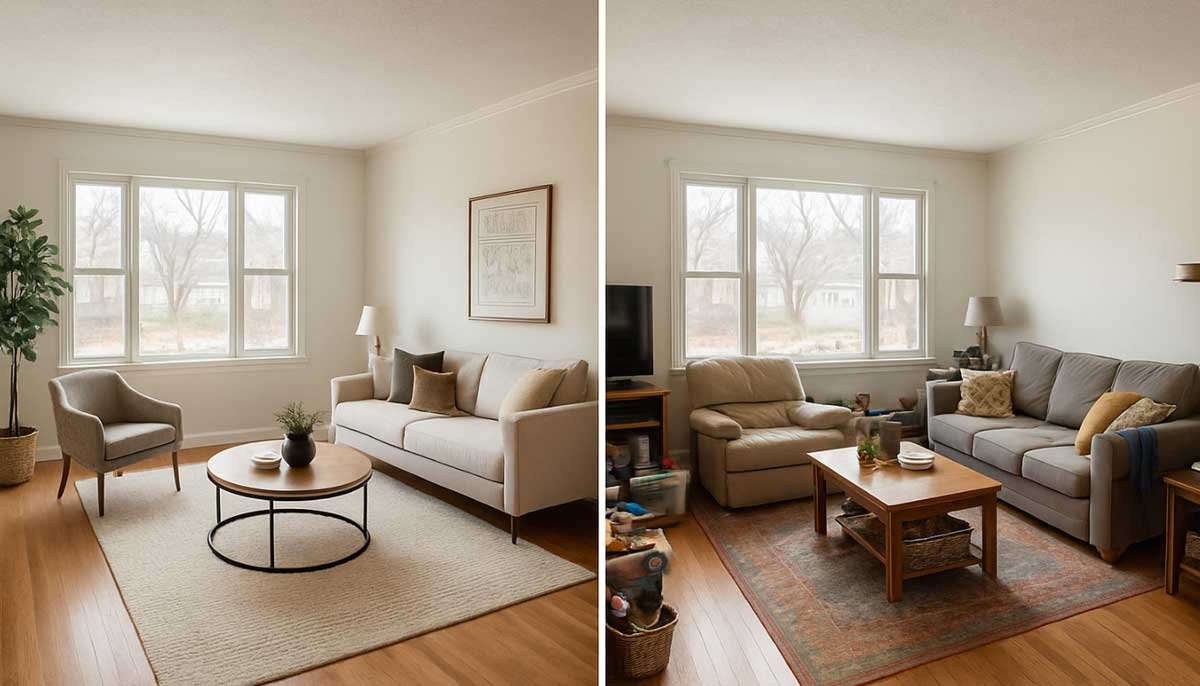

Luxury homes need more than clean rooms and attractive furniture. They need a clear point of view, strong visual balance, and a lifestyle buyers can understand quickly. Both occupied and vacant staging can work, but the better choice depends on the property, the current furnishings, and the expectations of the market, adds White Robbins Property Management Middletown.
What Occupied Home Staging Involves
Occupied staging uses some or all of the homeowner’s existing furniture, art, and accessories. A staging plan may include editing, rearranging, supplementing key pieces, and refining each room so the home feels elevated but still livable.
For luxury homes, occupied staging is most effective when the existing interiors already support the property’s price point. High-quality furniture, thoughtful lighting, neutral proportions, and well-maintained finishes can provide a strong foundation.
Benefits of Occupied Staging
- It can preserve warmth and personality while reducing visual distractions.
- It may be less disruptive than fully emptying the home.
- It can highlight how spacious rooms function in everyday life.
- It may require fewer rental furnishings when the existing pieces are suitable.
The challenge is objectivity. Personal collections, bold style choices, or oversized furniture can make rooms feel specific to the owner rather than broadly appealing. In the luxury segment, even small inconsistencies can affect perceived value.
What Vacant Home Staging Involves
Vacant staging starts with an empty property. Furnishings, rugs, art, lighting, and accessories are selected to suit the architecture, room scale, and likely buyer profile. This approach creates a curated presentation from the ground up.
Vacant properties often need staging because empty rooms can feel cold or confusing. Buyers may struggle to judge room size, furniture placement, or lifestyle potential. Strategic luxury staging helps define each space with intention.
Benefits of Vacant Staging
- It creates a cohesive design story across the entire home.
- It helps buyers understand scale, flow, and room purpose.
- It can make photography feel more polished and emotionally engaging.
- It removes distractions from outdated or mismatched owner furnishings.
Vacant staging can be especially valuable for homes with unusual layouts, expansive open areas, or architectural features that need context. The right furnishings can make a large room feel inviting rather than empty.
How Luxury Buyers Evaluate Staged Homes
Luxury buyers often look beyond basic function. They notice proportion, material quality, lighting, views, privacy, storage, and the feeling of arrival. Staging should support these impressions without overwhelming the property itself.
In this segment, buyers respond to restraint. Overdecorated spaces can feel distracting, while underfurnished rooms may feel unfinished. The best presentation creates aspiration while leaving enough room for the buyer’s own imagination.
Market expectations also matter. In competitive high-value markets, NYC staging is often associated with editorial-level presentation, careful styling, and an understanding of how rooms read in person and through photography.
When Occupied Staging Works Better
Occupied staging may be the stronger option when the homeowner’s furnishings are current, refined, and scaled correctly. It can also work well when the home is actively lived in and a full vacancy is not practical.
This approach is most successful when there is flexibility. Some items may need to be stored, replaced, or repositioned. Personal photographs, excess accessories, visible paperwork, and niche decor should usually be reduced.
Signs an Occupied Plan May Be Enough
- The main rooms already photograph well.
- The furniture supports the architectural style.
- The color palette feels calm and cohesive.
- The home can remain consistently clean and presentation-ready.
When Vacant Staging Works Better
Vacant staging is often the better choice when the existing furnishings do not match the property’s value, style, or target buyer. It is also useful after renovations, when a fresh design direction helps connect new finishes to a complete lifestyle.
For large luxury homes, vacant staging can define zones within open layouts. Seating areas, dining moments, workspaces, and bedroom retreats become easier to understand when each area has a clear purpose.
Vacant staging can also reduce risk when a home has been sitting unsold. A redesigned presentation may reset buyer perception and help new photography feel more compelling.
Key Factors That Influence the Best Choice
The decision should be practical, not emotional. A staging strategy should consider the home’s condition, furnishings, timeline, listing photography, and buyer expectations. For high-end properties, consistency across every major room is especially important.
- Property value and price positioning
- Quality and condition of existing furnishings
- Architecture, layout, and natural light
- Target buyer lifestyle
- Photography and showing schedule
- Budget, timing, and logistics
Choosing the Stronger Strategy for a Luxury Home
Neither occupied nor vacant staging is automatically better. Occupied staging works when the existing environment already supports the desired impression. Vacant staging works when the home needs a fully controlled, cohesive presentation.
For luxury homes, the strongest staging plan is the one that makes the property feel clear, elevated, and easy to understand. Whether occupied or vacant, successful luxury staging helps buyers see not just the rooms, but the lifestyle those rooms can support.