
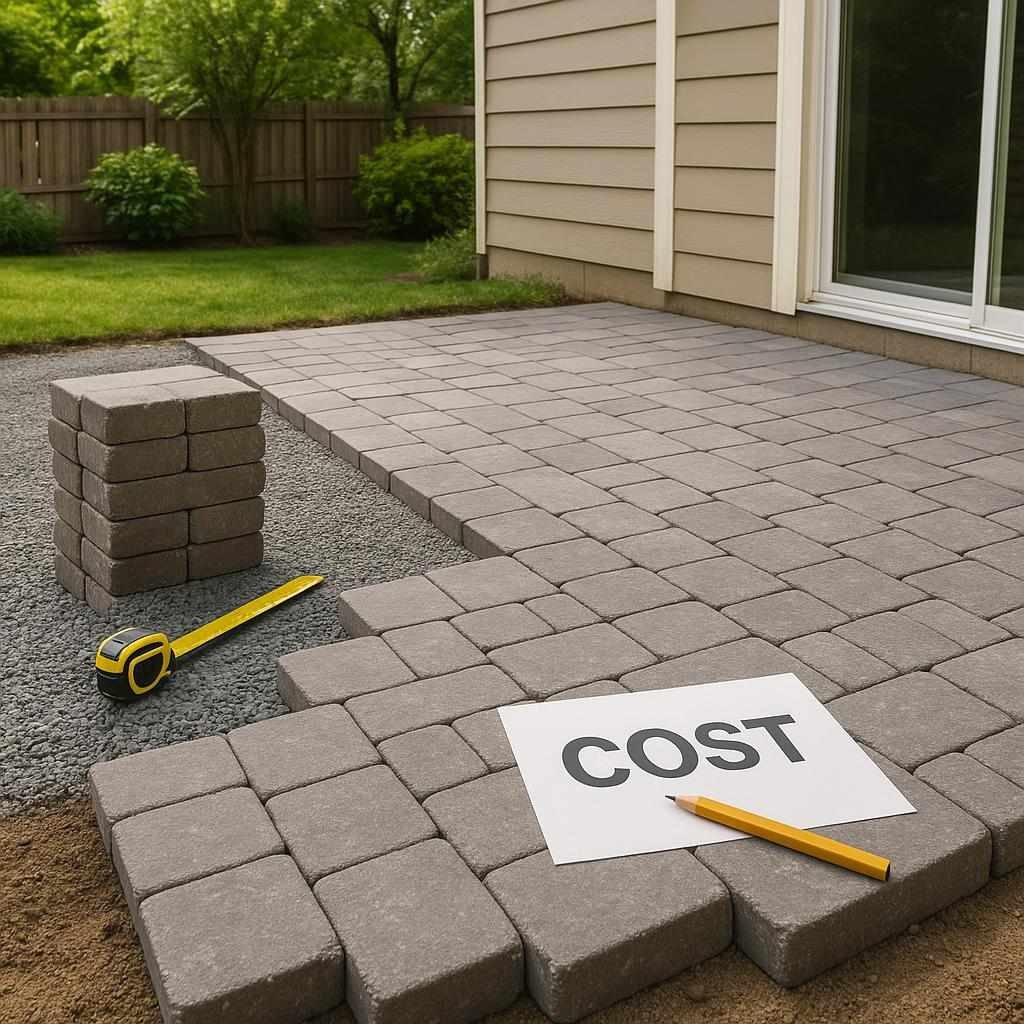

Paver patio installation cost usually lands between about $10 and $40 per square foot for a professionally built project, with simple jobs at the low end and custom layouts, heavy prep, or premium stone pushing the number much higher. For most homeowners, the real question is not the headline average. It is which part of the quote is doing the damage.
Recent public estimates point in the same direction. Homewyse shows a basic installed range in the low-to-mid twenties per square foot, while Unilock frames a 400-square-foot patio closer to the $12,000 to $16,000 band. The spread makes sense because “paver patio” can mean anything from a clean concrete-paver rectangle to a heavily cut natural-stone build with grading problems.
Average Paver Patio Installation Cost
A realistic starting budget for a professionally installed paver patio is about $4,000 to $16,000, with a common planning range of roughly $15 to $30 per square foot for mid-market work. That answer is useful only if you immediately pair it with size, material, and prep assumptions.
Small patios under 150 square feet can still feel expensive because mobilization, base work, and edge restraint do not shrink in perfect proportion. Larger patios often get a better per-square-foot rate, but they can still jump fast if you add borders, curves, steps, drainage work, or premium pavers.
| Patio Size | Low-End Installed Range | Mid-Range Installed Range | Higher-End Installed Range |
|---|---|---|---|
| 100 sq. ft. | $1,500-$2,500 | $2,500-$3,500 | $3,500-$5,000+ |
| 200 sq. ft. | $3,000-$4,500 | $4,500-$6,500 | $6,500-$9,000+ |
| 400 sq. ft. | $6,000-$9,000 | $9,000-$12,500 | $12,500-$16,000+ |
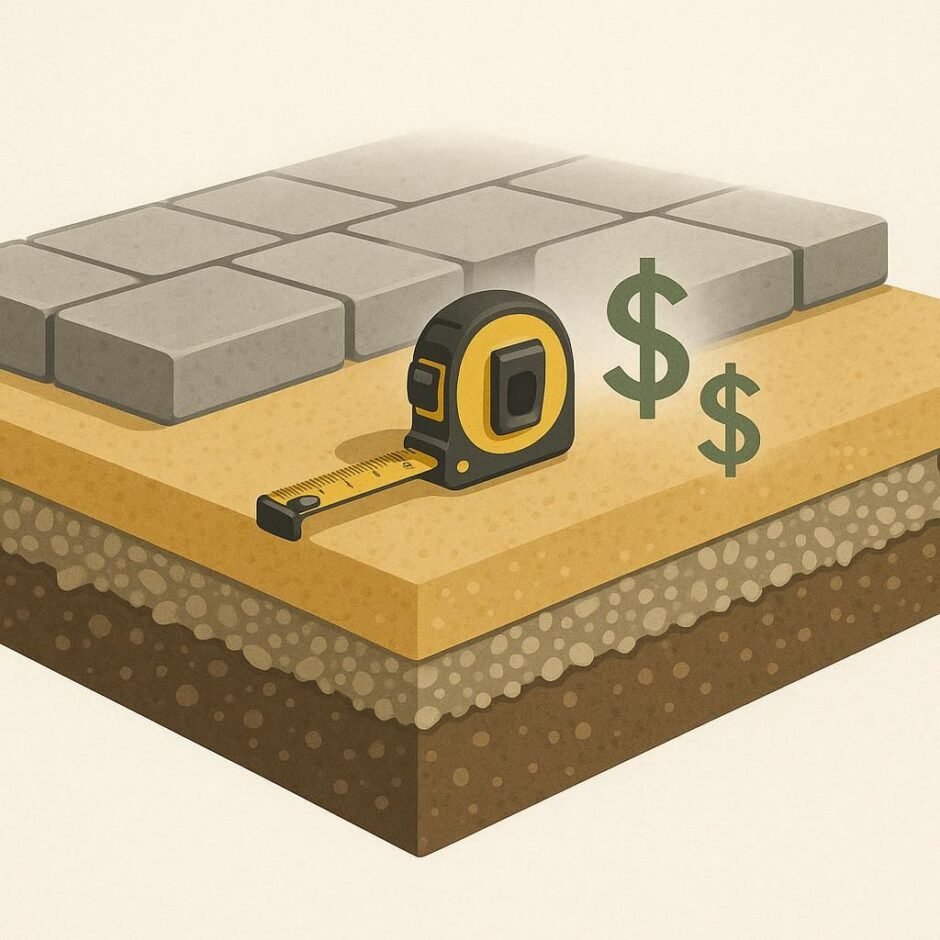
Cost Per Square Foot by Material
Material choice changes the quote faster than most homeowners expect. Concrete pavers usually keep the project in the most manageable range, brick pushes the finish upward, and natural stone is where budgets start to lose their calm.
The material number also hides design complexity. A basic field paver installed in a straight pattern is one thing. A mixed-size layout with borders, inlays, or heavy cutting is another, even if the paver itself did not look expensive on the display rack.
| Paver Type | Typical Installed Cost Per Sq. Ft. | Best Fit | Main Budget Risk |
|---|---|---|---|
| Concrete pavers | $10-$25 | Most standard backyard patios | Can rise with patterns and borders |
| Brick pavers | $14-$28 | Traditional or historic look | More labor when cuts pile up |
| Natural stone | $20-$40+ | High-end custom projects | Material price and waste factor |
| Permeable pavers | $18-$35+ | Drainage-sensitive sites | Special base requirements |
What Actually Drives the Quote Up or Down
The fastest way to misread a paver patio quote is to stare only at the paver line item. In many jobs, the expensive part is the site itself. Sloped yards, soft soil, old concrete removal, tight access, and drainage corrections can change the project before the first paver is laid.
Labor is the other major swing factor. If the crew has to excavate deeper, haul material farther, hand-carry pavers through a gated yard, or build retaining transitions, the square-foot number climbs even when the visible patio still looks simple from above.
That community pattern shows up again and again: homeowners start by comparing surface materials, then realize the real money issue is base work, drainage, and how long the patio will stay level. That is why the cheapest quote on day one is not always the cheapest patio three winters later.
| Cost Driver | Usually Adds a Little | Usually Adds a Lot |
|---|---|---|
| Excavation and grading | Flat, open site | Sloped or muddy site |
| Layout complexity | Square or rectangle | Curves, borders, inlays |
| Access to backyard | Wide side gate | Hand-carry only access |
| Drainage fixes | Minor runoff adjustment | Base rebuild or water redirection |
Labor, Location, and Hidden Costs
Labor rates and regional pricing are the easiest reason two homeowners get wildly different quotes for patios that look similar on paper. The same 300-square-foot layout will not price the same in a high-cost metro, a dense suburb, and a lower-cost market with easier access to aggregate and installers.
LawnStarter and similar cost guides regularly show large installed ranges because local labor, hauling, and material supply all change the job. If you want a more accurate plan, ask contractors to separate labor, base material, pavers, edge restraints, polymeric sand, and optional drainage into distinct lines.
Permits are another sleeper cost. Many basic ground-level patios do not trigger major permitting, but some municipalities care about lot coverage, drainage, setback changes, or tied-in structures like pergolas and outdoor kitchens. It is cheaper to ask early than to redo the plan after materials arrive.
| Hidden Cost | When It Shows Up | How to Control It |
|---|---|---|
| Haul-away and disposal | Old slab or poor soil must go | Ask if disposal is included |
| Extra base depth | Freeze-thaw zones or weak soil | Request base specs in writing |
| Drainage materials | Water sits near the house | Price drains and slope changes separately |
| Permit or inspection fees | Local code requires review | Check municipality before design finalization |
DIY vs. Professional Installation Cost
DIY can save real money, but only if the project is simple and you already understand excavation depth, compaction, and base layering. Most DIY budgets look great until tool rental, extra base stone, wasted pavers, and weekend delays start stacking up.
A homeowner who handles a small rectangle on stable ground can often cut the total by thousands. A homeowner who guesses at base depth or drainage can spend that savings twice. Pavers are forgiving on the surface. The layers underneath are not.
| Approach | Main Cost Advantage | Main Risk | Best Use Case |
|---|---|---|---|
| DIY | Lower labor spend | Sinking, shifting, drainage failure | Small simple patio on easy site |
| Professional install | Faster build and better base control | Higher upfront quote | Medium to large patios or difficult sites |
How to Budget a Paver Patio More Accurately
The most reliable way to budget a paver patio is to break the quote into five buckets: pavers, base materials, labor, site prep, and optional upgrades. Once you see those numbers separately, the project stops feeling random and starts feeling negotiable.
Ask every contractor for the same square footage, the same paver category, the same base depth, and the same edge detail. If one quote still looks much lower, look for what disappeared. It is often excavation depth, haul-away, or drainage work rather than a magical material discount.
- Measure the exact patio footprint and note access issues.
- Choose a material tier before asking for bids.
- Request written base specs and drainage assumptions.
- Price one simple layout and one upgraded layout.
- Keep a 10% to 15% contingency for hidden site work.
Frequently Asked Questions
This FAQ section gives direct cost answers first, then the practical context homeowners usually need before they sign a contract.
How much does a paver patio cost per square foot?
A professionally installed paver patio often costs about $10 to $40 per square foot, with many mid-range jobs landing closer to $15 to $30. The exact number depends on paver type, labor market, site prep, and drainage needs.
Is a paver patio cheaper than concrete?
Sometimes, but not always. Basic poured concrete can be cheaper upfront, while pavers often cost more initially and make more sense when repair flexibility, appearance, and long-term surface performance matter.
What is the biggest cost driver for a paver patio?
Base preparation and labor usually move the quote the most. Expensive pavers matter, but poor soil, grading, drainage, and access problems can change the total even faster.
Does patio size lower the price per square foot?
Often, yes. Larger patios can spread fixed setup costs over more square footage, but curves, borders, and site complications can erase that advantage quickly.
Is DIY worth it for a paver patio?
DIY is most worth it on a small, simple patio with stable ground and easy access. Once excavation, compaction, and drainage get complicated, professional installation usually protects the budget better.
Do you need a permit for a paver patio?
Sometimes. Many simple ground-level patios do not trigger a permit, but drainage rules, lot coverage limits, setbacks, and attached features can still bring local code into the picture.
Conclusion
Paver patio installation cost is best treated as a layered budget, not a single number. If you remember only one rule, remember this: base prep, labor, and drainage can change the total just as fast as the pavers you choose.
For a small straightforward patio, a modest budget can still deliver a solid result. For anything larger, more decorative, or trickier underfoot, the smart move is to compare detailed quotes line by line and protect the base work before chasing surface upgrades.